Can millions of new energy luxury cars really hold their value?
 12/29 2025
 633
633
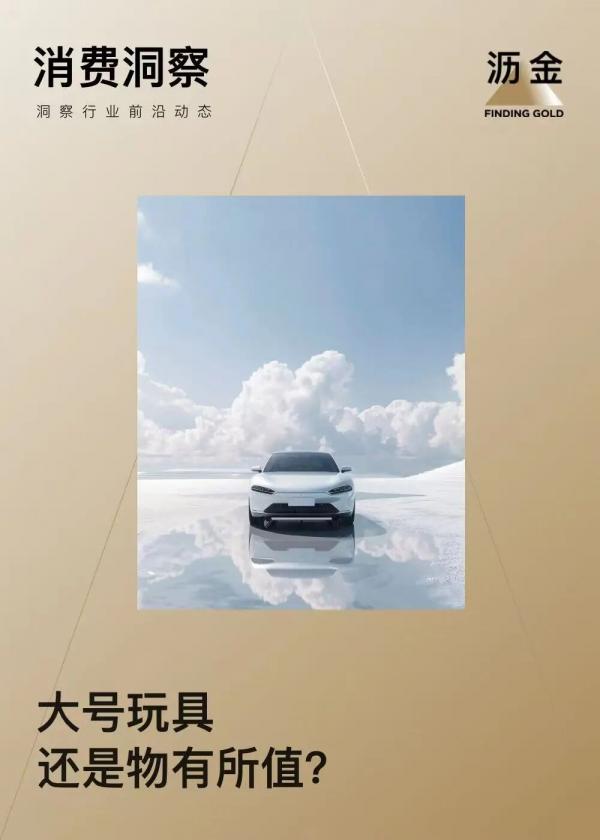
As 2025 draws to a close, the new energy sector enters a new phase.
Over the past year, domestically produced high-end new energy vehicles priced at 500,000, 800,000, or even over 1 million yuan have made frequent appearances, officially entering the price range traditionally dominated by luxury fuel (This Chinese character means 'fuel' and has been translated to 'fuel-powered' for proper context in English) fuel-powered vehicles.
If the past few years have seen domestic new energy vehicles focus on technological accumulation and market validation, the true test for million-yuan new energy luxury cars has shifted from speed, acceleration, and feature overload to time and asset value.
Can they withstand the test of time? Do they possess a stable and predictable second-hand value? Can they, like traditional high-end fuel-powered vehicles, be integrated into a long-term asset portfolio rather than becoming high-priced toys that rapidly depreciate and are phased out by the market within a few years?
The new energy sector is fiercely competitive.
Is the way out to move upmarket?
In 2025, the high-end battle among Chinese new energy vehicles has officially commenced, with several major automakers entering the fray.
In the most fiercely competitive price range of 50,000 to 200,000 yuan, price wars have nearly reached their limits, profits have been squeezed to the minimum, and scale expansion increasingly resembles a high-risk gamble. Consequently, a number of automakers have chosen to bypass this red ocean, setting prices at 500,000, 800,000, or even over 1 million yuan. For the first time, domestic new energy vehicles are systematically challenging the traditional luxury car segment.
Going upmarket does not mean blindly pursuing sales volume but rather attempting to rebuild three things: profit structure, brand positioning, and a more sustainable long-term presence. Compared to the highly competitive mainstream market, the high-end segment offers healthier profit margins and greater differentiation potential.
Over the past year, multiple high-end product lines of domestic new energy vehicles have been launched, with each automaker presenting its own interpretation of the 'domestic new energy luxury car' to the market.
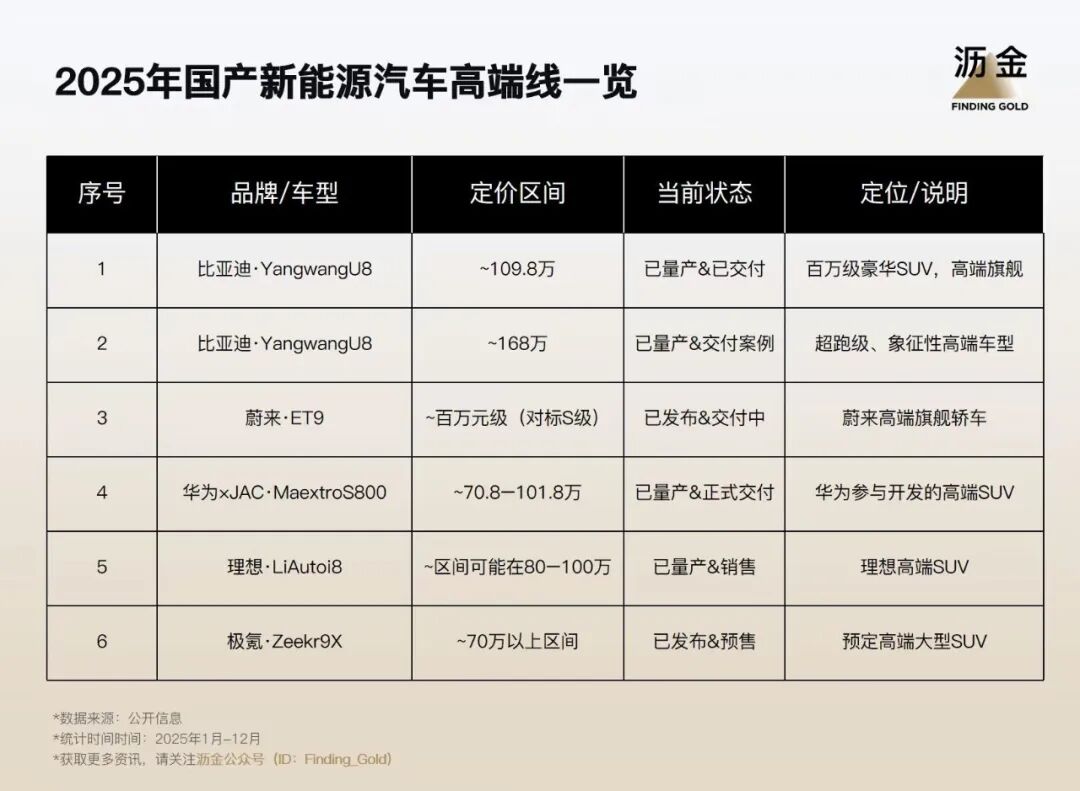
How should high-end new energy vehicles be priced?
Observing these high-end new energy products reveals that they are not simply replicating the path of traditional luxury cars. Instead, they are attempting to forge their own language under new era trends and technological conditions. In the new energy era, high-end status is no longer defined by engines and speed but by system stability, safety margins, and intelligent management capabilities.
In the era of fuel-powered vehicles, high-end status was primarily defined by speed and ultimate mechanical performance.
Engine size, intake and exhaust paths, cooling requirements, and transmission structures collectively formed a highly coupled engineering system. Vehicle acceleration, top speed, and even body proportions and aerodynamic lines ultimately had to yield to mechanical constraints.
For models like Porsche, their iconic streamlined designs were not merely aesthetic choices but engineering results strongly tied to engine layout, aerodynamic efficiency, and chassis structure. Speed, appearance, and technological barriers remained intertwined in the fuel-powered vehicle era.
New energy vehicles have altered this premise.
Electric motors and electronic control systems have significantly lowered the engineering threshold for achieving high performance. Powerful acceleration no longer requires complex and expensive mechanical stacking but has become a relatively easily replicable capability. When 'speed' itself becomes democratized, it no longer suffices to distinguish high-end status.
Meanwhile, the reduced size of electric motors, the naturally low center of gravity brought by batteries, and the diminished need for intake and exhaust systems have also liberated vehicle designs. Body proportions are no longer rigidly constrained by engines and transmission structures, allowing exterior designs to be partially freed from engineering constraints.
This means that in the new energy era, speed and appearance are no longer the moats for high-end vehicles.
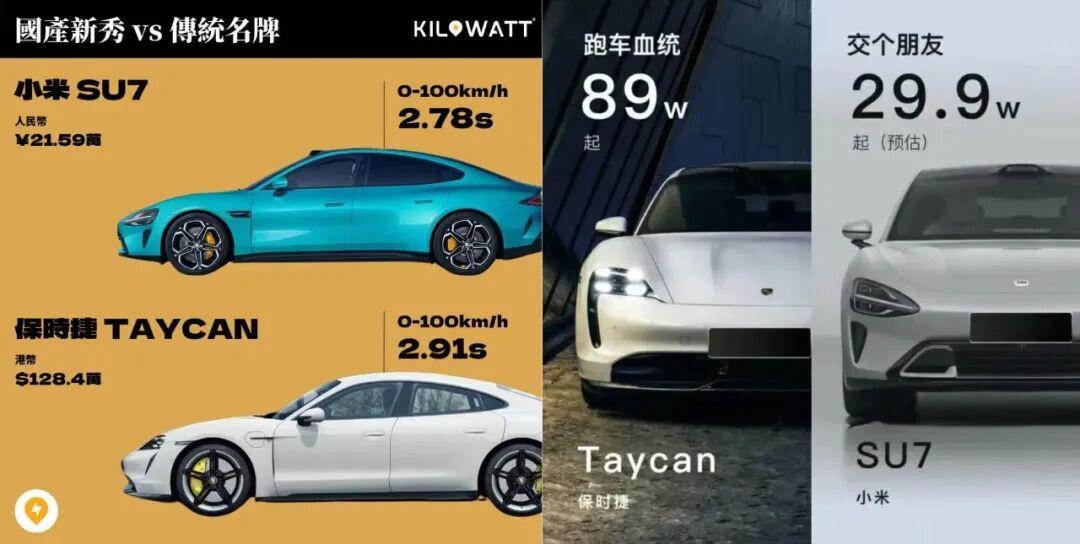
Comparison of Xiaomi SU7 and Porsche in terms of price, appearance, and speed
Source: Internet
When new energy vehicles priced at 200,000 or even 100,000 yuan can already replicate the appearance of high-end fuel-powered vehicles and surpass them in acceleration performance, high-end new energy vehicles must redefine their value benchmarks.
Safety is the most critical aspect.
In the fuel-powered vehicle era, safety was primarily understood as the ability to protect occupants after an accident. This safety logic presupposed the occurrence of a collision and aimed to minimize harm.
In the context of high-end new energy vehicles, however, the definition of safety is undergoing a subtle yet important shift.
It is no longer solely understood as passive protection at the moment of an accident but has been shifted forward to the overall design of the powertrain, sensing systems, and control logic. High-end new energy automakers are investing significant engineering resources in ensuring the stability of high-energy-density powertrains under extreme conditions and defining the intervention boundaries of intelligent assistance systems in complex scenarios, attempting to intervene before risks evolve.
This safety orientation represents a further extension of traditional fuel-powered vehicle safety: while collision protection remains important, preventing accidents and controlling risk evolution are becoming steps that new energy vehicles aim to take forward.
In terms of experience, high-end new energy vehicles also offer different answers compared to fuel-powered vehicles.
In the era of traditional fuel-powered vehicles, a better experience meant enhancing the act of driving itself. More precise handling, a more stable chassis, better sound insulation, and more comfortable seating essentially still placed humans in control of the machine, merely providing a better experience during the process.
New energy vehicles, however, subvert the very nature of experience.
When the powertrain, electronic control architecture, and vehicle engineering are no longer highly interdependent, vehicles can be designed as holistic systems rather than assemblies of multiple mechanical modules. Intelligent cockpits, assisted driving, environmental control, and software logic are unified in planning, shifting the experience from feature stacking to system integration.
Under this logic, high-end new energy vehicles emphasize not how well the driver can perform but to what extent the user's concerns can be minimized. Judgments are made in advance, adjustments are integrated, and repetitive decisions are absorbed by the system. Users still retain choice but no longer need continuous intervention.
This transformation brought about by intelligence also represents an evolution in the experience structure: from scattered operations to continuous usage states; from isolated performance points to overall feelings. When technology begins to handle judgment and coordination, high-end experiences no longer rely on continuous human intervention but on the overall reliability of the system.
This is precisely the new experience value that high-end new energy vehicles aim to establish: not to make cars faster tools but to transform them into more complete, immersive, and worry-free private mobility spaces.
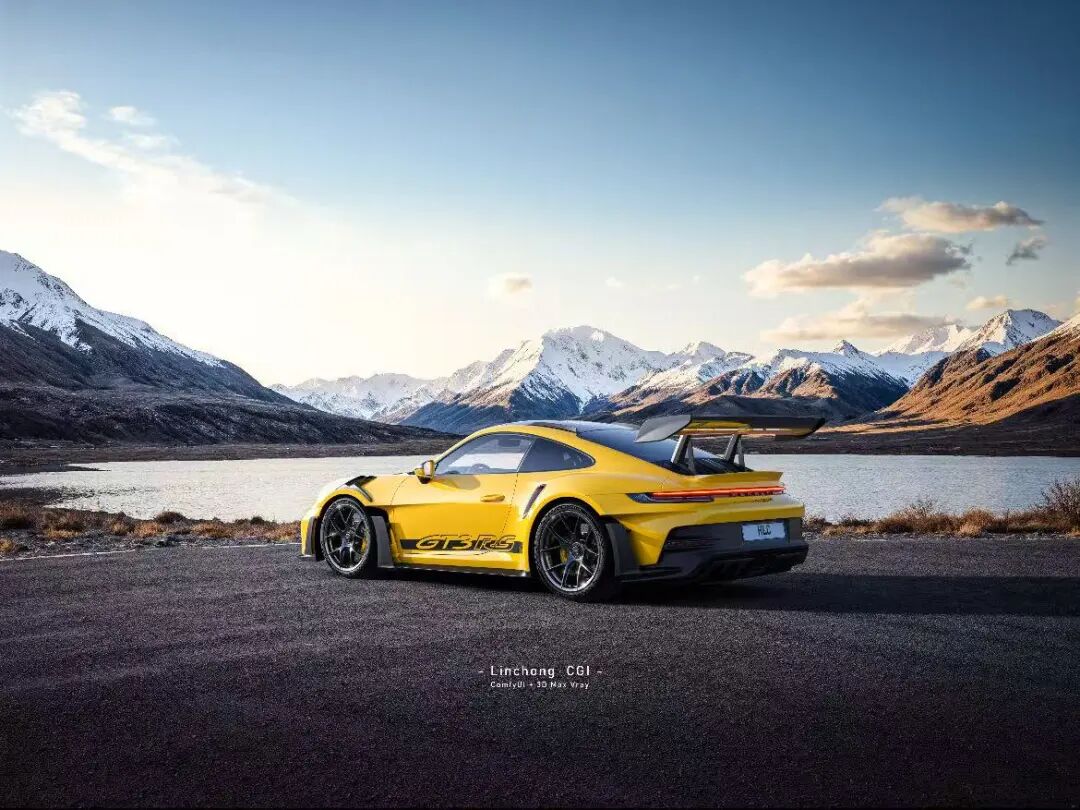
Porsche CGI poster image. Source: Internet
The true test of luxury vehicles
Time as the criterion
High-end new energy vehicles have articulated their pricing logic to consumers on their own track. However, after entering the million-yuan price range, they must undergo a completely different evaluation method.
In the million-yuan price range, a vehicle is no longer just a consumer good but an asset allocation. What truly determines its value is not the parameters announced at the launch or the short-term experience it offers but whether it can still be recognized by the market, supported by the system, and held with confidence by users five, eight, or even ten years later.
For high-end new energy vehicles, time is no longer a depreciation curve but a qualification review. Whether they can pass the test of time is the question they truly need to answer.
This is where the positioning of high-end new energy vehicles conflicts with that of other new energy vehicles.
For a long time, the product rhythm of new energy vehicles has been closer to that of consumer electronics: rapid iteration, platform changes, feature upgrades, and strategy adjustments. This logic poses no problem in the mid-to-low price range and is even an important driver of popularization. However, when prices break through the mainstream range, rapidity is often interpreted as risk.
People can accept changing their smartphones every three years but find it difficult to accept a million-yuan car facing platform discontinuation, service contraction, feature marginalization, and even difficulties in second-hand circulation five years later.
Consequently, asset attributes have become an unavoidable practical challenge for high-end new energy vehicles.
Compared to fuel-powered vehicles, new energy vehicles still lack historical accumulation in this dimension. The residual value expectations of fuel-powered vehicles are built on long-term stable mechanical systems, mature repair networks, predictable parts supply, and market consensus on their long-term value. Even with significant depreciation, their second-hand prices often have a clear floor.
However, the judgment of second-hand value for new energy vehicles is still influenced by multiple variables: the battery degradation curve has not been fully validated over the long term, technological generation turnover is much faster than that of fuel-powered vehicles, and platform discontinuation and service strategy changes are more frequent. These factors combined inevitably raise doubts among potential consumers with high budgets about the asset value of new energy vehicles.
Therefore, some high-end new energy brands have begun to proactively address this issue.
Some attempt to reduce the impact of technological uncertainty on long-term use by extending battery warranty periods and providing performance guarantees. Others introduce battery swapping, whole-vehicle extended warranties, and other mechanisms to partially transfer key risks from users back to the companies themselves. Some brands have also started to intervene in the second-hand circulation process, attempting to establish basic anchors for residual values through buyback programs and official certified second-hand vehicle systems.
The core purpose of these attempts is to reduce the erosion of price expectations caused by technological uncertainty and demonstrate to the market that new energy vehicles are not merely for short-term consumption but possess the conditions for long-term holding and value management.
It should be noted that being on the right path does not mean reaching the destination. What truly determines whether a vehicle possesses asset attributes is never a single configuration, a one-time promise, or a set of mechanism designs but the continuous fulfillment capability of these promises over time.
Stability requires time for validation, reliability requires time for inspection, and trust also requires time for accumulation. These factors cannot be compressed or replaced by marketing.
Technology can iterate rapidly, concepts can take shape quickly, and experiences can be meticulously designed. However, ultimately, only time can answer the most fundamental question: when the novelty fades and everything returns to reality, will domestic high-end new energy vehicles merely be phased (This Chinese phrase means 'phase-based' or 'stage-specific' and has been translated to 'short-lived' for proper context in English) short-lived products or assets that can be trusted for the long term?
In the high-end market, time is not a cost but a qualification.
-
![]()
It's Hard to Build Cars, Even Harder to Build Humans, and XPENG is Doing Both
-
![]()
Valuation Soars by $57 Billion: Three Entrepreneurs Born in the 1980s Forge an AI Unicorn Now Suddenly on the Market
-
![]()
How Can We Achieve the Goal of 100,000 Hydrogen Vehicles by 2030?
-
![]()
July Online Market for Consumer-Grade Sports Cameras: Robust Double-Digit Growth in Sales Volume and Value, Mid-Range Products Fuel Market Expansion
-
![]()
A Hundred Billion Dollar Market! When Will the 'Golden Age' of Agentic AI Arrive?
-
![]()
Changzhou’s Wealthiest Woman Faces Unexpected Setback
-
![]()
FAW Seeks Efficiency Gains, Leapmotor Accelerates Expansion
-
![]()
Dual Leaders in Robot Vacuum Industry Look Overseas for Growth