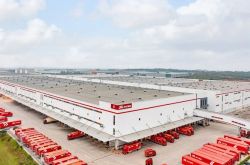
China’s Auto Companies Top Global Sales Rankings, with Multiple Independent Brands Targeting 3 Million Units
 01/08 2026
 549
549

Written by / Xue Fei
Produced by / Five-Star Vehicle Review
In 2023, China overtook Japan as the world’s largest automobile exporter, with 4.91 million units shipped overseas. By 2025, this figure is projected to exceed 7 million units, propelling China’s total global auto sales to 27 million units—surpassing Japan’s 25 million and securing the largest market share worldwide.
In 2024, Chinese new energy vehicles (NEVs) accounted for 80% of global sales. While Japanese automakers clung to traditional manufacturing philosophies, Chinese independent brands steadily expanded their global footprint, leveraging market advantages in developing countries. The global automotive landscape built by Japan over three decades is now being reshaped by intelligence and electrification.
However, behind this sales surge lies the issue of razor-thin profit margins per vehicle. Japanese brands, particularly “efficiency-first” Toyota, remain dominant in this regard—Toyota’s profits from selling 10 million units exceed the combined earnings of all Chinese automakers.
01 Independent Brands Capture Two-Thirds of Market Share
By 2025, over 60% of global passenger vehicles will be produced in Asia. China’s technological breakthroughs in new energy and intelligent systems are redefining global automotive standards and competitive dynamics. Chinese automakers have transitioned from “followers” to “leaders” in the electric and intelligent transformation, with independent brands commanding over 65% market share and competing head-to-head with international giants.
In 2025, independent brands demonstrated robust growth, with leading players achieving significant year-on-year increases:
- BYD: 4.602 million units (+7.7%)
- Geely: 3.025 million units (+39%)
- Changan: 2.913 million units (+8.5%)
- Chery: 2.806 million units (+7.8%)
- SAIC Independent (including Wuling/Roewe/MG): 2.928 million units (+21.6%)
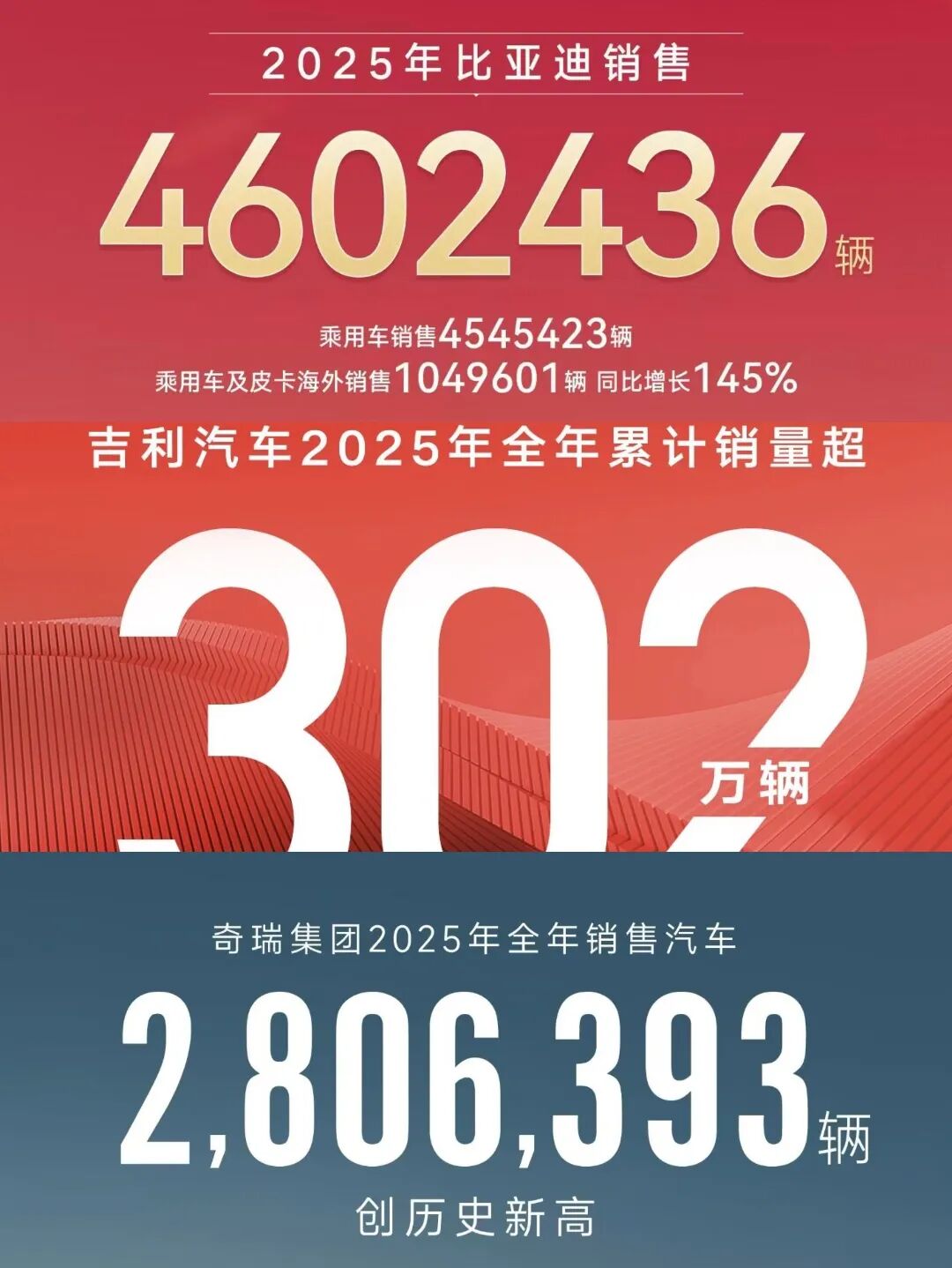
According to data from the Nihon Keizai Shimbun, combining automaker production/sales figures (January–November 2025) and S&P Global Mobility industry statistics, China’s automakers are expected to see a 17% year-on-year increase in global sales in 2025, reaching approximately 27 million units.
For decades, the global automotive market’s top spot alternated between American and Japanese automakers, with Japan holding a long-term lead. At its 2018 peak, Japanese automakers’ global sales neared 30 million units; even in 2022, they outsold Chinese counterparts by roughly 8 million units. In just three years, Chinese automakers have staged a remarkable reversal, reshaping the global market and demonstrating strong momentum in electrification and intelligence.
02 Suzuki’s Global Sales Hit 4.5 Million Units
In 2025, Honda and Nissan lag far behind BYD in global sales, with risks of being overtaken by independent brands like Geely and Changan in the coming years. Surprisingly, among Japanese automakers, Suzuki—alongside Toyota—stands out with sales volumes comparable to BYD.
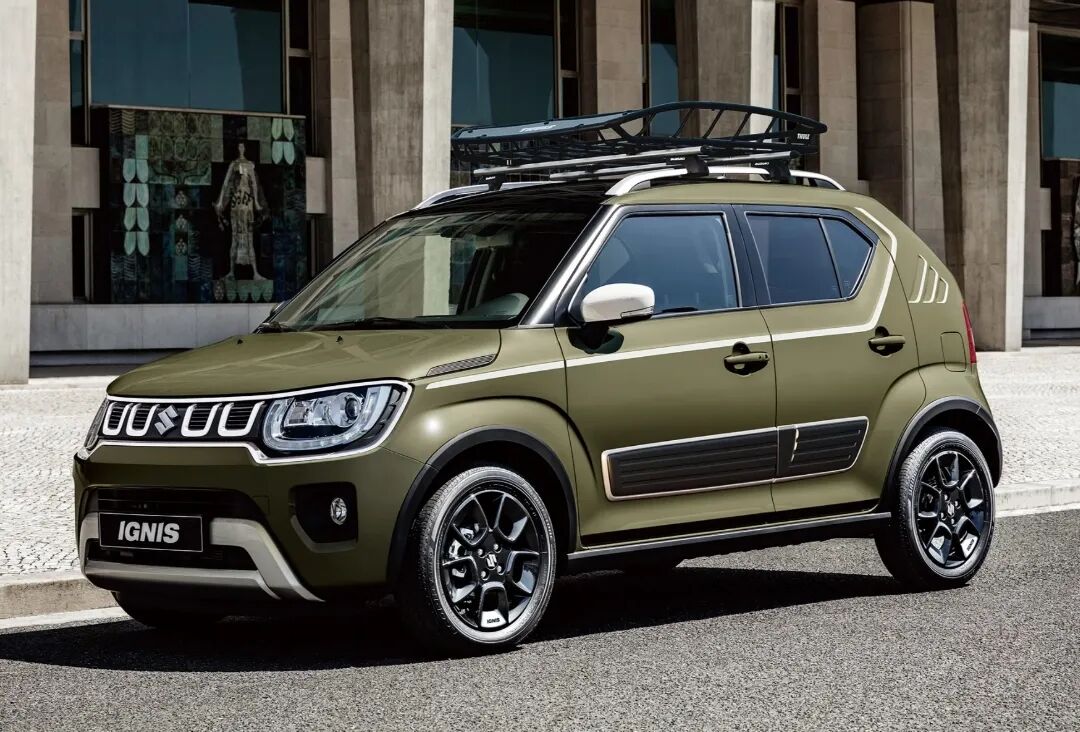
In 2025, Suzuki’s global sales reached 4.5 million units, making it one of only two Japanese automakers (the other being Toyota) to achieve growth.
Though Suzuki has withdrawn from China’s domestic market, it thrives in India and Southeast Asia, where its compact cars dominate sales charts. Coupled with its motorcycle sector influence, Suzuki remains a powerhouse in Japan’s automotive camp.
Models like the Alto and Beidouxing once symbolized Suzuki’s Chinese market presence. Even today, the parallel-imported Jimny remains highly sought after.
Unfortunately, Suzuki’s focus on fuel-efficient compact cars struggles amid China’s NEV-dominated market. Without new energy offerings, its return to China is virtually impossible.
03 GAC Honda’s Production Halted, Nissan Relies on Sylphy
On December 29, 2025, GAC Honda’s three plants (Huangpu, Zengcheng, Guangzhou Development Zone) suspended production, with restarts delayed from January 2 to January 5, and again to January 19.
The core cause was a chip shortage, triggered by Nexperia’s supply cuts and compounded by production line upgrades, leading to two restart delays.
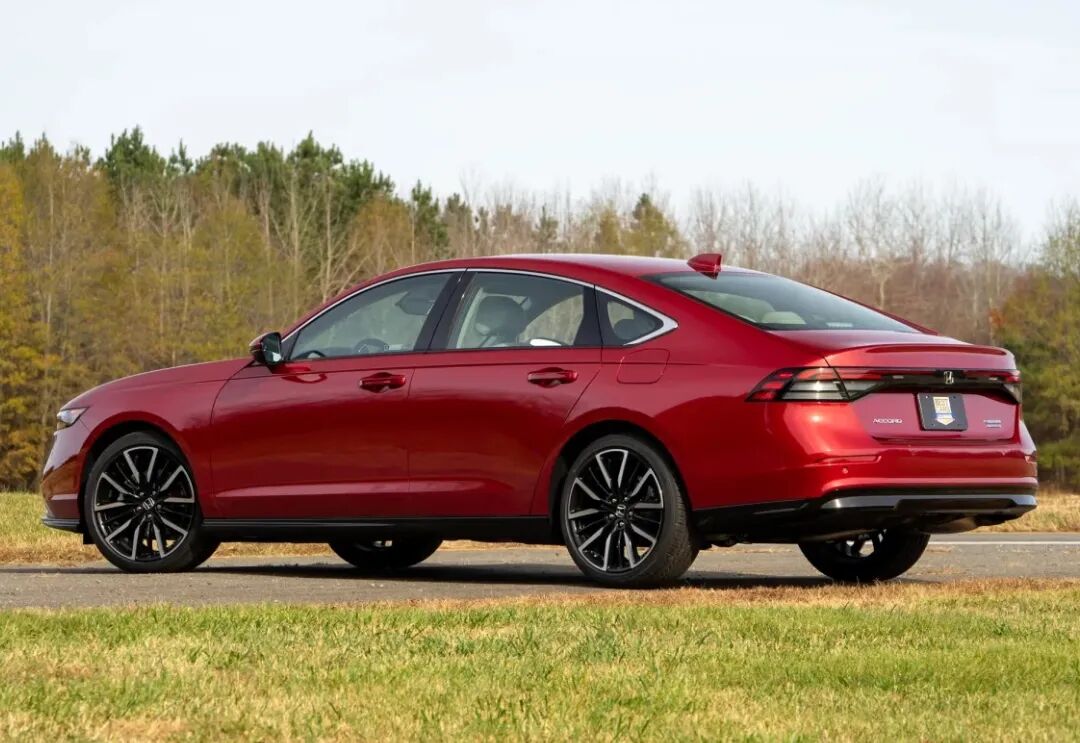
Reading this, one might feel transported back in time—wasn’t the chip crisis resolved years ago? Nexperia halted supplies of general-purpose MCUs and automotive-grade chips critical to Honda, leaving inventory sufficient for just seven days of production (normal safety stock: 45 days), rendering restarts unfeasible.
Meanwhile, Honda’s Japanese plants halted production for two days (January 5–6); its North American and Mexican facilities previously reduced/halted output. The company expects a ¥150 billion operating profit decline in FY2026, with global sales targets revised downward.
Nissan faces similar challenges, with declines in both China and global markets. Of its 600,000 Chinese sales, the Sylphy accounted for 330,000 units. Price cuts on its N-series models have yielded limited gains but damaged brand positioning. Coupled with Infiniti’s struggles, Nissan is unlikely to elevate its brand value shortly.
Nissan and Honda’s combined global sales (under 4 million units) trail China’s leading independent brands, falling short of BYD’s 4.6 million units and Hyundai’s 2025 global sales.
U.S. import tariffs cost Japan’s seven major automakers nearly $10 billion in profit in H1 2025. Nissan reported a ¥670.9 billion net loss in FY2024 and sold its Yokohama headquarters to ease financial pressure. Unexpected yen depreciation and chip disruptions further eroded margins.
Looking ahead to 2026, independent brands’ market share is poised to rise, while ordinary joint-venture and luxury brands enter a decisive phase of NEV transformation. Except for the mid-to-high-end sedan market (¥200,000–500,000), traditional fuel vehicles may lose their “impregnable” positions within one to two years.
------- The end -------
-
![]()
Enflame Tech's IPO Journey: Navigating Over 5.9 Billion Yuan in Losses and Soaring Debt in Q1 This Year
-
![]()
Trillion-Yuan Giant Li Shufu 'Streamlines': Could Levc Be the Casualty?
-
![]()
AI Competes for Electricity and Generates Power in the Gobi Desert
-
![]()
The First Batch of Victims of the AI Bubble: Programmers
-
![]()
ByteDance, DJI, and Xiaohongshu Secure Top Three Positions Among China’s Fastest-Growing Unicorns
-
Tesla's in-car voice system in China is finally learning to 'understand human language'
-
![]()
Foreigners Are Amazed: Chinese Electric Vehicle Drive Systems Unveil Innovative 'Poses'
-
![]()
700,000 Brothers and the Future of Robots: Behind JD.com's 'Nirvana Plan'