Every Incident is a Step Forward: China-US Driverless Cars Enhance Safety Features
 04/07 2026
 524
524
Author | Wang Bo
Editor | Dexin
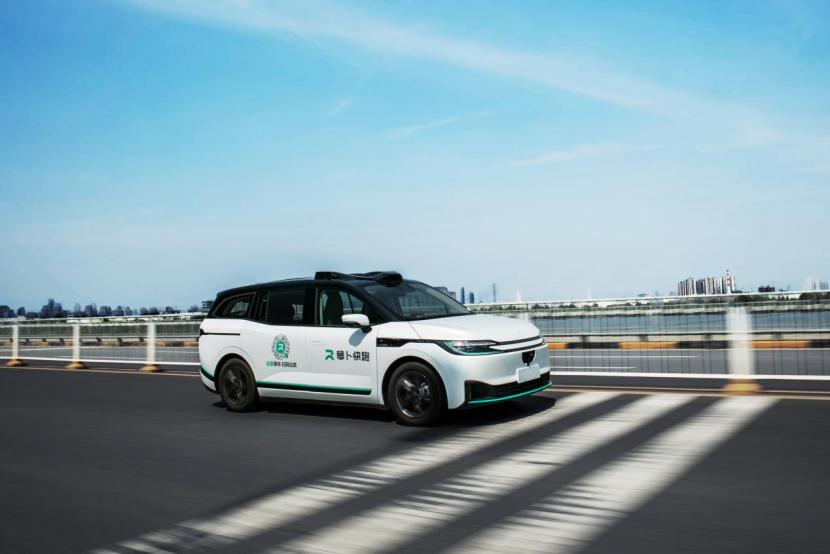
Recently, a few of Luobo Kuaipao's driverless cars in Wuhan experienced brief operational pauses, sparking widespread discussion. The relevant authorities responded promptly, and fortunately, no injuries were reported, with traffic quickly returning to normal.
Industry analysts suggest that these pauses were likely triggered by unexpected situations that activated the vehicles' safety self-check mechanisms—a proactive approach by the system to ensure passenger and public safety.
In 2026, AI large models are making rapid strides. Waymo recently secured $16 billion in financing in the U.S., achieving a valuation of $126 billion, with remarkable technological and commercial advancements in the Robotaxi sector. Meanwhile, incidents like Luobo Kuaipao's recent event in Wuhan and Waymo's power outage in San Francisco last year serve as reminders that greater tolerance for technological development can pave the way for a safer and more secure future.
I. Minimal Risk: Safety Mechanisms in Driverless Cars
Based on information from various sources, Luobo Kuaipao's recent incident was most likely caused by the system detecting uncertainties in the external environment or its operational status, thereby activating the industry-standard "Minimal Risk Condition" (MRC).
MRC is a vital aspect of system safety design. When the system encounters inconsistent sensory information or scenarios that cannot be judged with high confidence, it initiates safety protocols to minimize risks when continued operation is not feasible. This is a direct application of "safety redundancy" design in autonomous driving technology.
An analogy from the aviation sector can help clarify this concept: when a civil aviation aircraft's autopilot detects sensor abnormalities, it automatically switches to a "degraded mode" or hands over control to human operators. This safety redundancy design has been a cornerstone of aviation safety for decades, and the logic behind driverless cars' "active stops" is analogous.
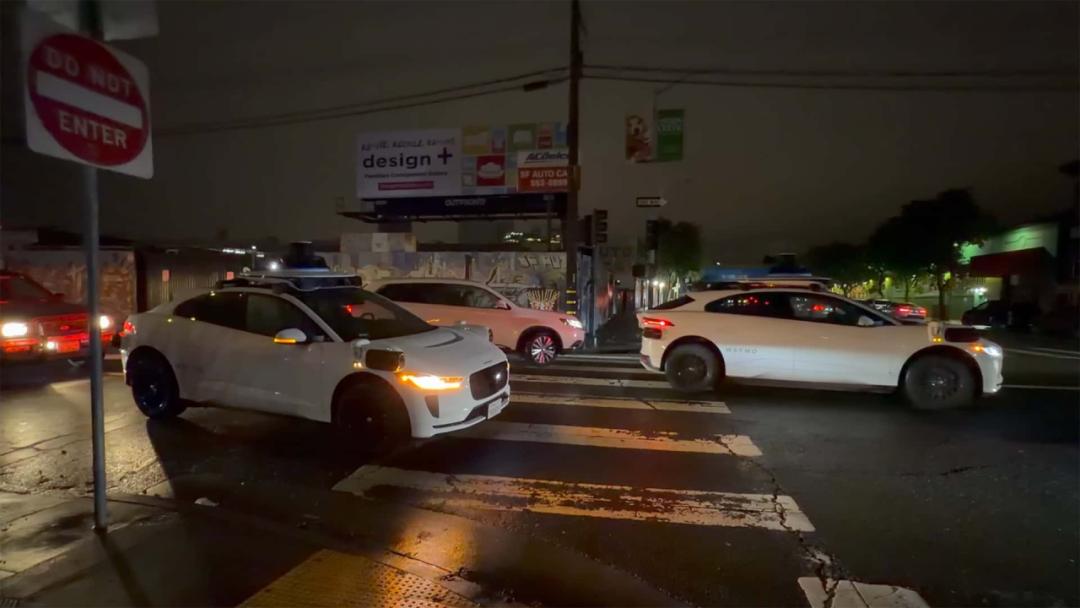
Globally, such safety mechanism activations are not isolated events. In December 2025, a large-scale power outage caused by a substation fire in San Francisco led to widespread traffic light failures. Google Waymo's fully driverless vehicles, unable to recognize the inactive traffic lights, halted at multiple intersections with hazard lights on, causing traffic congestion and briefly trapping some passengers.
Waymo explained that its system treats inactive traffic lights as "Four-way stop" scenarios. However, due to the unexpected scale of the outage, the vehicles took too long to confirm intersection safety, triggering the "Minimal Risk Condition" (halting in place with hazard lights on).
Waymo also clarified that this strategy is not a corporate choice but a mandatory safety requirement for L4 autonomous driving set by the California Department of Motor Vehicles (DMV).
Zhu Keli, Executive Director of the China Information Association and Dean of the New Economy Research Institute, analyzed: "The international standard ISO23793-1:2024 classifies Minimal Risk Conditions (MRC) into two categories: straight-line stops and in-lane stops, allowing vehicles to decelerate longitudinally and stop at any position when MRC is triggered.
Both last year's incident of Waymo's driverless cars halting due to inactive traffic lights and Luobo Kuaipao's recent proactive stop fall under the safety mechanisms of minimal risk operations, reflecting the autonomous driving system's conservative exit strategy when facing uncertainties."
"The logic is straightforward: when a driverless car encounters uncertain conditions, it must prioritize safety, much like high-speed trains braking first. Safety systems are not mere decorations; they can save lives in critical moments," commented Jin Cuodao, a Chinese internet business observer.
II. Multi-Layered Safety Nets: Robotaxi Safety Assurance
For both Waymo and Luobo Kuaipao, each activation in extreme scenarios provides valuable real-world training data for their systems.
San Francisco's power outage has become input for Waymo to optimize its algorithm for inactive traffic lights, while Wuhan's experience will serve as parameters for Luobo Kuaipao's iterations. The stress tests they undergo will ultimately set safety baselines for the entire industry—the earlier problems are identified and thoroughly resolved, the broader the path forward.
Every "exposure-repair-validation" cycle of rare scenarios brings autonomous driving one step closer to greater reliability.
Today's L4 autonomous vehicles are already equipped with comprehensive safety mechanisms to handle most real-world challenges, featuring "multi-layered insurance" across perception, computation, steering, braking, and more.
In essence, when one system faces uncertainty, backup systems can immediately take over.
For example, in perception redundancy, vehicles are equipped with multiple LiDARs, high-definition cameras, and millimeter-wave radars. The primary and supplementary perception systems operate independently, ensuring that if one type of sensor is disturbed by the environment, other devices can take over within milliseconds.
In computation redundancy, a dual-computing platform heterogeneous architecture is used, with the primary chip handling daily decisions and the backup chip synchronizing data in real-time.
For execution redundancy, vehicle steering uses independent power supplies for primary and secondary motors.
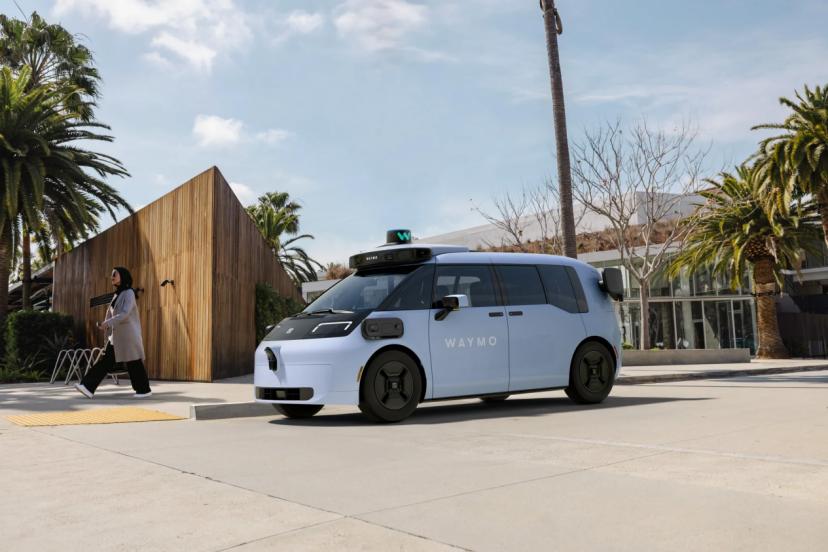
The rapid development of AI has accelerated autonomous driving as a more certain trend; conversely, as a core carrier of AI's physical-world implementation, autonomous driving's deep understanding and interaction with the physical world are seen as a key path to Artificial General Intelligence (AGI).
In the global tech competition, China and the U.S. are undoubtedly the two most critical players, with autonomous driving at the forefront of their AI rivalry. While the U.S. market enjoys abundant capital, top-tier computing power, and relaxed policies, Chinese companies face greater challenges—and thus greater value—in making progress under limited computing power and technological blockades.
Benefiting from U.S. open policies, Waymo now has 2,500 driverless cars, expanding in over a dozen U.S. cities, including Los Angeles, San Francisco, Phoenix, Austin, and Atlanta. Its plan for this year is to double its ride volume, reaching 1 million weekly rides by the end of 2026.
Additionally, the U.S. House Energy and Commerce Committee recently voted to pass the "2026 Autonomous Driving Act," proposing to significantly relax restrictions on vehicles without steering wheels or pedals, providing a regulatory framework for Google Waymo and Tesla Cybercab to accelerate commercialization.
This also serves as a warning: we must persist in "solving problems through development," not halting progress due to occasional incidents. Further city expansions, zone expansions, and vehicle increases are needed to accelerate technological iteration through large-scale applications.
The incidents involving Luobo Kuaipao in Wuhan and Waymo in San Francisco are sparks from the collision of algorithms and reality, as well as a necessary path to AGI.
Only through refinement in countless real-world scenarios can AI become a trustworthy travel companion for humanity. This is the path that Luobo Kuaipao and Waymo are jointly exploring.
-
![]()
The Unstoppable Rise of 'Optical Progress and Copper Decline': Sunny Optical’s Strategic Vision for the Next Decade
-
![]()
AI + Going Global in the Second Half: No Intermission for Robot Vacuum Cleaners
-
![]()
The Suffering Endured in E-commerce, Walmart Doesn't Want to Repeat in AI
-
![]()
What Does the Doubling of New Energy Vehicle Exports Mean?
-
![]()
Ghosn: 'Only I Can Save Nissan'
-
![]()
Volkswagen Lays Off 100,000 Employees, The Elephant Sits Down
-
![]()
Expanding Production Capacity! Yutong Optics Acquires Approximately 1.5 Hectares of Industrial Land in Chang'an, Dongguan
-
![]()
Why Is Nokia Making a Comeback in the AI Era?