Launching 8 New Models in One Day: A Vanishing Impact
 04/07 2026
 453
453

Lead
Introduction
What Truly Sticks in Consumers' Minds?
On March 30, the Chery QQ3 EV, SAIC Volkswagen ID.ERA 9X, Geely Galaxy Star 8 Ocean Edition, and Tank 700 made their debuts on the same day. The following day, the Volkswagen Sagitar S, mid-cycle refresh of the Talagon, and Land Rover FREELANDER Defender brand followed suit.
In fact, over ten models, including the Wenjie M6, new Zhijie R7/S7, Xiangjie S9/S9T, Shangjie Z7/Z7T, BYD Song Ultra EV, and Leapmotor A10, were launched in the last full week of March alone. This is just a snapshot of the end of March. According to incomplete statistics, nearly 30 new or refreshed models were released in March 2026.
Extending the timeline to the entire year, this figure becomes even more staggering. However, when a dozen or so new models are launched in a single week and five or six debut in a single day, a paradoxical phenomenon emerges in China's automotive industry: the more new models there are and the denser the launch events, the more fragmented consumer attention becomes.
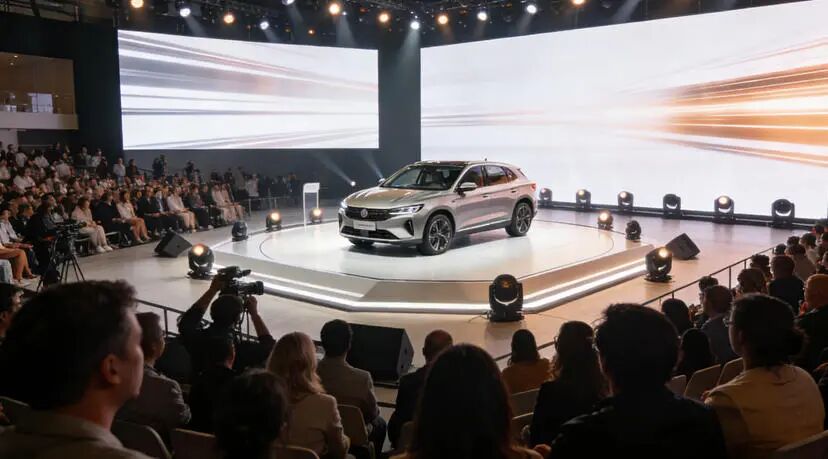
Take the recent iCAR V27 launch event, for instance. At such a critical occasion, the large screen erroneously displayed two four-wheel-drive models as two-wheel-drive. Earlier, at the V23 pre-sale launch event, iCAR had mistakenly labeled the prices of three models as 199,900 yuan each. Are these elementary mistakes due to carelessness, or is the launch pace so frenetic that even the most basic review processes are being compromised?
As automakers frantically launch new models and pursue speed, few stop to ponder: how much cognitive capacity do consumers have left amid the bombardment of multiple new models in a single day? As automakers rush to launch a new model every six months, how many of these lavishly funded launch events ultimately prove ineffective?
01 The Cost of Product Overcrowding
Undeniably, the rapid pace of China's automotive manufacturing has become a global phenomenon. Even foreign media have noted that while traditional automakers are still striving to shorten their typical five-to-seven-year product planning cycles, Chinese competitors can introduce a new model within two years. This speed has astonished the global automotive industry and contributed to the rise of China's new energy vehicles.
However, on the flip side, when every new model is rushed to market at light speed and product iteration cycles shrink from years to months, or even weeks, what can consumers truly remember?
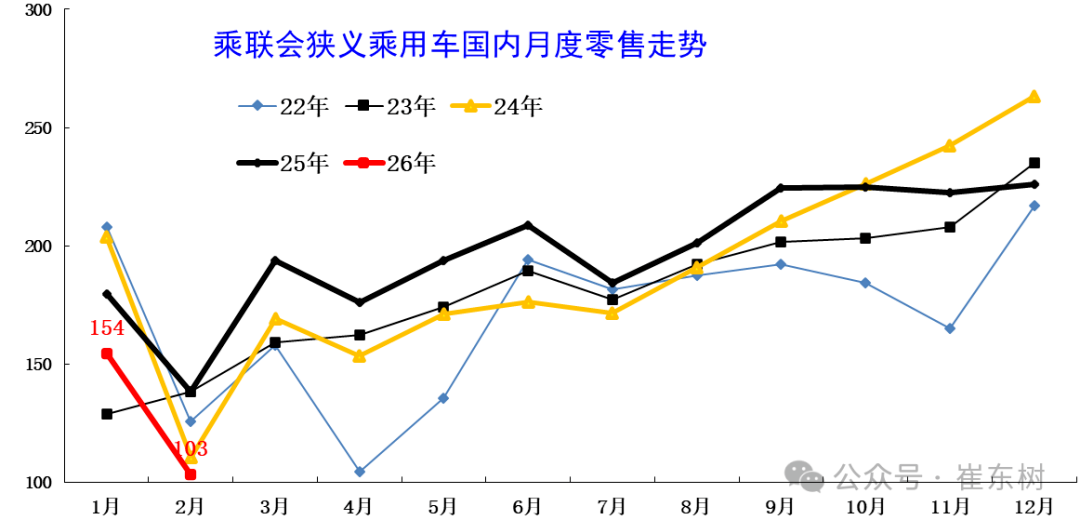
Market data from February 2026 serves as a stark warning. According to passenger vehicle terminal data, total sales of new energy passenger vehicles in China reached 429,000 units in February, down 34% year-on-year and 24% month-on-month. Among them, sales of pure electric models fell 37% year-on-year, plug-in hybrid models declined 32%, and extended-range models dropped 17%.
What does this imply? It means that despite automakers launching new models like dumplings in boiling water, the overall market size is not expanding but contracting. A harsher comparison comes from leading companies: traditional giants like BYD, Geely, and SAIC are barely holding steady, but what about new forces and high-end domestic new energy brands?
In reality, everyone recognizes that there is no positive correlation between the density of new car releases and the intensity of market demand. As the supply side rushes to launch a new model every six months, the demand side contracts under the combined effects of reduced purchase tax incentives, weak consumer sentiment, and fluctuating fuel prices. The result is a dual dilemma of new model oversupply and diluted consumer attention.
Don't just take my word for it; look at the delivery cycle of the Xiaomi SU7 Refreshed Edition, which has shortened from up to six or even eight months at its initial launch to just 1 to 5 weeks now. On the surface, this appears to be a victory in ramping up production capacity, but on a deeper level, it reflects the end of the era of waiting lists. The predicament of other automakers at the table is easily imaginable.
An industry insider revealed the industry's dilemma: "The biggest problem with slow sales now is that everyone has run out of trump cards. In the past, we talked about 800V high-voltage systems, lidar, and 8295 chips, and customers would be impressed. Now, look at vehicles in the 200,000-yuan range; which one doesn't have these features?"
When technological configurations shift from differentiated selling points to standard thresholds, and every new model piles on similar parameters, this homogeneous competition, where everyone is fully equipped with no shortcomings, is pushing new car launches into an awkward position: every model claims to be revolutionary, but consumers, after listening to all the claims, find that all the lines sound familiar.
As a result, consumers' decision-making logic has undergone a fundamental shift. Brands that attempt to create memorable points with "refrigerators, TVs, and sofas" quickly discover that these standard features no longer leave any imprint on consumers' minds. Consumers no longer make purchases based on "you have it, and I don't," but instead wait to see who offers a better deal.
02 The Bitter Fruit of Ineffective Communication
At its core, the rapid pace of R&D in the automotive industry leads to product homogenization, while the abundance of marketing efforts directly results in ineffective communication. When a dozen or so new models make their debut in a single week and launch events are scheduled so closely that they clash, the ultimate outcome is that these events, which often involve investments of millions or even tens of millions of yuan, may go unnoticed.
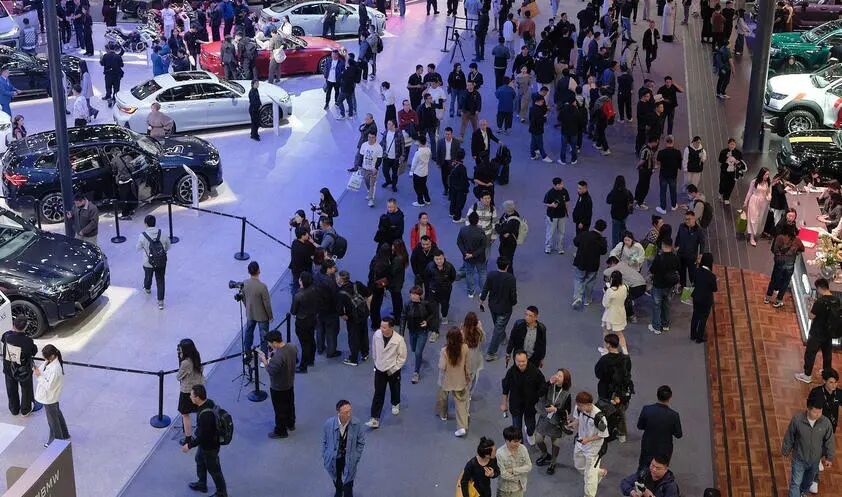
As is well known in the automotive circle, automakers fear clashing with Huawei and Xiaomi's launch events the most. Because their events are top-tier in both the automotive and digital circles. On the day of their events, the trending topics list will undoubtedly be dominated by Huawei and Xiaomi.
As the business world often says, in an era of information overload, attention has become the scarcest resource. When automakers still adhere to traditional thinking, relying on trending topics and prolonged communication cycles, and fantasize about having the same built-in traffic as Xiaomi and Huawei, the reality is often much harsher.
For example, many new models like to announce small order numbers after their launch and buy trending topics in droves. Even if the data looks good and the trending topics explode, there is still no perception among users. This false prosperity in communication is also consuming automakers' marketing budgets without translating into terminal sales.
An even more fatal issue is the superficiality of communication content. To chase trending topics, many automakers choose to collaborate with digital influencers or beauty bloggers, having them stroll elegantly in front of the cars. This is no different from watching short videos; everyone's purpose is just to pass the time, not to place an order for a car.
To clarify these issues, we must think from the consumer's perspective. When all automakers are pursuing speed and quantity, has any automaker considered whether consumers truly need so many new models? How many of these seemingly diverse product matrices represent genuine technological breakthroughs, and how many are just launched for the sake of launching new models?
What's even more concerning is the vicious cycle created by abundance: the more new models there are, the lower the attention each one receives; the lower the attention, the more automakers tend to use more launch events and louder voices; but as traffic becomes more dispersed, the prevalence of ineffective new model launches increases. In this process, even those products with genuine technological breakthroughs and valuable innovations are highly likely to be drowned out in the sea of information.
Last August, eight new models were launched in a single day, a scenario referred to as the most intense day in the automotive industry. This year, facing the sales pressure in the first quarter from January to March, the spectacle of eight or even ten new models launching on the same day is certain to repeat itself someday. Therefore, we must reexamine this issue: consumers have limited cognitive capacity, so please find a memorable point.
Editor-in-Chief: Cao Jiadong Editor: Chen Xinnan
THE END
-
![]()
Big Shake-Ups in PR at Leading Firms! Top Executives in Internet and Auto Sectors See Major Turnover, Talent Migration Reaches New Heights
-
![]()
Unchecked Weight Gain in New Energy Vehicles: Taxation as a Stopgap, Not a Long-Term Fix
-
140 Trillion Tokens Later: China is Building a 'High-Speed Rail for Computing Power'
-
![]()
Jeep's Second Attempt: Stellantis' Self-Rescue More Like a Leveraged Position Increase
-
Chinese Cars' North American Experience: Canada Opens a Window While the U.S. Tightens the Door
-
![]()
Venturing into Satellite Manufacturing: Another BIT Graduate is Eyeing an IPO
-
Trend丨MRDIMM is Rising to Alleviate Bandwidth Bottlenecks
-
![]()
Half-Day Orders Skyrocket to 24,863 Units! XPENG's Bold Move: GX Debuts at Just 269,800 Yuan, Outshining Multiple 9-Series Newcomers | Mingjing Pro