Can the Auto Market Surge with the Trade-In Policy Boom?
 04/07 2026
 621
621
On one hand, RMB 62.5 billion in national subsidies are being fully rolled out; on the other, the automotive market experienced an 8.8% year-on-year decline in the first two months. Yet, as the nation vigorously promotes automobile consumption upgrades, the automotive market in the first quarter of 2026 is steadily tapping into its growth potential.
Since the State Council launched the nationwide consumer goods trade-in program in 2024, after two years of implementation, this policy has become a potent catalyst for stimulating the existing automotive market. Data indicates that from 2024 to 2025, over 18.3 million vehicles were traded in, with new energy vehicles (NEVs) making up nearly 60%, significantly boosting the entire automotive consumption market.
As we step into 2026, building on the successes of the previous phase, the State Council has once again refined and upgraded the trade-in policy, focusing more on consumption in sectors such as automobiles, home appliances, and mobile phones. While ensuring that subsidy benefits truly reach consumers, the process for claiming subsidies has been streamlined. After making a purchase at a designated platform or store and uploading proof, consumers can receive subsidies in as few as three working days. This convenient and efficient process ensures that all participating consumers can truly feel the policy's strength and sincerity.
Reporters from Auto Review have learned that the second batch of consumer subsidies, totaling RMB 62.5 billion, is set to be officially disbursed this month. Guided by the policy, in just the first two months of the year, all 31 provinces across the country have introduced detailed supporting measures for automobile trade-ins. Leading the way in implementation, regions such as Beijing, Shanghai, Shanxi, Shandong, and Shenzhen have refined replacement targets, increased local subsidies, and optimized processing procedures based on local consumption characteristics. A comprehensive automotive consumption stimulation initiative, covering both fuel and new energy vehicles and spanning first-, second-tier cities, and lower-tier markets, has thus been fully launched.
However, the automotive market's performance at the start of 2026 has been less than stellar. Data from the China Association of Automobile Manufacturers (CAAM) reveals that from January to February 2026, a total of 4.152 million vehicles were sold nationwide, down 8.8% year-on-year. Domestic market sales reached 2.799 million units, a 23.1% decline. NEV sales stood at 1.71 million units, down 6.9% year-on-year, far below industry expectations.
In response, Chen Shihua, Deputy Secretary-General of CAAM, stated that the early release of demand triggered by previous policy adjustments is the main reason for the current market fluctuations. Starting January 1, 2026, the purchase tax exemption for NEVs was halved, leading many consumers to concentrate their purchases at the end of 2025, resulting in a temporary contraction in market demand at the beginning of the year. At the same time, automobile trade-in subsidies shifted from a fixed amount to being calculated as a percentage of the new vehicle's price, and the market is still adapting during this initial policy transition phase. Additionally, the 2026 Spring Festival holiday was extended to nine days, leaving only 16 effective working days in February, which affected the production and sales rhythms of many automakers. The combined impact of these multiple factors has led to the automotive market performing below expectations.
As a "barometer" for the annual automotive market, March represents not only the prime window for spring car purchases but also a critical battleground for the concentrated realization of trade-in policy dividends. Now, with all policy details fully implemented, automakers continuing to ramp up incentives, and spring consumption demand gradually being released, whether China's automotive market can ride this wave and achieve a steady recovery in sales has become a focal point of concern for the entire industry.
Trade-Ins Bid Farewell to "One-Size-Fits-All" Benefits
According to the "2026 Implementation Details for Automobile Trade-in Subsidies" released by the State Council, the standout feature of the 2026 policy is a complete departure from the "blanket" fixed-amount subsidies of the past, shifting to a precision-controlled model of "subsidies based on a percentage of the new vehicle's price with an upper limit." This marks a fundamental difference between the current policy and previous iterations.
Specifically, the trade-in policies from 2024 to 2025 primarily featured fixed-amount subsidies. Whether for entry-level models priced below RMB 100,000 or mid-to-high-end models priced above RMB 300,000, the difference in subsidy amounts for replacements was minimal. In 2026, however, the State Council clearly stipulated in the details: "For scrapping eligible old vehicles and purchasing new energy passenger vehicles, a subsidy of 12% of the total price (including tax) of the new vehicle will be provided, with a maximum subsidy amount of RMB 20,000. For scrapping eligible fuel-powered passenger vehicles and purchasing fuel-powered passenger vehicles with a displacement of 2.0 liters or less, a subsidy of 10% of the new vehicle's sales price will be provided, with a maximum of RMB 15,000. If only a replacement upgrade is made, purchasing a new energy passenger vehicle will qualify for an 8% subsidy based on the new vehicle's price, with a maximum of RMB 15,000, while purchasing a fuel-powered passenger vehicle will qualify for a 6% subsidy, with a maximum of RMB 13,000."
This differentiated design precisely aligns with the current trend of automotive consumption upgrades. Cui Dongshu, Secretary-General of the National Passenger Car Market Information Linkage Association, believes that the shift from fixed-amount subsidies to percentage-based subsidies with upper limits for automobile trade-ins in 2026 is highly significant. In the short term, it will unlock replacement potential and support steady consumption growth; in the long term, it will drive green, low-carbon development and industrial upgrading, compelling automakers to move beyond "price wars" and transition toward intelligence and high added value.
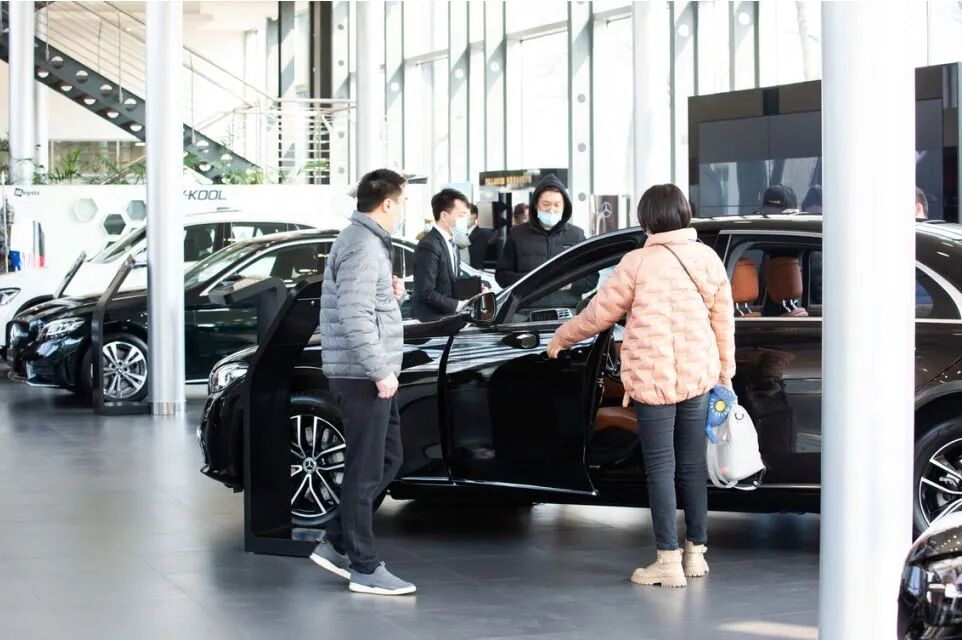
Data also supports this direction: In January 2026, the average price of new vehicles involved in trade-ins exceeded RMB 160,000, a significant increase compared to the same period in 2025. Models priced above RMB 200,000 accounted for 42% of the total, up 8 percentage points year-on-year, indicating that the policy's role in driving consumption upgrades has begun to take effect.
In addition to innovations in the subsidy model, another highlight of the 2026 trade-in policy is the strengthening of oversight. Through technical means such as online verification (online verification of commodity codes) and real-name authentication, a closed-loop regulatory system covering the entire process has been established to eliminate fraud and ensure that policy benefits are precisely delivered. At the same time, the policy encourages localities to adopt information-based methods for fully online processing of old vehicle scrapping, new vehicle purchases, and subsidy applications, not only improving processing efficiency but also reducing loopholes from human operation. Notably, Hubei and Sichuan have already issued their first penalties for fraudulent subsidy claims.
"National + Local" Dual Subsidies Amplify Policy Impact
The speed and intensity of policy implementation at the local level have further amplified the dividend effects of national policies. Within the framework of national policies, 31 provinces, municipalities, and autonomous regions have introduced detailed supporting measures tailored to local automotive consumption characteristics, increasing local subsidies and refining implementation procedures. This has created a "national + local" dual subsidy structure, providing comprehensive coverage for different consumer groups and vehicle models.
As a benchmark among southern first-tier cities, Shenzhen took the lead in releasing a dedicated implementation plan, explicitly setting the goals of achieving approximately 35,000 vehicle scrapping updates and 180,000 vehicle replacement updates by the end of 2026. To drive these goals forward, Shenzhen offers additional subsidies of RMB 5,000–10,000 for NEV replacements and RMB 3,000–8,000 for fuel vehicle replacements on top of national subsidies. It has also optimized the subsidy application process, enabling "online applications, offline verification, and instant payments," greatly boosting consumer enthusiasm for replacements. As of the end of February, Shenzhen had completed 28,000 automobile trade-ins, with NEVs accounting for 75%, achieving 15% of its annual target ahead of schedule.
Shandong, Zhejiang, Hubei, and other provinces have focused on covering all price ranges, introducing more targeted local stacked subsidies. Shandong proposes tiered subsidies of RMB 3,000–6,000 for new energy vehicle purchases by carless groups, with an additional RMB 2,000 subsidy for scrapping old fuel vehicles and replacing them with NEVs. Yuhang District in Hangzhou added a subsidy tier of RMB 8,000 for vehicles priced above RMB 400,000, covering the full price range from entry-level commuter vehicles to high-end luxury models, allowing consumers with varying purchasing power to enjoy policy benefits. Hubei, meanwhile, launched a "trade-in special auto show," partnering with local automakers to offer dual benefits of "replacement subsidies + automaker incentives," driving 12,000 new vehicle sales in February alone.
Additionally, in response to issues such as subsidy fund depletion and scalper profiteering in previous years, various regions have introduced countermeasures. Shanghai has clarified that subsidy funds will be "capped in total and allocated until depleted," setting a reasonable total subsidy amount based on local vehicle ownership and replacement demand while publicly displaying the remaining subsidy balance in real time to avoid fund wastage. Shanxi uses a Notarization lottery (notarized lottery) method to determine subsidy eligibility, ensuring fair and impartial distribution and curbing scalper profiteering. According to data from the Ministry of Commerce, as of March 19, 2026, a total of 1.008 million subsidy applications for automobile trade-ins had been received nationwide, driving new vehicle sales of RMB 164.43 billion. In January alone, 659,000 scrapped vehicles were recovered nationwide, a 50.2% year-on-year increase, demonstrating the policy's initial effectiveness in stimulating the market.
From "NEVs Outpacing Fuel Vehicles" to Luxury Brand Incentives
Notably, the continued release of policy dividends has also spurred active responses from automakers. Entering March 2026, major automakers have significantly increased their incentives, even breaking the traditional pattern of "greater subsidies for NEVs than for fuel vehicles."
Take FAW Toyota as an example: At the start of 2026, FAW Toyota introduced trade-in subsidies for its entire fuel vehicle lineup. The Asia Dragon model offers RMB 7,000 in trade-in subsidies, the Granvia and Crown Kluger models offer RMB 20,000, the Prado offers RMB 15,000, and the sixth-generation RAV4 fuel version offers RMB 6,000 in replacement subsidies—far exceeding incentives in previous years. Dongfeng Honda, targeting key fuel models such as the Inspire and CR-V, introduced a RMB 2,000 spring travel fund, up to RMB 4,000 in replacement subsidies, and 5-year low-interest financing. The UR-V and Elysion models even offer full purchase tax exemptions, further reducing consumer purchasing costs.
Moreover, luxury brands, which rarely participated in large-scale incentive campaigns in the past, joined the promotional lineup in March 2026, offering targeted trade-in benefits and achieving "luxury brand incentives for all." Leading luxury brands such as Mercedes-Benz, BMW, and Audi upgraded their replacement subsidies for key models. The Mercedes-Benz C-Class, BMW 3 Series, and Audi A4L models offer replacement subsidies of RMB 10,000–30,000, while comprehensive discounts for some high-end models exceed RMB 100,000.
In addition to traditional luxury brands, domestic high-end NEV brands have also introduced targeted incentive policies. Brands like Seres, Zeekr, and XPENG offer replacement subsidies, financial discounts, and free maintenance for their high-end models. The Seres M9 offers replacement subsidies of up to RMB 50,000, while the Zeekr 009 introduces an "old vehicle trade-in cash offset + lifetime free charging" promotion, further lowering the purchasing threshold for high-end models. Xu Changming, a senior economist at the State Information Center, stated, "The incentives from luxury brands not only respond to the trade-in policy but also reflect changes in the competitive landscape of the automotive industry. As the market shifts toward value-based competition, automakers are attracting consumers through diversified promotional methods, driving market demand release."
Furthermore, automakers continue to optimize services to enhance the replacement experience for consumers. Most automakers offer "one-stop old vehicle assessment services," partnering with third-party evaluation agencies to provide fair and transparent old vehicle assessments, avoiding undervaluation. Some automakers have introduced "old vehicle residual value guarantees," promising that assessed old vehicle values will not fall below 90% of the market average, alleviating consumer concerns about replacements. At the same time, automakers and dealers collaborate to streamline the replacement process, enabling "one-stop processing" for old vehicle recovery, new vehicle purchases, and subsidy applications, allowing consumers to complete replacements without leaving the store and significantly improving efficiency.
Automotive Market Recovery Anticipated, Though Concerns Linger
Overall, despite the automotive market's underperformance at the start of 2026, with the continued release of trade-in policy dividends, ongoing improvements in local supporting measures, increasing incentives from automakers, and the gradual recovery of consumer demand, the market in March is expected to lay a solid foundation for stable annual performance.
From a policy standpoint, the "national + local" dual subsidy framework has now been fully implemented. As consumers gradually grow accustomed to these policies, the propensity to hold onto cash in anticipation of better deals is anticipated to diminish, thereby serving as a potent catalyst for fostering a steady recovery in new vehicle sales.
Nevertheless, industry experts warn that the market's resurgence is still fraught with uncertainties. On one front, the cautious, wait-and-see stance of some consumers has not entirely vanished, and the realization of policy benefits will require time. On the other hand, the automotive sector is undergoing a transformative phase, marked by escalating competition in the realms of intelligence and electrification. Certain models are grappling with substantial inventory pressures, which could potentially dampen dealers' promotional activities and enthusiasm. Moreover, variables such as international oil price volatility and supply chain resilience may also exert an influence on the market's rebound.
According to preliminary projections by the China Passenger Car Association, total narrow passenger vehicle sales in March are anticipated to approximate 1.7 million units, representing a 12.4% year-on-year decrease but a 64.5% month-on-month surge. Retail sales of New Energy Vehicles (NEVs) are estimated at roughly 900,000 units, boasting a penetration rate of 52.9%, thus rebounding to exceed the 50% mark once again. This data underscores that, despite notable month-on-month growth, the market still confronts a 12.4% year-on-year downturn, indicating that the market has not yet fully shaken off short-term pressures. Should expectations remain unmet, automakers may be compelled to further ramp up incentives, thereby intensifying industry rivalry.
However, in the long haul, with the sustained enhancement of trade-in policies, ongoing advancements in automotive product capabilities, and the gradual unleashing of consumer demand, the fundamental prospects for China's automotive market remain upbeat, with steady growth still projected for 2026.
Note: This article was initially featured in the "Hot Topics" column of the April 2026 edition of Auto Review magazine. Stay tuned for more.
Image: Sourced from the internet
Article: Auto Review
Layout: Auto Review
-
![]()
Big Shake-Ups in PR at Leading Firms! Top Executives in Internet and Auto Sectors See Major Turnover, Talent Migration Reaches New Heights
-
![]()
Unchecked Weight Gain in New Energy Vehicles: Taxation as a Stopgap, Not a Long-Term Fix
-
140 Trillion Tokens Later: China is Building a 'High-Speed Rail for Computing Power'
-
![]()
Jeep's Second Attempt: Stellantis' Self-Rescue More Like a Leveraged Position Increase
-
Chinese Cars' North American Experience: Canada Opens a Window While the U.S. Tightens the Door
-
![]()
Venturing into Satellite Manufacturing: Another BIT Graduate is Eyeing an IPO
-
Trend丨MRDIMM is Rising to Alleviate Bandwidth Bottlenecks
-
![]()
Half-Day Orders Skyrocket to 24,863 Units! XPENG's Bold Move: GX Debuts at Just 269,800 Yuan, Outshining Multiple 9-Series Newcomers | Mingjing Pro