March Sales Shuffle: BYD’s Resurgence, Geely’s Strength, Xiaomi’s Slump, NIO’s Progress, and Leapmotor’s Surprise
 04/10 2026
 560
560
March sales data has sparked a flurry of discussions. Key questions include: Is BYD or Geely the stronger contender? Can Xiaomi maintain its sales momentum? Is Leapmotor truly a dark horse, or will it follow the trajectory of Nezha? As one of China’s few premium brands, has NIO truly turned a corner? And why did HiMo’s March sales figures suddenly vanish? Let’s examine these points one by one.
BYD: China’s Top Contender Faces Risks
According to BYD’s data, March sales reached 300,222 units, securing the top spot among Chinese brands for monthly sales. From January to March, cumulative sales hit 700,400 units, placing BYD second among Chinese brands, just behind Geely. However, BYD’s Q1 sales declined by 30%. Extrapolating for the full year, based on last year’s 4.6 million annual sales, a 30% drop would result in approximately 3.22 million units—significantly lower than Geely Auto’s full-year target of 3.45 million units. This suggests BYD’s sales could be overtaken by Geely in 2026.
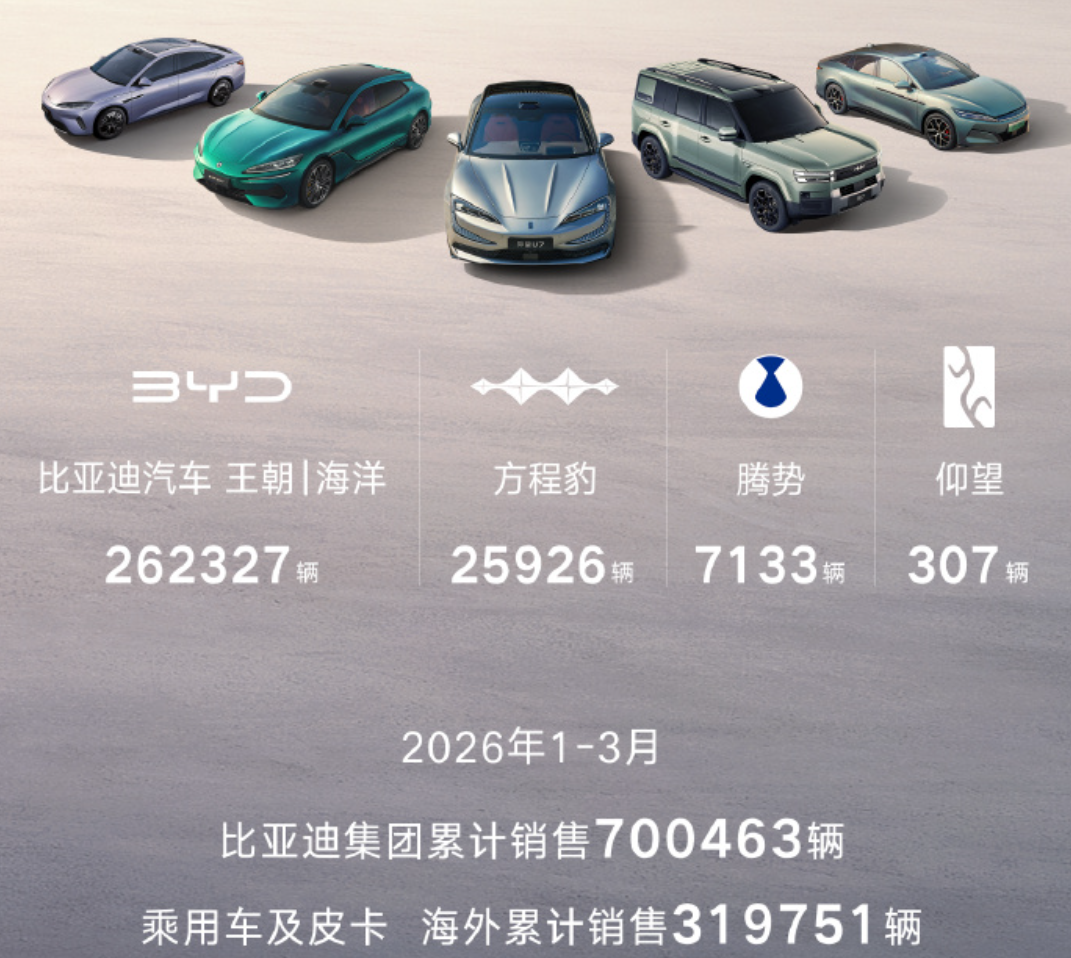
Breaking it down by market, BYD’s Q1 overseas sales reached 319,751 units, accounting for 45% of total sales, up from around 22.8% last year. This indicates BYD will increasingly rely on overseas market growth in 2026.
Geely Auto: China’s Q1 Leader
Geely Auto, as commonly referred to, encompasses Geely Auto Group, including three major brands: Geely, Lynk & Co, and Zeekr. Geely Holding includes additional brands such as Volvo, Lotus, and Polestar.
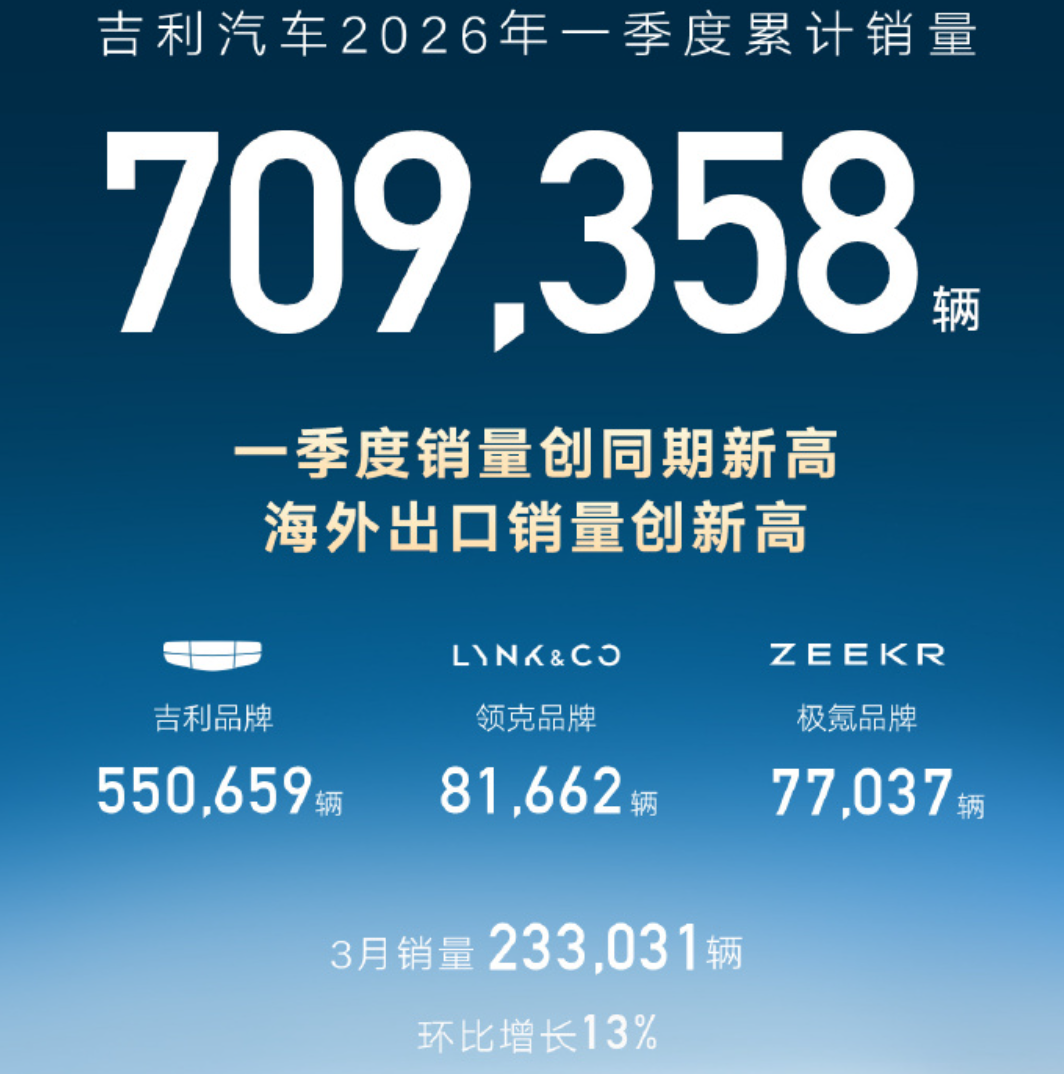
Data shows Geely Auto sold 233,000 units in March, marking a slight year-on-year increase and a significant 13% month-on-month jump. In March alone, BYD outsold Geely by nearly 70,000 units. However, Geely led BYD in monthly sales in January and February. Based on historical trends, this may suggest Geely will face challenges competing with BYD starting in April.
For Q1, Geely sold 709,300 units, slightly ahead of BYD’s 700,400 units, ranking first among Chinese brands. Domestically, Geely sold 506,300 units in Q1, significantly outpacing BYD’s 380,700 units.
At Geely Auto’s Q1 earnings briefing on March 18, CEO Gan Jiayue stated, “Our management team has a clear goal: to achieve China’s top domestic sales ranking by 2026.” Based on Q1 results, this may not be empty talk.
In fact, if BYD cannot reverse its declining trend, Geely could surpass it in total annual sales as well.
Changan Auto: A Central SOE Under Pressure
Changan Auto experienced a strong rebound in March sales, surging 78% month-on-month to 270,878 units, with a 1% year-on-year increase. Q1 cumulative sales reached 557,501 units, a sharp 20% year-on-year decline.
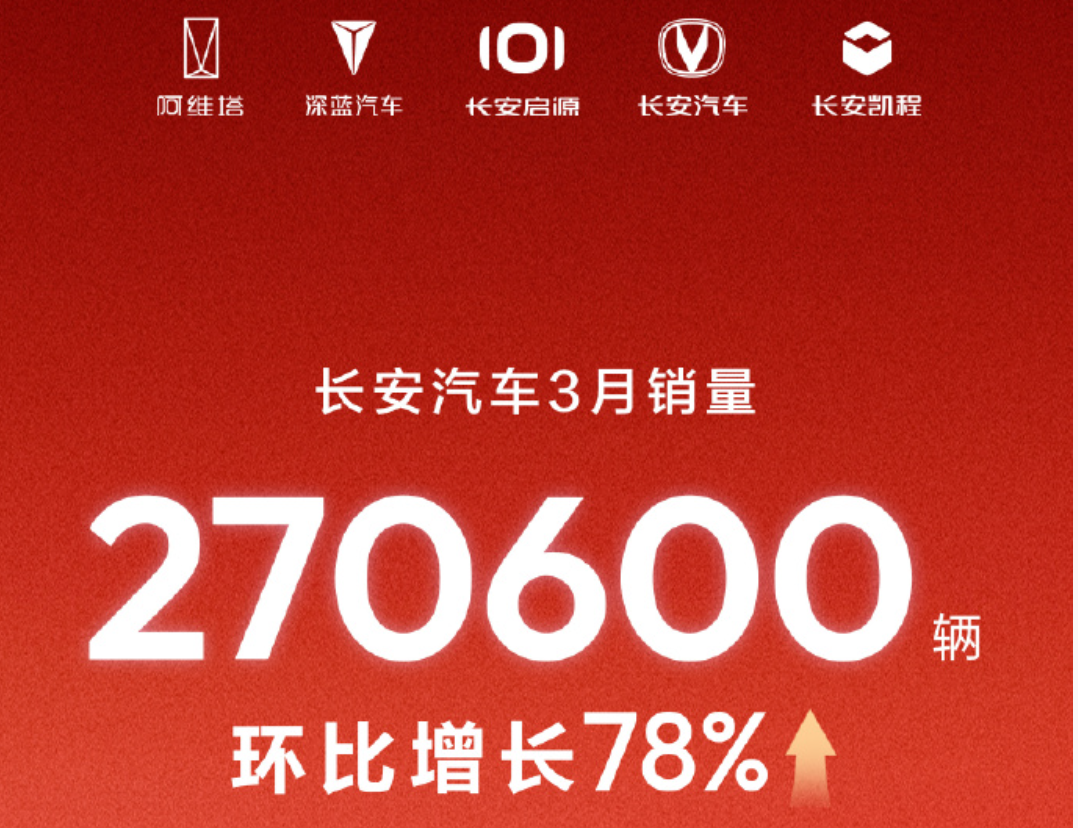
In recent years, Changan Auto has struggled to maintain relevance in the industry, despite multiple efforts to break out of its slump. Take its premium brand Avatr as an example: March sales plummeted 50% year-on-year to just 5,143 units. Meanwhile, Avatr’s brand image remains vague—its name derives from “A” (An for Changan), “Vi” (for Huawei), and “Ta” (De for CATL), emphasizing resource integration over original technology, which bodes poorly for long-term development.
On April 8, Avatr unveiled two new models: the new Avatr 12 (launched) and Avatr 06T (pre-sale). Both feature “Qiankun Intelligent Driving ADS” branding on their bodies, reportedly an industry first. From a branding perspective, this further reinforces Avatr’s heavy reliance on dominant suppliers, undermining its self-identity and long-term prospects.
Chery Group: Steady Growth
Unlike state-owned Changan Auto, Chery Group has taken a different path.
In March, Chery Group sold 240,678 units, up 12.1% year-on-year, ranking third among Chinese brands. Q1 cumulative sales reached 601,712 units, placing third behind Geely and BYD.
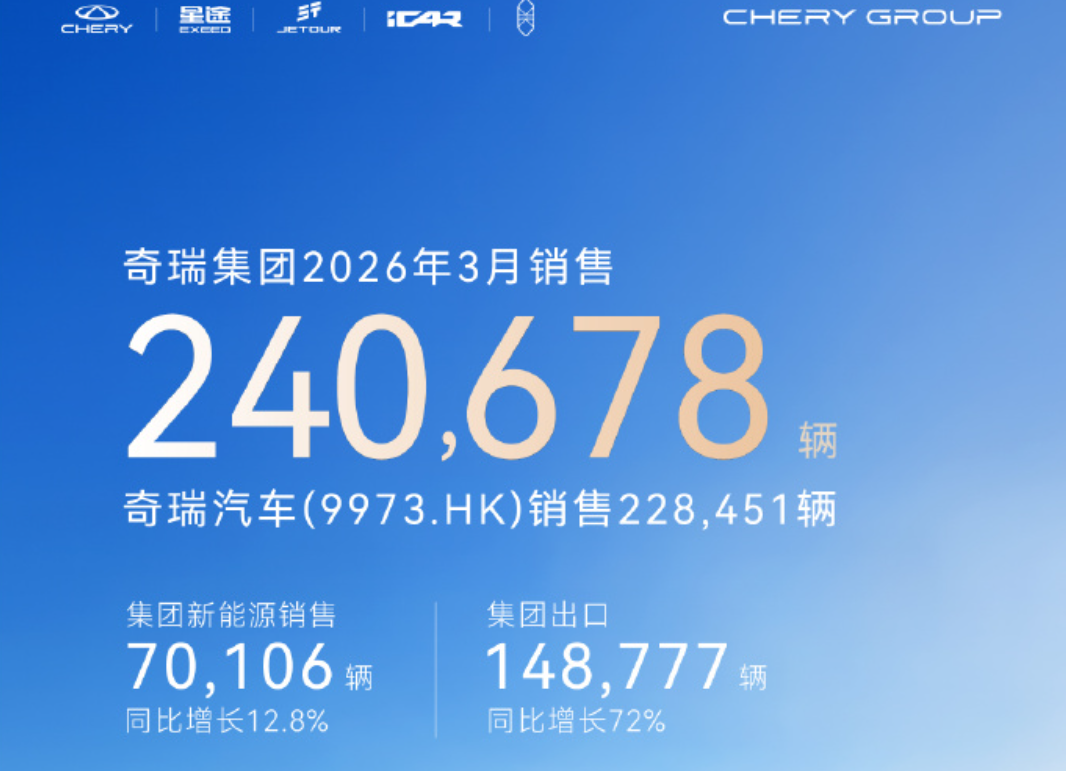
Chery’s brand development has been well-rounded, with steady growth across its main brand, Jetour, and iCAR. While Exeed still has room for sales growth, its core intelligent driving technology is developed in-house by Chery, and it is actively building its own battery supply chain, showcasing far greater independence than Avatr. Additionally, Chery partnered with Huawei to launch the Luxeed brand while continuing to develop its own Exeed, demonstrating a balance between core technology control and flexible third-party collaborations to avoid missing market opportunities.
NIO: A Pivotal Year in 2026?
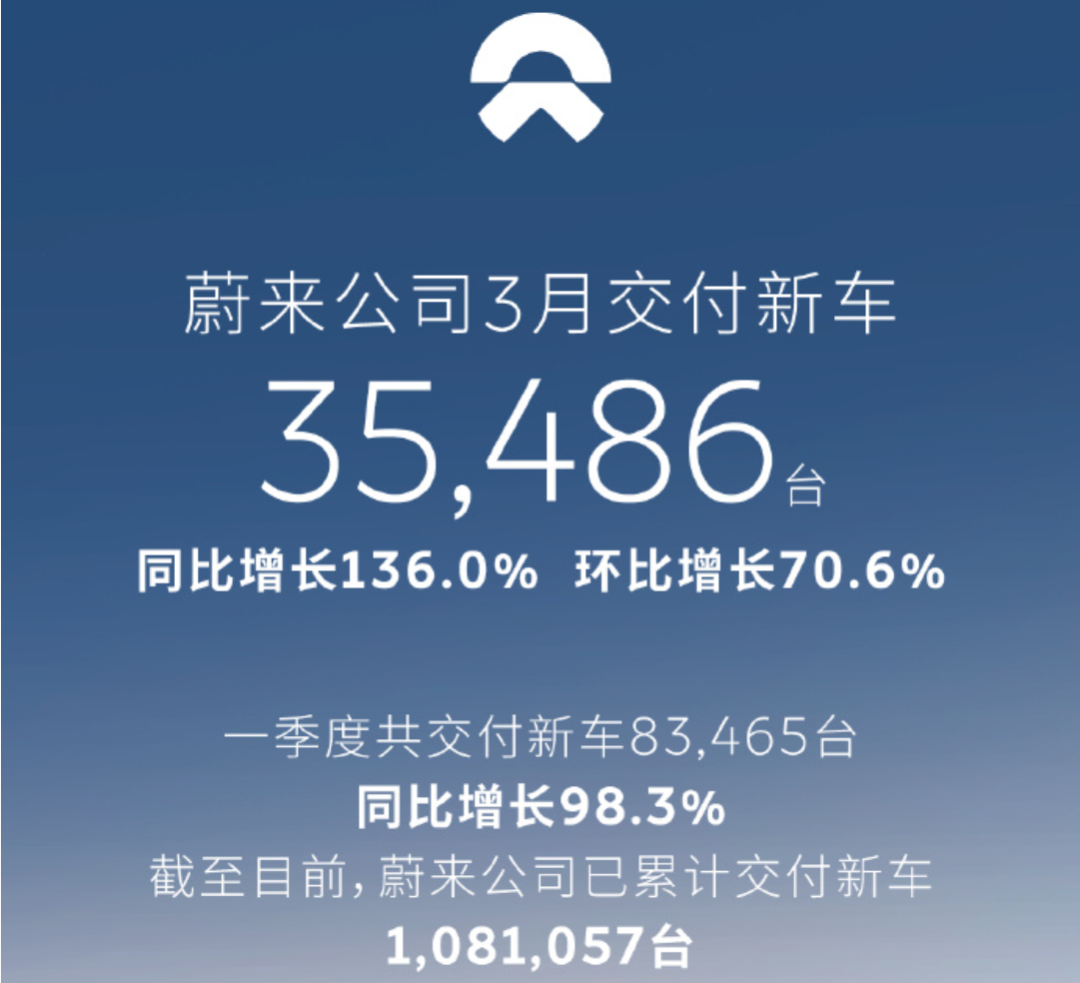
NIO impressed many in 2026. March sales surged 136% year-on-year and 70% month-on-month to 35,486 units. This double-digit growth outperformed most new energy vehicle (NEV) startups.
Q1 cumulative sales reached 83,465 units, up 98.3% year-on-year, exceeding the company’s previous delivery guidance of 80,000–83,000 units. This marks NIO’s second-best quarterly performance, trailing only Q4 2025. Achieving such strong sales in a traditionally slow season suggests NIO may finally be “turning the corner” if it can sustain this momentum throughout the year.
Xiaomi Auto: Is Its Momentum Fading?
As a newcomer, Xiaomi Auto has drawn mixed industry reviews, but its sales performance ranks among the top NEV startups.
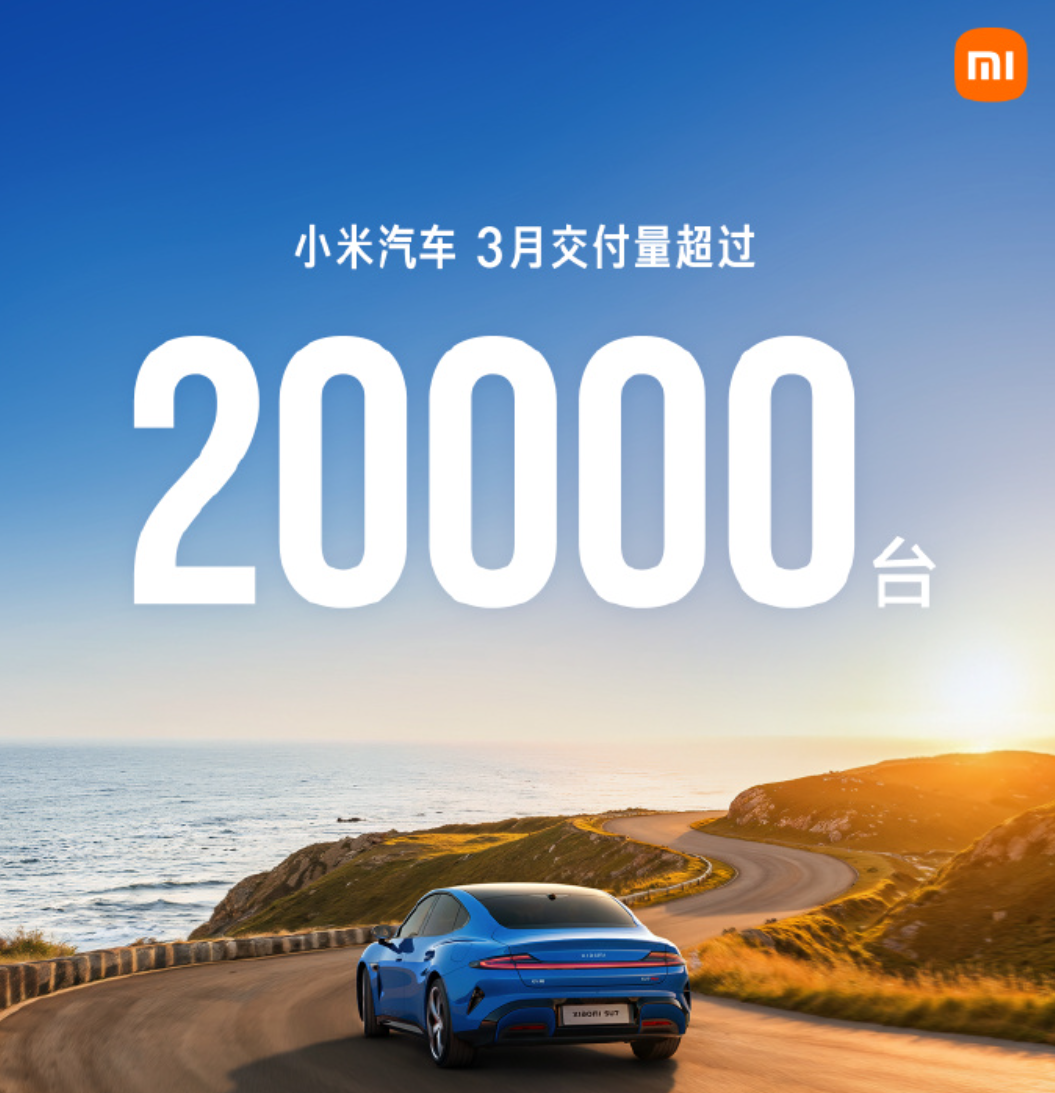
In March, Xiaomi sold over 20,000 units (CPCA data: 21,440 units), a 26.7% year-on-year decline. Q1 cumulative sales reached 80,856 units, down 29.3% quarter-on-quarter from Q4 2025 but up 6.6% year-on-year from Q1 2025. After a breakthrough 410,000 units in 2025, Xiaomi’s growth has clearly slowed in 2026.
Xiaomi’s challenges stem not just from products but from corporate image and values. Over the past year, it has been labeled “exaggerative” and “dishonest” by the industry. In March 2025, a Xiaomi SU7 standard edition driver using intelligent driving was involved in a severe crash on an Anhui highway. Xiaomi CEO Lei Jun dismissed it as “a sudden traffic accident,” sparking industry-wide concerns about the company’s values. In October 2025, another Xiaomi vehicle crashed on Chengdu’s Tianfu Avenue, with doors failing to open, drawing widespread criticism. Xiaomi has yet to respond. Curiously, in September 2025, Xiaomi recalled 110,000 SU7 standard edition vehicles due to inadequate intelligent driving capabilities and upgraded the hardware in new models. Similarly, after multiple door-opening failures, new SU7 models abandoned purely electronic door handles without mechanical redundancy, further fueling doubts about Xiaomi’s corporate values.
Now, with March sales down 26.7% year-on-year, factors include model transitions and declining reputation. Public data shows Xiaomi has launched multiple livestreams this year to boost sales, indirectly confirming industry rumors of weakening order backlogs.
Leapmotor: A Dark Horse in the Making?
What is Leapmotor’s secret to success compared to other NEV startups?
Data shows Leapmotor delivered 50,029 units in March, up 34.87% year-on-year and 78% month-on-month. Q1 cumulative deliveries reached 110,155 units, up 25% year-on-year, maintaining positive momentum.
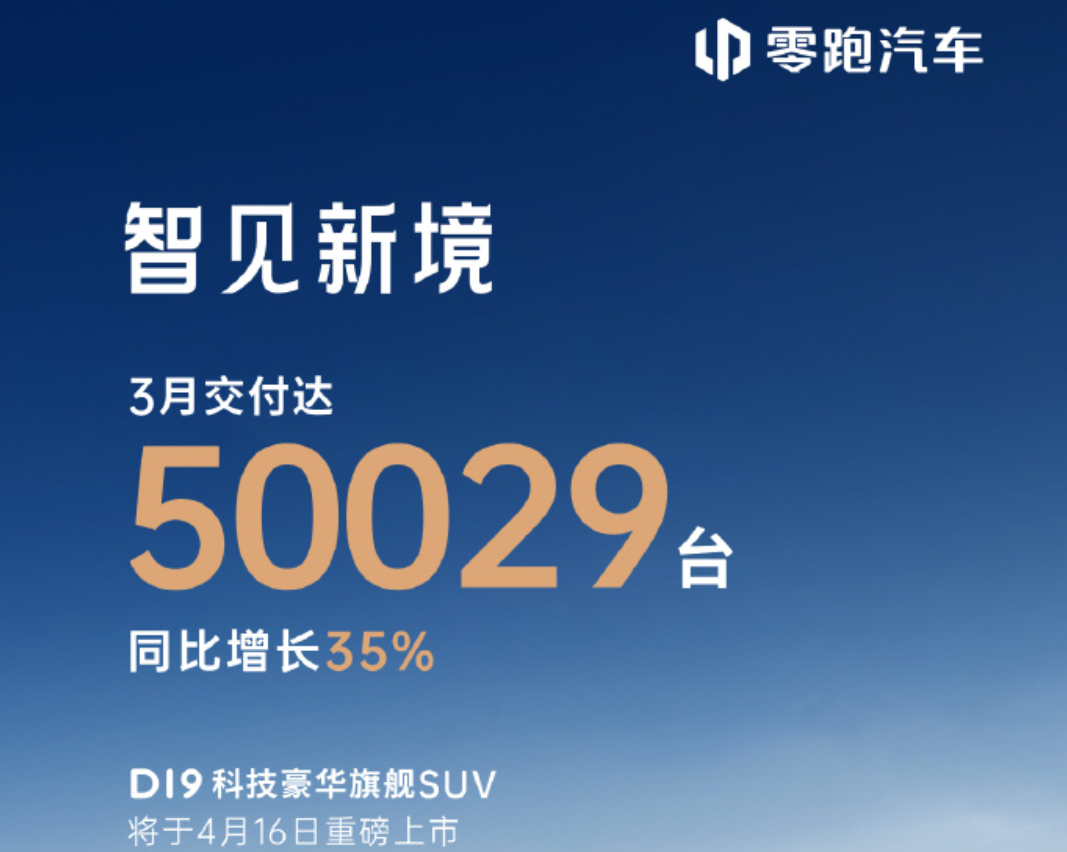
Many in the industry struggle to understand Leapmotor’s popularity, often labeling it a “cheap version of Li Auto.” This year, Leapmotor plans to launch two affordable pure electric models, the A10 and A05, priced below 50,000 yuan, clearly prioritizing sales volume.
While some speculate Leapmotor could follow Nezha’s path, the reality may differ.
HiMo (Hongmeng Intelligent Mobility): Missing in Action
Industry shockwaves hit when HiMo, previously consistent in releasing sales data, skipped its March announcement. Many speculate this was due to weaker-than-expected sales. Auto Recorder suggests HiMo may no longer release consolidated sales figures, allowing individual brands to report independently.
HiMo, as a standalone “category,” may soon disappear. This implies Huawei will focus more on “enabling” partners rather than dominating brand control, granting greater autonomy to its collaborators.
March and Q1 sales reveal major shifts in China’s auto market. A return to rational competition and a stronger emphasis on corporate values appear to be underway.
-
![]()
Jitian Xingzhou: A Pioneer in Optical Payloads Secures Hundreds of Millions in Series B Funding!
-
![]()
Orders Secured Through to the Second Half of the Year! The Rationale Behind the 'Surge' in Demand for This Company’s Optical-Grade Base Films
-
![]()
Beyond Patents: The Retail Rivalry of Insta360 and DJI Unfolds
-
![]()
180 Billion Market Cap Vanished! How Did Seres Fall So Far?
-
![]()
Blockbuster! Domestic storage takes the global double crown for the first time, from an AI company
-
![]()
China Spearheads Formulation! World's Pioneering Global Technical Regulation for Automated Driving Systems Greenlit and Unveiled
-
![]()
Farewell to Pulsed Support Policies: Three Major Auto Policy Directions from Multiple Departments Take Effect on the Same Day
-
![]()
Embercore AI’s Accelerated Funding: The Robot Industry’s Shift Toward ‘Learning Systems’