Changan vs. Geely: Who Reigns Supreme in China’s HEV Market?
 04/15 2026
 421
421
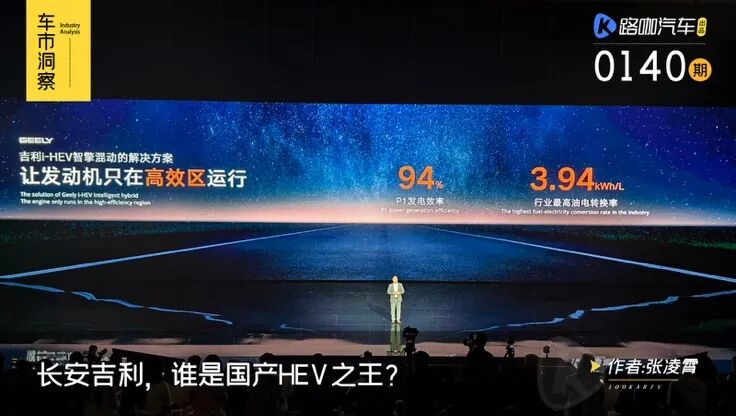
In less than a month, Changan, GAC, and Geely have rolled out their latest gasoline-electric hybrid technologies. Great Wall and Chery are expected to follow suit shortly. This technology route, once overlooked by Chinese automakers, has made a resurgence amidst soaring fuel prices.
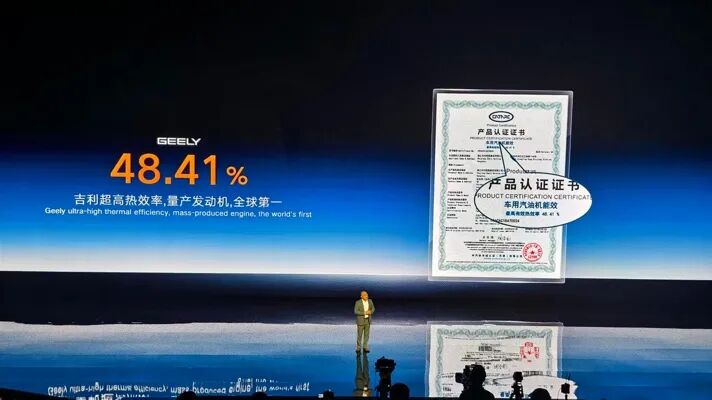
On April 13, Geely unveiled its next-generation i-HEV Intelligent Hybrid technology. With an engine thermal efficiency of up to 48.41%, a 230kW ultra-high-power drive motor, and a combined fuel consumption of just 2.22L per 100km, it easily surpasses Japanese hybrids on paper. When paired with competitive pricing, domestic HEVs gain an even stronger foothold.
The ambitions of Chinese HEVs stretch beyond the domestic market, aiming to challenge the global dominance currently held by Japanese hybrids.
Who Reigns Supreme in China’s HEV Market?
From March to April this year, Chinese automakers have collectively launched new hybrid technologies. In the HEV sector, two days prior to Geely's announcement of its "i-HEV Intelligent Hybrid," GAC Group revealed its "Xingyuan Super Twin-Engine" technology at its Tech Day. Shortly before these back-to-back releases by GAC and Geely, Changan introduced its latest "Blue Whale Super Hybrid."
All three automakers have consistently stated that they are moving away from the traditional "oil-centric" approach. Instead, they are adopting a blend of efficient engines, high-power electric drives, and high-rate compact batteries, supplemented by AI and cloud-based data for energy and thermal management. This convergence in technology routes underscores both technical sophistication and the evolving maturity of business models.
The traditional hybrid approach, heavily reliant on parallel "oil-centric" thinking, falls short in efficiency during urban traffic congestion. Chinese automakers have shifted to using high-power electric drives for most starting, low-speed, and re-acceleration tasks, allowing the engine to operate primarily within its most efficient range. The compact battery serves merely as a "power buffer," resulting in fuel savings without significantly increasing vehicle prices.
Increased electrification directly translates to fuel savings. Geely's i-HEV is equipped with a maximum 1.83kWh battery, capable of delivering a maximum discharge power of 110KW and a maximum energy recovery power of 60C. This sets it apart from Japanese hybrids, as the high battery discharge power allows the motor to participate more extensively in driving the vehicle. The 60C energy recovery power enables hybrid vehicles to utilize robust energy recovery modes previously exclusive to electric vehicles.
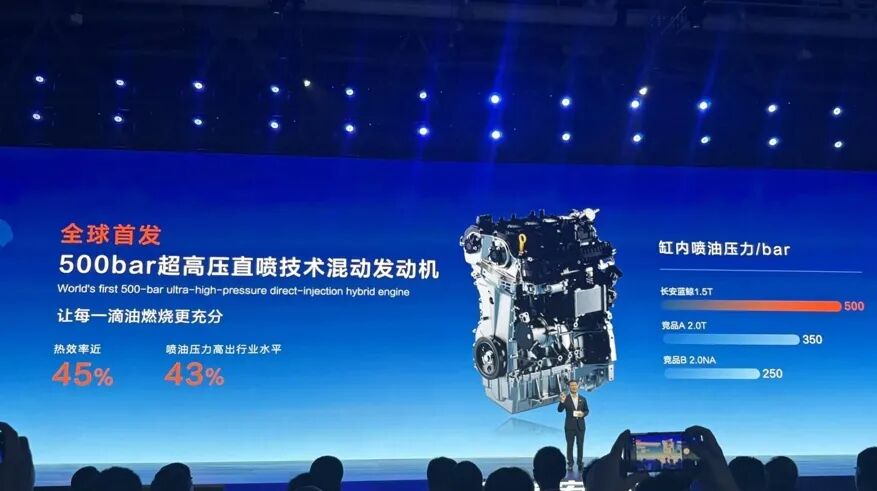
Changan's hybrid approach mirrors Geely's, featuring a 1.7kWh battery with a maximum energy recovery power of 50C. The engine achieves a thermal efficiency close to 45%, with an efficient operating range accounting for 56.3%.
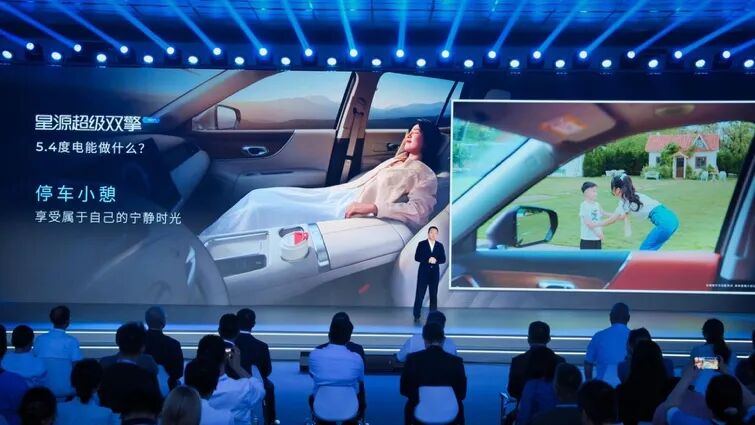
GAC's "Xingyuan Super Twin-Engine" boasts a battery capacity of up to 5.4kWh, also a high-rate battery, enabling a pure electric range of up to 17 kilometers. Increasing battery capacity provides redundancy for in-car intelligent features such as refrigerators, color TVs, entertainment screens, and air conditioning, allowing gasoline vehicles to offer an intelligent experience comparable to that of electric vehicles. Most importantly, as electric vehicles become more prevalent, consumer preferences in China have shifted. The quietness and smoothness provided by electric drives are gradually becoming a consumer trend.
It is clear that the advantage of Chinese hybrids over Japanese hybrids in this round lies not only in the technology itself but also in a comprehensive strategy: increasing the proportion of electric drive, controlling costs with compact batteries, and enhancing OTA updates and human-machine interaction to create a gap in comprehensive fuel consumption and quietness.
Low Prices + HEVs: Speeding Up the Demise of Gasoline Vehicles?
The latest round of hybrid launches by Chinese brands has a clear target: not to compete directly with high-end electric vehicles but to disrupt the low-end gasoline vehicle market. Whether through lightweight solutions like "efficient engine + high-power electric drive + compact battery" or AI control systems for energy management and scenario recognition, the goal is to bring fuel consumption closer to that of plug-in hybrids and range-extended electric vehicles.
In March this year, the penetration rate of new energy passenger vehicles exceeded 50% for the first time in a single month, reaching approximately 51%-53%. Coupled with rising fuel prices, market competition has shifted from incremental growth to stock replacement.
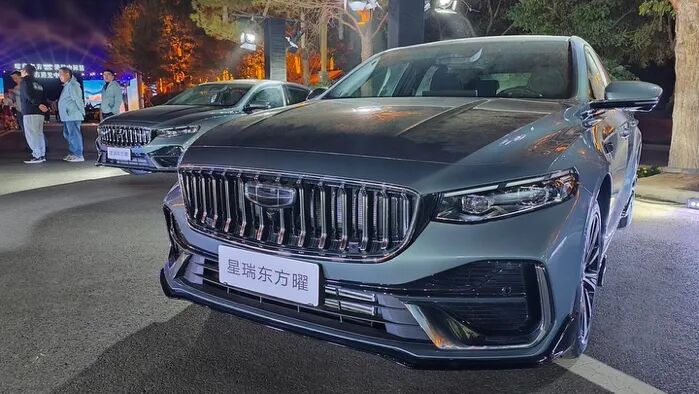
In 2025, Geely's China Star series sold 1.2141 million units annually; Changan's annual gasoline vehicle sales exceeded 919,000 units, with its sedan pillar, the "Eado," selling 168,900 units for the year; GAC's self-owned brand Trumpchi accumulated 319,200 units in 2025, with gasoline-powered compact SUVs like the GS3 Shadow Speed still achieving annual sales of over 65,000 units. Low-priced gasoline vehicles continue to hold significant market appeal.
The first unavoidable issue with HEV adoption is the increase in overall vehicle costs. From a cost perspective, battery motor controllers are not inexpensive, especially since the latest hybrid technologies announced by domestic automakers all adopt higher-cost, high-rate flash charging and discharging systems.
Following the launch of Changan's Blue Whale Super Hybrid, a company executive revealed to Lujia Auto that the price difference between new models equipped with the Blue Whale Super Hybrid and comparable gasoline vehicles would be controlled within 10,000 yuan. Geely officials also acknowledged that the adoption of i-HEV would lead to increased costs, particularly in terms of upfront R&D expenses, which would need to be amortized over a certain sales volume.
Therefore, once HEVs can control costs and compete with gasoline vehicles on price, they will have the confidence to replace gasoline vehicles. Especially the combination of "low prices + HEVs" will have a clear market impact.
During the launch event, Geely announced that its latest i-HEV hybrid technology would be mass-produced in China Star series models, including mainstay vehicles like the Star Rui, Star More L, Bo More L, and the fifth-generation Emperor Hao, driving comprehensive hybridization and intelligent upgrades of gasoline vehicles.
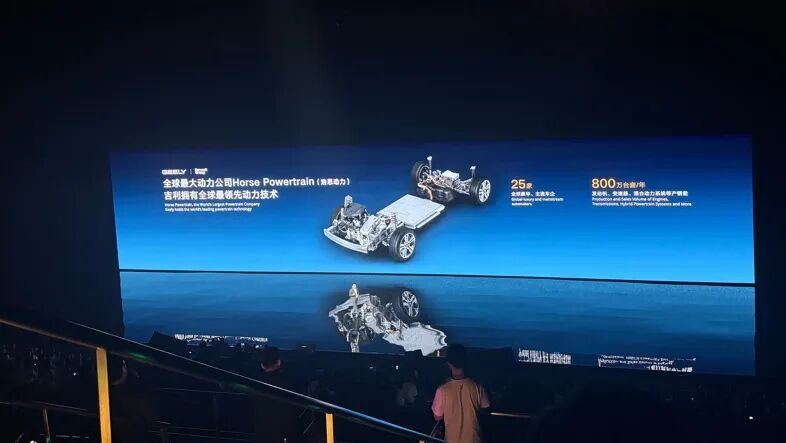
Geely executives pointed out at the launch event that the main power unit of Geely's i-HEV hybrid technology is developed and manufactured by Hao Si Power, the world's largest power company—a joint venture between Geely and Renault that supplies engines, transmissions, and other core components to over 20 global automakers. This means that Geely's i-HEV can not only be used in domestic new vehicles but also compete globally with Japanese hybrids.
However, several unavoidable variables remain in the reality of replacing gasoline vehicles: HEVs' real-world fuel consumption is closely tied to actual driving conditions. Industry professionals in automotive emissions point out that while automakers tout breakthroughs in fuel consumption below 3 liters per 100km as milestones, the actual achievement rate of real-world fuel consumption remains questionable. "Even without rising fuel prices, current HEVs struggle to reduce costs per kilometer to below 0.2 yuan. For users with access to charging, the cost advantage is less pronounced compared to plug-in hybrids or range-extended electric vehicles."
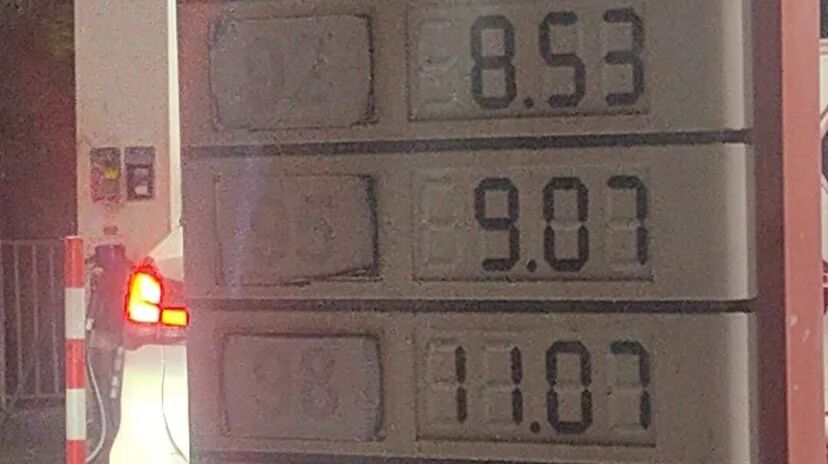
Additionally, traditional gasoline vehicles still hold a price advantage in the low-cost segment. The newly announced pre-sale price of the Roewe i6, a compact sedan, starts in the 60,000-yuan range, with the official price potentially even lower.
Professor Ouyang Minggao from Tsinghua University recently pointed out in a public speech that plug-in hybrid (PHEV) and range-extended electric vehicles have already entered a downward trajectory, partly due to their technical efficiency and energy structure being inferior to pure electric drives. However, it is worth noting that the logic of technology does not fully align with commercial logic. Even today, with the development of electric vehicles, many consumers remain anxious about charging and safety issues. The fact that mainstream automakers are flocking to HEVs proves that internal combustion engines still hold strong vitality in the era of electrification.
-
![]()
Embrace Freedom, Live Boldly! Great Wall Motor’s Menglong PLUS Launches in the Greater Bay Area, Unlocking Enhanced Lifestyles with One Vehicle
-
![]()
The Agent hasn't arrived yet, but Ascend has already paved the way from hardware to software.
-
![]()
In 71 years, He sold products to 100 million people
-
![]()
First-hand Practical Test! Opus 4.8 Vs ChatGPT 5.5 Vs Kimi 2.6: Which is the Most Usable?
-
![]()
Fourfold Uncertainty Challenges Facing China's Agent Industry - Interpretation of the 'Report' (Part Six)
-
Crazy Anthropic
-
![]()
CNPC’s Kunlun Model Advances with 152 Implemented Scenarios, Showcasing Proactive AI
-
![]()
Revenue Increases, But Profits Don't: Pinduoduo's Anxiety Amidst Billion-Dollar Brand Building