Dialogue with Momenta's Cao Xudong: Data is Merely a Raw Resource, System Strength is the Key
 04/28 2026
 475
475
Redefining Competitive Dynamics in Autonomous Driving
Author|Qin Zhangyong
What exactly are we discussing when we talk about autonomous driving?
Following the digital AI boom, we've stepped into the era of physical AI. Autonomous driving, a topic of fervent discussion for years, is now poised for significant advancements. There's a broad consensus within the industry that autonomous driving will be the linchpin for the physical AI revolution.
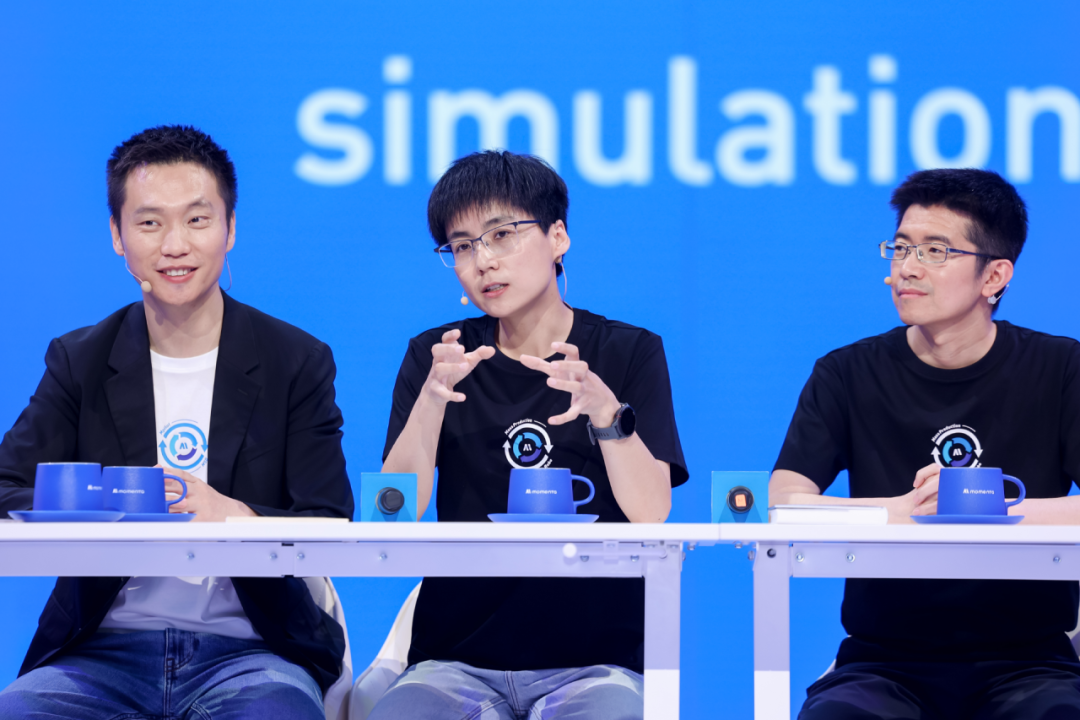
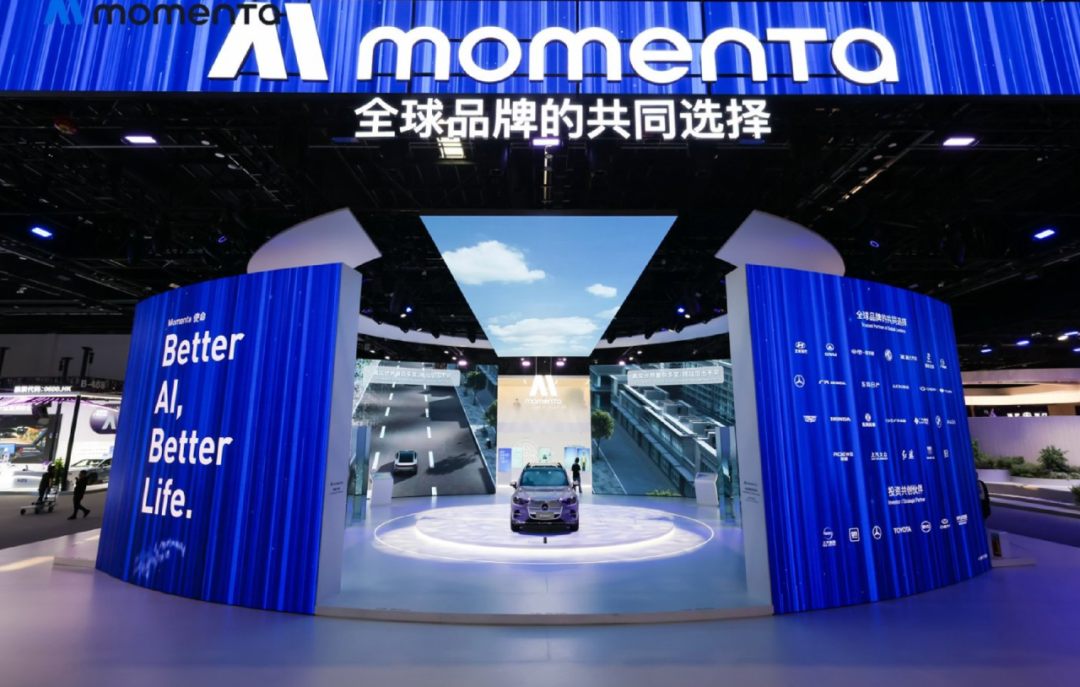
At the 2026 Beijing Auto Show, Momenta unveiled the mass production launch of its Momenta R7 reinforcement learning world model. In CEO Cao Xudong's perspective, autonomous driving serves as the overture to the physical AI era, heralding the transition from a technological concept to widespread mass production.
Within the narrative framework of physical AI, the competitive landscape of autonomous driving has undergone a transformation.
Data and algorithms, once highly prized, no longer occupy the top spots. Cao Xudong illustrated this with an analogy: data is akin to raw ore. The true value lies in refining this ore into a rich resource, then forging it into steel and engines, and ultimately integrating those engines into vehicles.
This process is a testament to the systemic capabilities of the entire data ecosystem. Data constitutes only 10% of the value proposition, with the remaining 90% emanating from the system's value, encompassing architectural and organizational prowess.
Momenta's strategy revolves around leveraging a single, comprehensive model to support full-scenario applications, such as the coordinated development of L2 passenger vehicles, Robotaxi services, Robovan logistics vehicles, and Robotruck trucks. This approach capitalizes on platform effects to slash R&D costs and enhance technical efficiency.
During the media exchange post-announcement, Cao Xudong also forecasted that autonomous driving boasts formidable economies of scale and first-mover advantages, leading to swift industry consolidation. He envisions only 2-3 successful companies in China and 3-4 globally.
To achieve scaled L4 autonomy, a cumulative investment of at least ten billion USD is requisite, with even loftier sums needed for general-purpose robots. However, in the long haul, relying solely on financing is patently insufficient to sustain R&D in general-purpose physical AI. A cash-flow business is imperative, serving as the gateway to the physical AI era.
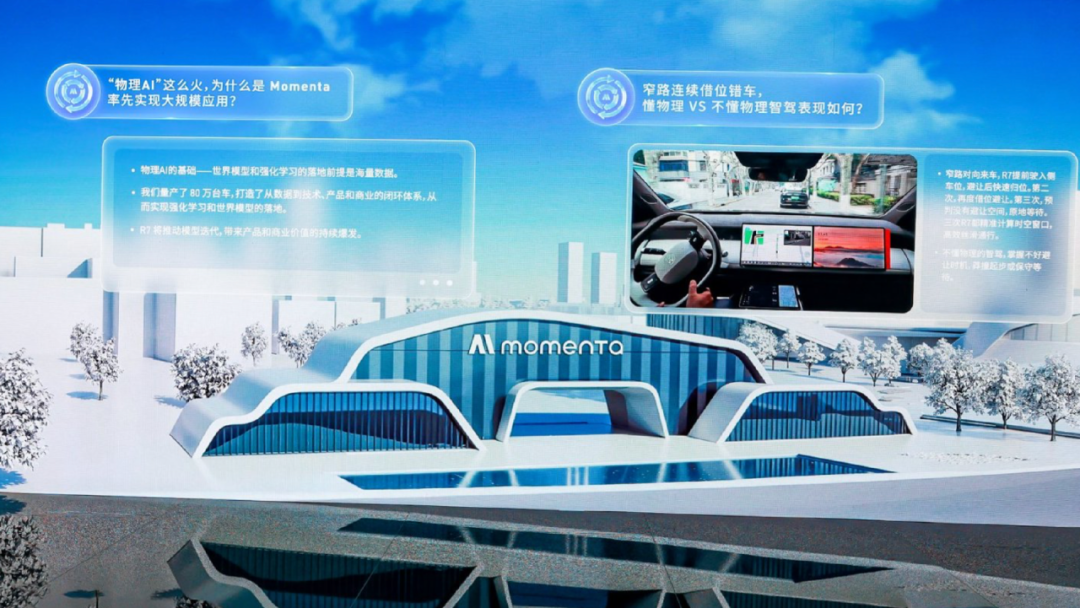
And Momenta has already secured this gateway. At this Beijing Auto Show, over 20 brands and more than 60 vehicle models showcased Momenta's solutions. New models from BBA all incorporated Momenta's technology. To date, Momenta has successfully delivered over 70 mass-produced vehicle models, with a cumulative fixed-point model count surpassing 200, and mass production spanning more than ten countries and regions.
Below is an abridged version of the exchange between the media and Momenta CEO Cao Xudong:
01
The Crux Lies in Effective Data Utilization
Q: Reverse joint ventures are gaining traction in the global automotive sector. How do you perceive this trend? What overseas client interactions have you had at this auto show?
Cao Xudong: Chinese technology is extending its reach from China to the global stage, delivering more advanced product value to local users. However, this expansion also brings certain impacts, such as on local companies, employment, or taxation. Beneficial reverse joint ventures enable locals to savor the exceptional user experience brought by Chinese high-tech products and technologies.
On the flip side, it's tantamount to Chinese technology empowering local enterprises, fostering greater development, superior job opportunities, increased employment, and enhanced taxation for local companies. It's a win-win paradigm.
Last year, we emerged as the preferred choice for global brands. Among the world's leading brands, German marques like BBA and Volkswagen, Japanese brands like Toyota, Honda, and Nissan, and American brands like General Motors and Ford, have all become our mass production cooperation clients.

Q: What challenges arise when cooperating with foreign automakers?
Cao Xudong: The most prevalent challenge is the clash between China's rapid pace and the standards of international OEMs. However, this conflict primarily centers around customers and users. By co-creating with a focus on customer and user value, superior innovative methods can often be unearthed, leading to superior outcomes.
Q: In the actual mass production process, is the primary bottleneck for the data ecosystem the volume of data or the algorithms?
Cao Xudong: Data transcends its mere existence. Consider data as ore, specifically low-grade iron ore. To truly harness data, you must first refine this lean ore into a rich resource.
How do you transform lean ore into a rich resource, then into steel, and ultimately into engines installed in vehicles? That's where the true value resides. Hence, the entire data ecosystem is a systemic capability. Possessing raw data, even in vast quantities, constitutes only 10% of the value source. The remaining 90% stems from the system's value.
Q: There's a saying that data isn't the challenge, but effectively utilizing it is. How does Momenta leverage data effectively?
Cao Xudong: Our large model is segmented into a pre-training phase and a Post-Training phase.
In the pre-training phase, we utilize massive real-world data from 800,000 mass-produced vehicles and pre-train with a world model to endow AI with physical common sense. However, possessing this common sense about the world doesn't equate to good behavior. Hence, Post-Training is still necessary to align or inspire its behavior with exemplary human conduct. This process is roughly divided into these two stages.
Q: What's the standout feature of Momenta's world model?
Cao Xudong: The disparity between companies stems from their organization, culture, and corresponding system construction.
While innovation in specific algorithms is crucial, and each generation of algorithmic architecture innovation can yield significant progress, frankly speaking, in the Chinese context, the flow of knowledge and talent is relatively swift. Relying solely on specific algorithms doesn't create substantial barriers or differences. The barriers lie in systemic and organizational capabilities.
Hence, you may observe that everyone is discussing the same direction for specific algorithms, but the final results may differ by one or two generations. The difference doesn't lie in the specific algorithms but in the system and organization.
02
Autonomous Driving: The Prelude to Physical AI
Q: Physical AI is gaining momentum. What's Momenta's global standing?
Cao Xudong: The essence of physical AI lies in data closure and commercial closure, which form positive feedback loops. Data closure leads to a superior user experience, and when it approaches human-level performance, it triggers explosive commercialization. Commercialization brings a surge in data, which in turn drives exponential improvements in model capabilities.
Our assessment is that autonomous driving has entered this stage, while robots still require some time. That's the first point. Therefore, autonomous driving is the prelude to physical AI because it's the first to achieve large-scale data closure and commercial closure.
For scaled L4, my assessment is that the cumulative investment required is at least ten billion USD, and that's assuming the R&D efficiency of a startup. If it's a large company, it may necessitate not just ten billion USD but hundreds of billions.
My assessment is that physical AI necessitates a gateway, and that gateway is a cash-flow business. Although the entire embodied intelligence capital market in China is very vibrant now, in the long run, relying solely on investment and financing to achieve general-purpose physical AI or AGI in the physical world is unrealistic. Physical AI must be underpinned by a cash-flow business.
Q: How's the progress of the L4 business this year? What advantages does Momenta possess in Robotaxi?
Cao Xudong: Our L4 isn't confined to Robotaxi but encompasses all scenarios. This year, we're advancing Robotaxi and Robovan logistics vehicles, and we'll launch Robotruck trucks in 2027 because our ten-year vision is to double the efficiency of logistics and transportation in a decade.
We believe that a large autonomous driving model can accomplish all vertical applications of autonomous driving and excel in them. The value it brings is a significant reduction in R&D costs for each vertical. Moreover, the experience and data from each application scenario and vertical can be aggregated and absorbed into this large model, making each vertical perform even better. This is essentially a platform advantage.
Q: How do you perceive the current competitive landscape in intelligent driving? Will there be a definitive outcome by 2030?
Cao Xudong: Autonomous driving boasts formidable economies of scale and first-mover advantages, even surpassing those in the chip industry. In PCs and mobile phones, only two companies dominate globally in chips. For autonomous driving software, the marginal cost is zero, so its economies of scale are even more pronounced. These economies of scale apply not only to costs but also to enhancements in user experience.
On the other hand, there's a particularly strong first-mover advantage with OEMs because many OEM business deals take three years just to initiate, from meeting the client to securing the contract. For international OEMs, it may take 5-7 years.
So, I still adhere to my original assessment: there will only be 2-3 successful companies in China and 3-4 globally, and the consolidation will occur swiftly.
-
![]()
Is Zhipu's Trillion-Yuan Market Cap, Despite No Profit, Truly 'Outrageous'?
-
![]()
XiaoPai Unveils Home AI Brain, Paving the Way for Smart Homes to First Grasp 'Home Understanding'
-
![]()
Is the Future of Extended-Range EVs Pure Electric or Li Auto’s 5C Extended-Range? A Li Auto Executive Shares Insights
-
Ant Group’s New Board of Directors: Signaling a New Era?
-
![]()
Google Initiates TPU Sales, as Industry Leaders Eye AI Chips for 'Cost-Effective Tokens'
-
![]()
Input Methods: The Rising Star in AI! WeChat, Doubao, and Qianwen Lead the Charge into the Voice Input Era
-
![]()
Struggling to Sell? Cut It Out! Toyota, Volkswagen, and Changan Lead the Charge in Streamlining, Eliminating Non-Core Products in the Blockbuster Model Era
-
![]()
Arm China and Volcano Engine Join Forces to Expedite Cloud Computing and AI Infrastructure Rollout