4.35 Million Ferrari Luce Strips Away Ultra-Luxury Pretenses
 05/29 2026
 444
444
Just as Vertu and 8848 phones saw their market share dwindle in the Android and iOS era, the automotive industry may be heading towards a technological democratization akin to that of smartphones, with the price differentials among mainstream vehicles continuing to narrow.
"If I were to voice my true opinions, it would spell trouble for Ferrari."
"This could potentially shatter a legend."
"If this car is launched, at least the Prancing Horse emblem should be removed."
"This is definitely a car from which even Chinese companies wouldn't borrow design cues."
These impassioned remarks came from Ferrari's former chairman, Montezemolo, in response to Ferrari's inaugural electric vehicle, the Luce.
This electric car has completely removed the last veil of exclusivity that ultra-luxury brands once enjoyed.
Part.01 Ferrari's Metamorphosis into a Mustang
Montezemolo once resolutely declared, "As long as I'm at the helm, Ferrari will never build a large, cumbersome SUV."
Yet, shortly after his departure, Ferrari promptly launched the Purosangue, a four-door, four-seat model with opposing doors, priced at a "mere" 390,000 euros (approximately 3.07 million yuan).
With the Purosangue, Ferrari still maintained some discretion, referring to the SUV as an "FUV" (Ferrari Utility Vehicle).
With the Luce, Ferrari has dropped all pretenses.
Not only does it defy previous executives' vows against electrification, but it also introduces the brand's first five-seat model.
In terms of design, the Luce completely overturns Ferrari's previous aesthetic.
Montezemolo's frustration is understandable. During his tenure, he championed limiting annual production to preserve brand exclusivity, creating iconic models like the F40, Enzo, and LaFerrari. These cars were sleek, low-slung, and angular.
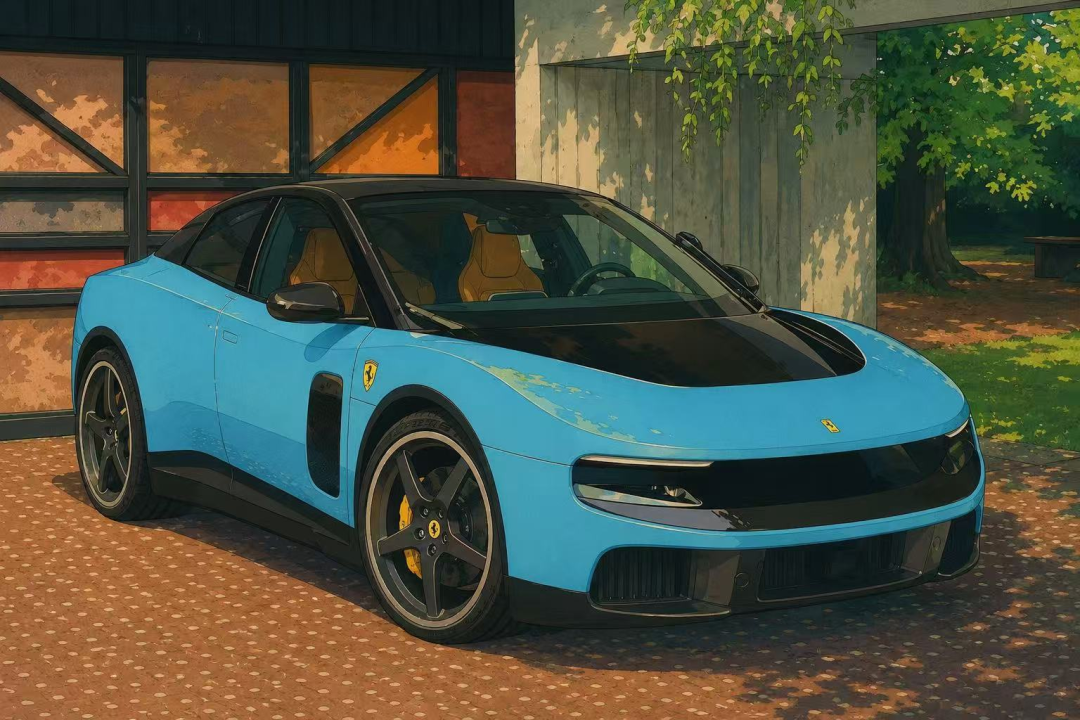
In contrast, the Luce appears rounded and somewhat clumsy. Without Ferrari's iconic logo, it might be mistaken for a Mustang or even a Toyota or Honda.
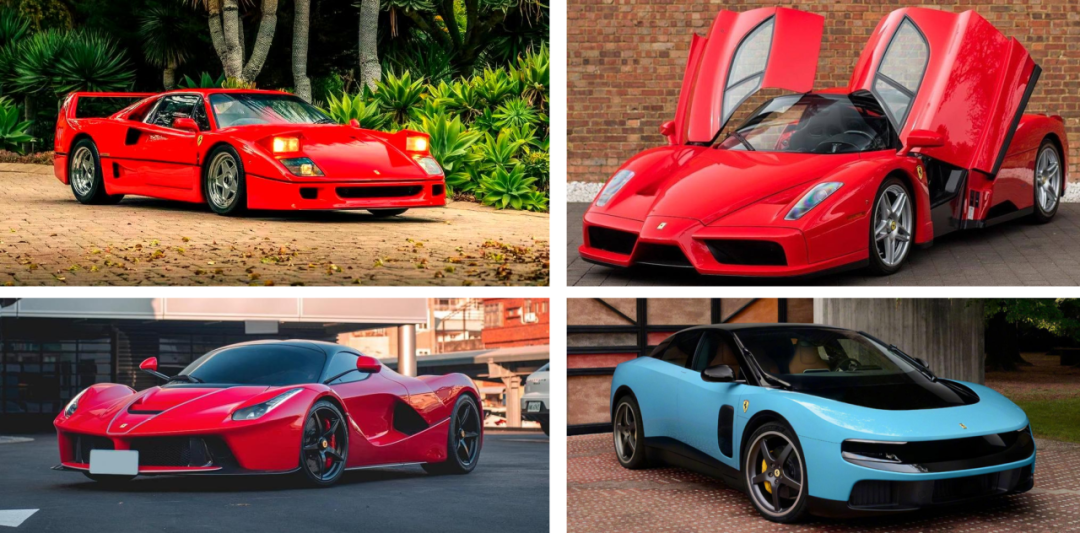
The significant design shift is primarily attributed to a change in designers.
The Luce was designed by Jonathan Ive, Apple's former Chief Design Officer, whom Steve Jobs hailed as his "spiritual partner at Apple." Ive is a pioneer in industrial design, and to this day, consumer electronics design adheres to the minimalist framework he established.
He clearly brought his minimalist style to the Ferrari Luce. The upper part features an all-glass cockpit, with smooth transitions between the front and rear fenders, almost devoid of sharp edges. No protruding sensors are designed on the body surface, and there is no mention of LiDAR or cameras.
Such a radical transformation generally does not yield favorable outcomes.
After the Luce's unveiling, Ferrari's stock price plummeted, dropping by 8% at one point during the session.
Ferrari's foray into electrification not only failed to make waves but also ignited immense controversy.
Part.02 Adding Springs to a Heated Brick Bed
Ultra-luxury brands like Ferrari have always oscillated between resistance and accommodation when confronted with electrification.
Ferrari had repeatedly stated that electrification was not part of its short-term plans. However, it later not only embraced electrification but also set ambitious targets: 40% pure electric by 2030, with the first electric model launching in 2025.
This struggle stems from the real pressure of sales performance, as electric vehicles have disrupted traditional competition models, compelling Ferrari to adapt.
But reality is far more complex than plans.
In October of the previous year, Ferrari halved its pure electric target to 20%, and the Luce's release was postponed to May of this year.
A major issue is that technologies accumulated during the internal combustion engine era are becoming obsolete in the electrification era.
In the internal combustion engine era, Ferrari's naturally aspirated V12 engine reigned supreme. However, within the electric technology narrative, Ferrari needs to find a new competitive edge.
A simple comparison of several parameters: the Ferrari Luce accelerates from 0 to 100 km/h in 2.5 seconds, reaches a top speed of 310 km/h, and boasts a combined system maximum power of 772 kW (approximately 1,050 horsepower).
In comparison, the Xiaomi SU7 Ultra, priced at 529,900 yuan, offers 1,548 horsepower, accelerates from 0 to 100 km/h in 1.98 seconds, and reaches a top speed of 350 km/h. The Yangwang U9 has 1,300 horsepower, a top speed of 300 km/h, and accelerates from 0 to 100 km/h in 2.46 seconds.
In terms of the three-electric system, the Luce has a maximum WLTP range of approximately 530 km, while the Xiaomi SU7 Ultra has a CLTC range of 630 km (approximately 567 km WLTP), and the Yangwang U9 has a slightly lower range of 450 km (approximately 405 km WLTP).
Factoring in price, one Ferrari Luce can buy 2.4 U9s or 8.2 SU7 Ultras.
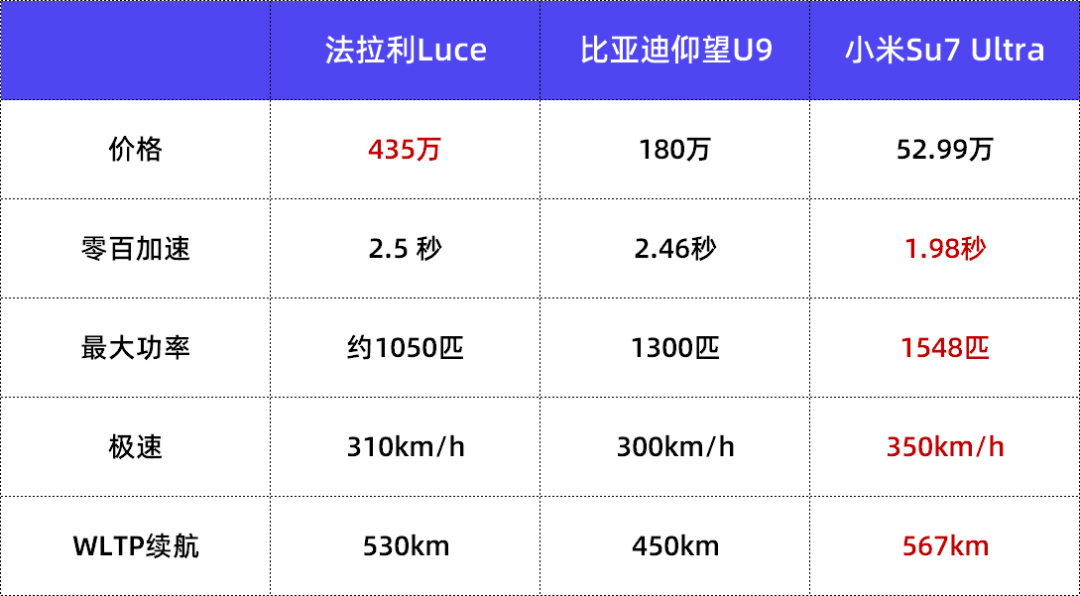
When compared in this manner, the price of 550,000 euros (approximately 4.35 million yuan) is sustained by brand loyalty and faith.
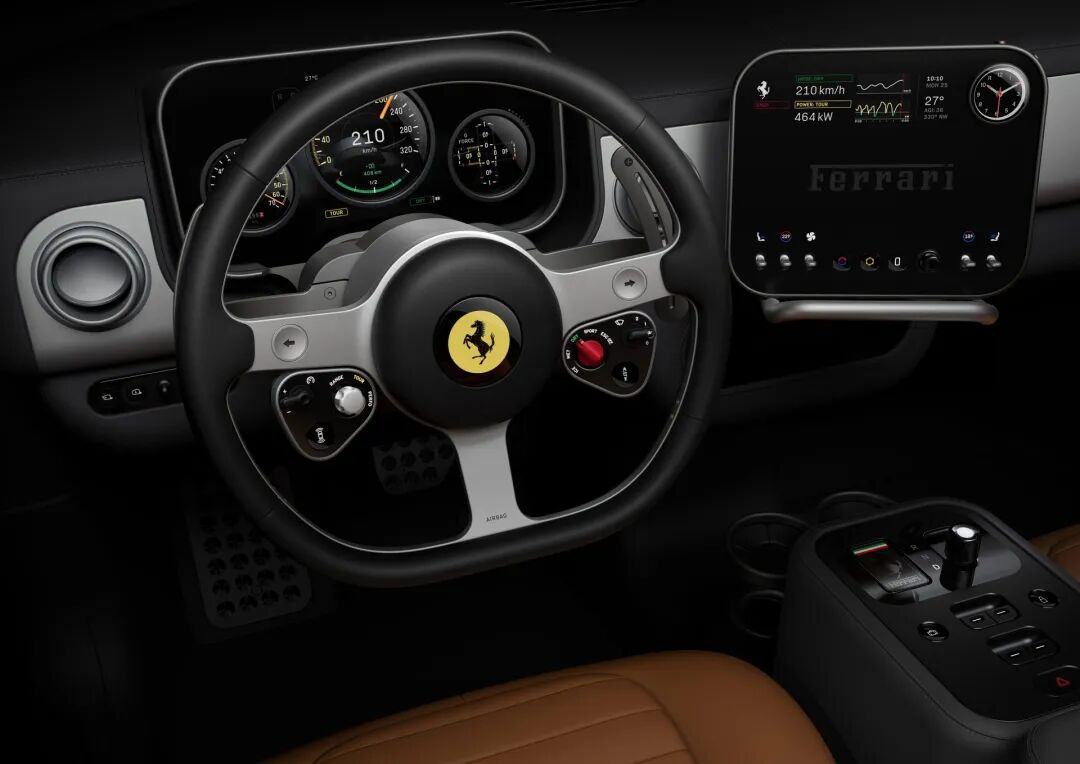
Perhaps to justify this faith, Ferrari added several unique design elements. The cockpit retains necessary screens while incorporating numerous physical mechanical buttons and functional levers, preserving the driving experience inertia of internal combustion engine vehicles.
It also added "engine sound." By capturing and amplifying the vibration sounds of the rear motors, it provides drivers with authentic and unique auditory feedback, enhancing the driving experience.
Ferrari is not the only one adding engine sounds to electric vehicles, but this move inevitably carries a sense of absurdity, akin to "adding springs to a heated brick bed." Retaining physical mechanical buttons fully reflects the struggle and contradiction of ultra-luxury internal combustion engine brands in the electrification era.
Part.03 Ultra-Luxury Brands Struggle with Electrification
Electrification poses widespread challenges for ultra-luxury brands.
The Porsche Taycan was the earliest adopter but now faces numerous difficulties. In 2025, global Taycan sales reached 16,339 units, a 22% year-on-year decline; in the first quarter of this year, only 3,420 Taycans were delivered globally, a further 19% drop. Amid this continuous decline, the Taycan production line at Porsche's Zuffenhausen factory was fully suspended until June 8.
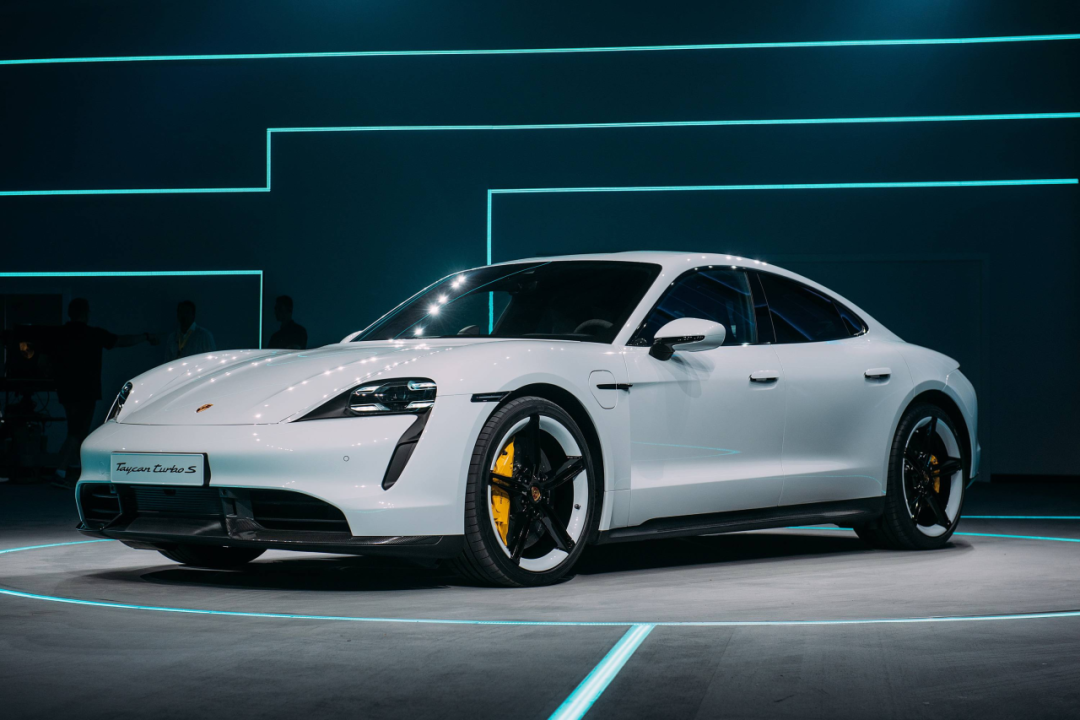
The Taycan can still sell over ten thousand units largely due to its lower price, making it more accessible to consumers. Other ultra-luxury brands have fared even worse.
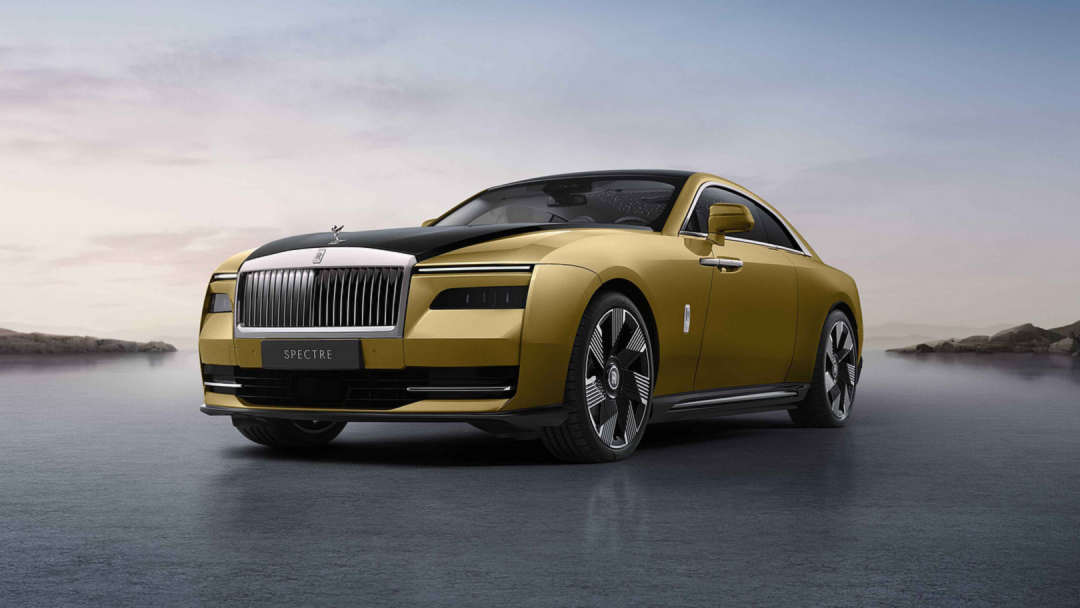
In December 2022, Rolls-Royce launched its first pure electric model, the Spectre, a two-door, four-seat coupe priced at 5.75 million yuan. This model delivered 1,002 units in 2025, a significant 47% drop from 1,890 units in 2024. In March this year, Rolls-Royce withdrew its plan to fully electrify by 2030, stating that it would continue producing its iconic V12 engine for some time.
In 2023, Lamborghini unveiled the pure electric Lanzador, but this model remained a concept car without mass production. At its launch, traditional car enthusiasts strongly opposed it, and recently, the project has been terminated, with no new pure electric products from Lamborghini expected before 2030. CEO Winkelmann stated bluntly that target customers' acceptance of pure electric sports cars is "nearly zero." Delaying the electric vehicle strategy is a wise move.
Bentley has also faced setbacks. Last November, Bentley announced its product timeline, with the first pure electric SUV set to be unveiled at the end of this year and introduced to the market in 2027. This actually represents a one-year delay. Bentley's overall pure electric plan is also being further postponed, with reports indicating that only one pure electric model will be confirmed for release before 2030, and the full electrification target has been pushed back from 2030 to 2035.
Aston Martin has also suffered. Its electrification progress has been repeatedly delayed. The latest news is that it has abandoned its aggressive electrification goals, significantly reduced pure electric investments, and restarted a fuel and hybrid-first approach. Several pure electric model plans have been canceled, with only one pure electric SUV retained, and its launch delayed until after 2028.
Alfa Romeo had set a goal of full electrification by 2027 but has now abandoned its plan for full electrification in North America by that year.
This series of setbacks for ultra-luxury brands largely illustrates the problem: electrification has initiated a technological democratization in the automotive industry.
Part.04 The Consumer Electronics Trend in Automotive Consumption
At present, the dilemma of ultra-luxury internal combustion engine vehicles is closely related to industry changes.
Electrification has eroded many symbols of internal combustion engines, such as the roar of the engine, mechanical texture, and linear acceleration, all of which added significant brand value to ultra-luxury brands, making brand premiums somewhat acceptable in the market.
However, in the electrification era, vehicles operate extremely quietly, feature intelligent interactions, accelerate faster, and undergo dramatic changes in technological elements. All these factors have stripped ultra-luxury cars of their brand essence.
Meanwhile, electric vehicles struggle to provide consumers with an ultra-luxury experience. The heavy weight of batteries undermines handling, and having ultra-luxury car owners search for charging stations does not reflect their unique social status.
More importantly, electric vehicles iterate rapidly. Products that were flagship features a few years ago quickly become standard across the entire lineup. Facelift models are released almost annually, or even more frequently. Amid fierce competition, automakers often rely on low prices and high specifications to boost sales.
Ultra-luxury cars need to retain value, possess collectible quality, and maintain technological advancement over time, but these requirements cannot be met in the current pure electric market.
The deeper reason is that these ultra-luxury brands are technologically lagging, having been overtaken by Chinese new energy automakers. From the three-electric system to smart cockpits and autonomous driving, ultra-luxury brands are factually behind.
It's not that Ferrari's Luce doesn't want to incorporate smart cockpits and advanced driver-assistance systems, but rather that if the smart cockpit's interactions are problematic and the driver-assistance technology offers a poor experience, it would further damage the brand. Therefore, clinging to mechanical sensations and engine roars is both a differentiation strategy and a sign of helplessness.
The technological stratification in the electrification era will not be as significant as in the internal combustion engine era. Following this trend, the ultimate direction of automotive electrification is steering toward automotive consumer electronics. Just as Vertu and 8848 phones lost their market after the Android and iOS era, cars may undergo a technological democratization similar to that of smartphones, with the price differentials among vehicles continuing to shrink.
Ultra-luxury internal combustion engine vehicle brands may ultimately become relics of a bygone era.
-
![]()
Embrace Freedom, Live Boldly! Great Wall Motor’s Menglong PLUS Launches in the Greater Bay Area, Unlocking Enhanced Lifestyles with One Vehicle
-
![]()
The Agent hasn't arrived yet, but Ascend has already paved the way from hardware to software.
-
![]()
In 71 years, He sold products to 100 million people
-
![]()
First-hand Practical Test! Opus 4.8 Vs ChatGPT 5.5 Vs Kimi 2.6: Which is the Most Usable?
-
![]()
Fourfold Uncertainty Challenges Facing China's Agent Industry - Interpretation of the 'Report' (Part Six)
-
Crazy Anthropic
-
![]()
CNPC’s Kunlun Model Advances with 152 Implemented Scenarios, Showcasing Proactive AI
-
![]()
Revenue Increases, But Profits Don't: Pinduoduo's Anxiety Amidst Billion-Dollar Brand Building