What Trumps Are Left in Mercedes-Benz's Deck?
 05/29 2026
 503
503
Lead | Introduction
Is Mercedes-Benz lagging in localizing the GLE? By 2026, the domestically produced GLE will not only face off against the BMW X5 but also contend with the 'smart and electric' onslaught from Chinese automakers. With growth in the incremental market slowing and existing market share dwindling, what cards does Mercedes-Benz still hold?
This article is produced by | Heyan Yueche Studio
Written by | Cai Yan
Edited by | He Zi
Full text: 2,173 characters
Reading time: 4 minutes
The Mercedes-Benz GLE is finally going local.
Recently, the Ministry of Industry and Information Technology unveiled the 407th batch of new car listings, officially introducing the Beijing Benz GLE. Planned for localization as early as 2024, it has finally made its debut this year. Compared to its imported counterpart, the domestically produced Mercedes-Benz GLE boasts enhancements in wheelbase and localized intelligent features.
Key highlights of the domestically produced Mercedes-Benz GLE include a wheelbase 115mm longer than that of the BMW X5 (which itself is 120mm longer than its predecessor), the reintroduction of the 3.0T powertrain, and the integration of the MBUX Superscreen ultra-widescreen display, MB.OS vehicle system, and NVIDIA supercomputer. Apart from intelligent upgrades tailored to local demands, other enhancements are directly aimed at rivaling the BMW X5.
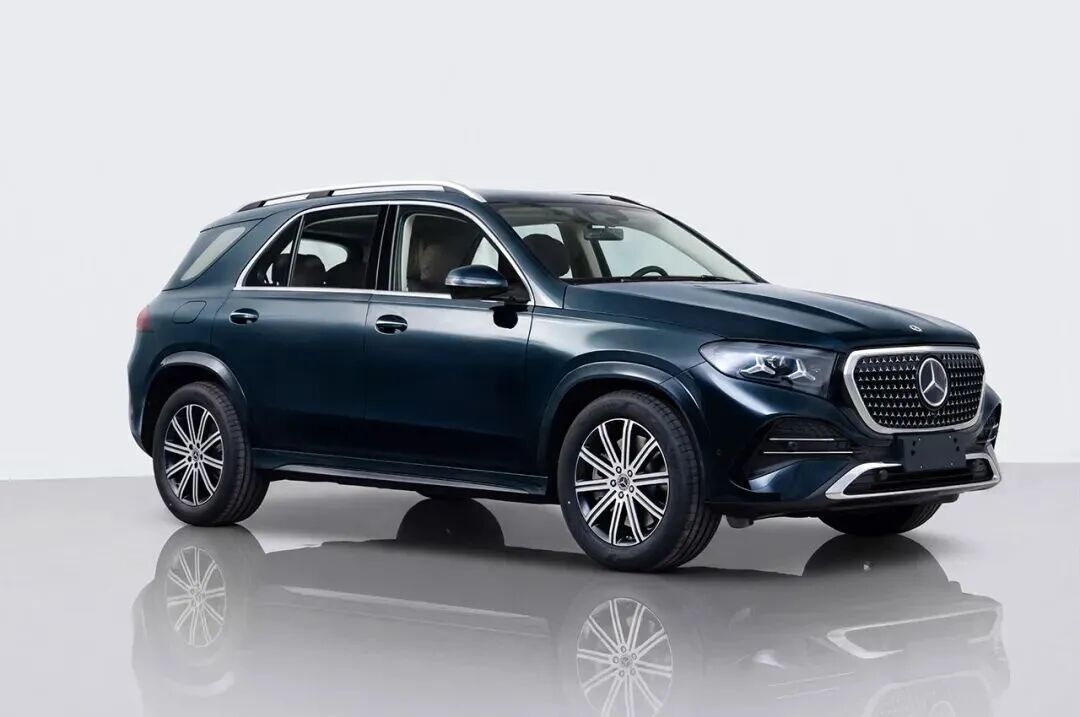
Had these upgrades to the domestically produced GLE been rolled out a year or two before or after the launch of the domestically produced BMW X5, it might have captured a substantial share of potential BMW X5 customers. However, the reality is that in 2026, the domestically produced GLE is following the classic product upgrade path of 'extended space + enhanced power + improved intelligence,' likely only competing with the upcoming generation of the domestically produced BMW X5.
As for Duan Jianjun, the former CEO of Mercedes-Benz China, who stated that the domestically produced GLE's main competitor is the BMW X5L and aims to regain dominance in the 500,000-700,000 RMB luxury SUV segment, the first part holds true. However, in the context of a 60% new energy vehicle penetration rate in 2026, the second part raises the question of whether the so-called 'dominance in the luxury SUV segment' should be qualified with 'for fuel vehicles.'
Time is running out for the domestically produced GLE in the market
In 2025, sales of domestic high-end new energy SUVs surged by over 60% year-on-year, with the penetration rate of local brands in the 300,000-500,000 RMB price range exceeding 35%. This year, as brands continue to focus on the '9-series' in the mid-to-large/large SUV segment, the penetration rate of local brands in the high-end luxury market is set to increase further.
Take models like the Zeekr X9, AITO M9, and Li Auto L9 as examples. These vehicles have either developed mechanical capabilities that rival BBA or have become consumer favorites due to their 'comfort + smart and electric technological edge.' This is evident when examining SUV sales above 500,000 RMB over the past six months.
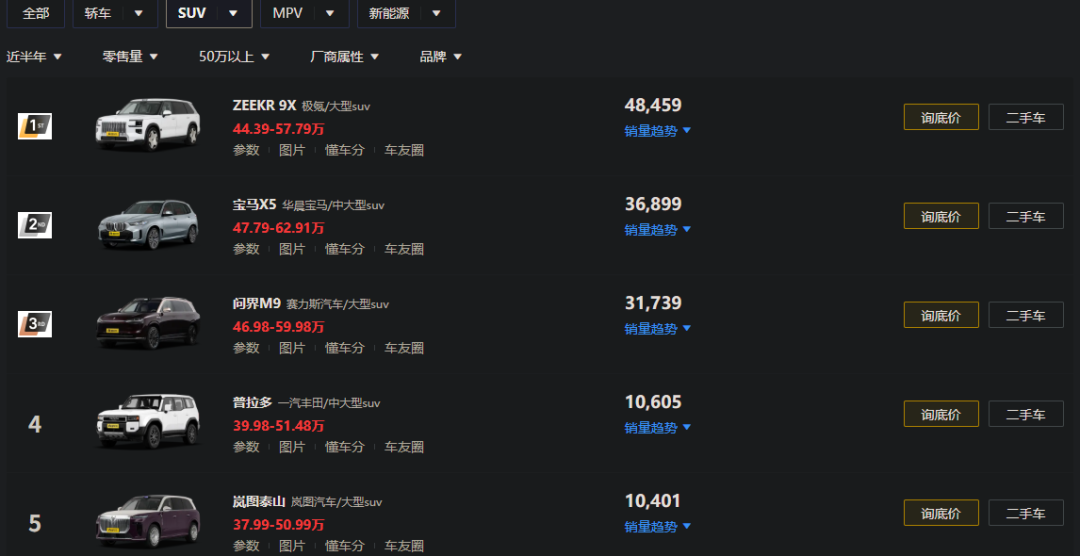
Shifting focus back to fuel vehicles, it cannot be denied that currently, in the 500,000 RMB fuel SUV segment, the BMW X5 is the only model selling in significant volumes. However, starting from the fourth quarter of 2025, BMW has been maintaining sales through price reductions, and with the BMW X5 facing an upcoming generation change, its pricing holds little reference value for the domestically produced Mercedes-Benz GLE.
Of course, it must be emphasized that although by 2026, local brands in the Chinese market will have made significant inroads in the luxury SUV segment, leaving limited opportunities and time for BBA, the good news is that in the fuel luxury SUV segment, with the BMW X5 setting the value benchmark, the domestically produced GLE can alleviate some market pressure if it balances price and space.
In simple terms, in 2026, it is unlikely that Mercedes-Benz Group or BAIC Group can rely solely on the brand power of the 'three-pointed star' to reap substantial profits in the Chinese auto market. After all, when the penetration rate of new energy vehicles in China exceeds 50% and the market enters a mature phase, consumer demand for luxury new energy vehicles is no longer driven by mere brand worship.
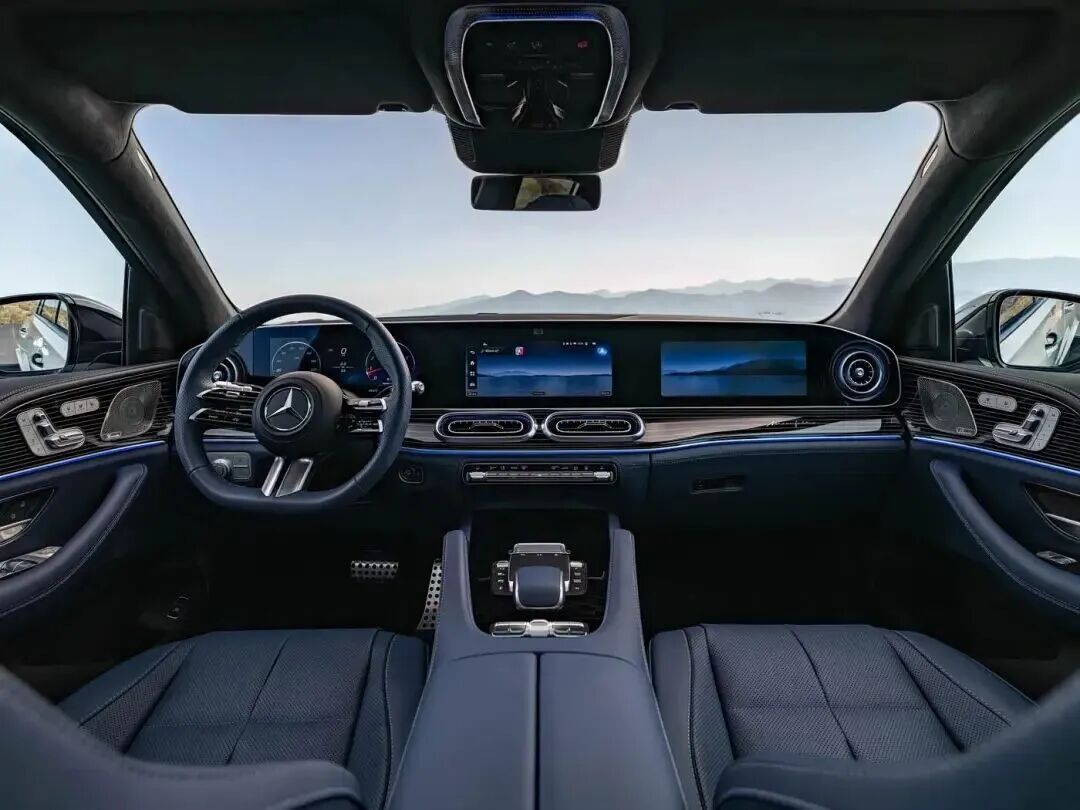
Therefore, the core product mission of the domestically produced Mercedes-Benz GLE is to meet the needs of users who are highly loyal to the Mercedes-Benz brand and to retain its existing customer base. After all, for Mercedes-Benz, even if sales in the Chinese market continue to decline, the weight of a 35% market share is not something Mercedes-Benz can easily afford to lose. The same applies to BMW, Audi, and even Japanese brands.
Mercedes-Benz Still Has Cards to Play
However, just when everyone thought that Mercedes-Benz, facing slowing growth in the incremental market and loss of market share in the existing market in China, would throw in the towel, Mercedes-Benz has proven to be more clear-headed than most brands.
The greatest confidence supporting Mercedes-Benz's clarity lies in its 'globalization.'
In the first quarter of 2026, Mercedes-Benz's total global sales declined by 6%, with a significant 27% drop in Chinese sales, causing the Asian market to slip from its position as Mercedes-Benz's largest market to behind the European market.
In contrast, Mercedes-Benz's European market sales reached 158,400 units in the first quarter, a 7% year-on-year increase, with German sales reaching 49,300 units, a 9% year-on-year increase, making Germany Mercedes-Benz's largest market. The North American market also saw significant growth, with Mercedes-Benz selling 89,600 units in the first quarter, a 16% year-on-year increase, and 81,100 units in the United States, a 20% year-on-year increase.
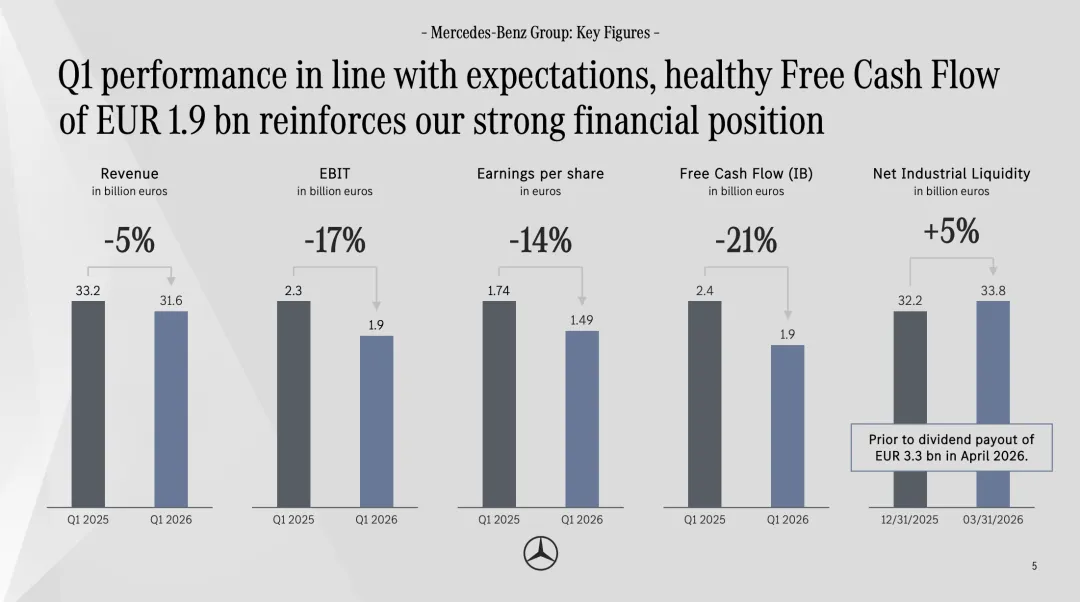
It must be emphasized that Mercedes-Benz's sales growth in Europe is primarily driven by its electrification transformation.
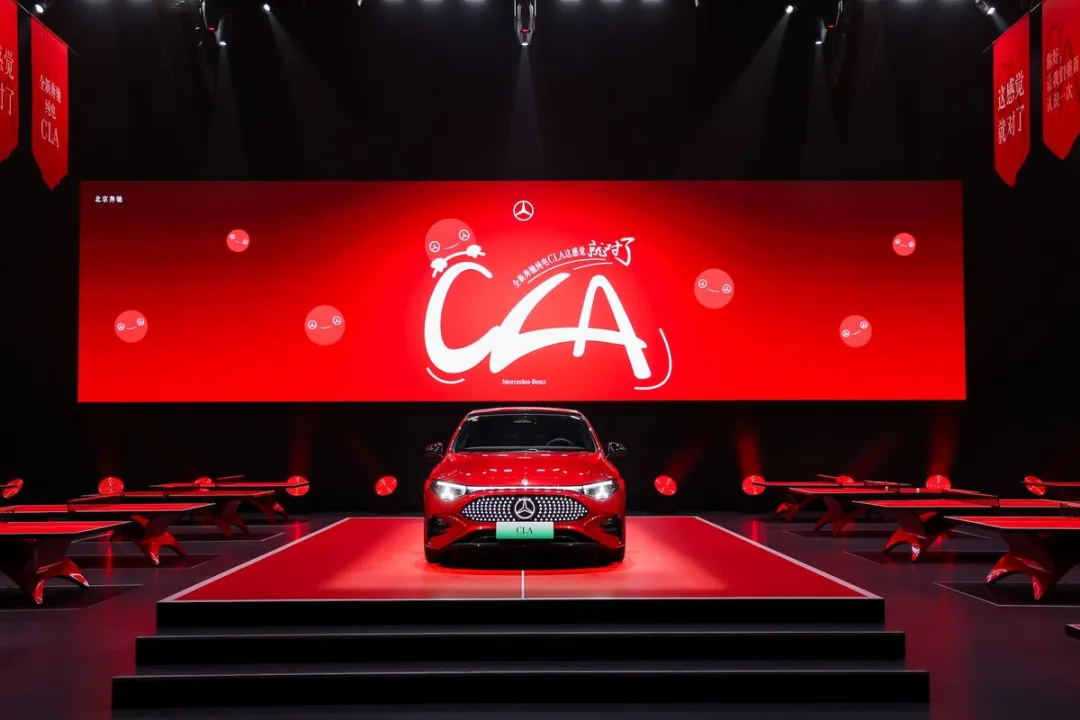
According to Mercedes-Benz, the all-new electric CLA has received an enthusiastic response in Europe, leading the factory to adopt a three-shift production schedule. Mercedes-Benz's pure electric vehicle sales in Europe increased to 34% in the first quarter, with a 36% surge in pure electric vehicle sales in the German market.
While the pure electric CLA, which failed in the Chinese market and is not favored by Chinese consumers, has become a highly sought-after model in the European market, this demonstrates the product resilience afforded by Mercedes-Benz's globalization strategy.
We can say that 'Europeans haven't fully embraced the finer aspects of new energy vehicles,' but we must admit that Mercedes-Benz's ability to 'trade space for time' will undoubtedly become a 'market dividend' for the brand for a considerable period. By innovating and developing in China and selling products globally, Mercedes-Benz can use global market growth to compensate for losses in the Chinese market, a strategy that is preemptively capturing overseas consumers' minds regarding new energy vehicles.
This is also why Chinese brands have been emphasizing 'going global' in recent years. The Chinese market has entered a mature phase, while global markets offer inherent advantages for overseas brands. Therefore, Chinese brands' 'going global' strategy is about 'competing for markets and time' with overseas brands.
Mercedes-Benz holds the 'global market' as its safety net while closely advancing electrification updates and long-term布局 (layout) in the Chinese market. Ola Källenius, Chairman of the Board of Management of Mercedes-Benz Group AG, stated, 'By 2027, Mercedes-Benz will launch 40 new models covering diverse powertrain forms, including seven models specifically designed for the Chinese market.'
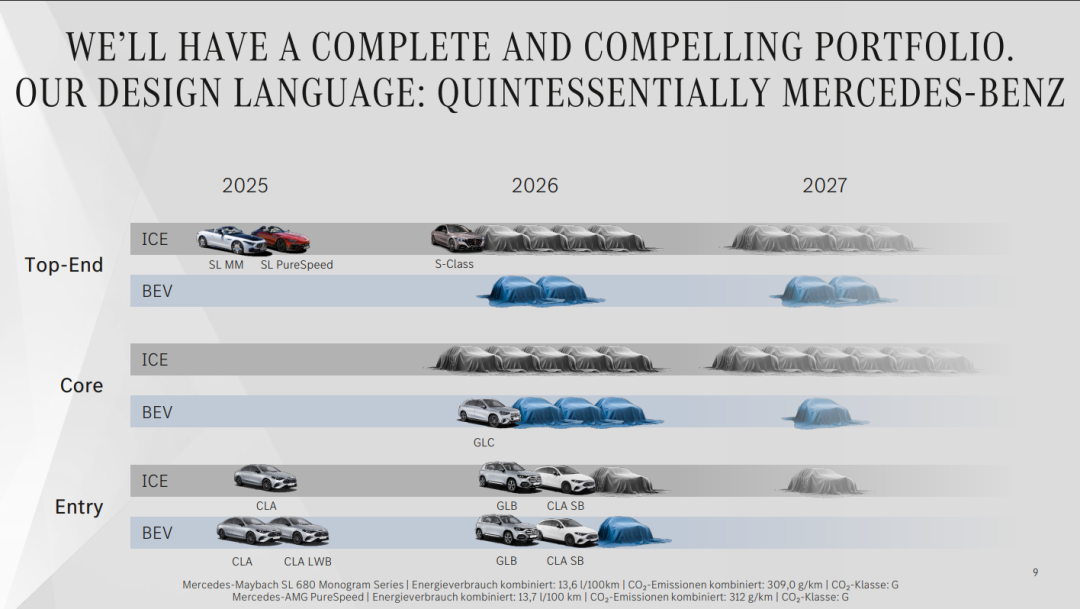
Considering Mercedes-Benz's previous indecisiveness on new energy strategy in the Chinese market, it is hard to say definitively whether 'Mercedes-Benz is truly determined this time to address its electrification shortcomings.' However, it is certain that the pure electric GLC, customized MB.OS system, and intelligent enhancements represent significant improvements compared to the earlier 'EQ' era.

Commentary
Looking back at BBA's electrification journey, the core reason for their previous failures was underestimating the determination and speed of Chinese automakers. The market does not wait for the hesitant, nor will Chinese consumers be 'forgiving' enough to give traditional luxury brands repeated opportunities for trial and error. While BBA's new electrified products launched in 2026 do seem promising and leverage global supply chains to create distinctive global brand features, with Chinese brands accelerating their upgrade and iteration speed, it remains to be seen whether BBA's strategy of 'trading space for time' can rebuild technological moats before Chinese brands successfully go global.
(This article is original to Heyan Yueche and may not be reproduced without authorization.)

Heyan Yueche is now available on the following platforms
Tencent | Yiche.com | Chejiahao | Toutiao | Sina KanDian | Sohu
Xiaohongshu | Dayuhao | Sina Weibo | Yidian Zixun | Baijiahao
NetEase | Qiche Toutiao | Cheyouhao | Pacific Car
-
![]()
Embrace Freedom, Live Boldly! Great Wall Motor’s Menglong PLUS Launches in the Greater Bay Area, Unlocking Enhanced Lifestyles with One Vehicle
-
![]()
The Agent hasn't arrived yet, but Ascend has already paved the way from hardware to software.
-
![]()
In 71 years, He sold products to 100 million people
-
![]()
First-hand Practical Test! Opus 4.8 Vs ChatGPT 5.5 Vs Kimi 2.6: Which is the Most Usable?
-
![]()
Fourfold Uncertainty Challenges Facing China's Agent Industry - Interpretation of the 'Report' (Part Six)
-
Crazy Anthropic
-
![]()
CNPC’s Kunlun Model Advances with 152 Implemented Scenarios, Showcasing Proactive AI
-
![]()
Revenue Increases, But Profits Don't: Pinduoduo's Anxiety Amidst Billion-Dollar Brand Building