Wang Chuanfu, with 160 Billion Yuan in Assets, Urges Patience Amid Shareholder Concerns
 06/12 2026
 572
572
Produced by Leida Finance | Written by Ding Yu | Edited by Meng Shuai
"I only hold BYD stocks, and now my entire portfolio is down by 26%. I'm very upset," a shareholder said with a choked voice at BYD's annual shareholder meeting.
Faced with the shareholder's 'soul-searching questions,' Wang Chuanfu urged shareholders to remain patient, stating that BYD would continue to grow sustainably over the next three to five years and 'will definitely deliver better returns to shareholders.'
Wang Chuanfu even boldly claimed, "In five years, BYD will truly become the world's largest in scale."
However, BYD's overall situation is not optimistic at present. In the first quarter, the company achieved revenue of 150.225 billion yuan, down 11.82% year-on-year; net profit attributable to shareholders was 4.085 billion yuan, a significant decline of 55.38% year-on-year.
In terms of sales, BYD sold 1.405 million vehicles in the first five months of this year, a year-on-year decrease of over 20%.
In the capital market, as of the close on June 11, BYD's stock price was 89.8 yuan per share, down more than 30% from its peak last year.
Tianyancha shows that Wang Chuanfu is the actual controller of BYD. In the "2026 Hurun Global Rich List" released in March this year, Wang Chuanfu was listed again with a wealth of 160 billion yuan.
Shareholder Chokes Up Asking About Prospects, Wang Chuanfu Urges Patience
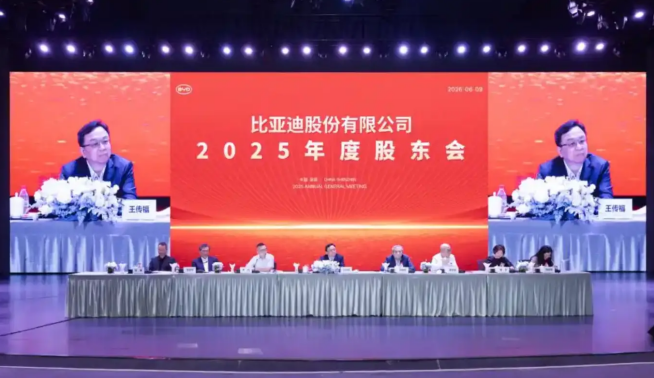
On the morning of June 9, BYD held its 2025 annual shareholder meeting in Pingshan, Shenzhen. In addition to company chairman and president Wang Chuanfu, board secretary Li Qian, and other executives, nearly a thousand shareholders attended, marking the highest number of participating shareholders in the company's history.
According to media reports, at the shareholder meeting, a shareholder choked up while asking about the company's business and stock price prospects.
Based on an on-site video, the shareholder said that while the Shanghai Composite Index had risen by 30% and CATL's stock had surged by 76% during the same period, he only held BYD stocks and was now down by 26% on his entire portfolio, feeling very upset.
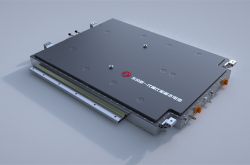
Wang Chuanfu stated that BYD would continue to grow sustainably over the next three to five years. With the support of second-generation blade batteries, flash charging technology, and new technologies to be launched in the next year or two, BYD expects to achieve dual-wheel drive domestically and internationally, forming a virtuous cycle and taking Chinese technology global.
Wang Chuanfu further said that BYD is expected to achieve significant growth by 2030, and "in five years, BYD will truly become the world's largest in scale."
At the same time, when responding to concerns about the company's undervalued stock price at the shareholder meeting, Wang Chuanfu said, "Everyone recognizes our potential, but our stock price has not yet reflected it. On behalf of the management, I understand and appreciate your support."
Wang Chuanfu said that BYD is a long-termist, having grown from a team of 20 people 30 years ago to its current scale, always adhering to a development philosophy of technological innovation, technology-driven, and innovation-oriented. It has also grown step by step following the national strategy and going global.
In Wang Chuanfu's view, the company's performance will continue to improve, and he hopes shareholders will remain patient. The company will continue to drive future growth through technological innovation, seize various opportunities, and make scientific and forward-looking layouts to achieve better and faster development, "definitely delivering better returns to shareholders."
Leida Finance noticed that since late March this year, BYD's stock price has generally been on a downward trend. As of the close of the shareholder meeting, the company's stock price was 91.89 yuan per share, down more than 30% from its peak in May last year.
Q1 Revenue and Profit Decline, Sales Drop by 20% in First Five Months
In fact, shareholders' concerns are not unfounded, as BYD is indeed facing certain pressures.
In terms of performance, in the first quarter of this year, BYD's revenue decreased by 11.82% year-on-year to 150.225 billion yuan, marking a year-on-year decline for three consecutive quarters.
During the same period, BYD's net profit attributable to shareholders decreased by 55.38% year-on-year to 4.085 billion yuan, marking a year-on-year decline for four consecutive quarters, with the decline further widening from 38.16% in the fourth quarter of last year.
BYD's sharp profit decline in the first quarter is partly closely related to exchange rate fluctuations. Financial reports show that in the first quarter of this year, BYD's financial expenses were 2.1 billion yuan, compared to -1.908 billion yuan in the same period last year.
In response, BYD explained in its first-quarter report that this was mainly due to exchange losses in the current period, compared to exchange gains in the same period last year.
In the first quarter of this year, BYD's net cash flow from operating activities was 2.79 billion yuan, a sharp year-on-year decline of 67.48%, mainly due to a decrease in cash received from selling goods and providing services.
In the first quarter, the cash received from selling goods and providing services was 151.599 billion yuan, a year-on-year decrease of over 35 billion yuan.
However, BYD's gross profit margin in the first quarter reached 18.8%, up 1.4 percentage points from the fourth quarter of last year, reaching the highest level in the past four quarters, but still lower than 20.1% in the same period last year.
In terms of car sales, BYD's performance this year has also been unsatisfactory.
Production and sales reports show that in May this year, BYD sold over 380,000 vehicles, a slight year-on-year increase of 0.26%, leading domestic automakers.
However, considering the sales in the first five months, BYD's total sales declined by 20.32% year-on-year to 1.405 million vehicles.
Leida Finance found that BYD's expansion pace has actually slowed down since last year.
In September 2025, it was reported that BYD had lowered its sales target for 2025 by 16%, from the initial 5.5 million vehicles to 4.6 million vehicles.
Ultimately, in 2025, BYD achieved annual sales of 4.602 million vehicles, just exceeding the target line, with a year-on-year increase of 7.73%.
At the recently concluded shareholder meeting, Wang Chuanfu also expressed his views on car sales, stating that "the first quarter of this year was the darkest moment for new energy vehicles," as the purchase tax exemption for new energy vehicles was adjusted from full exemption to a 50% reduction starting in 2026, leading to some sales being brought forward in November and December 2025.
Wang Chuanfu said that the retail penetration rate of new energy passenger vehicles in China dropped from 59.1% in December last year to 38.6% in January this year, before rebounding to 44.9% in February.
"For BYD, which only makes new energy vehicles and does not make fuel vehicles, the impact was significant in January and February this year. However, through efforts in March and April, our sales have been recovering month by month, and BYD achieved positive sales growth in May."
Wang Chuanfu said that the production capacity of BYD's second-generation blade batteries, released in March, is ramping up, and many operational data have started to recover. With the production capacity ramp-up, sales are expected to increase by 20,000 to 30,000 vehicles per month until the end of the year; at the same time, the company's cash flow will also continue to increase accordingly, returning to previous levels.
Based on Wang Chuanfu's projected sales growth, BYD's total car sales this year may fall within the range of 4.65 million to 4.93 million vehicles.
Domestic Market Under Pressure, Overseas Sales Surge
In fact, the "darkest moment" mentioned by Wang Chuanfu refers more to the domestic new energy vehicle market. Recently, the new energy vehicle market has generally shown a trend of "domestic demand under pressure, strong foreign trade."
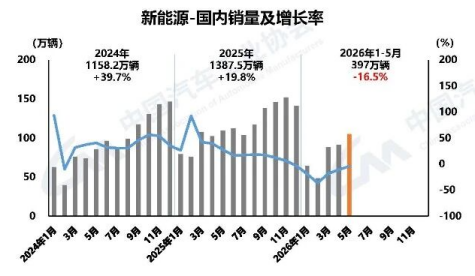
According to data from the China Association of Automobile Manufacturers, in May this year, domestic sales of new energy vehicles reached 1.049 million units, a month-on-month increase of 14.8% and a year-on-year decrease of 4.1%.
Extending the timeline further, in the first five months of this year, domestic sales of new energy vehicles totaled 3.97 million units, a year-on-year decrease of 16.5%.
In contrast to the domestic market, new energy vehicles are thriving in overseas markets.
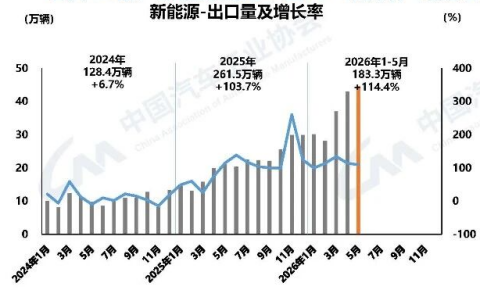
In May this year, China exported 446,000 new energy vehicles, a month-on-month increase of 3.8% and a year-on-year surge of 1.1 times. In the first five months of this year, exports of new energy vehicles reached 1.833 million units, also achieving a year-on-year increase of 1.1 times.
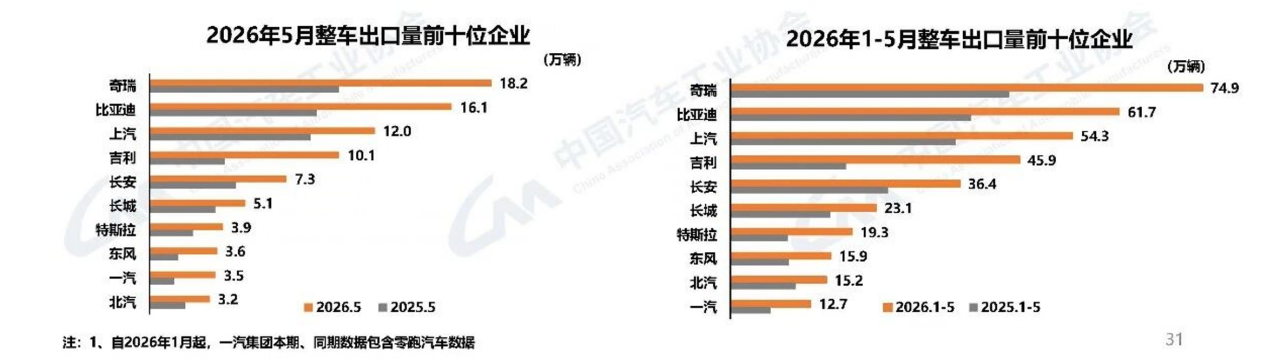
Among automakers, BYD's overseas performance is particularly outstanding, second only to Chery Automobile.
In May this year, BYD exported approximately 161,000 new energy vehicles, a year-on-year increase of 80.4%; total exports in the first five months reached 617,000 units, a year-on-year increase of 64.85%.
Wang Chuanfu stated at the shareholder meeting that the current momentum of Chinese automakers going global is very strong, and BYD, as a representative, has seen good development. Product competitiveness, price, technology, and experience all surpass many local competitors. Product strength will ultimately be reflected through data and real growth.
Wang Chuanfu revealed that BYD's overseas sales target for 2026, set at the beginning of the year, was 1.5 million units, but it now seems likely to exceed this figure. BYD has been operating overseas for many years, and its reputation, technology, products, and service network will support the company in achieving impressive export data in the coming years.
When asked how to maintain sustained growth in overseas markets, Wang Chuanfu believes that localization is crucial in overseas markets.
For example, BYD has established a production base in Brazil, primarily serving South America, which is rapidly starting production and helping the company maintain a stable market share in Brazil and even South America.
"Our exports should not only grow but also be able to sustain localized services, ensuring sustained and stable growth and achieving win-win cooperation and development with locals," Wang Chuanfu said.
Wang Chuanfu expects that, relying on technological innovation, BYD's overseas business will maintain rapid growth over the next three years. The company will continue to make forward-looking layouts in new technologies, seize every opportunity for industry transformation, and strive to create long-term returns for shareholders.
In Wang Chuanfu's view, automobiles are a means of transportation involving life safety, and ultimately, they must return to product quality and performance rather than flashy marketing. Currently, BYD's products have established a high-end brand image in overseas markets, and the company will continue to refine its products and introduce multiple new technologies in the future.
Will BYD be able to recover its performance and achieve its sales targets as Wang Chuanfu said? Leida Finance will continue to monitor.
-
![]()
Insta360 Leads Global Market, Yet Profit Signals Remain Subdued
-
Marketing and Transaction Growth: Entering the Age of the Agent
-
![]()
Dongfeng’s Solid-State Batteries Set for Mass Production and Vehicle Integration in H2 2026
-
Marketing and Transaction Growth: Entering the Age of Agent
-
![]()
Stock Prices Hit Rock Bottom & Regulatory Interviews Raise Dual Alarms in Auto Industry
-
![]()
Can the Hongqi G919 Surmount the Challenge Posed by the Mengshi 917?
-
![]()
AI Gaokao Evaluations Plagued by Chaos: Full Marks Awarded for Incomplete Questions
-
![]()
For Two Straight Months, No BBA Model Has Exceeded 10,000 Monthly Sales in the Chinese Market