The Entry Ticket to Physical AI Might Have Been First Obtained by Seres
 06/17 2026
 528
528
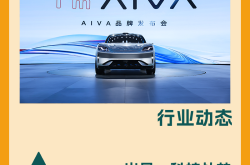
Recently, Saidou Technology unveiled its AI automotive brand AIVA in Beijing. Unusually, the event eschewed discussions of technical specifications or driving range, instead repeatedly emphasizing “when AI grows a car's body.”
More intriguing details have also been revealed—the concept car Origin Concept made its debut, with the first mass-produced model, the ME7, slated for launch within the year. Manufactured by Seres, the ME7 will cover the entire mid-to-high-end market above RMB 200,000, with its AI capabilities powered by Volcano Engine's Doubao large model and intelligent cockpit solutions.
What truly stands out is its equity structure—the largest shareholder is Shacizhiyuan, a subsidiary of Chongqing State-Owned Assets, holding 34.5%; Seres steps down to second place with approximately 33%; and Wending Investment, a subsidiary of CATL, holds 9.9%. Why such a shareholder lineup for a brand born from AI?
—Lead
01 Capital Gains Beyond AITO's Core Business
Undoubtedly, Seres' main focus remains AITO. By 2025, AITO is projected to generate RMB 165 billion in revenue and nearly RMB 6 billion in net profit, with an average transaction price of RMB 391,000 per vehicle. This underscores the group's unchanged strategy: targeting the high-end market, deepening cooperation with Huawei, and focusing on AITO to build a world-class luxury automotive brand.
However, AIVA operates outside this main trajectory. While AITO competes in the RMB 390,000 price range, AIVA targets the RMB 200,000 segment, avoiding direct competition. Independently operated by Saidou Technology, AIVA's financials are kept off the books of the listed company, ensuring no impact on AITO. Seres, as a key shareholder, serves as the industrial resource provider responsible for “building great cars.”

What Seres brings to the table is its years of accumulated manufacturing and quality systems. Their significance becomes clear within the RMB 200,000 price segment—currently the most crowded, cost-sensitive, and quality-controlled market. It's also where new entrants most often stumble in delivery and yield, requiring substantial reinvestment to rectify.
By leveraging AITO's proven manufacturing and quality systems, Seres enables AIVA to bypass the costliest phase of a new brand's development. Here, quality is not an expense but a determinant of yield, delivery, and reputation, directly influencing profitability and future equity value. Seres' investment mitigates the track 's (track's) greatest risk—the foundation for “superior capital gains.”
These gains manifest in two layers. The first is manufacturing: ME7 production generates immediate revenue for Seres, providing visible cash flow. The second is equity: with approximately 33% ownership under the equity method, Seres recognizes proportional investment income once Saidou turns profitable, while brand appreciation accrues in long-term equity investments for future realization. Manufacturing revenue is recognized upfront, equity gains deferred, all while AITO's core business remains unaffected. This is less a product line expansion than a capital arrangement securing entry into physical AI.
02 Organizational Synergy: Creating Differentiation Beyond Procurement
Returning to the equity structure, each party contributes tangible assets.
State-owned assets, as the largest shareholder, provide industrial resources and policy support.
CATL's role has evolved. Previously supplying batteries via “factory-within-a-factory” arrangements for Seres, it now joins as a shareholder. This capital tie-up reflects CATL's deeper confidence in Seres, elevating cooperation from supply to shared risk.
Seres contributes manufacturing and quality; Xingyu and Bojun follow with upstream supply chain investments; Volcano Engine joins through deep co-creation with its Doubao large model and intelligent cockpit. Thus, funding and R&D pressures—typically heaviest for new brands—are distributed among multiple stakeholders. Seres avoids the hundreds of billions in burn rates seen among new entrants, opening a new AI automotive front. This represents both asset structure optimization and asset-light collaboration.

Why assemble such a team for an AI car? The key lies in Doubao. As a general-purpose large model deployed across millions of vehicles and dozens of brands, procurement alone cannot secure differentiation. Hence, AIVA's collaboration with Volcano Engine transcends installing a cockpit assistant—it involves “joint definition and design” from product inception. According to AIVA, product definition once relied on research and experience; now, AI analyzes data, identifies trends, and infers demands to pinpoint viable directions before production begins. The competitive focus shifts from “what is procured” to “who collaborates.”
This approach is familiar to Seres. “Cross-border deep integration” has long been its ethos: integrating external strengths into product development beyond mere procurement or contract manufacturing. AIVA extends this philosophy into the AI era. Ultimately, its novelty lies not in AI but in organization—core technologies need not be self-owned if collaborative strengths can be harnessed. In the AI era, automotive competition hinges not just on manufacturing capabilities but on organizational prowess.

03 From Manufacturing to Technology: Valuation Shifts Driven by an Equity Structure
Zooming out, the industry trajectory is clear: electrification in the first half, intelligence in the second, culminating in AI. Capital market valuation logic for automobiles is shifting accordingly. Under this framework, vehicles cease to be mere manufacturing endpoints; they become the first physical manifestation of AI in the real world—embodied intelligent agents capable of environmental perception, autonomous decision-making, and sustained human interaction. Whoever controls such carriers holds the gateway for AI to transition from screens to reality. AIVA's “AI-first, car-second” approach aligns precisely with this trajectory.
For Seres, this equity structure also drives valuation realignment. A manufacturing-centric company gains entry into the AI automotive race through a multi-party, AI-led project. Future metrics may transcend traditional automotive P/E ratios.
Deeper transformations are reshaping automotive manufacturing itself. In the software-defined era, OEMs served as orchestrators, focusing on software integration. With AI-defined automobiles, no single company can monopolize the value chain from models to chips, batteries, and manufacturing. Competition shifts from “building great cars alone” to “collaboratively growing a car.” The equity structure exemplifies this new paradigm, translating “AI-defined automobiles” from slogan to industrial organization. How far this logic extends will be answered by the ME7's launch and subsequent real-world performance—but the direction is unmistakable.
When automotive manufacturing evolves from an assembly line to an equity structure binding multi-party strengths, the transformation may extend beyond vehicles to the very nature of “automaking” itself.
-
Storm-Eye Dreamer: Musk’s Empire and SpaceX’s Leap to Public Markets
-
AI CITY 2.0: Transforming Cities from 'Problem Identification' to 'Problem Solving'
-
The Entry Ticket to Physical AI Might Have Been First Obtained by Seres
-
![]()
Maxwell Technologies Unveils Hong Kong IPO Plan, Pioneering Domestic GPU A+H Listing
-
M3 Fails to Support MiniMax, Market Value Retracts by 300 Billion HKD
-
![]()
Xingyuan Intelligence Unveils World Model ω-EVA, Elevating Embodied Intelligence to New Heights
-
![]()
Xinliu Exclusive: Nubia Fully Commits to Second-Gen Doubao AI Smartphone
-
![]()
No grace period for beginners! Saido Tech goes straight into battle from the start