No grace period for beginners! Saido Tech goes straight into battle from the start
 06/16 2026
 352
352
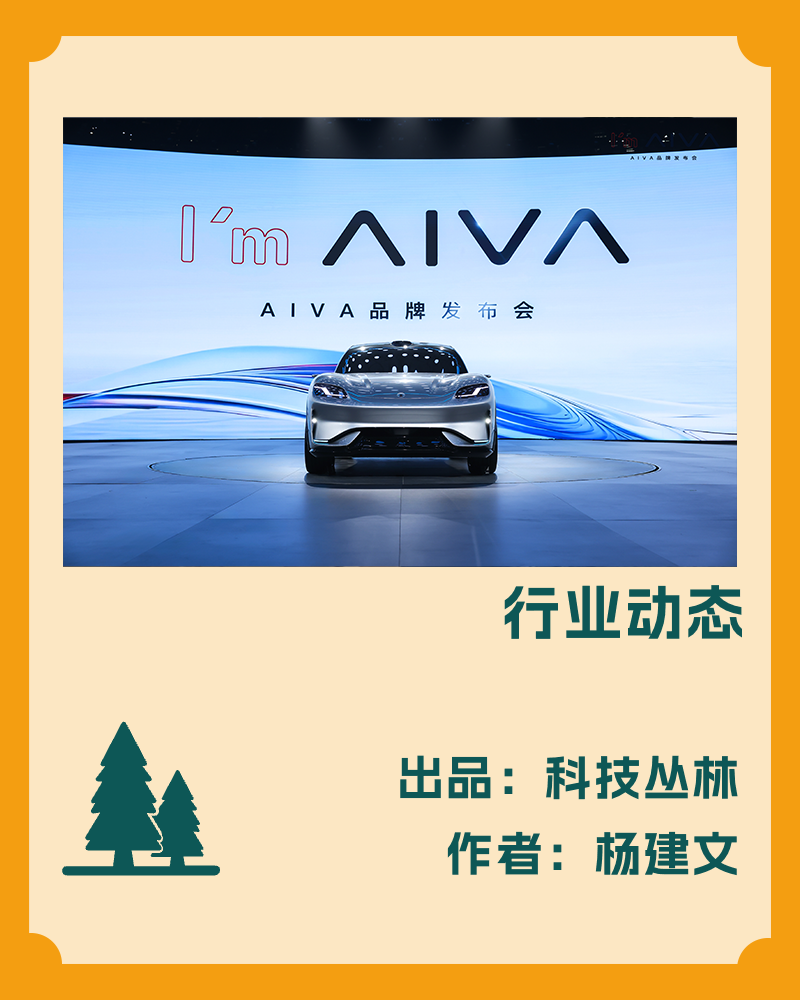
Let's talk about Saido Tech today.
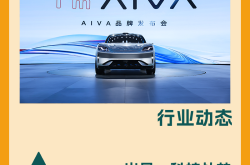
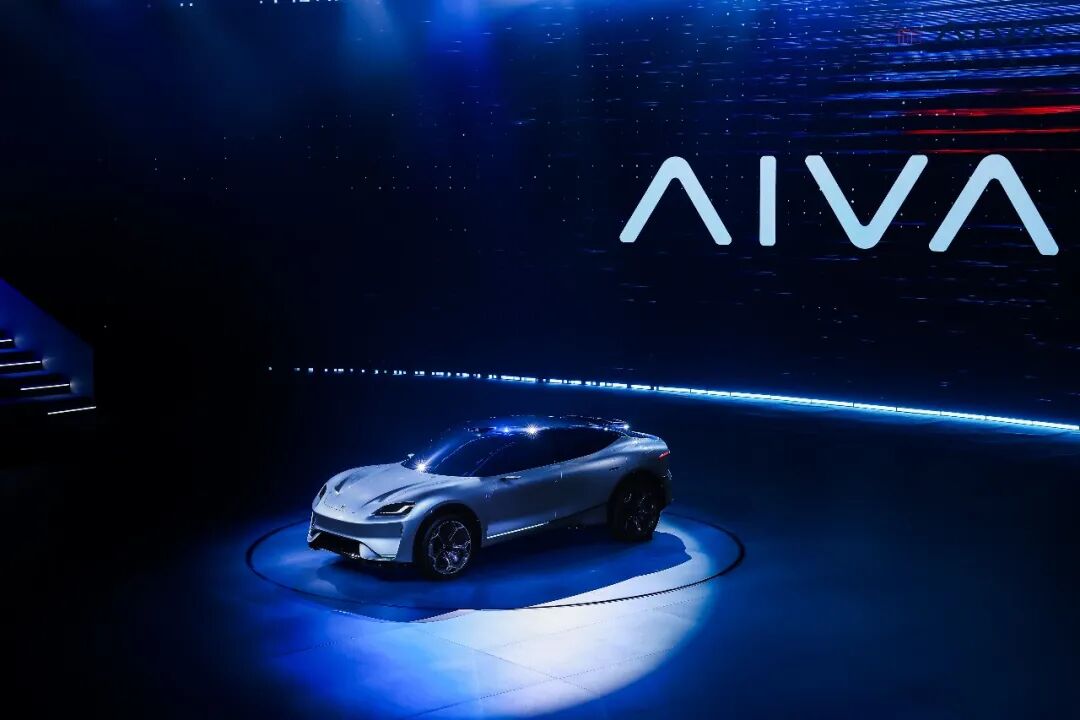
On June 9, 2026, Saido Tech officially launched its AI vehicle brand AIVA in Beijing.
The AIVA Origin Concept car made its debut alongside the announcement, with the first production model, the AIVA ME7, set to arrive later this year.
This launch not only marks the birth of a new AI vehicle brand but also reveals Seres' strategic transformation path in the 'Post-AITO Era' and its new layout in the AI vehicle era.
01 Who is Saido Tech?
To understand Saido Tech, we must clarify its relationship with Landian Auto and Seres.
This is not merely a rebranding but a systemic transformation involving equity restructuring, asset integration, and strategic upgrading.
After AITO opened up the high-end market, Seres launched Landian Auto, hoping to create synergy between 'AITO + Landian.' AITO targeted the high-end segment, while Landian focused on the mass market.
However, Landian's market performance consistently fell short of expectations.
In 2025, cumulative sales reached only about 16,000 units, and since 2026, monthly sales have consistently remained below 1,000 units, with some months seeing fewer than 500 units sold.
Even without looking at the financial reports, it's clear that significant losses lie behind these sales figures. 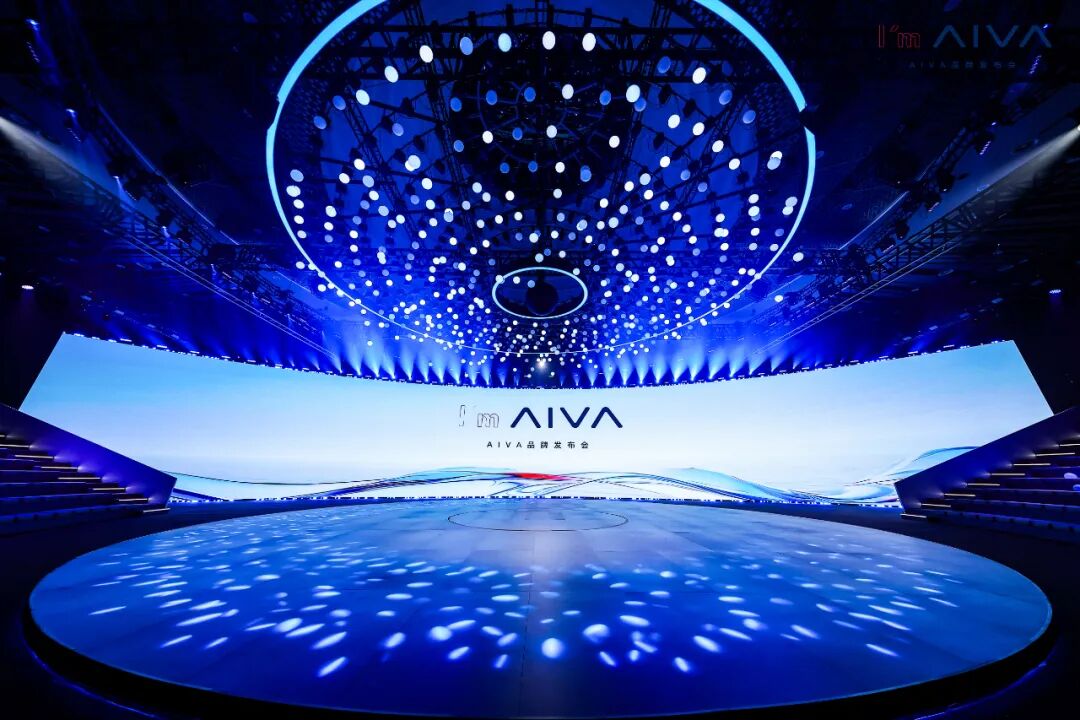
The deeper impact is reflected in the capital market narrative.
The AITO brand has successfully established itself in the RMB 300,000 to RMB 500,000 price range, and Seres is striving to tell a capital story of being a 'leader in China's luxury smart electric vehicle market.'
However, Landian's persistent losses and stagnant sales not only drag down the group's overall gross and net profit margins financially but also create confusion in valuation logic.
Investors find it difficult to understand why a company positioning itself as 'high-end and intelligent' would carry the burden of a consistently loss-making low-end brand.
This 'high-end defocusing' effect has placed Seres under significant Valuation discount (valuation discount) pressure in the capital markets.
To fundamentally shed this burden,
in February this year, Seres announced a cooperation agreement with the People's Government of Shapingba District, Chongqing, to divest its Existing assets (existing assets) related to Landian Auto and establish a new target company (Landian Tech) with capital contributions. The Shapingba District government led the introduction of cash capital increases.
In May, Landian Tech underwent a major strategic turning point, completing a capital increase and share expansion worth approximately RMB 6.671 billion, introducing five investors, including Shaci Zhiyuan, a local state-owned asset platform in Chongqing, and CATL, a leading power battery manufacturer.
Among them, Shaci Zhiyuan became the largest shareholder with a RMB 3.43 billion investment, holding a 34.5% stake; Seres retreated to the second-largest shareholder with a 32.96% stake; CATL invested RMB 984 million through its subsidiary Wending Investment, holding a 9.89% stake; employee stock ownership platforms and industrial capitals such as Xingyu Automotive Lighting and Jiangsu Bojun Technology also joined, creating a diversified equity structure.
Landian Tech was officially renamed Saido Tech. 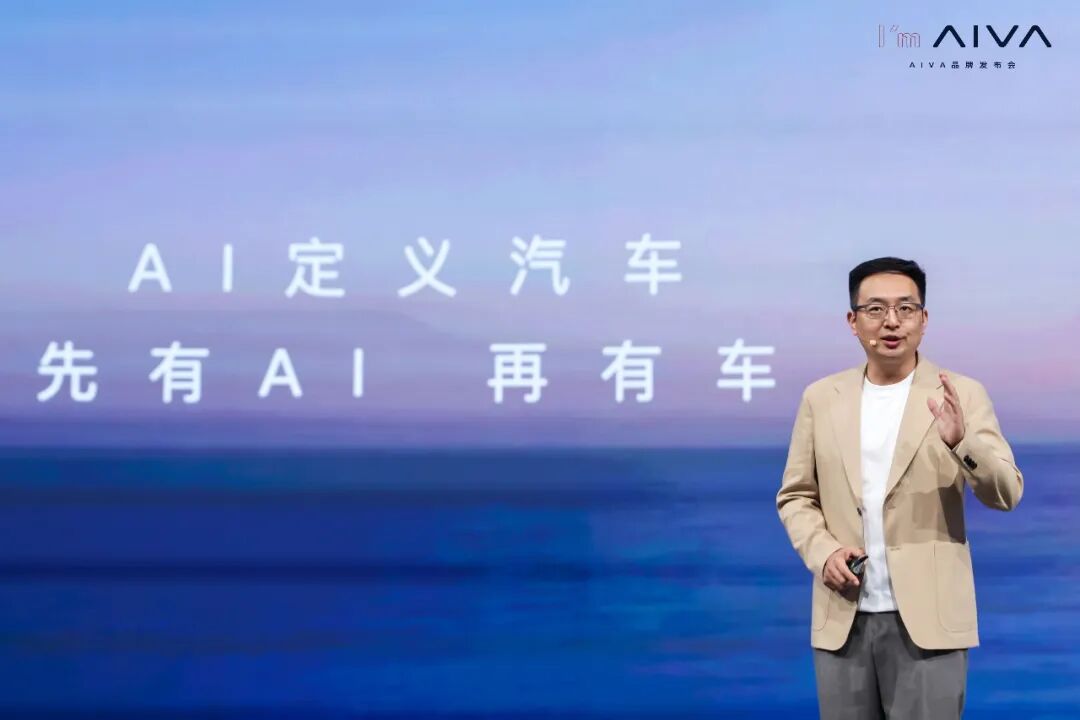
The name 'Saido' is also intriguing.
'Sai' represents its historical connection to Seres, while 'Dou' points to its deep cooperation with Volcano Engine and Doubao Large Model.
The naming logic visually embodies the cooperative relationship of technological binding and deep business collaboration between the two parties.
This rebranding and capital increase mark Saido's full transformation from a traditional new energy vehicle manufacturer to an AI vehicle ecosystem enterprise, completing a fundamental strategic upgrade.
For Seres itself, this divestiture of Landian Auto's inefficient existing assets directly optimizes the listed company's balance sheet structure and business layout. At the same time, by shifting from a wholly-owned Controlling entity (holding entity) to a financial equity participant, Seres achieves business risk isolation, thoroughly untangles and redirects internal group resources, allowing it to focus wholeheartedly on AITO's high-end model R&D, operations, and brand building, streamlining business lines, optimizing financial report loss items, and achieving strategic relief.
This marks a new beginning for both Seres and Saido Tech.
02 What story is Saido telling?
Saido Tech's launch event essentially marks the beginning of Seres' narrative of a 'second growth curve.'
Unlike the AITO model in cooperation with Huawei, Seres this time has chosen a new narrative angle of 'AI-defined vehicles,' while leveraging multi-party capital empowerment and technological synergy to create differentiated competitive advantages.
Building an Industrial Ecosystem
Let's start with Seres. As the second-largest shareholder, although no longer the controlling party, Seres, as an important shareholder and industrial resource provider, will still contribute its vehicle manufacturing capabilities and supply chain resources, providing solid support for Saido Tech's product realization.
CATL, as a leading battery supplier, will offer systematic energy solutions in battery technology, safety, and power battery charging and swapping systems.
For CATL itself, this is also to pre-lock the long-term battery demand of a volume brand, diversify its customer base, and upgrade itself from a 'replaceable supplier' to a 'core node in the industrial chain.'
The participation of industrial capitals such as Xingyu Automotive Lighting and Jiangsu Bojun Technology further improved (completes) the industrial chain collaboration, constructing a complete industrial ecosystem for Saido Tech from component supply to vehicle manufacturing.
The employee stock ownership platform holds a 16.48% stake, effectively binding the core team's interests, stimulating organizational vitality, and injecting momentum into the company's long-term development.
State-owned asset platforms can provide industrial resource support.
Finally, the AIVA brand, as an independently operated entity, is responsible for brand, product, and business advancement.
This is the narrative at the capital level.
Technological Synergy
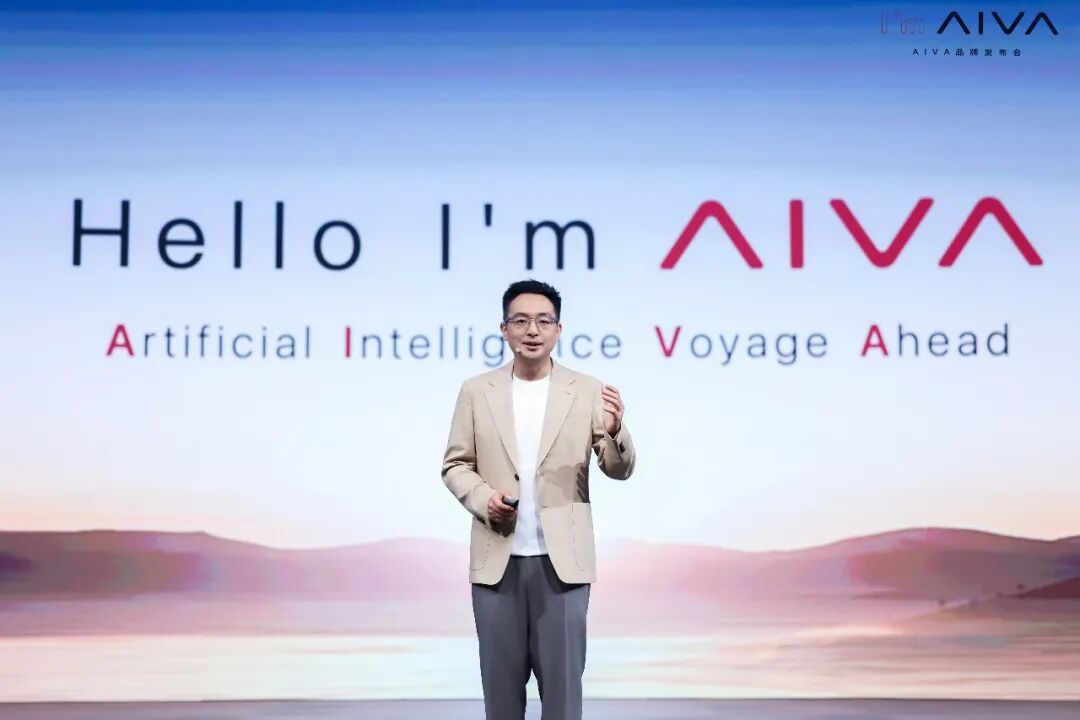
Of course, the core narrative of the AIVA brand is 'AI defines the vehicle: AI comes first, then the vehicle.'
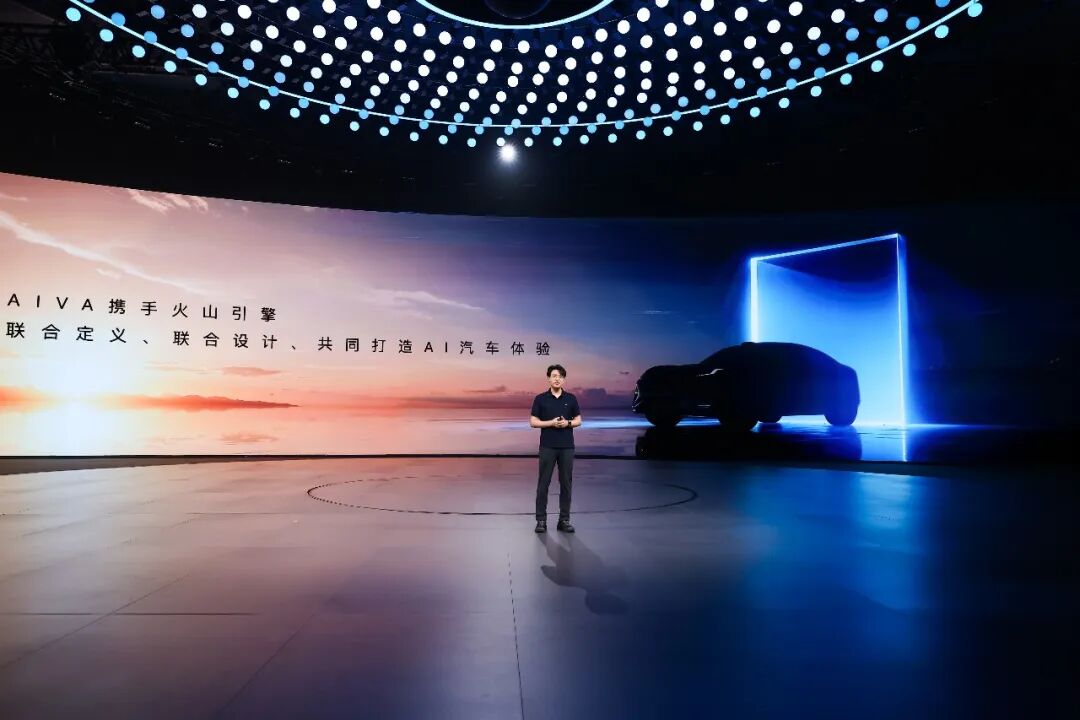
Saido Tech has chosen to collaborate with ByteDance's Volcano Engine to jointly define, design, and create an AI vehicle experience.
Volcano Engine provides technical services such as the Doubao Large Model and smart cockpit solutions for the AIVA brand, helping enhance the in-vehicle intelligent interaction experience.
It's worth mentioning that this cooperation is not a traditional single-point technology supply or simply integrating an AI assistant into the vehicle. Instead, it is a deep co-creation centered around 'AI-defined vehicles.'
In terms of intelligent driving, Yuanrong Qixing, a leading domestic intelligent driving company, will provide its intelligent driving capabilities. Yuanrong's solutions have already been mass-produced in multiple models from automakers such as Great Wall Motors, Mercedes-Benz Smart, and Leapmotor, making them relatively mature.
In summary, AIVA's exploration is not an independent attempt by a single entity but a new paradigm of AI vehicle industrial organization, driven by AI prioritization, carried by an independent market-oriented entity, and based on the collaboration of multiple industrial strengths.
03 Production Model AIVA ME7 to Debut This Year
At the launch event, the AIVA Origin Concept car also made its official debut.
Through this vehicle, we can see Saido Tech's vision for the future form of AI vehicles.
Although it is a crossover, the car's completion level is remarkably high.
The overall vehicle exudes a sporty and elegant feel.
In today's automotive market, where homogenization is prevalent, this car still manages to stand out.
Whether it's the handsome front fascia, the sexy and smooth body lines, or the large sloping rear, it embodies the essence of a 'young person's first coupe SUV.'
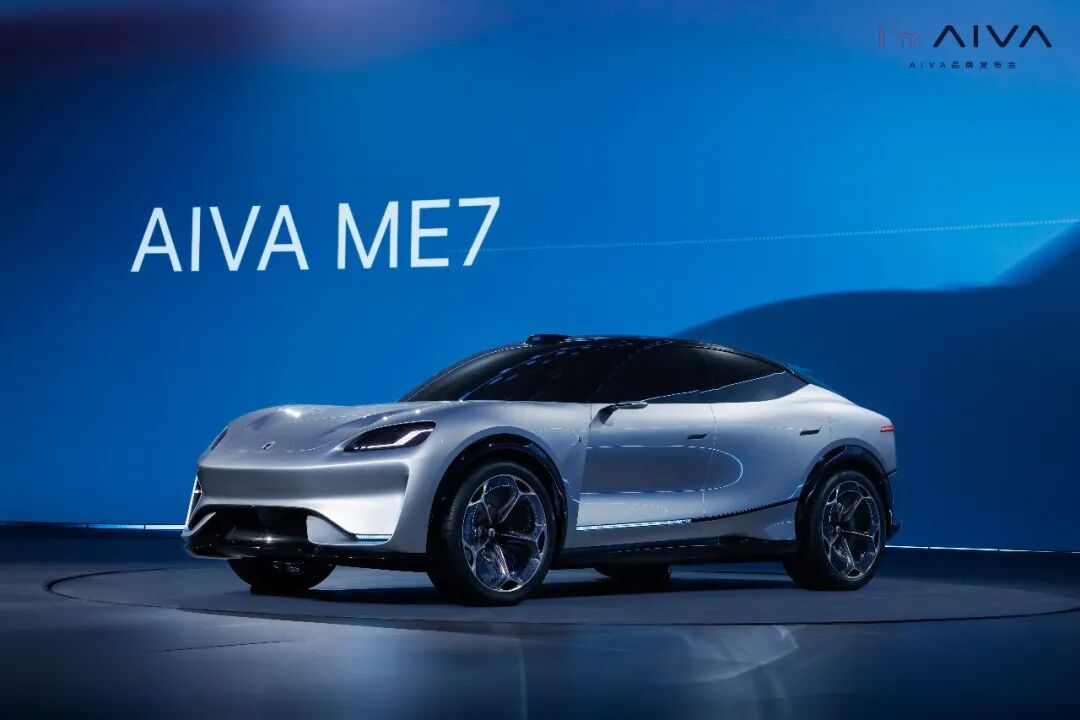
Additionally, the car incorporates many elements to enhance its sporty attributes, including front fascia ducts, a racing-style large rear wing, an exaggerated rear bumper design, and attractive wheel styles.
It indeed looks stunning.
Of course, I'm not the only one saying this. Both other media representatives at the event and online users have highly praised this car.
For a vehicle, having an attractive appearance is half the battle won.
AIVA's first production model, the AIVA ME7, will debut in 2026, offering both pure electric and extended-range powertrain versions.
The AIVA series will cover the mainstream market above RMB 200,000.
Li Bo, President and Product Manager of Saido Tech (formerly Head of Huawei Smart Selection Vehicle Products), emphasized that vehicles built on an AI-native philosophy will undergo fundamental changes in interaction methods, intelligence ceilings, and user experiences. Vehicles will shed their 'one-time design, long-term unchanged' nature and become intelligent companions capable of continuous iteration and autonomous growth.
However, since this was the first debut, there were limited opportunities to experience the 'AI-native' capabilities on-site, which was somewhat disappointing.
04 Opportunities and Challenges Coexist
Saido Tech's inaugural brand launch has undoubtedly secured a strong start.
Judging by the public feedback after the concept car's debut, initial market attention has been successfully ignited.
But this is just the beginning.
As for what kind of vehicle Saido Tech intends to build, official statements remain somewhat 'metaphysical' at present.
They focus more on grand concepts like 'AI-native,' 'biomechanics,' and 'continuously evolving intelligent companions' rather than specific parameters such as range, acceleration, and computing power.
I believe this restraint is deliberate, a tactical protection measure, as revealing too much too soon could make them vulnerable to targeted research by competitors.
However, for Saido Tech, as a new brand, the difficulty and pressure of breaking through are significant.
Firstly, there's the fierce competition in the industry, which goes without saying.
Secondly, after multiple rounds of market education by new forces and established brands, today's consumers are extremely rational, and their criteria for evaluating new brands are increasingly stringent.
Take Xiaomi Auto as an example. Despite having a base of tens of millions of private domain fans and inherent cross-border brand momentum, Xiaomi Auto's ability to achieve instant popularity upon launch and rapidly capture market share fundamentally relies on its Ultimate product definition capability (ultimate product definition capabilities), reasonable pricing and configuration strategies, a mature and stable supply chain system, and a fully integrated marketing and after-sales system, among other multi-dimensional core strengths.
Only by closing all capability loops can one break through in the fiercely competitive automotive sector.
Therefore, for Saido Tech, the bar is even higher when it comes to breaking through.
Thus, the AIVA brand has no grace period for beginners. Its first production model, the ME7, must achieve 'peak performance from the start.'
It cannot afford any 'rookie-phase' awkwardness and must compete head-on with established brands in terms of product maturity, channels, services, and other dimensions. The battle begins immediately.
The good news is that, backed by Seres' manufacturing system and the support of industrial partners like CATL, Saido Tech has inherent advantages in creating mature products.
The Saido team has also submitted a commendable answer in terms of product development.
However, on the ME7, Saido Tech must still address several critical questions that could determine its survival:
First, pricing. In the fiercely competitive red ocean market of RMB 200,000-300,000, how can Saido find a price point that both reflects AI value and avoids being overly niche? Should it opt for an aggressive low-price strategy to capture market share or insist on a premium positioning to shape a high-end AI image?
Second, configuration. Can the vehicle's hardware configuration and three-electric performance support its product positioning? Moreover, in today's era of converging hardware configurations, what new configurations and experiences can Saido offer that differentiate it from competitors?
Third, and most crucially, the 'generational gap' in AI experience. 'Continuous iteration and autonomous growth' cannot remain just a slogan. How will Saido Tech deliver unique experiences in smart cockpits, advanced intelligent driving, and full-scenario human-vehicle interaction, distinguishing itself from industry mainstream offerings and establishing its own cognitive label in the automotive market?
Saido Tech needs to clarify these questions, substantiate, articulate, and communicate the brand story of 'AI-native vehicles,' and translate the initial grand vision into tangible, verifiable product value for users.
Only by completing this closed-loop process can Saido Tech truly shed its newcomer status when the ME7 is launched, achieving a seamless transition from conceptual hype to product realization and from brand storytelling to market reputation.
Fortunately, there is still some time before the ME7's launch.
Saido Tech can make good use of this window period.
We look forward to Saido Tech's answers.
The end.
-
![]()
Xingyuan Intelligence Unveils World Model ω-EVA, Elevating Embodied Intelligence to New Heights
-
![]()
Xinliu Exclusive: Nubia Fully Commits to Second-Gen Doubao AI Smartphone
-
![]()
No grace period for beginners! Saido Tech goes straight into battle from the start
-
![]()
Mercedes-Benz Slashes Price for Its Iconic Three-Pointed Star Emblem: All-Electric GLC Starts at 349,000 RMB
-
![]()
Ideal Livis Day: Ideal Declares 'Smart Cars' Dead
-
![]()
Zhuiguang S Captures Attention: A Review of the Latest High-Design New Cars from the MIIT
-
![]()
Xinliu Exclusive: Nubia Goes All-In on Its Second-Gen Doubao AI Smartphone
-
![]()
After ‘Cutting Through the Noise’ on 100,000 Orders, How Impressive Is BYD’s Tang?