Xinliu Exclusive: Nubia Fully Commits to Second-Gen Doubao AI Smartphone
 06/16 2026
 457
457
[Abstract] Xinliu has exclusively learned that Nubia is poised to unveil its second-generation Doubao AI smartphone, channeling all its core resources into this initiative while temporarily sidelining its conventional smartphone lines.
Will Nubia's Strategic Move Pay Off?
Here's the main content:

"All-In": Nubia's High-Stakes Bet
Sources reveal that ZTE Nubia's top brass has orchestrated significant strategic shifts internally, funneling all vital resources into the second-generation Doubao AI smartphone while momentarily halting progress on other traditional smartphone ventures. This move signifies a bold, albeit risky, gamble.
Nubia initially made waves with its full-network compatibility tech and high-end imaging smartphones. However, squeezed by market leaders Huawei, Apple, Xiaomi, OPPO, and Vivo, its market share has dwindled to the fringes.
The collaboration between the two entities couldn't have been timelier. In December 2025, ByteDance and Nubia jointly unveiled the Doubao smartphone engineering prototype, the Nubia M153, priced at 3,499 yuan. It swiftly sold out post-launch, with some units fetching up to 36,000 yuan on the secondary market—remarkable for an engineering prototype.
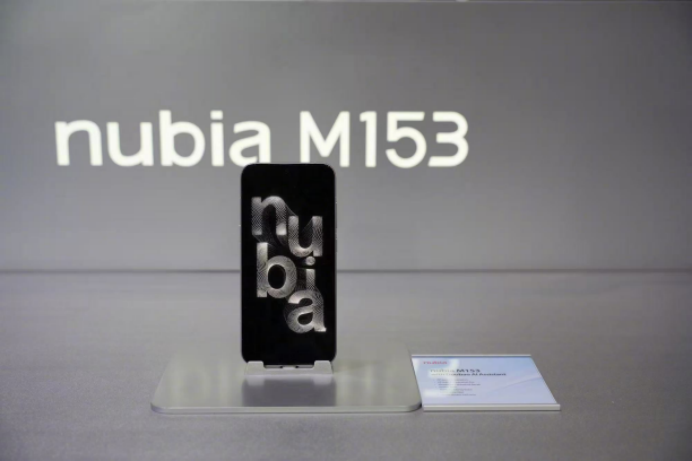
Image Source: Weibo
ByteDance has further deepened its ties with Nubia, officially launching the full-scale project for the second-generation Doubao smartphone assistant. The new Doubao AI smartphones will continue to bear the ZTE Nubia brand, with ZTE Group providing underlying communication tech and mass production support. Nubia, as an independent terminal brand, will oversee all hardware execution and integration.
According to Xinliu's exclusive intel, the second-generation Doubao AI smartphone is slated for release in the first half of 2026, boasting the fifth-generation Snapdragon 8 Supreme mobile platform.

First-Gen Machine: The Aftermath of the Initial Stir
To comprehend Nubia's decisive move, one must first understand the impact and experiences of the first-generation Doubao smartphone.
The Doubao smartphone assistant utilized GUI Agent (Graphical User Interface Agent) technology, enabling users to voice their needs, with AI seamlessly coordinating tasks across apps—price comparisons, cross-platform orders, batch file downloads, automatic itinerary bookings—all without manual app switching, integrating AI directly into the OS level.
This approach fundamentally challenged established players. Post-launch, the first-gen Doubao smartphone faced unanimous opposition from internet software giants like Meituan, Tencent, and Alibaba. The crux was that Doubao bypassed traditional traffic entry points and ad systems, directly impacting their business models.
Under pressure, within a month, Doubao announced adjustments to its AI smartphone capabilities, temporarily revoking operation permissions for financial apps, game incentives, and other scenarios. With core functions restricted, second-hand prices plummeted. Many questioned: Was this a temporary setback or the end of their collaboration?
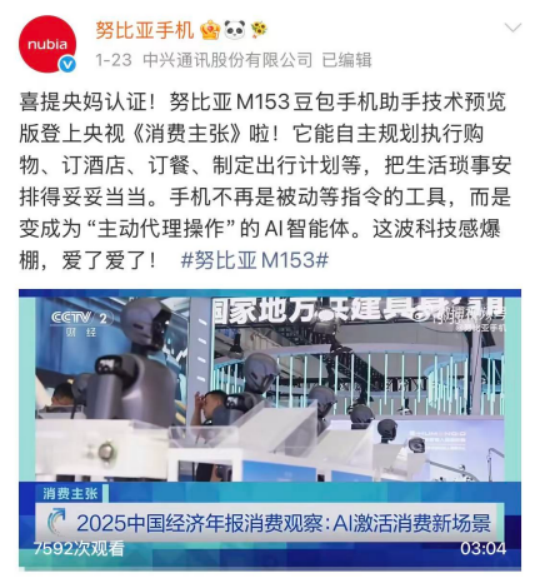
In January 2026, the technical preview of the Nubia M153 Doubao smartphone assistant made headlines on CCTV Finance Channel's "Consumer Advocate" program. Gaining official recognition, it entered the public spotlight, bolstering both sides' confidence in deepening their partnership.
In February 2026, Ni Fei, President of Nubia, announced on the eve of MWC 2026 that an AI new product "redefining smartphones"—the second-generation Doubao smartphone—would soon debut.

Second-Gen Machine: Overcoming Shortcomings and Forging Alliances
Leaks suggest the second-generation Doubao smartphone will feature comprehensive hardware upgrades, including a Snapdragon 8 Supreme processor, a 6.78-inch LTPO straight screen, a 7000mAh large battery, and 100W fast charging. Software-wise, the Doubao smartphone assistant 2.0 will significantly enhance cross-app autonomous task execution.
However, hardware upgrades are just the beginning; ecosystem compatibility is key. The core conflict from the first-gen machine—AI system operation permissions versus app platform commercial interests—didn't vanish with hardware improvements.
Reports indicate that Doubao has negotiated permission openings with leading internet firms, with the new machine set to gain necessary system interfaces for high-frequency scenarios like social networking, office work, and travel. This means the second-gen Doubao smartphone isn't just a tech upgrade but a bold attempt to reshape industry interests.
Previous leaks hinted at brands like Honor and Vivo exploring collaboration with Doubao. However, these major players, unlike Nubia, won't launch independent "Doubao smartphones" but will adopt a lightweight licensing model, adding a "Doubao AI Smartphone" identifier to new models. This represents technical licensing cooperation rather than Nubia's deep OS-level integration.
Currently, Nubia stands as the boldest and only hardware manufacturer willing to fully cede control. This is its unique selling point—and its risk. Yet, Nubia seems to have no alternative.

Epilogue: The AI Smartphone Battleground Intensifies
According to IDC's 2026 China Smartphone Market Outlook, AI smartphone shipments in China are projected to reach 147 million units in 2026, accounting for over half—53%—for the first time. Yet, over 90% of these will be "App-driven traditional smartphones" with added AI assistance, failing to fundamentally transform human-computer interaction.
Nubia's Doubao AI smartphone aims to reconstruct human-computer interaction, replacing Apps with a system-level AI as the unified entry point. This inevitably places it in direct conflict with leading super Apps. In contrast, manufacturers who merely add "AI" branding without altering underlying logic have chosen a safer path.
Xinliu believes: Nubia's decision to concentrate all core resources on the second-generation Doubao AI smartphone carries significant commercial risks. Insufficient R&D investment in traditional models could disrupt normal product iteration cycles, failing to meet existing users' upgrade expectations.
In particular, loyal users in imaging and gaming niches, cultivated by the brand over years, may face sustained attrition, potentially further marginalizing Nubia in the mass consumer market.
Meanwhile, Tianfeng International Securities analyst Ming-Chi Kuo revealed that OpenAI, with hundreds of millions of daily active ChatGPT users, has inquired about orders with Luxshare Precision, initiating custom contacts with plans for cumulative shipments of approximately 30 million OpenAI agent smartphones from 2027 to 2028. This aligns with ByteDance's strategy.
In Xinliu's view, the essence of competition in the 2026 smartphone industry lies in the battle for entry point definition rights: whether to maintain the old entry point landscape centered on super Apps or evolve into a new form dominated by system-level AI. The second-generation Doubao AI smartphone represents the most aggressive mass production attempt of the latter route domestically.
*Header image generated by AI
- XINLIU -
-
![]()
Xingyuan Intelligence Unveils World Model ω-EVA, Elevating Embodied Intelligence to New Heights
-
![]()
Xinliu Exclusive: Nubia Fully Commits to Second-Gen Doubao AI Smartphone
-
![]()
No grace period for beginners! Saido Tech goes straight into battle from the start
-
![]()
Mercedes-Benz Slashes Price for Its Iconic Three-Pointed Star Emblem: All-Electric GLC Starts at 349,000 RMB
-
![]()
Ideal Livis Day: Ideal Declares 'Smart Cars' Dead
-
![]()
Zhuiguang S Captures Attention: A Review of the Latest High-Design New Cars from the MIIT
-
![]()
Xinliu Exclusive: Nubia Goes All-In on Its Second-Gen Doubao AI Smartphone
-
![]()
After ‘Cutting Through the Noise’ on 100,000 Orders, How Impressive Is BYD’s Tang?