Chinese Automakers Go Global: Taking Root in Europe, Stealthily Advancing in North America
 06/17 2026
 545
545
From January to May this year, China exported a cumulative total of 4.25 million complete vehicles, marking a year-on-year increase of 49% and hitting a record high for the same period in recent years. In May alone, 988,000 vehicles were exported, up 42% year-on-year, nearing the historic milestone of one million units and signaling accelerated breakthroughs in automobile exports.
Looking back from 2022 to 2025, China's automobile exports surged from 3.33 million units to 8.32 million units, achieving nearly 2.5 times growth over four years and forming a foundation for sustained expansion. Automobile exports are now transitioning from scale expansion to a phase of high-quality, high-speed growth.
Beneath this strong export performance, a deeper transformation is underway: Faced with rising tariffs and regulatory barriers in Europe and the United States, Chinese automakers are shifting their global strategies from 'selling globally' to a deeper level of 'manufacturing globally.' The focus is not only on 'exploding orders' but also on 'building factories' and 'forming alliances.'
▍Europe: From 99% Imports to Accelerated 'Localization'
According to S&P Global Mobility statistics, by 2025, the passenger vehicle registrations of just three automakers—SAIC, BYD, and Chery—in Western and Central Europe are expected to exceed 617,600 units, a nearly 24-fold increase from 2020. Moreover, 99.3% of passenger vehicles sold in Europe are exported from China.
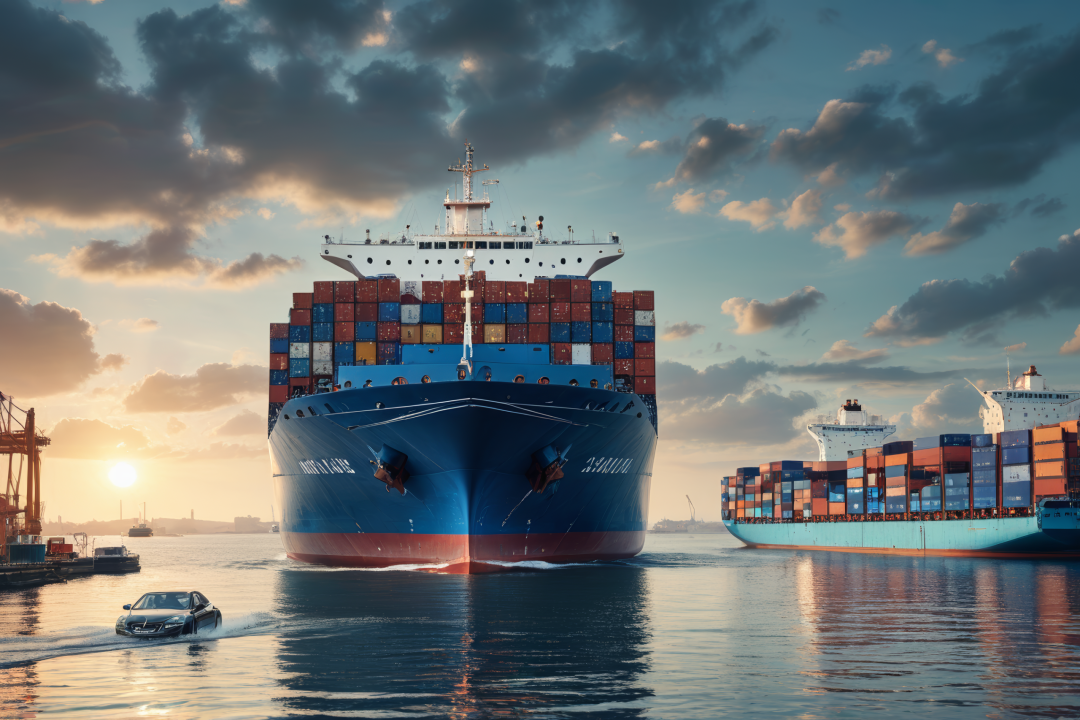
This export-driven landscape is now threatened by the EU's additional tariffs and the upcoming Industrial Accelerator Act. These measures encourage automakers to localize pure electric vehicles and their supply chains in exchange for policy incentives, forcing Chinese automakers to transition from 'export-driven' to 'regional manufacturing.'
Chinese automakers are primarily pursuing two paths for localization in Europe. The first is to build self-owned factories and invest heavily for long-term deep cultivation (deep cultivation). A representative example is BYD, whose factory in Szeged, Hungary, has advanced to a substantive stage. SAIC is also considering building its own factory and is evaluating five candidate sites, with Spain likely being the top choice.
Compared to building self-owned factories, a more cost-effective approach is to leverage idle capacity and repurpose existing industrial sites to launch production more quickly and at lower cost. Leapmotor has confirmed a partnership with Stellantis to produce vehicles at the Zaragoza factory in Spain, while Dongfeng Motor has signed a memorandum of understanding with Stellantis to produce the VOYAH brand at the Rennes factory in France. Geely has been reported to acquire a stake in Ford's Valencia factory to pave the way for its own brand's crossover vehicles. Chery is also in talks with Nissan and others about utilizing capacity at factories in Sunderland and elsewhere.
Of course, the localization strategy in Europe also faces significant challenges. The investment required to renovate idle factories, the legacy labor costs, and the establishment of a local supply chain for core components all demand substantial financial resources. Regardless of the approach Chinese brands take, it will significantly contribute to their sales growth in Europe. S&P Global Mobility predicts that by 2030, the sales of just three major Chinese brands (SAIC, BYD, and Chery) in Western and Central Europe will approach 1.177 million units, with the top ten brands exceeding 1.58 million units. The future market share in Europe will largely depend on the progress and effectiveness of each automaker's localization strategy.
▍North America: 'Curved Advance' Amid a Million-Dollar Tariff Wall
Compared to the bustling activity in Europe, Chinese electric vehicles face formidable barriers in North America. The United States has imposed cumulative tariffs of up to 125% on Chinese-made electric vehicles, along with strict restrictions on connected and autonomous driving software. A Senate proposal even seeks to permanently ban Chinese automobiles from the U.S. market.
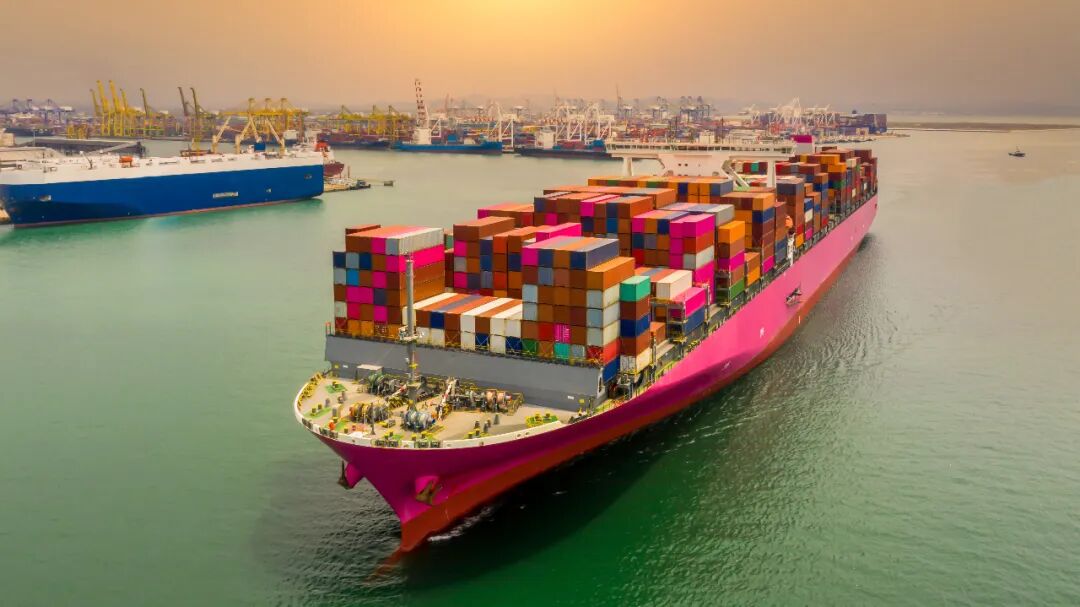
However, the wave of electrification is set to sweep across the globe. CNBC recently reported that while the 'Big Three' U.S. automakers are significantly scaling back their electrification propaganda, China is leading the way with nearly 75% of global electric vehicle production. By 2025, China's electric vehicle exports are expected to surpass 2.5 million units, with the United States being the only major market missing out.
Given the difficulty of a direct breakthrough, indirect strategies have become the mainstream approach. The most feasible path is 'joint ventures and cooperation, leveraging existing factories.' U.S. President Trump stated earlier this year that he supports Chinese automakers establishing factories in the United States as long as they employ American workers. Automotive advisors generally believe that while Chinese automakers' ultimate goal is wholly-owned operations, they are currently willing to take intermediate steps.
From existing layouts, Geely acquired Volvo years ago and produces electric vehicles at its factory in South Carolina, which can be expanded to accommodate more vehicle platforms. Geely's Zeekr brand is already being used by Waymo for its autonomous driving fleet. General Motors imports CATL batteries to produce the Chevrolet Bolt in Kansas City and plans to manufacture internal combustion engine vehicles with SAIC-GM-Wuling in Mexico. Stellantis, as a major shareholder of Leapmotor, has explicitly stated that it will 'definitely' promote production and sales expansion in Mexico and even Canada.
Mexico and Canada are emerging as key stepping stones. Chinese brands already account for a quarter of sales in the Mexican market, with GAC Group planning to assemble vehicles there this year. Canada allows up to 49,000 Chinese electric vehicles to enter annually at a low tariff of 6.1%, and BYD is considering building a factory or acquiring a traditional automaker in Canada.

However, obstacles remain dense. The United States threatens to raise American automotive content requirements in the renewal of the United States-Mexico-Canada Agreement (USMCA) and is even willing to withdraw from the agreement. Mexico, under pressure, has imposed a 50% tariff, and vehicles must meet 75% North American content to qualify for tariff exemptions. Currently, while Chinese vehicles are appearing at the U.S.-Mexico border, they are almost impossible to register in the United States.
Despite the severe political climate, curiosity on the market side is hard to hide. Surveys show that 38% of Americans would consider buying a Chinese car, with high fuel prices intensifying this desire. As the head of consulting firm Dunne Insights said, 'By 2030, some form of Chinese automobile will definitely appear on U.S. roads. They will always find a way.'
Several experts believe that electric vehicles represent the future of the global automotive industry, and cooperating with Chinese companies may be the most pragmatic choice for traditional U.S. automakers to remain competitive. In the future, Chinese automakers' globalization efforts will not halt. In Europe, the test is whether they can establish manufacturing roots; in North America, the competition lies in patience and wisdom in forming alliances.
Layout 丨 Zheng Li
Source 丨 S&P Global, CNBC
Image Source 丨 Qianku.com
-
Trillion-Dollar Commercial Space Industry: Profits Start Not with Rockets
-
![]()
Baidu Netdisk Encounters a 'Significant' Challenger: Tencent Netdisk Makes Its Debut
-
![]()
Tencent Cloud Drive: A Rising Contender to Baidu Cloud
-
![]()
AR Optical Leader Quietly Achieves 1 Million Units in Mass Production!
-
![]()
Raising 289 Million for Optical R&D! Olight Technology Prepares for GEM IPO
-
![]()
【OFweek Weike Cup】Cybernetics Officially Nominated for the 2026 Outstanding Contribution Award for Optical Industry Application Solutions
-
![]()
Precocious Ideals, Rebuilding A New Ideal
-
![]()
DeepSeek Finally Accepts 50 Billion Yuan in Funding