As BYD Continues to Lead, the World Should Re-examine the New Era of 'Intelligent Chinese Manufacturing'
 06/18 2026
 364
364
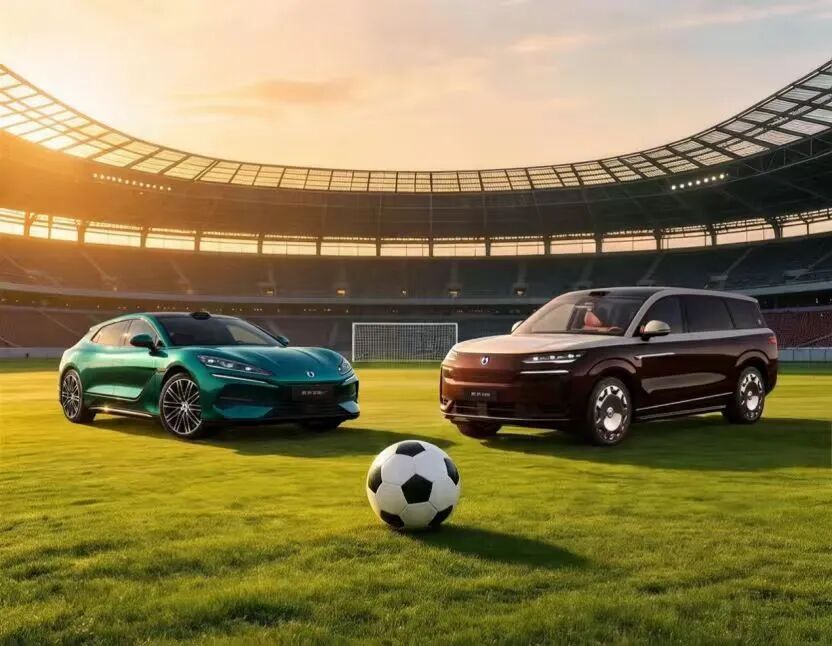
1.4 million units. This figure represents BYD's sales volume of new energy vehicles in the first five months of 2026. This breaks down to an average of over 9,000 units sold daily, or more than 370 units every hour.
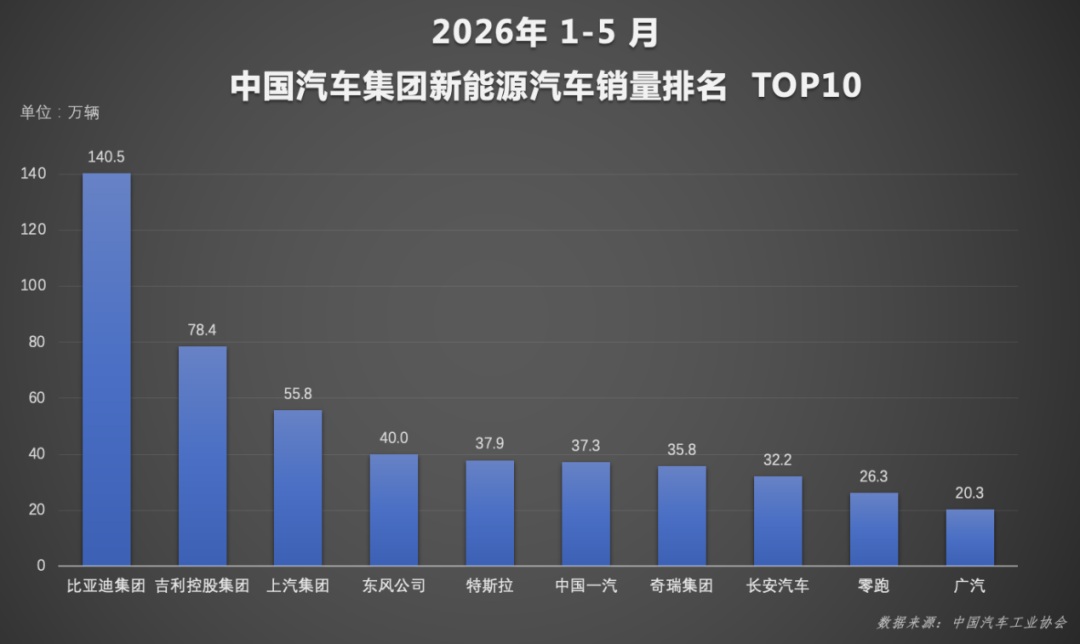
In May alone, BYD topped the rankings among the top 10 brands in China's automotive market, selling 330,000 units. In the new energy vehicle segment, it maintained its leading position with 383,000 units sold. Meanwhile, the penetration rate of new energy vehicles in China's automotive market further climbed to 62.9%, indicating that two out of every three newly sold vehicles are now new energy vehicles.
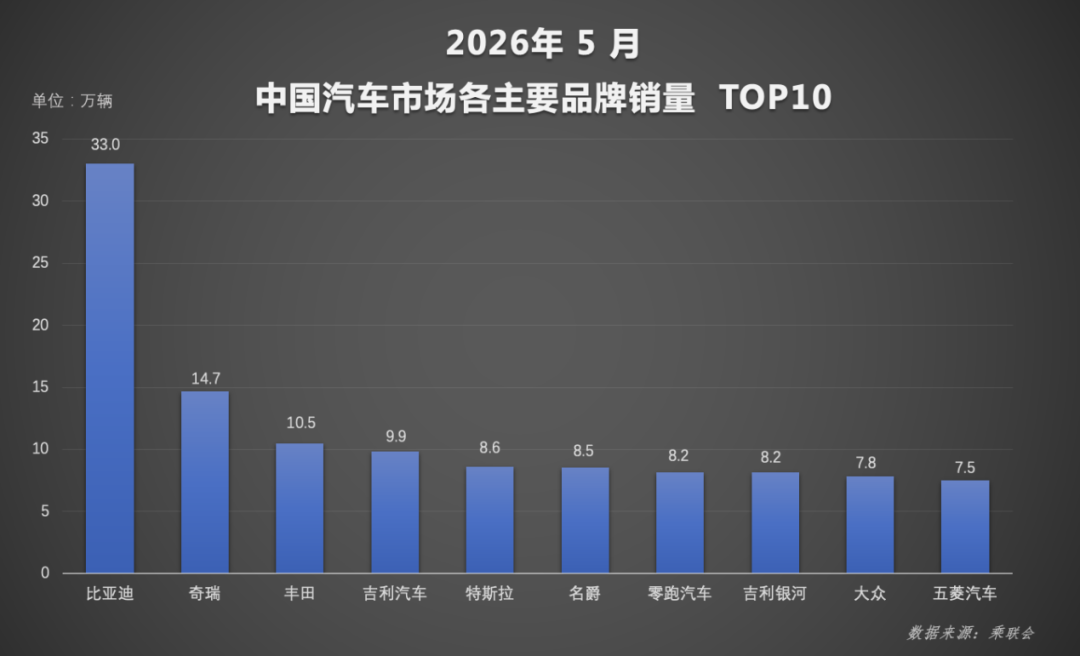
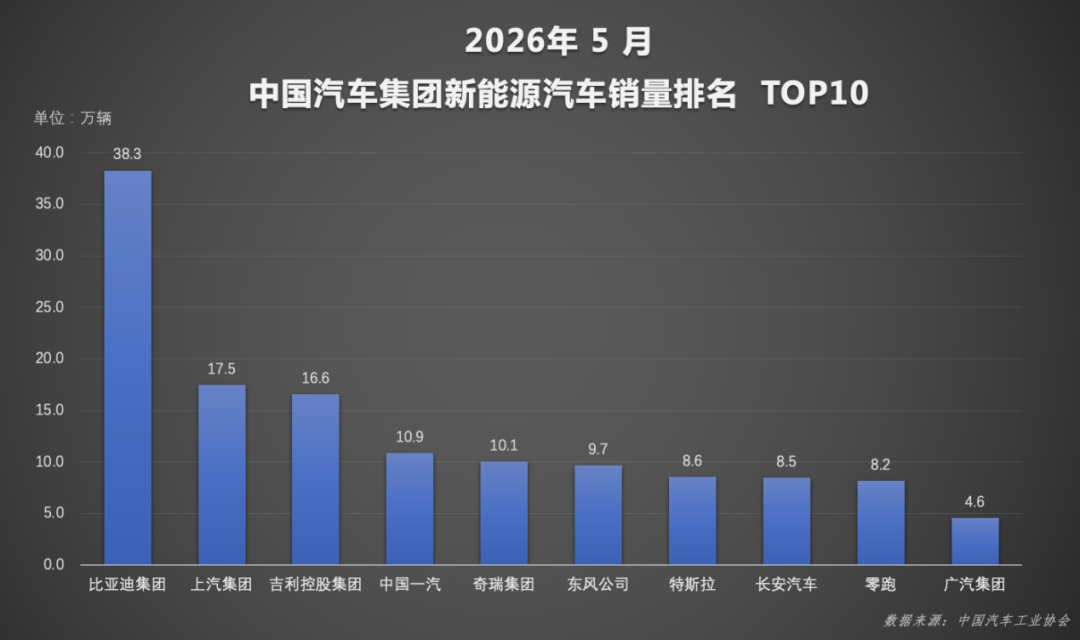
New energy vehicles are no longer just an 'emerging trend'; they have become the mainstream in China's automotive market. And in this mainstream arena, BYD is not merely a participant—it is the leader, pulling further ahead with each passing day.
However, data is never just about numbers.
When BYD's cumulative sales of new energy vehicles surpassed 1.4 million units from January to May, what we witness is not merely the success of a single company but the maturation of an entire industry. This marks a qualitative transformation in China's automotive industry, shifting from 'following' to 'leading' the global trends.
Two decades ago, few believed Chinese brands could take center stage in the global automotive arena. Back then, joint-venture brands dominated the market, while Chinese automakers struggled to survive in the low- to mid-end segments. To many consumers, the term 'domestic car' was synonymous with 'cheap' and 'inferior.' A decade ago, the idea of 'overtaking on curves' was dismissed as fantasy, with the century-old technological barriers erected by traditional automotive giants seemingly insurmountable. Five years ago, new energy vehicles were still dismissed as a 'policy-driven product,' with many convinced that 'without subsidies, no one would buy them.' Today, the market has given its most honest response: two out of every three newly sold vehicles are new energy vehicles; one out of every five new energy vehicles sold comes from BYD.
01. Technological Innovation Drives Sales Growth
BYD's leadership in sales may appear as numerical dominance, but at its core, it is a victory of technological strategy.
Looking back at the four-decade history of China's automotive industry, 'cost-effectiveness' was our primary weapon for a long time. Selling the same configuration at a lower price or offering more features for the same price—this was the survival law for Chinese brands, but it was also a self-imposed limitation born out of necessity. What truly makes one stand tall is never 'cheapness' but 'having what others have and having what others don't.'
BYD is proving this point.
While the industry debates 'who will define the next generation of smart vehicles,' BYD has already provided an answer through tangible product launches. The introduction of the second-generation Blade Battery has eliminated the trade-off between safety and range. This technology resolves the long-standing core conflict in the power battery sector, allowing 'no fires' and 'long range' to coexist.
The continuous rollout of flash-charging technology is turning 'range anxiety,' the biggest pain point for new energy vehicle users, into a relic of the past. What did people fear most when buying electric vehicles before? The fear of not finding charging stations on long trips or waiting an hour at a station even if one was found. Flash-charging technology has drastically reduced charging times, bringing the vision of 'charging as fast as refueling' closer to reality.
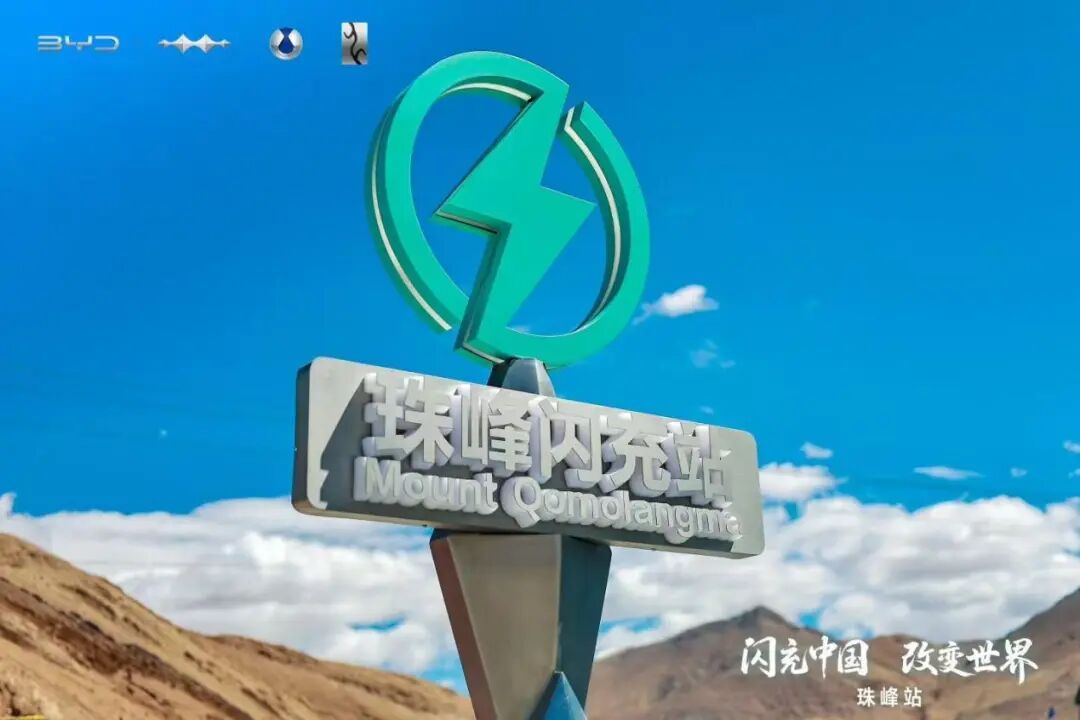
The mass-market launch of models like the third-generation Yuan PLUS, Fangchengbao 5 Flash Edition, Bao 8 Flash Edition, and Tengshi N9 Flash Edition means this technology is no longer exclusive to a few high-end models but is becoming a standard feature across BYD's product lineup.
In terms of intelligence, as of May 28, BYD had over 3.15 million vehicles equipped with advanced driver-assistance systems. This means smart driving is no longer a novelty for a few but has entered the daily experience of the mass market. The DiPilot assisted driving system generates over 200 million kilometers of real-world testing data daily, forming its deepest competitive moat. No latecomer can replicate this scale of real-world scenario accumulation in a short time.
More notably, after establishing safety baselines for intelligent parking, BYD has further introduced urban navigation safety baselines. This 'baseline' capability is precisely the industry's most scarce sense of responsibility. Many automakers tout how 'powerful' and 'intelligent' their smart driving systems are but rarely address 'what happens if it fails.' BYD has proactively placed this toughest challenge on the table, embodying the posture of an industry leader.
From relying on subsidies to standing tall on technology, BYD has completed not just its own transformation but the redefinition of China's automotive industry identity.
02. Overseas Expansion Becomes the Second Growth Engine
The true divide lies in vision.
When a brand achieves market leadership domestically, what comes next? Many companies answer, 'Hold onto the top spot.' But defense never secures leadership; competition is about constantly opening new frontiers.
BYD's choice is to go global.
While most automakers are still embroiled in domestic market battles, fighting over single-digit percentage points of market share, BYD's overseas sales have surpassed 160,000 units monthly, up over 80% year-on-year. From January to May, cumulative overseas sales exceeded 610,000 units—a figure surpassing the annual total sales of many Sino-foreign joint ventures and the cumulative deliveries of most new energy vehicle startups since their inception.
This is no mere exploratory foray but a systematic global expansion. From the Seagull to the Song PLUS, from the Yuan series to the SHARK pickup, Chinese automobiles are undergoing a profound transformation.
The success of the SHARK pickup exemplifies this shift. With sales exceeding 4,000 units for two consecutive months, this figure may not be astonishing in the global pickup market, but its symbolic significance far outweighs the numbers.
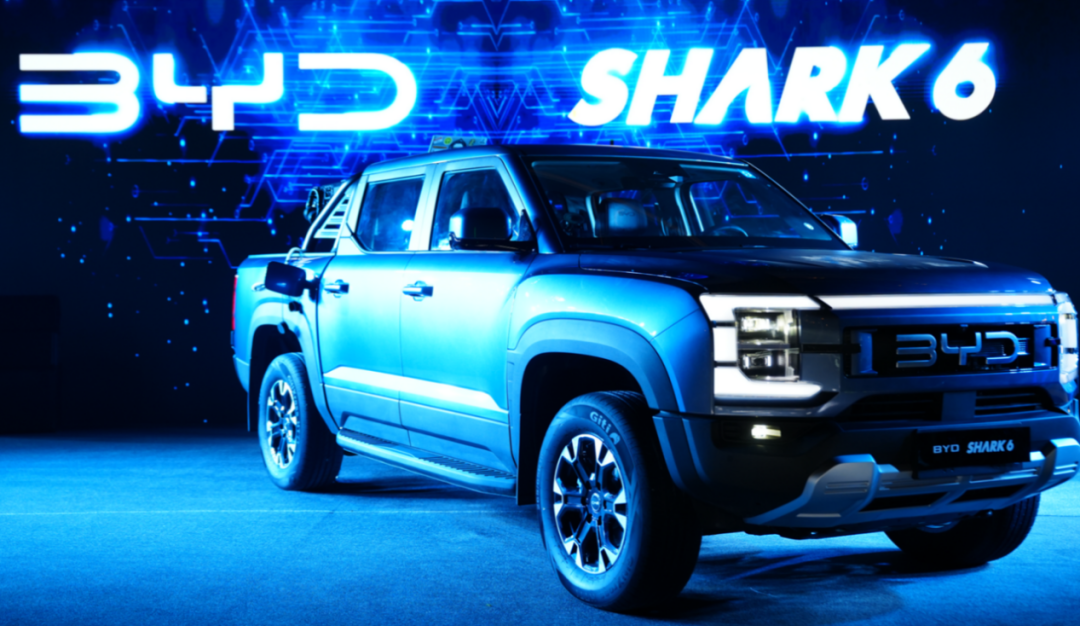
Pickups have been dominated by Western brands for decades, with names like Ford F-Series, Chevrolet Silverado, and Ram practically synonymous with the segment. For a Chinese brand's pickup to sell 4,000 units overseas for two consecutive months, it is not winning through price cuts but earning trust through product strength. This signifies that Chinese automobiles have begun penetrating market segments once deemed 'impenetrable.'
More profoundly, BYD's globalization is not mere export volume growth—it is not just shipping domestically produced vehicles to overseas ports. True globalization entails the full-system export of industrial chains, brand influence, and service networks. From overseas factory construction to localized operations, from compliance with local regulations to building user communities, from after-sales service networks to brand culture cultivation—these capabilities cannot be built overnight, but once established, they form the most formidable competitive barrier.
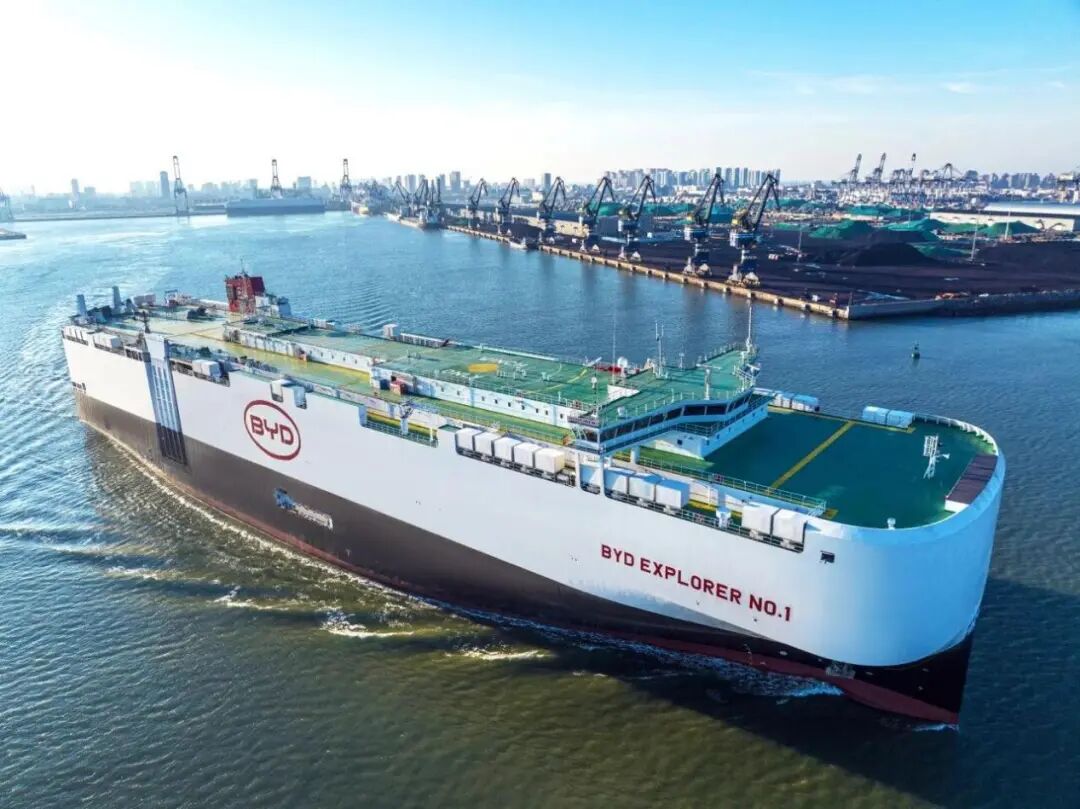
In the past, the criteria for being an 'automotive powerhouse' were clear: world-class brands? Mastery of core technologies? Global market influence? By these standards, China's automotive industry has evolved from 'having' to 'excelling' in less than two decades and is now progressing from 'excelling' to 'dominating.' BYD's market leadership is one of the most prominent milestones in this journey.
Global automotive giants are accelerating their counteroffensive, and trade barriers are rising. The road ahead is far from easy. But BYD has already blazed a replicable path for China's automotive industry through the synergy of technology, scale, and globalization. This path will not widen but will only extend further.
Operations | Su Hongying
Produced by | Dazhong Kanche
-
![]()
Duan Yongping Offers Insightful Perspectives: New Hurdles for Long-Term AI Investment
-
![]()
Chinese New Energy Vehicle Design: Stepping Out of the Shadows
-
![]()
Li Auto Awards Executives 35 Million Shares Based on Performance Metrics
-
![]()
Rushing Towards AI 2.0: How Confident is Unisound?
-
经过今年上半年各路AI豪强对市场的反复教育,有一个判断,可能决定未来一两年的走向:
-
![]()
Global Tech Sector Sees Collective Panic: Is the AI Hype Finally Deflating?
-
![]()
Three Consecutive Rises in Heavy Truck Sales: Both New and Old Players are Betting on the Same Thing!
-
![]()
Why Can’t Vivo Bridge the High-End Perception Gap Despite Support from Authoritative Media?