Honda CEO Thwarts Forced Resignation Bid
 06/18 2026
 560
560
To put it diplomatically, it was an attempt at persuasion for resignation. To speak candidly, it was a case of 'incompetence' necessitating a change.
External threats loom, internal anxieties simmer.
Recently, Honda's CEO, Toshihiro Mibe, faced a tumultuous 'forced resignation' saga. The rationale? Since assuming office in 2021, Mibe's infrequent visits to China have allegedly led to a plummeting market share, from 8% to less than 3%.
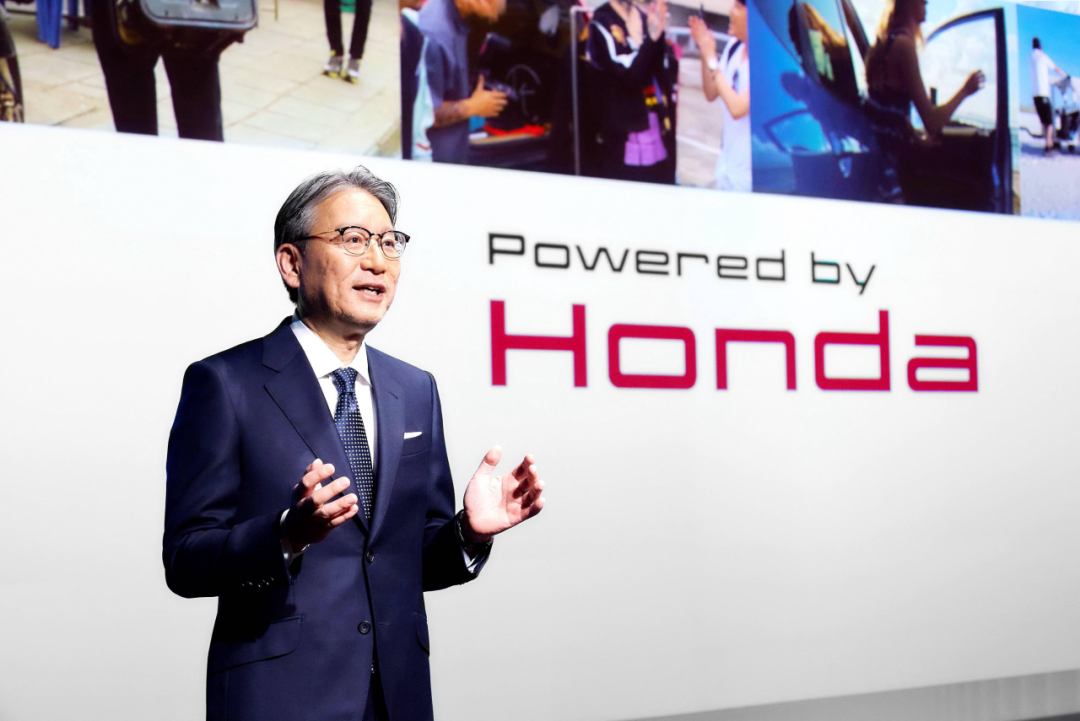
During Mibe's tenure, Honda suffered its first loss in 70 years, a significant blow to the company's reputation. Moreover, Honda's decision to scrap three planned all-electric models for the North American market, coupled with an over-reliance on an all-electric strategy, resulted in a catastrophic failure of its $15.7 billion electric vehicle business. This prompted retired Honda executives to intervene.
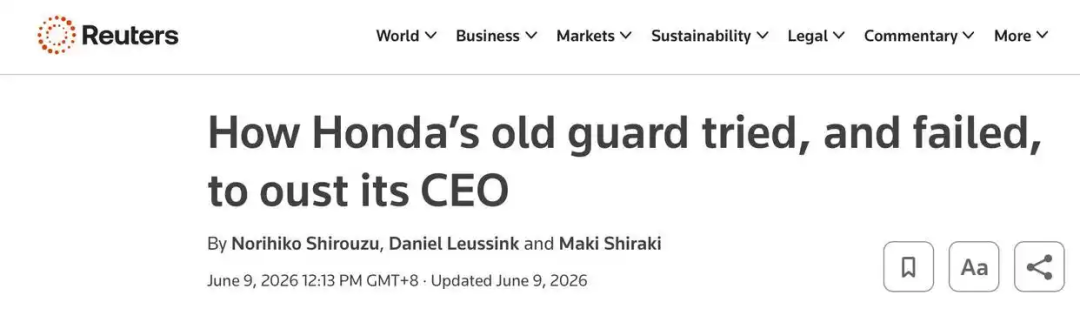
According to Reuters, several retired Honda executives have been holding secret meetings since late last year, discussing Mibe's leadership shortcomings and ultimately attempting to persuade him to step down.
To reiterate diplomatically, it was an attempt at persuasion for resignation. To state it bluntly, it was a case of 'incompetence' calling for a change.
Veterans Push for CEO's Resignation
The former CEO's push for the current CEO's resignation underscores Honda's dire straits.
In Honda's 69-year history of profitability, the year 2025 looms large as a challenging chapter. This year will mark Honda's first operating loss since 1957.
After Honda released its fiscal year 2025 annual report, revealing a net loss of 420 to 690 billion yen, approximately $15.9 billion, the veterans who once brought glory to Honda could no longer remain passive.
Originally, Honda expected a profit of 300 billion yen, but the anticipated profit turned into a massive deficit. This sudden turn of events caused Nobuhiko Kawamoto, the nearly 90-year-old former CEO, to see his blood pressure soar. He went directly to Honda's headquarters to demand Mibe's resignation.
However, Mibe refused.
Additionally, former President Kawamoto confirmed meeting with Mibe but declined to comment on whether he persuaded Mibe to resign or criticized his performance. Nevertheless, his concern was evident.
The core reasons behind the attempt to force Mibe's resignation revolve around two main issues.
One is Mibe's alleged neglect of China, the world's largest automotive market, leading to a significant decline in market share. The latest data shows that in May this year, Honda's monthly sales in China were 28,279 units, a sharp year-on-year decline of 48.68%, falling short of the monthly sales of BYD's Seagull model and trailing behind several new automotive brands.
From January to May this year, Honda's terminal sales in the Chinese market were 173,344 units, a year-on-year decline of 32.47%. The combined sales of the two Honda joint ventures, calculated based on the performance of new forces, barely match two months' sales of Leapmotor.
The core issue lies in the completely imbalanced product structure, relying solely on the CR-V. Taking May's data as an example, the Honda CR-V sold 11,408 units, accounting for 61% of Dongfeng Honda's total monthly sales. Dongfeng Honda's sales, in turn, accounted for more than 65% of Honda's monthly sales in the Chinese market.
It's no exaggeration to say that the CR-V supports Honda, a situation that indeed brings a tear to the eyes of long-time Honda fans. Moreover, both Honda joint ventures heavily rely on fuel-powered vehicles that are already struggling to sell.
Former executives criticized Honda for losing its 'on-site management' spirit. 'The CEO doesn't see the frontline situation, doesn't listen to customer feedback, and doesn't visit the sites. Neither does the CEO nor other senior management. China is a prime example.'
The veterans believe that due to the weakening of the corporate culture of listening to and reflecting the voices of customers, dealers, and production frontlines, Honda failed to prevent the decline in its market share in China. This is indeed a key reason, considering that Mibe's publicly documented visits to China are few and far between.
The other core issue is Mibe's aggressive electrification strategy, which made a 'failed' bet in the electric vehicle sector, resulting in significant losses in the global market.
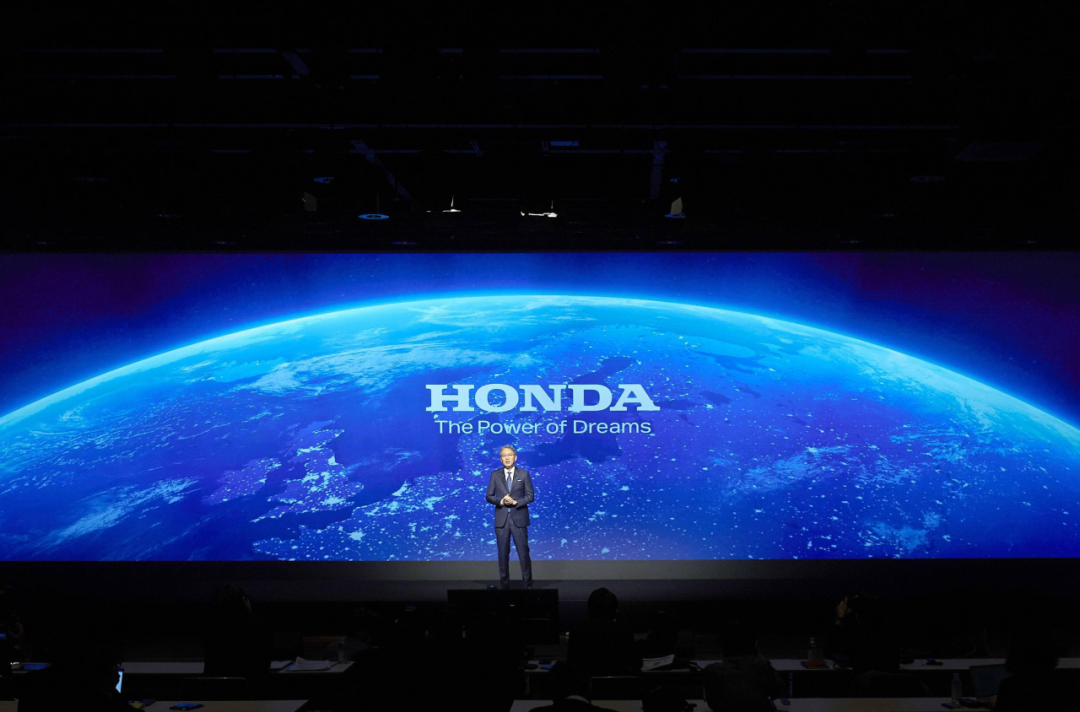
Shortly after taking over as Honda's CEO in 2021, Mibe set the goal of 'completely discontinuing fuel-powered vehicle sales by 2040.' He was overly optimistic about the growth prospects of the global electric vehicle market, believing that a full commitment to the all-electric market would maintain market share.
Five years have passed, and despite multiple attempts at model and transformation paths, Honda gives the impression of 'trying hard but to no avail.' In 2025, Honda sold just over 60,000 electric vehicles globally, accounting for less than 2% of total sales.
With fuel-powered vehicles struggling to sell and electric vehicles failing to catch on, what was Mibe busy with? He was busy sponsoring golf and playing with Honda-supported professional golfers Akiko and Chi Iwai.
This is the 'third sin' that the veterans accuse Mibe of.
Forced Resignation Attempt Fails
Due to a change in Honda's system.
In response to regulatory requirements to improve corporate governance, Honda has gradually introduced more external directors. Currently, Honda's board nomination committee consists of Mibe himself and four external directors, gradually moving away from 'veteran-dominated' governance and weakening the direct influence of retired executives on decision-making, making it difficult to rewrite personnel appointments as in the past.
This is a major factor why the forced resignation attempt failed this time.
The board ultimately chose to support Mibe's continued tenure, although Mibe himself will accept a 30% salary cut for three months as a penalty for Honda's first annual loss during his tenure.
Compared to the losses and the uncertainty of the path forward, a three-month salary cut is hardly a punishment. No wonder the veterans are dissatisfied but can only feel helpless.
Time has been cruel to Honda over the past five years. After all, these are the five years that shattered Honda's dreams.
Recall that when Mibe first took office in 2021, he was evaluated as 'an aggressive reformer' who was enthusiastic about the 'four modernizations' of electric vehicles, autonomous driving, intelligent connectivity, and more.
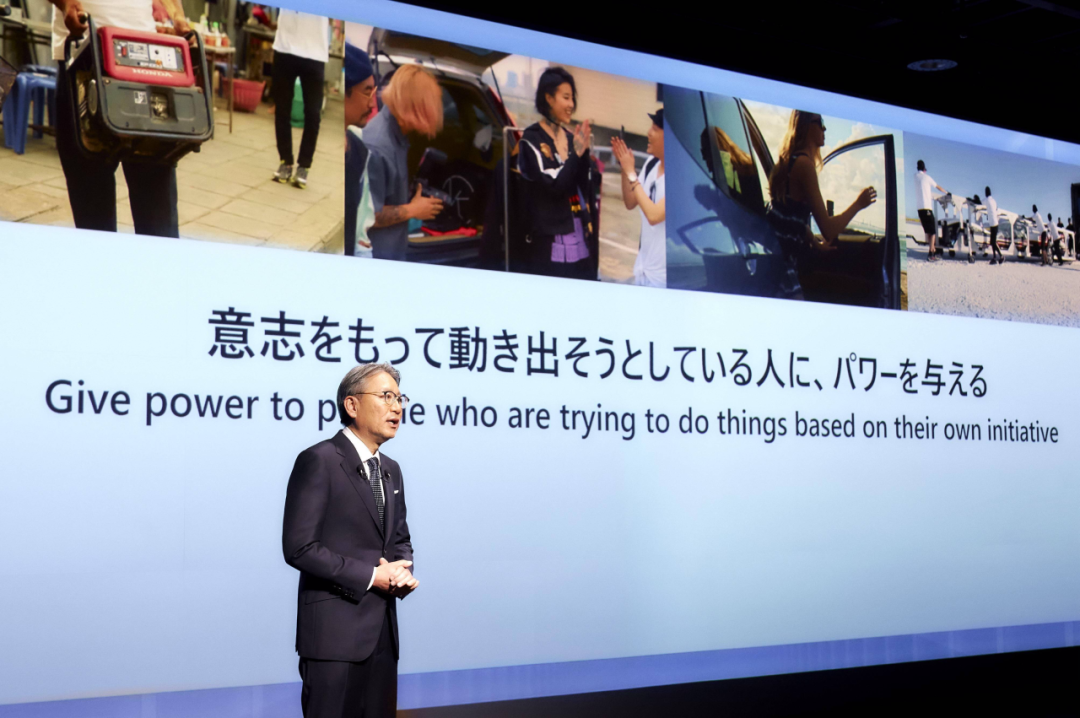
At that time, Honda achieved a peak annual sales record of 1.62 million units in the Chinese market in 2020. Many believed that the aggressive Mibe would become the technical leader of Honda's transformation in the 'four modernizations.'
Undoubtedly, due to his long tenure in Honda's technical research and development management and his profound understanding of strategic layout and corporate management, Mibe was highly anticipated.
Five years have passed, with sales plummeting by 1 million units over five years and the first loss incurred, the high hopes have ultimately turned into 'wild ambitions.' SBI Securities chief analyst Koji Endo commented, 'Honda always wants to do everything itself. This time, in the end, nothing went smoothly.'
Mibe is not unaware of the issues. This year, he visited China and toured a factory of a Shanghai-based automotive supplier. After the visit, he told his Japanese supplier partners, 'We simply can't compete.'
He urged Japanese suppliers to 'act quickly,' but in which direction? Can Honda be clear this time?
Action: The First Move, 'Self-Restructuring'
After returning to Japan, Mibe canceled two all-electric vehicle projects globally, and the electric vehicle collaboration with Sony also came to nothing.
Additionally, although electrification has been put on hold, Honda has established a new independent research and development company, transferring thousands of engineers to the new company, which enjoys greater autonomy.
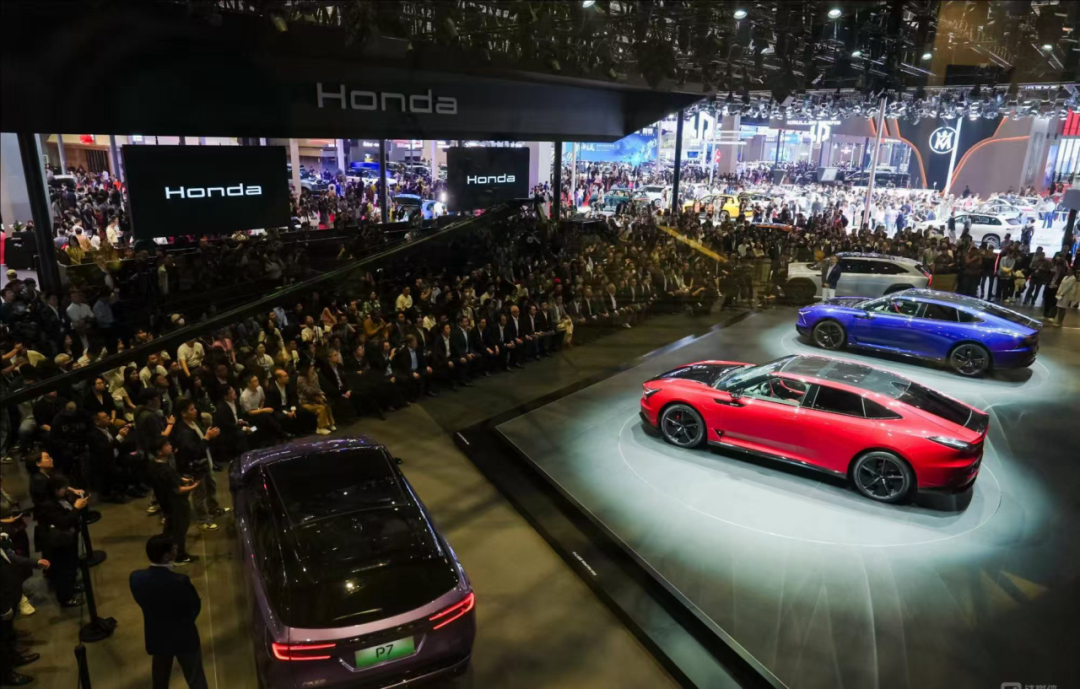
However, whether this adjustment can save Honda from its predicament remains uncertain.
After all, in 2024, after Mibe visited factories of Chinese automakers such as BYD and inspected welding and battery production lines, he also said a few weighty words: 'We have no chance of winning.'
Two weeks after returning, Honda announced the cancellation of the Honda 0 SUV, Honda 0 Saloon, and Acura RSX all-electric models and recorded an impairment loss of approximately 2.5 trillion yen.
This time, it seems to follow the same path. So, where is Honda's transformation path?
Jeffrey Rothfeder, author of 'Driving Honda,' said, 'One thing is certain: it's too late to turn things around in the short term.'
Note: Some images are sourced from the internet. If there is any infringement, please contact us for deletion.
-END-

-
![]()
Xiaomi and Others Boost Old Smartphone Battery Capacities, Power Banks Face Uncertain Future
-
![]()
Zhipu Soars to New Heights, MiniMax Faces Pressure: The Diverging Trajectories of the 'Dual Titans in Large Models'
-
AI Asset Spin-offs at Major Companies: Is Kling Paving the Way for ByteDance and Alibaba?
-
![]()
AI Agent Security Firm NewCore Raises $66 Million in Seed Funding, Achieves $300 Million Post-Money Valuation
-
From Pessimism to Optimism: China’s Hydrogen Fuel Cell Vehicles Set for Expansive Growth
-
The Race Against Time for Survival of Unitree and Its Peers
-
Dream Weaver in the Eye of the Storm: Elon Musk's Business Empire and SpaceX's IPO Moment
-
![]()
From 'Daydream' to 'Trillions in Wealth': Is SpaceX Really That 'Sci-Fi'?