The Qualification Remains, But Where Does Zotye’s Future Lie?
 06/22 2026
 519
519
Recently, rumors have been swirling that Zotye Auto, along with seven other long-established automakers, has been removed from the Ministry of Industry and Information Technology’s updated "Catalog of Road Motor Vehicle Production Enterprises," implying that they have lost their qualifications for complete vehicle production.
Shortly thereafter, Zotye Auto officially dispelled these rumors, clarifying that the report was unfounded. Zotye stressed that it remains listed in the MIIT’s "Catalog of Road Motor Vehicle Production Enterprises" and that its production qualification is both legitimate and valid.
Speaking of which, Zotye has been the subject of numerous rumors over the years. The focus of these rumors has shifted over time. In 2022, speculation first emerged that "Tesla would acquire Zotye." Later that same year, claims surfaced that Zotye’s battery technology surpassed that of CATL. By late 2025, the automotive industry was abuzz with rumors that BBK, in collaboration with Chery, would "borrow Zotye’s shell" to manufacture vehicles. These rumors came in successive waves, each met with a statement from Zotye refuting them.
However, what sparks more curiosity than the rumors themselves is Zotye’s actual situation over the years.
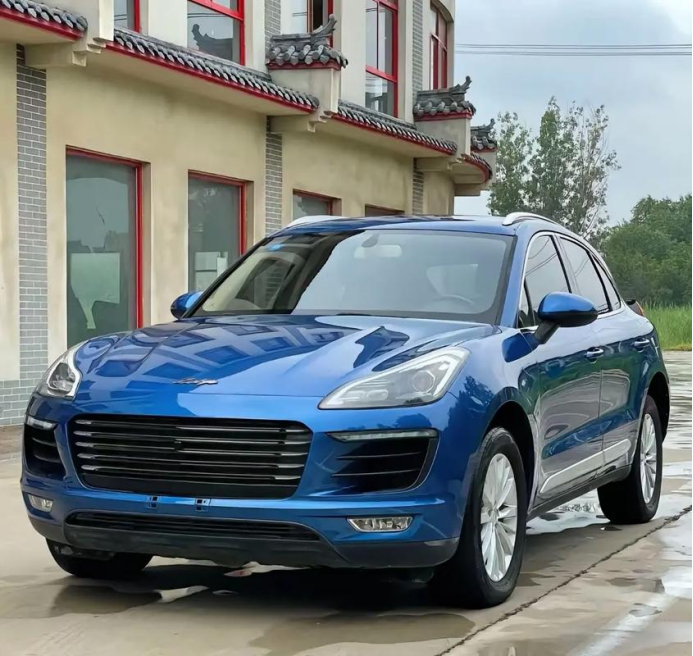
Since entering the automotive industry in 2003, Zotye has taken a shortcut by "imitating" existing models. From the early Zotye 2008 and Jiangnan TT to the later T600 and Z700, and then to the Zotye SR9, which gained notoriety for its resemblance to the Porsche Macan, nearly every model had a "prototype." This approach earned Zotye the nicknames "Porstye" and the "Measuring Tape Department."
The "measuring tape department" strategy proved effective because the market was less competitive at the time. Relying on "imitation" and low prices, Zotye’s sales surged from over 100,000 units in 2011 to 333,100 units in 2016, establishing it as a dark horse in the automotive market. These figures would still be impressive by today’s standards.
Behind these impressive sales figures lay significant quality deficiencies. Zotye’s biggest issue was its fragile core components. Many owners complained that Zotye vehicles felt unstable at high speeds, with noticeable chassis rattles when driving over speed bumps. Engine noise and transmission failures were also common. These issues were reflected in the sales figures. Starting in 2018, Zotye’s sales began to plummet: 230,000 units in 2018, 153,000 in 2019, and a staggering drop to 20,000 in 2020. In just three years, Zotye fell from its peak to rock bottom.
This decline was followed by the bankruptcy of Zotye’s parent company, Tieniu Group, and a restructuring application filed by creditor Zhejiang Yongkang Rural Commercial Bank with the court. In the second half of 2021, Jiangsu Shenshang injected 2 billion yuan to become the new controlling shareholder, attempting to revive Zotye.
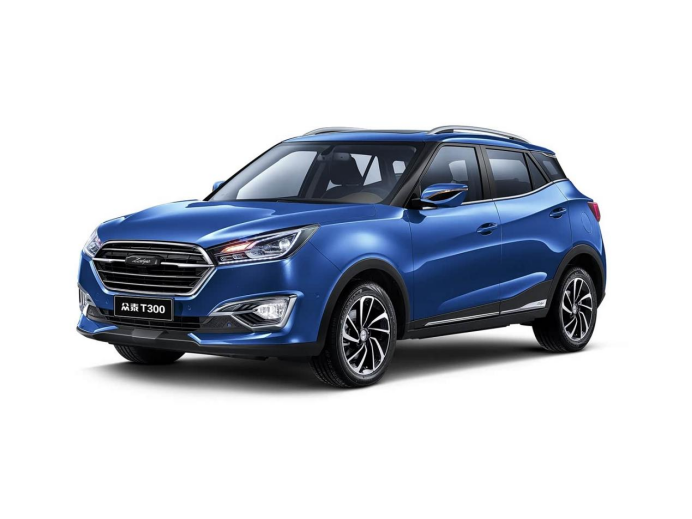
However, the restructuring failed to bring about a turnaround. The first model released after resuming operations, the T300 overseas version, saw dismal sales, with only 1,070 units delivered by June 2024. From 2022 to 2024, Zotye’s annual sales were 502, 111, and 14 units, respectively.
Despite this, Zotye did not give up. In 2026, a crucial "lifeline" finally emerged. A bank headquartered in Zotye’s hometown provided a 400 million yuan low-interest loan. While not a substantial sum, it was enough for Zotye to catch its breath. Zotye used the funds to repay overdue bank debts. At the same time, it shut down its idle production base in Daye, Hubei, securing 100 million yuan in compensation, which was immediately invested in new vehicle R&D. In early 2026, this nearly forgotten automaker finally took its first step toward a restart.
In March 2026, Zotye’s subsidiary, Shenkang Auto Body, officially announced its resumption of operations. Meanwhile, Zotye launched a large-scale recruitment drive, offering 49 positions ranging from ADAS engineers to power battery engineers, all aimed at core new energy vehicle roles. Clearly, Zotye was serious about ramping up new energy R&D this time.
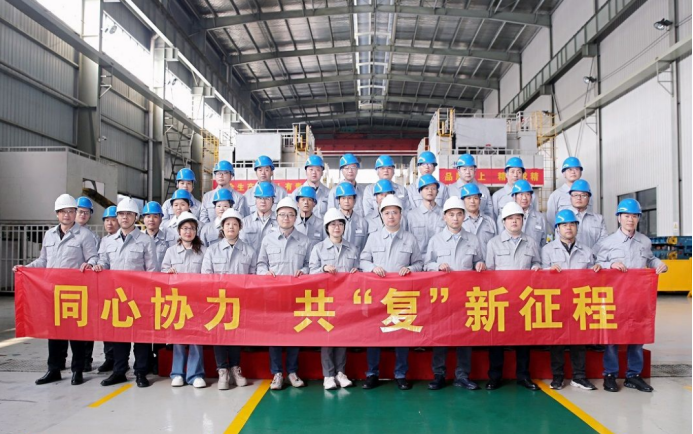
However, the path to self-rescue was far from smooth. In June 2026, an internal route dispute erupted within Zotye’s board. The "independent automaking faction," led by Chairman Han Biwen, insisted on independent R&D and manufacturing. In contrast, the "licensing OEM faction," represented by Director Zhong Yufei, argued that given Zotye’s financial and brand situation, persisting with independent automaking was "draining resources" and suggested becoming an OEM for other brands instead.
The two factions refused to back down. The "licensing OEM faction" went as far as initiating a proposal to remove Han Biwen, hoping to change the company’s direction by replacing him.
However, the removal proposal failed. Some directors felt that the company was just starting to show signs of recovery, and frequent leadership changes would be detrimental. Ultimately, the "independent automaking faction" narrowly won, temporarily stabilizing the situation.
The internal route dispute was temporarily resolved, but Zotye’s real challenges were just beginning. With seven consecutive years of losses and a persistently high debt-to-asset ratio, Zotye’s situation remained dire.
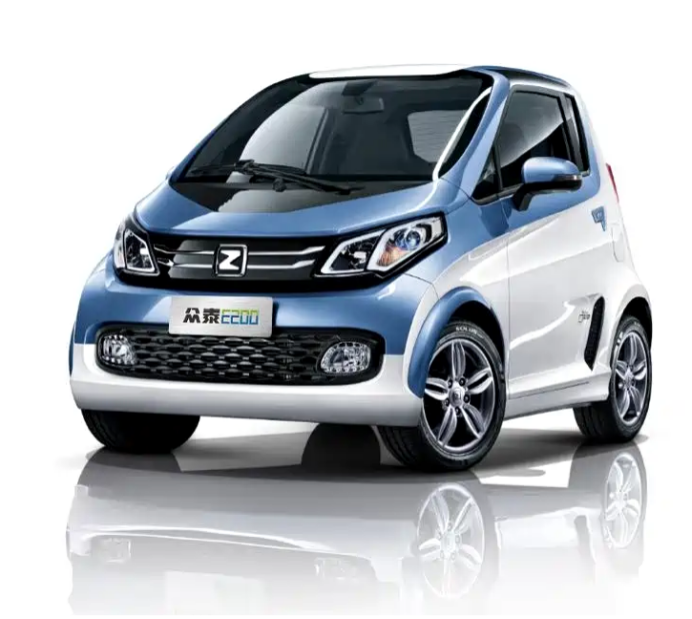
Fortunately, Zotye had some foundations in new energy. As early as 2016, it had ventured into the hydrogen energy vehicle market, launching hydrogen fuel cell prototypes like the E200 FCV. Zotye also established a national-level postdoctoral workstation and accumulated some achievements in lightweighting and new energy technologies. However, most of these accomplishments remained on paper. Recent operational difficulties led to a significant reduction in R&D investment.
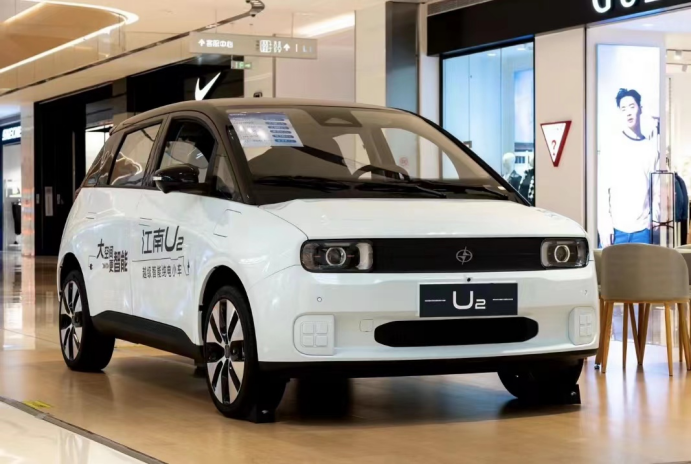
Having foundations is one thing, but relying solely on past achievements won’t suffice. Zotye’s plans are now clear. It aims to focus on A0-class pure electric vehicles, with plans to launch its first self-developed model by the end of 2026, likely the rumored Jiangnan U2 facelift. Simultaneously, it is laying the groundwork for a B-class pure electric platform to prepare for future mid-to-high-end models.
In Conclusion:
The elimination race in the new energy vehicle market has long begun. Ultimately, automakers must compete on core technologies—there are no shortcuts. Many automakers have been eliminated in recent years. While Zotye holds a production qualification, the difficulty of regaining a foothold in the market is evident. That said, based on Zotye’s actions this year, it has not yet been eliminated, and there remains room for imagination regarding its future path.
(Image source: Internet. Removal upon infringement.)
-
![]()
Insta360’s Post-Lockup Period Begins: Employees Suspected of Selling Shares, Institutions Biding Their Time—Is a Major Storm on the Horizon?
-
![]()
Are Houses Getting 'ID Cards' Now? In the Future, House Decorating, Renting, and Buying Will All Be Possible with a Simple Scan!
-
![]()
Where Should the Senior Citizens in County Towns Go?
-
![]()
【OFweek Weike Cup】Santec Officially Enters for the 2026 Optical Industry Annual Innovation Product Award
-
![]()
Anhui’s Taihu County Establishes a Project with an Impressive Annual Production Capacity of 850 Million Square Meters of Optical Film, Along with Supporting Rollers!
-
![]()
The AI Unicorn Valued at 960 Billion is Raising Funds Again
-
![]()
Unveiling the Strategy: The RMB 11.5 Million Deal of MLOptics
-
![]()
Qingtian Lease Hits 7 Billion Valuation in Six Months, Coexistence of Robot Leasing Bubble and Reality