Should Honda Offer Toshiaki Mibu a Second Chance?
 06/22 2026
 556
556
Multiple media outlets have reported that Honda is currently embroiled in executive upheaval. Several retired senior executives, including fourth-generation CEO and former CEO Nobuhiko Kawamoto, have jointly impeached the current CEO, Toshiaki Mibu. They accuse Mibu of neglecting the Chinese market and lacking a grasp of frontline realities since assuming office in 2021.
In April this year, Nobuhiko Kawamoto, the former CEO of Honda, made a personal appearance at Honda's Tokyo headquarters, demanding Mibu's resignation.
The rationale behind this demand is clear-cut: During Mibu's tenure, Honda incurred its first annual loss in nearly seven decades since going public, with a staggering ¥423.9 billion in losses. The retired executives could not remain passive in the face of such a situation.
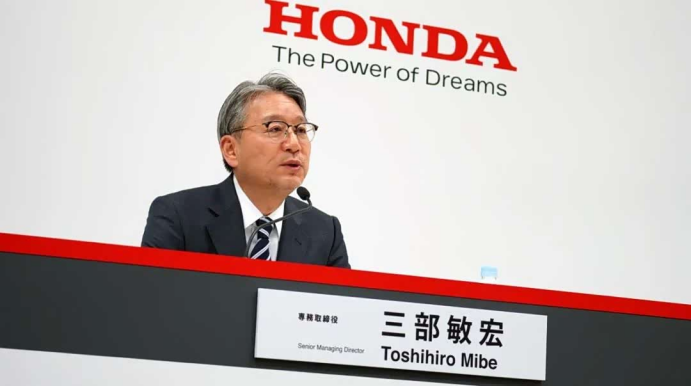
In truth, Honda's substantial losses stem from strategic overreach. Mibu had ambitiously declared plans to achieve full electrification by 2040, but harsh realities soon dismantled this vision. The weaker-than-anticipated demand for pure electric vehicles (EVs) in the U.S. compelled Honda to halt the development of multiple electric models, including the 0 Series SUV and sedan. This ultimately resulted in a net loss of ¥423.8 billion in fiscal 2025. Under immense pressure, Mibu conceded that the full electrification goal was "unrealistic" and was compelled to abandon the original target, redirecting focus from pure EVs to hybrid models to align with market shifts.
Meanwhile, Honda's predicament in the Chinese market is equally daunting. As a cornerstone of Honda's global sales, its performance in China remains far from encouraging. Data released by Honda China reveals that terminal sales in China in May amounted to just 28,279 units, marking a 48.68% year-on-year decline. This represents the second consecutive month of nearly 50% year-on-year drops, effectively halving sales.
Dongfeng Honda, a linchpin of Honda's presence in the Chinese market, is also under duress. Official data indicates that in May 2026, Dongfeng Honda sold 18,563 units, a 20% month-on-month increase but still a 23% year-on-year decrease, with the downturn persisting. Over the past five years, following a sales peak of 820,400 units in 2020, Dongfeng Honda has witnessed a steady decline in sales: approximately 793,000 units in 2021, around 652,000 units in 2022, about 614,000 units in 2023, dropping to 428,200 units in 2024, 325,800 units in 2025, and roughly 172,000 units from January to May 2026. In just five years, cumulative sales have dwindled by nearly 500,000 units.
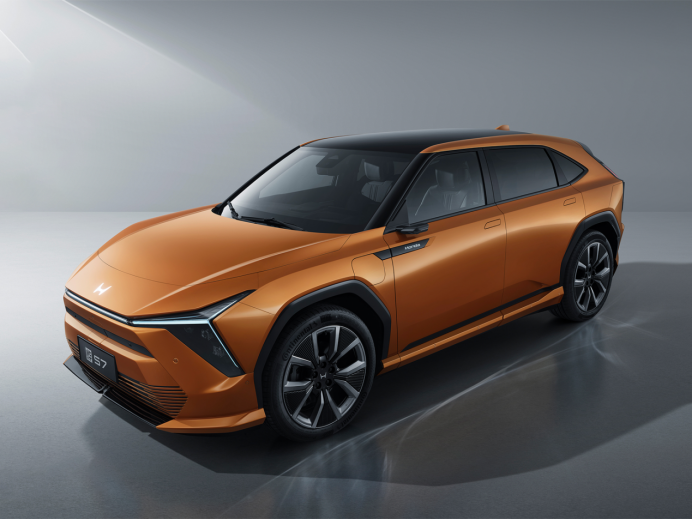
China's new energy vehicle (NEV) market is undergoing rapid transformation, yet Honda's mainstay models remain predominantly fuel-powered, with its product lineup significantly lagging behind market trends. The scarcity of new energy models is glaringly apparent in Honda's terminal sales.
Take Dongfeng Honda as an illustration: In May, the CR-V fuel-powered model alone accounted for nearly 60% of the brand's sales, with 10,744 units sold, underscoring the dominance of fuel cars. Meanwhile, the current top-selling new energy model, the S7, managed to sell only 426 units in May, with cumulative sales of just 1,296 units in the first five months, averaging less than 260 units per month. On one hand, fuel cars reign supreme, while on the other, electric vehicles struggle to gain traction. Honda finds itself ensnared in a dilemma of "clinging to fuel cars while failing to advance with electric vehicles" in China.
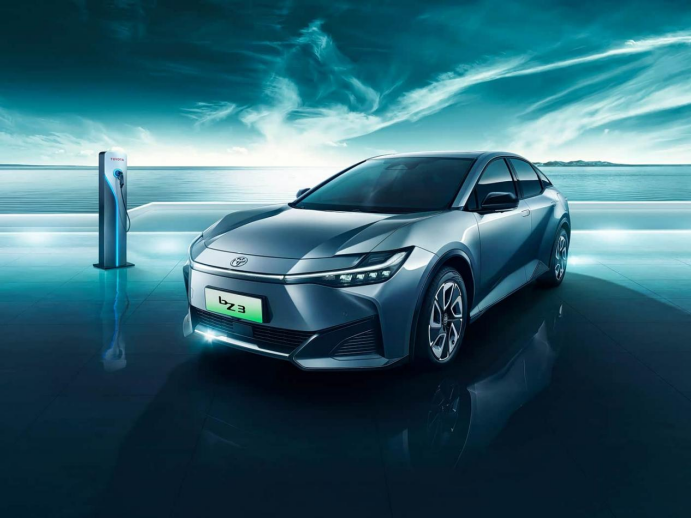
Compared to Toyota and Nissan, Honda has been notably sluggish in localization efforts. Over the past two years, Nissan and Toyota have accelerated deep integration with Chinese local technologies. The Nissan NX8, equipped with CATL batteries and Momenta's intelligent driving solution, sells nearly 5,000 units monthly; the N7, featuring a Huawei-customized cockpit, Momenta's urban NOA, and ChipStar chips, has also garnered relatively favorable market feedback. Concurrently, Toyota is forging ahead with collaborations with local technologies such as BYD, Huawei, and Momenta, with new energy models like the bZ3 and Platinum Wisdom 7 (BZ4X) achieving monthly sales in the thousands. In this race to "leverage Chinese technology," Honda has lagged behind.
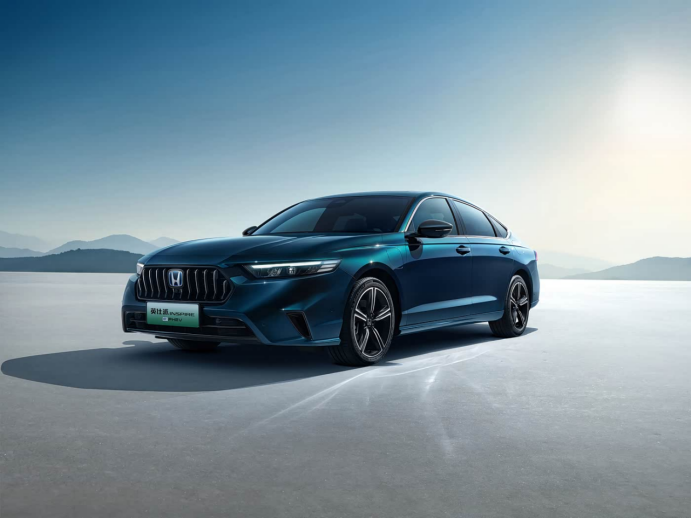
Of course, Honda is also ramping up its local R&D endeavors, delegating decision-making authority to its Chinese team, launching the Yunchi pure electric architecture tailored for the Chinese market, and incorporating Huawei technology to address智能化 (intelligentization) shortcomings. Additionally, Mibu has made multiple trips to China this year to expedite technical cooperation with GAC, striving to keep pace with domestic intelligentization trends. However, judging by market feedback, these efforts have yet to materialize into increased sales.
Now, it is time to assess the outcomes of Honda's transformation in China.
(Image sourced from the internet. Will be removed upon infringement claim.)
-
![]()
Insta360’s Post-Lockup Period Begins: Employees Suspected of Selling Shares, Institutions Biding Their Time—Is a Major Storm on the Horizon?
-
![]()
Are Houses Getting 'ID Cards' Now? In the Future, House Decorating, Renting, and Buying Will All Be Possible with a Simple Scan!
-
![]()
Where Should the Senior Citizens in County Towns Go?
-
![]()
【OFweek Weike Cup】Santec Officially Enters for the 2026 Optical Industry Annual Innovation Product Award
-
![]()
Anhui’s Taihu County Establishes a Project with an Impressive Annual Production Capacity of 850 Million Square Meters of Optical Film, Along with Supporting Rollers!
-
![]()
The AI Unicorn Valued at 960 Billion is Raising Funds Again
-
![]()
Unveiling the Strategy: The RMB 11.5 Million Deal of MLOptics
-
![]()
Qingtian Lease Hits 7 Billion Valuation in Six Months, Coexistence of Robot Leasing Bubble and Reality