Is There Truly an 'Optimal Path' for Green Travel Technology?
 06/22 2026
 543
543
Peanut's Insight
The precarious situation in the Strait of Hormuz has made energy security a pressing concern at both the national strategic level and in our daily lives, as reflected in our utility bills. For drivers, it's about the financial impact of fuel price fluctuations; for cities, it's about ensuring a stable energy supply.
Currently, 40% of the world's crude oil is consumed by transportation, which is the backbone of economic activity—people and goods need to keep moving. So, what's the solution? We must explore new energy sources!
'Energy choices are not like choosing between Coca-Cola and Pepsi; there's no universal formula that fits all.' After six years of reporting on the global mobility industry and visiting markets in Northern Europe, Western Europe, the CIS, North America, and Southeast Asia, I've become increasingly convinced: there is no 'one-size-fits-all' optimal solution. High-capacity lithium batteries, hybrid fuel efficiency, hydrogen fuel cells, methanol—whatever works and suits local conditions is good technology.
A black cat or a white cat, if it catches mice, it's a good cat; similarly, a green travel solution that adapts to local conditions while balancing carbon reduction and energy security is a good one.
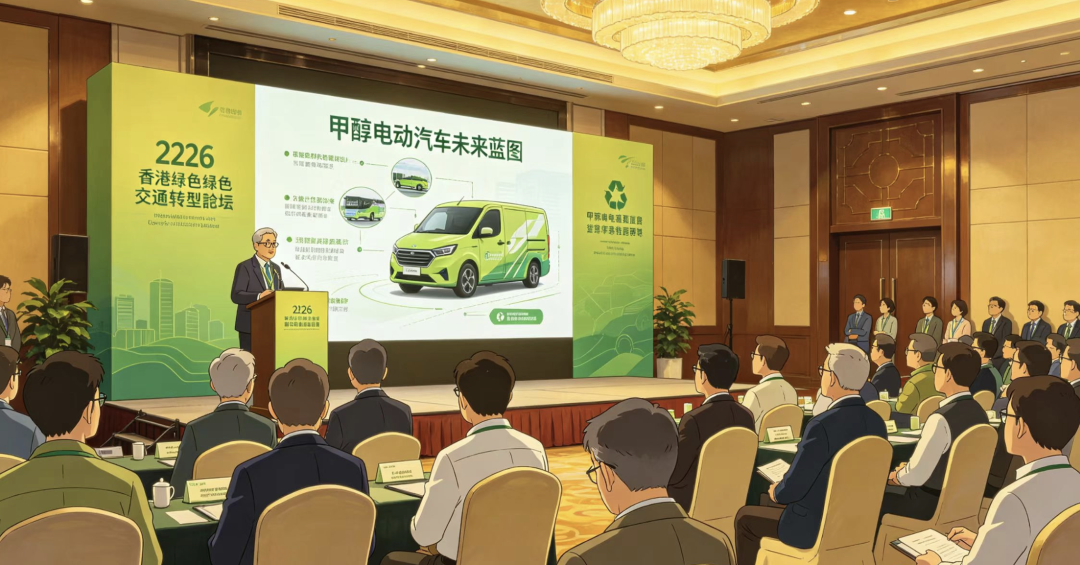
On June 17th, amidst the sweltering heat and high humidity of Hong Kong, I was invited by the CheBaiHui Research Institute to the conference center on Queen's Road East for the Green Transportation Transition Forum (Hong Kong) & Methanol Electric Vehicle Development Forum 2026.
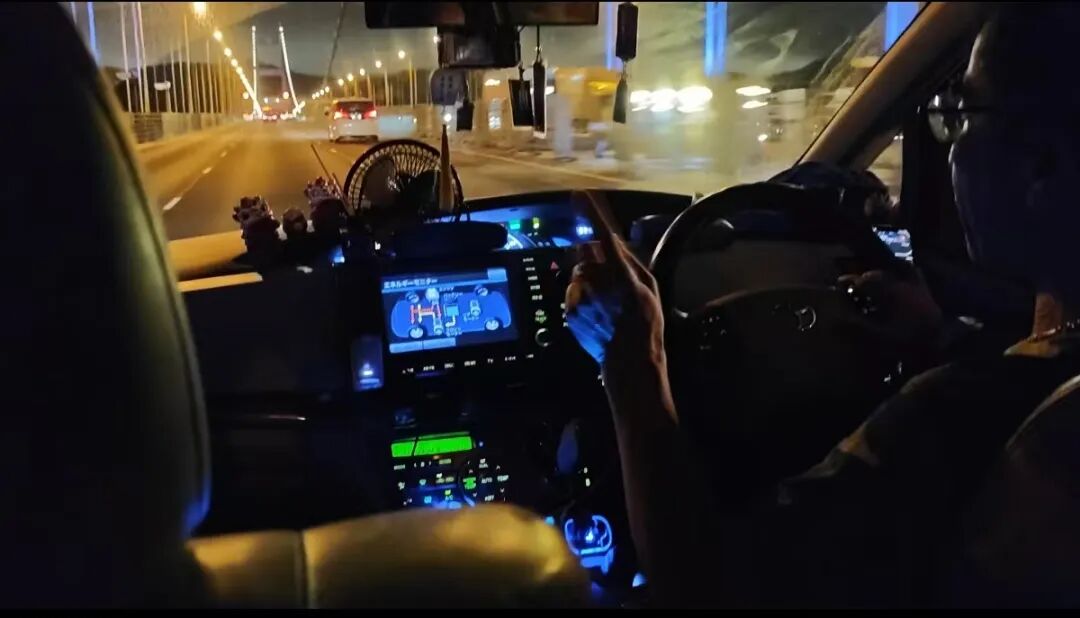
Old habits die hard—on my way, I chatted with a local commercial vehicle driver. Coincidentally, the driver who picked me up drove a decade-old Toyota hybrid, purchased for 700,000 HKD. Clearly, he was affluent and open to trying new technologies. I asked him if he'd consider buying a pure electric vehicle given the high fuel prices. Without hesitation, he replied: electrification sounds great, but without a fixed parking spot, waiting half an hour at public charging stations isn't practical.
If private vehicles are difficult to popularize, what about public transportation? When mainland China promoted new energy vehicles, it relied on the 'Ten Cities, Thousand Vehicles' program, using buses and official vehicles with fixed routes and charging stations to lead the way.
I raised this question with a professor from PolyU. With a smile, he shared a report that dashed my hopes: if all buses in Hong Kong went fully electric, an additional 3,500 vehicles would be needed to compensate for range limitations, posing significant challenges in terms of parking space and grid load.
This issue is particularly typical. In May, during an interview in London, I felt the same: narrow streets and century-old underground pipelines make large-scale grid expansion and new charging stations nearly impossible.
Many developed global cities face the same dilemma: achieving dual-carbon goals requires electrification, but infrastructure and geographical constraints hold them back. What's the solution?
The forum provided a pragmatic answer: methanol.
Don't Limit Yourself to Pure Electric; Methanol Isn't a 'Fallback Option'

Discussions about new energy routes often fall into the trap of 'pure electric or nothing,' treating other options as secondary. But in cities like Hong Kong, methanol is a more realistic solution.
The key factor is cost—not the cost of vehicles, but the cost of infrastructure.
Alex DOELL, CEO of the Global Methanol Institute, calculated at the forum: existing gas stations can be upgraded to methanol refueling stations with minimal modifications, costing just tens of thousands of yuan per tank, without the need for land acquisition or large-scale grid expansion. Even existing liquid fuel storage and transportation systems can be reused. For land-scarce Hong Kong with difficult urban redevelopment, this is invaluable.

Public data from the Hong Kong Census and Statistics Department shows: nearly all of Hong Kong's energy is imported, with 100% of vehicle gasoline and about a quarter of electricity coming from the mainland, and the rest generated locally from imported coal and natural gas. For a city without domestic energy supply, energy structure resilience is paramount.
The more mature and historic a city's built environment, the higher the cost of redoing electrification infrastructure. Pure electric is more suitable for new cities, short distances, and scenarios with fixed parking. But in old cities with narrow roads, weak grids, and land scarcity—as well as in commercial vehicles for long-distance, heavy-duty, and high-frequency operations—the barriers to pure electric adoption are formidable.
Methanol fills this gap. It doesn't require overhauling existing systems or forcing cities to pay exorbitant infrastructure costs for decarbonization. A few upgrades to the existing energy network can take the first step toward decarbonization.
A Pragmatic Technology Matured Over Two Decades
Many consider methanol a niche route, but it's actually a 'marathon runner' in the automotive industry.
As early as the 1970s oil crisis, the U.S. and Europe extensively explored methanol for vehicles, with California once having hundreds of refueling stations and tens of thousands of methanol vehicles on the road.
Domestically, Geely has been the key driver of this route. As the core enterprise undertaking national-level methanol vehicle R&D, it has deeply cultivated this field for two decades, solving basic issues like corrosion and cold starts, iterating methanol electric range-extender technology, and commercializing mature products.
Fan Xianjun, CEO of Farizon New Energy Commercial Vehicle Group, shared hardcore data at the forum: over 60,000 Geely-affiliated methanol electric vehicles are in operation, with cumulative mileage exceeding 25 billion kilometers, and the technology has evolved to the 3.0 generation. In June, the Xingzhi T methanol electric light truck completed a Guinness challenge, traveling 1,699 kilometers on a single tank of methanol and full battery, breaking the stereotype that new energy light trucks can't handle intercity heavy-duty operations.

Methanol is no longer a pilot concept—it's proven reliable day after day.
When oil prices were stable, pure electric vehicles surged ahead, and methanol's voice was faint. But times have changed: tensions in the Strait of Hormuz directly impact every link of transportation through crude price fluctuations, shifting energy security pressure from the national level to every fleet and driver. Meanwhile, pure electric's shortcomings in heavy-duty, cold, and infrastructure-poor scenarios have become increasingly apparent.
My hometown is Harbin, where temperatures below -30°C are common in winter. Electric vehicle range drops by half, and outdoor charging speeds plummet—operators dare not use pure electric.
In such cold regions, as well as mines, ports, and long-distance logistics, methanol's suitability far exceeds that of pure electric, with no performance degradation at -97°C.
Fang Haifeng, chief expert at the China Automotive Technology and Research Center and deputy director of the China Automotive Strategy and Policy Research Center, provided even more convincing calculations: heavy trucks using green methanol have lower lifecycle carbon emissions than pure electric vehicles.
So, in my view, technology has no hierarchy—only suitability.
Industry Insiders Ask: Can Green Methanol Keep Up?
When discussing methanol, a core question always arises: current mainstream methanol is coal-based—is this truly a green transition?
As an assessment expert for the 'Carbon Roadmap Plan,' a low-carbon transition project for China's automotive supply chain SMEs, this was my top concern at the forum. Interestingly, through discussions with guests, I gained a new perspective—energy transition shouldn't, and can't, be an all-or-nothing process but rather a gradual transition.
First, replace fuel with existing methanol capacity to significantly reduce pollutants and lower dependence on foreign oil, ensuring energy security. Second, gradually increase the proportion of bio-methanol and electro-methanol, using green electricity and carbon capture to produce green methanol, ultimately achieving near-zero lifecycle emissions.
Cen Wenhui, COO of Hong Kong and China Gas Company Limited, shared their practice: a coal-based methanol plant in Inner Mongolia operating for over a decade can now produce green methanol meeting international standards through technical upgrades. Domestically, hundreds of millions of tons of existing methanol capacity can gradually shift to green methanol production through process improvements.
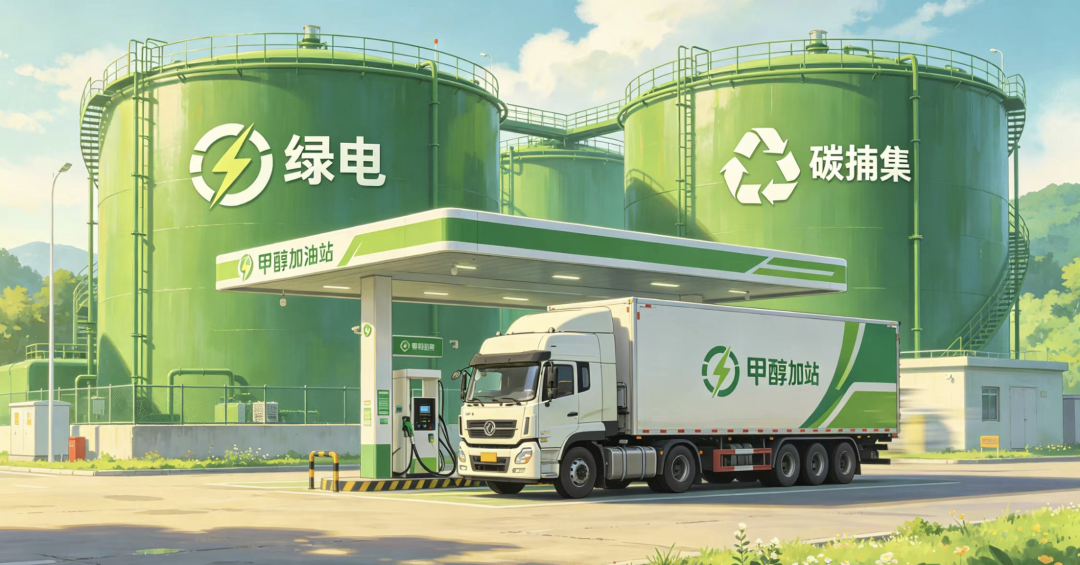
Later, I realized this controversy has precedent: a decade ago, when coal-fired power dominated the grid, we first popularized electric vehicles, then gradually increased the proportion of green electricity, ultimately achieving full lifecycle greening of electric vehicles. Methanol is following the exact same path.
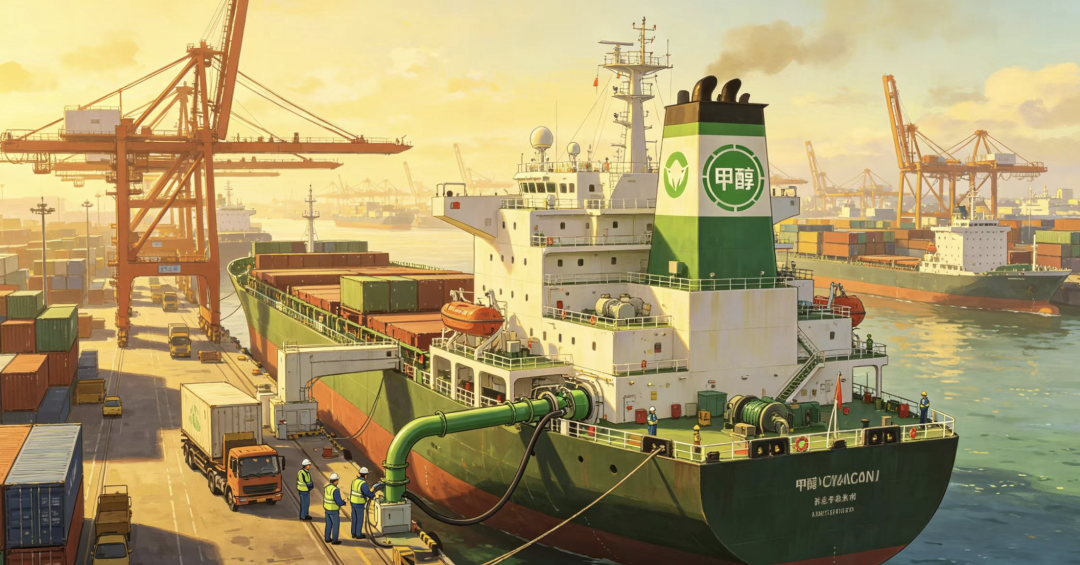
More critically methanol, isn't limited to transportation. It's a rare energy carrier that can serve shipping, chemicals, power generation, and aviation fuel, with a single supply chain shared across multiple industries. As global decarbonization demand rises, green methanol capacity expansion and cost reduction are just a matter of time.
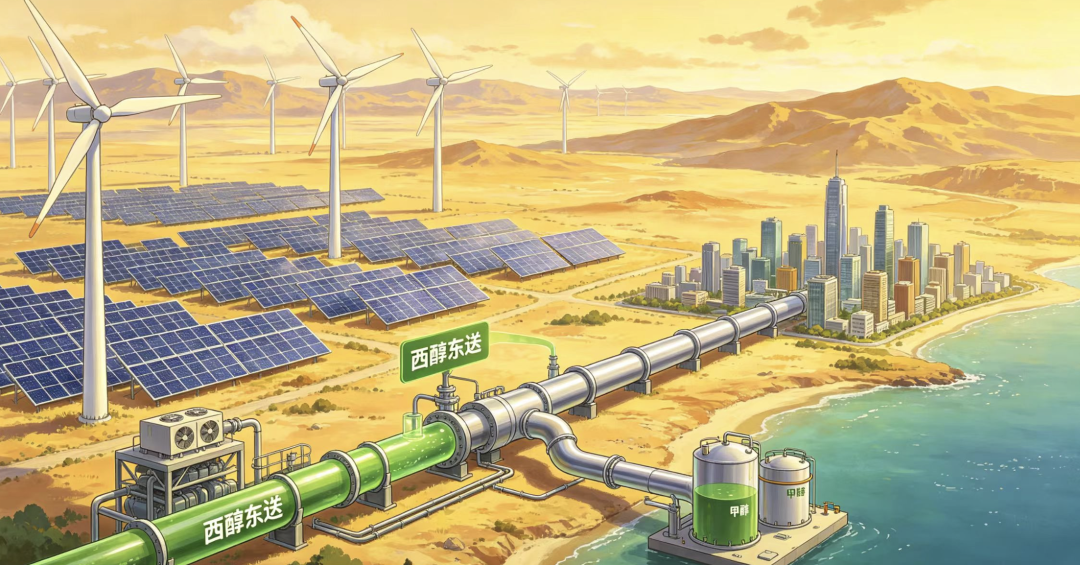
Fan Xianjun also mentioned a grander vision: methanol, a liquid energy at room temperature and pressure, can rely on existing oil and gas pipelines for transportation. They're discussing 'west-to-east methanol' and 'north-to-south methanol' schemes with national pipeline networks, converting northwest wind and solar power into liquid methanol for low-cost transportation to coastal regions. By 2027, they plan to build 4,000 methanol refueling stations nationwide, creating a network covering most areas.
Hong Kong Can Set an Example for Global Cities
Hosting this forum in Hong Kong is deeply symbolic. Backed by China's vast methanol production capacity and mature vehicle technology, facing the global market, and being a typical energy-importing, land-scarce metropolis—
As Zhang Yongwei, chairman of the CheBaiHui Research Institute, said, Hong Kong is China's first stop for global cooperation in green transportation.
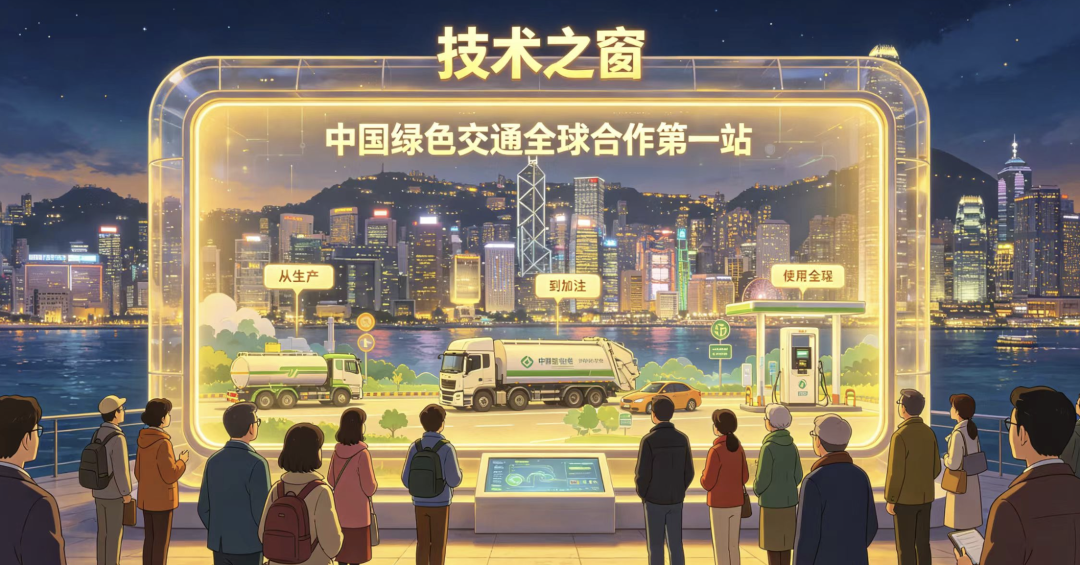
If the methanol electric vehicle solution succeeds in Hong Kong—whether for public buses, urban logistics, or cross-border transportation—this model can be directly replicated in similar cities across Southeast Asia, the Middle East, and Europe.
As Academician Chen Qingquan said, China's automotive industry shouldn't just export products but also solutions and standards. Hong Kong serves as the pivot to showcase China's methanol technology to the world.
After this forum, I'm firmly convinced: when discussing green transition, some argue over 'the ultimate route,' as if there must be a single technological winner. But the more places I visit, the clearer it becomes—the world isn't black and white.
Plain new cities can vigorously promote pure electric; cold regions can adopt methanol; heavy-duty long-distance transport can explore hydrogen. Different resource endowments and application scenarios deserve different optimal solutions.

Green transition is a diversified and collaborative relay race. Solutions that can be implemented, sustained, and balance energy security and costs are good solutions.
Hong Kong's approach is pragmatic. And this methanol route, developed over two decades, has finally arrived at its window of opportunity.
Text | Li Xiyin · Peanut
-
![]()
Insta360’s Post-Lockup Period Begins: Employees Suspected of Selling Shares, Institutions Biding Their Time—Is a Major Storm on the Horizon?
-
![]()
Are Houses Getting 'ID Cards' Now? In the Future, House Decorating, Renting, and Buying Will All Be Possible with a Simple Scan!
-
![]()
Where Should the Senior Citizens in County Towns Go?
-
![]()
【OFweek Weike Cup】Santec Officially Enters for the 2026 Optical Industry Annual Innovation Product Award
-
![]()
Anhui’s Taihu County Establishes a Project with an Impressive Annual Production Capacity of 850 Million Square Meters of Optical Film, Along with Supporting Rollers!
-
![]()
The AI Unicorn Valued at 960 Billion is Raising Funds Again
-
![]()
Unveiling the Strategy: The RMB 11.5 Million Deal of MLOptics
-
![]()
Qingtian Lease Hits 7 Billion Valuation in Six Months, Coexistence of Robot Leasing Bubble and Reality