Will Chinese Automakers Brave the North American Market Amid U.S. Pressure?
 07/08 2026
 404
404

Lead
Introduction
Absolutely, and without hesitation.
In recent days, the North American automotive industry has been increasingly gripped by 'panic.' The cause isn't a shortage of chips or worker strikes, but rather a long-standing agreement—the USMCA trade pact, also known as the United States-Mexico-Canada Agreement.
The USMCA officially came into force on July 1, 2020, and was personally signed by then-President Trump. This agreement can be viewed as a free trade pact tailored for the North American market, featuring strong exclusivity and industrial constraints. Its primary objective is to solidify the automotive supply chain and prioritize 'America First.'
Take the automotive sector as an illustration. The USMCA imposes stringent duty-free thresholds: for finished vehicles to circulate duty-free among the U.S., Canada, and Mexico, the regional value content of vehicle components must reach 75%. Furthermore, 70% of the steel and aluminum raw materials used in vehicles must be smelted and cast within North America, and 40%-45% of the components must be produced by workers earning at least $16 per hour.
Evidently, these regulations are quite stringent. On one hand, they facilitate cross-border duty-free movement of finished vehicles and components among the three countries, enhancing efficiency. On the other hand, they erect significant barriers to entry for foreign automakers. Models merely assembled in Mexico with extensive use of Chinese-imported batteries and components cannot enjoy duty-free status.
However, this agreement, intended to 'protect' the U.S. automotive industry, faced rejection from the U.S. during its 'review' six years later.
On July 1, during the inaugural round of online tripartite review of the USMCA, U.S. Trade Representative Greer officially declared the U.S.'s refusal to renew the agreement under the current terms. The three parties failed to reach a consensus, effectively closing the long-term renewal channel and ushering in a cycle of annual negotiations.
The U.S.'s uncompromising stance has directly led to a sharp increase in the 'uncertainty' surrounding the USMCA trade agreement and triggered its decade-long annual review process.
Although the U.S. is not immediately withdrawing from or canceling the current duty-free status, the long-term stability expectations for the North American market have been further eroded. Mexico and Canada will also be compelled to tighten their component reviews of Chinese products, raising the threshold for Chinese automakers to enter the North American market via Mexico.
01 North American Auto Market: Rife with Uncertainty
Uncertainty in the North American automotive market is rapidly intensifying. On the surface, it revolves around whether the USMCA will be renewed, but more critically, the rules themselves are shifting from a 'stable framework' to a 'tool for repeated negotiations.' Once the system becomes unstable, what the market loses first is not the agreement itself but the certainty of future expectations.
In the most extreme scenario, the U.S. could directly withdraw from the USMCA, reverting the three countries to a high-tariff system. The North American automotive market would then witness soaring costs, supply chain disruptions, factory production cuts, or even shutdowns.
However, the current situation leans more towards another state: the U.S. is not truly withdrawing but continuously using the USMCA as a bargaining chip. The rules have not collapsed, but they have become unreliable. The market is most sensitive not to bad news per se but to constantly changing signals.
Structurally, multiple agencies predict that the U.S. trade deficit with Mexico in goods has ballooned to approximately $150-$170 billion. In 2024, official U.S. statistics revealed a full-year deficit of about $108 billion, with the automotive supply chain contributing nearly 40%. Thus, the automotive supply chain is under intense pressure.
A typical path involves U.S. design, low-cost manufacturing or assembly in Mexico, and then zero-tariff reflux into the U.S. market. This appears to be a trade flow but is actually constructing a highly integrated North American production system.
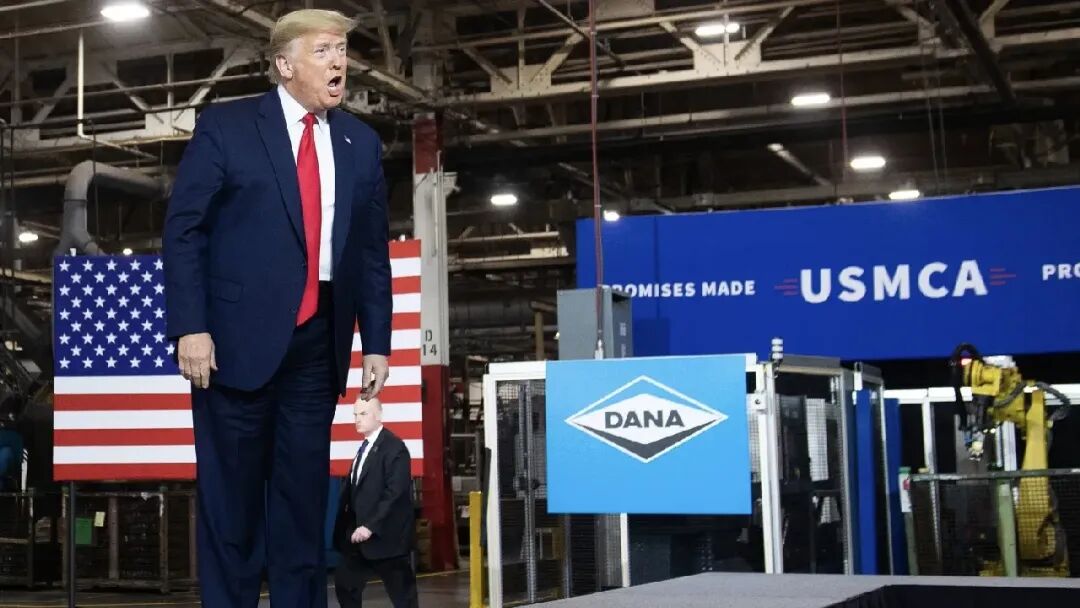
Precisely due to this deep integration, the USMCA is no longer just a trade agreement but the foundational rule governing the operation of the North American automotive supply chain. Once this foundational rule is reopened for discussion, the impact extends beyond tariffs to the reconstruction costs of the entire supply chain.
In fact, major automakers have already incurred significant costs to adapt to the USMCA. Stellantis invested $13 billion to upgrade its finished vehicle and supporting supply chains in the U.S. and Mexico. General Motors spent $5.5 billion to relocate production of several models back to the U.S. Toyota and Hyundai each invested billions to localize battery and powertrain components.
Regarding the new demands from the U.S., Aakash Arora, an expert from the Boston Consulting Group, bluntly stated: 'All solutions are on the table, but no matter which one, the first point is clear: increase U.S. content.'
However, what does continuing to increase U.S. content entail? It means redesigning the supply chain, incurring higher costs, and raising vehicle prices. Under this U.S. logic, both automakers and consumers stand to lose.
According to calculations by the American Automotive Parts Association, if the proportion of North American components in finished vehicles is raised from 75% to 82% and a mandatory 50% U.S.-made component indicator is added, as per U.S. demands, the production cost of a mid-size electric vehicle would rise by $4,000 to $7,000, ultimately passed on to end consumers.
The average price of new vehicles in North America is already nearing $50,000. Cost increases would directly dampen demand for new energy vehicle replacements, potentially slowing down the electrification progress that U.S. and Japanese automakers have been championing.
Even more daunting is the risk of investment stagnation brought about by 'annual reviews.' The payback period for investments in vehicle factories and battery support projects typically spans 8 to 12 years. Now, with trade rules potentially adjusting annually, multinational automakers are hesitant to embark on multi-billion-dollar expansion plans.
Several overseas automakers have already suspended the commencement of new factories in Mexico and shelved North American battery support investments. The once-booming 'nearshoring' trend is rapidly cooling down.
02 Attention: Canada May Offer Greater Opportunities
The Washington Post stated that restricting China's 'backdoor' entry into the U.S. market is a key aspect of this USMCA reassessment. Bloomberg also mentioned that as Chinese automobiles continue to expand their market share outside the U.S., the U.S. aims to increase the proportion of locally manufactured components and impose stricter component content rules to prevent Chinese components from flowing into the U.S. market via its two neighbors.
From a geopolitical perspective, the U.S.'s move is seen as having ulterior motives.
Historically, Mexico has been viewed as a crucial springboard for Chinese automakers to indirectly access the core North American consumer market. By 2025, China's automobile exports to Mexico exceeded 600,000 units, making Mexico China's largest overseas market for finished vehicle exports. Numerous power battery, thermal management, and chassis component enterprises simultaneously established factories in Mexico, forming a complete cluster of Chinese automotive support industries.
However, the reassessment of the USMCA has sounded an alarm for Chinese automakers seeking to enter the North American market via Mexico. This does not imply that automakers should abandon exploring the North American market but rather that they should exercise greater caution.
From a broader trend perspective, the U.S. automotive market is becoming increasingly closed and will impose stricter requirements on Chinese automakers. Moreover, under the influence of this local protectionism, even though Mexico has repeatedly publicly opposed the U.S.'s demands to increase localization and restrict third-party supply chains, the room for negotiation is very limited.
In comparison, Canada presents greater value than Mexico.
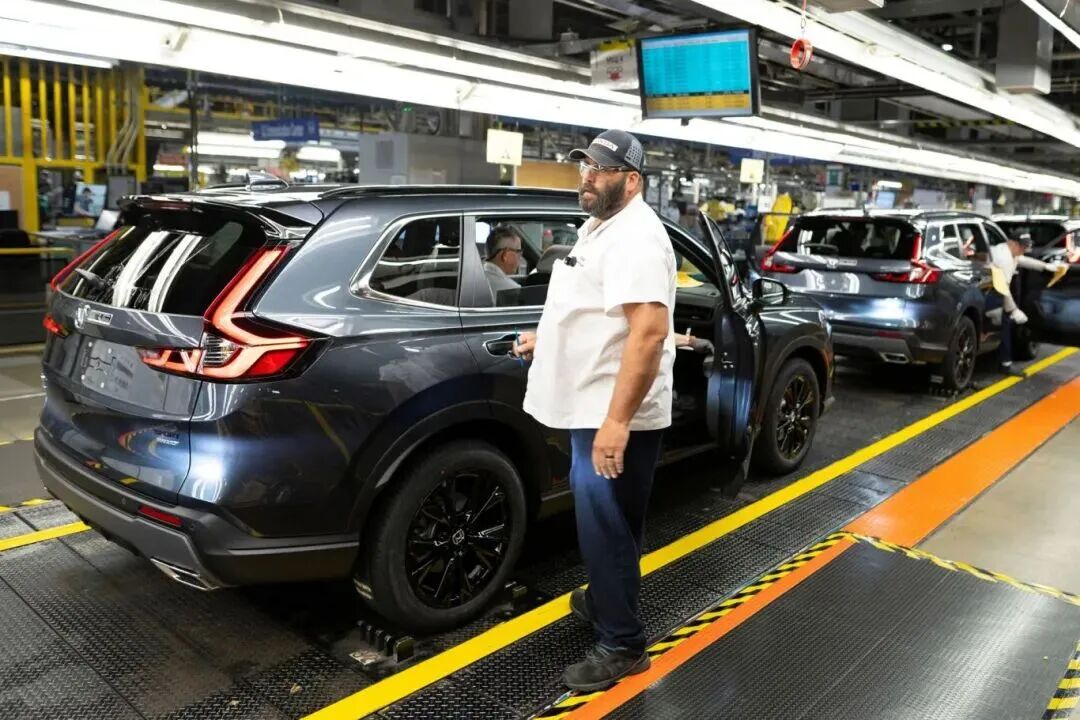
In 2024, Canada followed the U.S.'s lead and imposed a 100% punitive additional tariff on Chinese electric vehicles, nearly halting exports of domestically produced electric cars. However, just a year later, the Canadian government reversed its stance. Earlier this year, China and Canada reached a special trade agreement on electric vehicles. Starting March 1, high additional tariffs were abolished and replaced with an annual quota management system:
An annual import quota of 49,000 Chinese-made electric vehicles was opened, with only a 6.1% basic most-favored-nation tariff applied within the quota. The quota will steadily increase to 70,000 units within five years. The quota is released in two batches, first half and second half of the year, each with 24,500 units, using a 'first-come, first-served' mechanism.
At the same time, Canada has also introduced supporting vehicle purchase subsidy policies. Up to 5,000 Canadian dollars in subsidies can be claimed for affordable electric vehicles. Combined with the tariff quota benefits, this translates into a price advantage of tens of thousands of RMB, further enhancing the competitiveness of domestically produced electric cars.
Clearly, the North American market is not monolithic. In the grand narrative of Chinese automobiles going global, even without the U.S. market, Chinese cars will still find their way into the North American market. The question is merely from which entry point they should choose to ensure greater 'stability.'
At the conclusion of this article, one point must be emphasized: No matter what obstacles are encountered, the overall trend of Chinese automobiles going global will remain unchanged. Trade protectionism will only compel the Chinese automotive supply chain to accelerate its global multi-point layout. Next, it will be the 'Age of Great Navigation' for Chinese automobiles.
Editor-in-Chief: Li Sijia Editor: He Zengrong

THE END
-
![]()
OFILM Reports Colossal 460 Million Yuan Loss: Founder Quietly Shifts Focus to Optical Modules!
-
![]()
Yutong Optics and Zeiss Forge Partnership to Develop Quality Measurement System and Launch "Optical Communication Joint Measurement Class"
-
![]()
AutoNavi Revises Splash Screen Ads with Precision Amid Controversy
-
![]()
Unlicensed Vehicle Disputes: AutoNavi Ensnared in the Aggregation Model
-
![]()
Agent: The 'Hard Requirement' for Entering Core Enterprise Systems for the First Time
-
![]()
Global Auto Market Outlook: Sales Decline in China, US, and Europe, Chinese Exports Approach 10 Million
-
![]()
AI Pioneer Breaks Free from the 'Doldrums'
-
![]()
Valuation Exceeds $26 Billion! Three Chinese "Gold Medalists" Shake Up the AI Industry