Quite a Surprise: In the U.S., the World's Largest Market, Japanese Vehicles Drop Out of the Top Three in Quality Rankings
 07/08 2026
 347
347
During the era of traditional fuel-powered vehicles, it's no overstatement to claim that Japanese vehicles enjoyed global popularity. Apart from their stronghold in the Japanese domestic market, Japanese cars also commanded a significant market share in China, the United States, India, and Southeast Asia.
In the year 2025 that just concluded, despite a notable downturn in domestic sales, Japanese vehicles still managed to sell over 3 million units annually, accounting for more than 12% of the total yearly sales of Japanese vehicles. The U.S. market led the way, with a cumulative total of 6.05 million units sold throughout the year. Both Toyota and Honda achieved annual sales exceeding one million units in the United States.
What might come as a surprise is that in India, the cumulative sales of Japanese vehicles in 2025 reached 2.38 million units, capturing a market share close to 60%. India also stands as the nation with the highest market share for Japanese vehicles outside of Japan. Contrary to other markets, the best-selling brand in India is not Toyota or Honda, but Suzuki—the same Suzuki that has withdrawn from the domestic market.
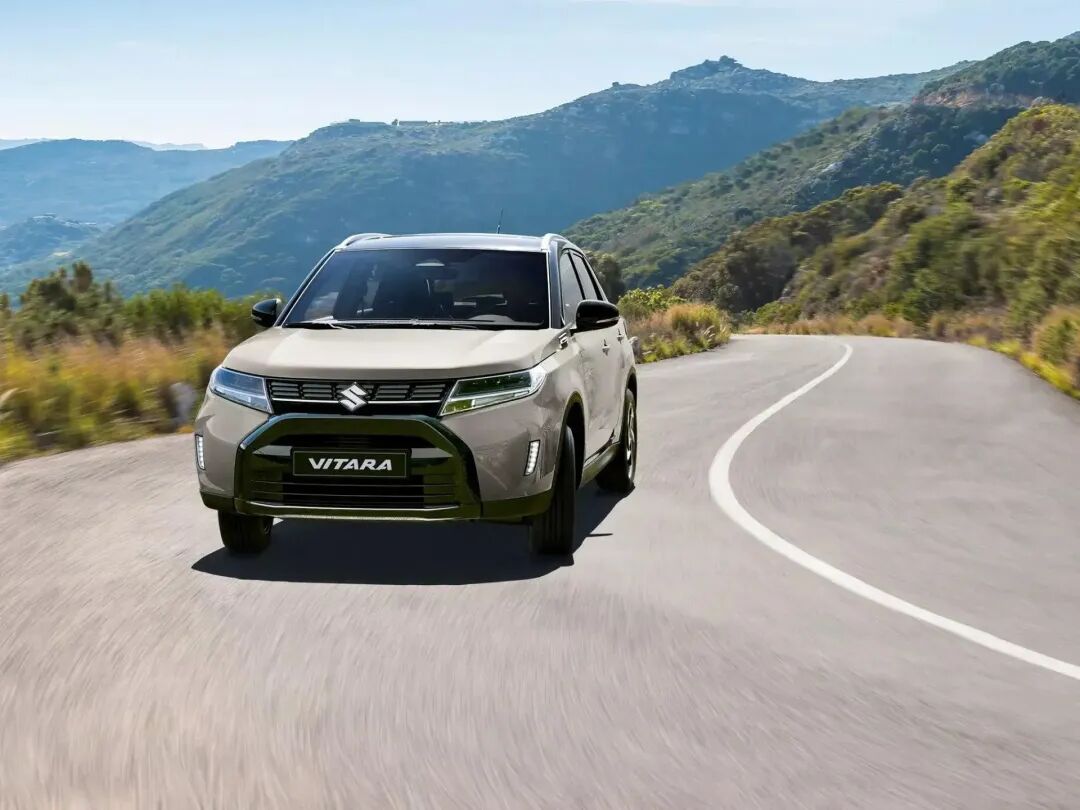
Data reveals that in 2025, Suzuki's sales in India surpassed 1.84 million units, accounting for 77% of the total sales of Japanese vehicles in India and 55.8% of Suzuki's global sales.
In Japan, the total annual sales of Japanese vehicles in 2025 amounted to only 2.35 million units, significantly lower than those in the U.S. and Indian markets. Among the brands, only Toyota exceeded one million units in sales, reaching 1.5 million units.
Additionally, the total annual sales of Japanese vehicles in Thailand and other Southeast Asian regions also hovered around 1.5 million units. In regions like Hong Kong and Taiwan, Honda and Toyota also enjoyed very high market shares. Only in Europe, where the automotive industry is equally robust, did Japanese vehicles have a relatively weaker market presence.
So, the question that arises is: Why are Japanese vehicles able to achieve such strong global sales? According to Che Kuaiping, there are roughly the following reasons:

Firstly, it's primarily due to the global footprint of Japanese vehicles. As early as the 1980s, Japanese automakers had already shifted away from the export sales model and established vehicle production plants and parts factories in regions such as North America, India, Thailand, and Mexico. The advantages of this strategy include avoiding high tariffs and effectively reducing transportation costs.
Secondly, Japanese automakers, including Toyota, Honda, and Nissan, all possess their own comprehensive manufacturing systems. For instance, Toyota's lean production method significantly cuts manufacturing costs while maintaining strict control over product defects, preventing faulty products from reaching the market. Their quality control far surpasses that of European and American automotive brands. It is precisely for this reason that Toyota is renowned as a 'vehicle that won't break down' and consistently ranks at the top in new vehicle quality lists.
Finally, compared to American and European vehicles, Japanese vehicles boast a clear advantage in fuel efficiency, thanks to their use of small-displacement naturally aspirated engines paired with CVT transmissions, along with the subsequent introduction of hybrid technology. This makes Japanese vehicles particularly appealing in countries with high fuel prices, such as those in Southeast Asia and India.
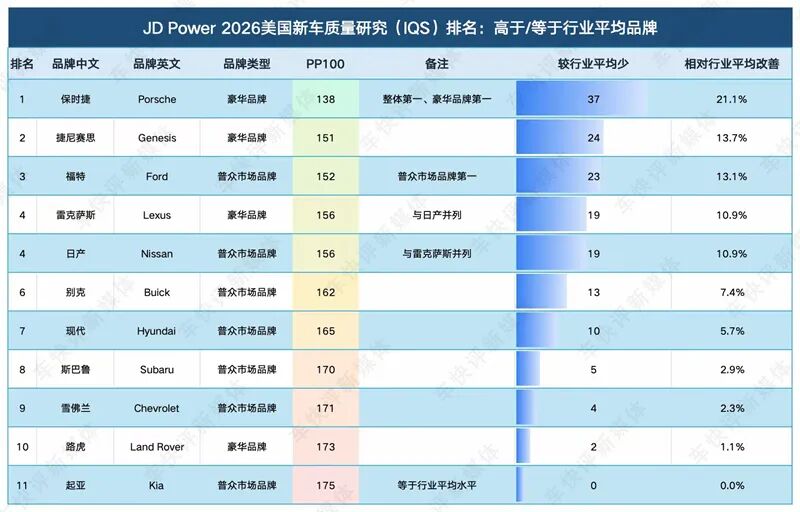
However, it is somewhat surprising that in the United States, the most crucial market for Japanese vehicles, the ranking of new vehicle quality for Japanese vehicles has seen a significant drop. According to the latest 2026 U.S. New Vehicle Quality Study rankings, the top three spots are occupied by Porsche, Genesis, and Ford. Lexus and Nissan are tied for fourth place, while Toyota and Honda are notably absent from the rankings.
Copyright Notice: This article is an original work by Che Kuaiping. Reproduction requires permission. Unauthorized reproduction is strictly prohibited, and any form of plagiarism or misappropriation of text or images will result in legal action. Some images in the article are sourced from the internet, with copyright belonging to the original authors. If your work is used, please contact us for royalties or removal.
-
![]()
OFILM Reports Colossal 460 Million Yuan Loss: Founder Quietly Shifts Focus to Optical Modules!
-
![]()
Yutong Optics and Zeiss Forge Partnership to Develop Quality Measurement System and Launch "Optical Communication Joint Measurement Class"
-
![]()
AutoNavi Revises Splash Screen Ads with Precision Amid Controversy
-
![]()
Unlicensed Vehicle Disputes: AutoNavi Ensnared in the Aggregation Model
-
![]()
Agent: The 'Hard Requirement' for Entering Core Enterprise Systems for the First Time
-
![]()
Global Auto Market Outlook: Sales Decline in China, US, and Europe, Chinese Exports Approach 10 Million
-
![]()
AI Pioneer Breaks Free from the 'Doldrums'
-
![]()
Valuation Exceeds $26 Billion! Three Chinese "Gold Medalists" Shake Up the AI Industry