The Declining Sales of Li Auto: A Strategic Shift
 07/08 2026
 376
376
Lead
As the Li L8 transitions from a six-seater SUV to a five-seater flagship model, incorporates the self-developed Mach M100 chip, and adopts an embodied intelligence strategy for the first time in a single vehicle, and as Li Auto directly counters peer skepticism by asserting that "the pinnacle of extended-range technology is 5C extended-range," the significance of the new Li L8 transcends a mere model update. It embodies Li Auto's concentrated response to multiple challenges, including current sales performance, product lineup, technological direction, and brand positioning.
This article is produced by Heyan Yueche Studio
Written by Cai Yan
Edited by He Zi
Total word count: 2,458
Estimated reading time: 4 minutes
In June, sales rankings for new energy vehicle startups were unveiled, with Leapmotor leading at 93,376 units, followed by HiPhi exceeding 50,000 units, and both NIO and XPeng surpassing 40,000 units for the first time. Li Auto, however, stood out as the only one among the top six to experience both year-over-year and month-over-month declines, with 30,895 units sold. In the first half of the year, Li Auto delivered a cumulative total of 193,500 units, achieving just over 40% of its annual target of 480,000 units.
Faced with competitors surging ahead while Li Auto lags, is this divergence among new energy vehicle startups a result of product transition pains, or does it signal that the benefits of the extended-range route have reached their peak?
Can the all-new Li L8 reverse the trend?
Using the all-new Li L8 as a starting point, Li Auto is seeking innovative solutions. At the end of June, the all-new Li L8 officially launched, offering Ultra and Livis versions priced at RMB 369,800 and RMB 429,800, respectively. The most significant change in the all-new Li L8 can be summarized as follows: a shift from six seats to five, and an expansion from extreme family use towards physical AI integration.
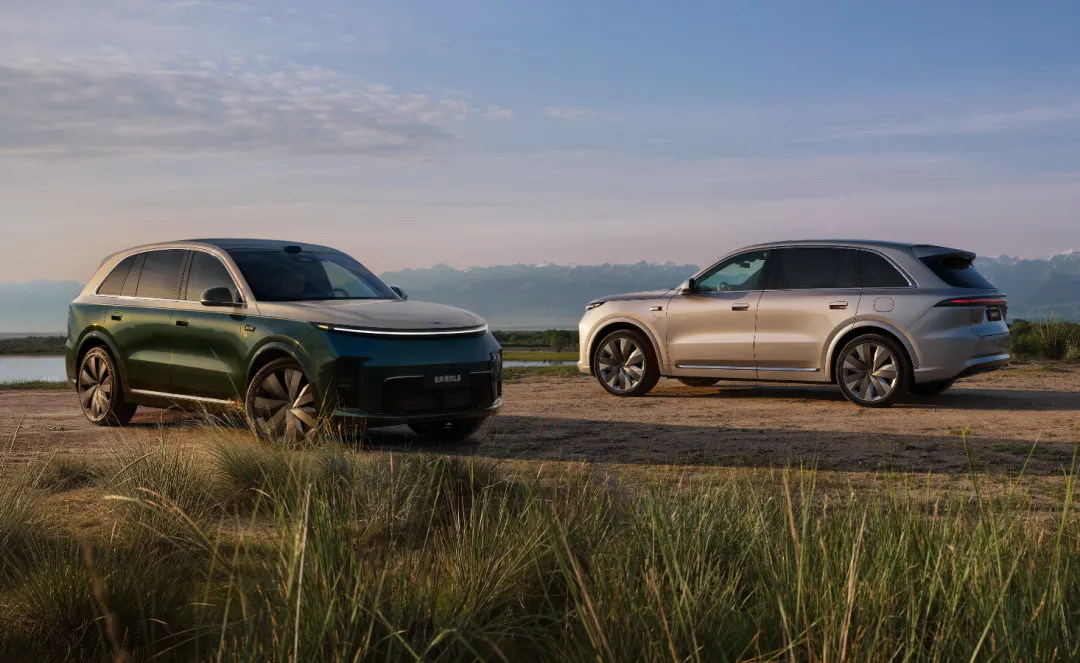
In terms of product specifics, the all-new Li L8 further enhances its body dimensions compared to the previous model, with a 55mm increase in length and a 40mm extension in wheelbase. Combined with the newly adjusted seat layout and the "Maybach-like comfort" emphasized at the launch event, the design clearly focuses on amplifying the interior space of the five-seater flagship model, an area where Li Auto excels.
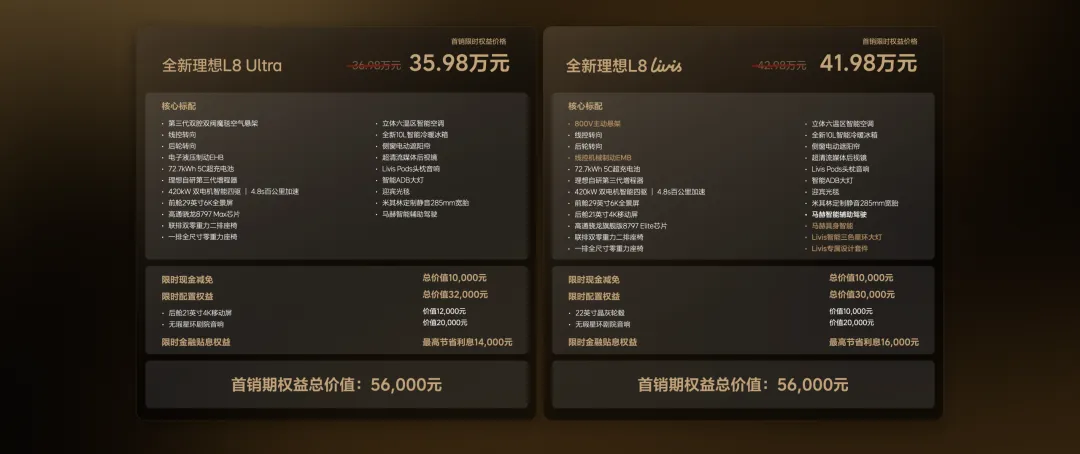
For the powertrain, the all-new L8 is equipped with a 72.7kWh 5C ultra-fast charging battery across all variants, upgrading the CLTC pure electric range from a maximum of 280KM in the 2025 model to 430KM. Notably, with Li Auto having already deployed over 4,000 5C ultra-fast charging stations nationwide, the company has introduced the narrative that "the pinnacle of extended-range technology is Li Auto's 5C extended-range."

While Li Auto's claim that "the pinnacle of extended-range technology is Li Auto's 5C extended-range" has sparked online debate, for the average consumer, it can be understood as Li Auto's advertising slogan. After all, with the robust capability of a 400KM pure electric range and a 5C charging infrastructure in place, Li Auto naturally exudes confidence.
However, from a market progression perspective, starting from mid-2025, extended-range models have seen a declining share of sales, in stark contrast to the rising share of pure electric models. As consumer range anxiety is alleviated by increasingly improved charging infrastructure, the number of consumers who will need an extended-range system as a "psychological crutch" is likely to decrease.
Of course, the biggest highlight of the all-new Li L8 lies in its comprehensive display of Li Auto's four-year accumulation of hardcore technologies in computing power, wire-controlled chassis, and embodied intelligence. These are not only Li Auto's strongest cards but also the key levers to drive sales in the second half of the new energy vehicle era.
The Ultra version is equipped with a dual-chamber, dual-valve Magic Carpet air suspension and a single self-developed Mach M100 chip (1280TOPS). The Livis version upgrades to a self-developed 800V active suspension, wire-controlled mechanical braking EMB, dual Mach M100 chips (2560TOPS), and 360° quad-lidar.
The reason the Li L8 Livis is called an embodied intelligent vehicle lies not just in the numerical specifications but more critically in the upgraded intelligent experience. The two Mach M100 chips are dedicated to different tasks: one handles assisted driving, powered by the Mach VLA large model. According to Li Auto, users will intuitively experience the driving innovations brought by embodied intelligence in the second half of the year.
From a timeline perspective, in July, the vehicle will assist in navigating complex scenarios such as width-restricted barriers and height-restricted gantries. By September, it will further achieve driving capabilities comparable to human drivers, including narrow-road reversing, yielding during oncoming traffic, navigating complex road surfaces, and controlling smart floor locks and garage doors.
The other Mach M100 chip in the Li L8 Livis is primarily responsible for in-cabin decision-making and task execution. Through the Mach Mind-Pro and Mind-Edge on-device native intelligent agent models, it analyzes and processes complex information like a human. At the Li L8 Livis launch event, examples such as "long-sentence road planning" and "wake-word-free communication outside the vehicle" were showcased.
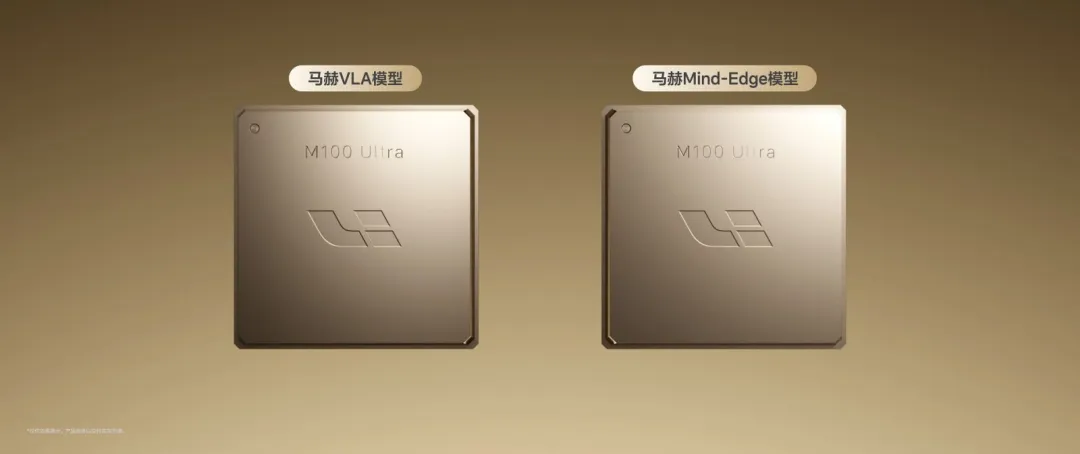
The all-new Li L8, shifting from "six seats to five" and from "extreme family use to embodied intelligence," reveals that Li Auto, after strategic market adjustments, has a clear plan.
On one hand, with the Li L9 already serving as the flagship six-seater SUV, instead of positioning the all-new Li L8 as a scaled-down version of the L9 to compete in the crowded six-seater market, Li Auto has chosen to switch tracks. By leveraging flagship-grade technologies and configurations, it aims to carve out greater growth in the five-seater SUV segment, creating better complementarity with the Li L9. On the other hand, Li Auto is likely to use the L8 as a market testing anchor. If the higher-priced, more intelligent L8 receives positive market feedback, Li Auto will directly replicate this successful path in the new L6 and L7 models. Conversely, it will need to readjust the pricing and intelligent configuration balance for the new L6 and L7. After all, for Li Auto, the RMB 200,000–300,000 price range is the true volume-driving segment for the brand.
Of course, for the all-new Li L8, despite being positioned as a market anchor for the Li L series, the current premium SUV segment is already fiercely competitive and will not easily allow Li Auto to advance its "embodied intelligent vehicle" product narrative.
Times Have Changed, and Competitors Have Multiplied
In 2022, when the first-generation Li L8 was launched, China's automotive market was in a transitional phase between "old and new energy models." The BMW X5, Mercedes-Benz GLE, and Land Rover Range Rover dominated the luxury mid-to-large SUV segment, while the RMB 300,000–400,000 new energy mid-to-large SUV market was still a blue ocean.
Under the logic of new energy vehicles being exempt from purchase taxes, license plate quotas, offering low operating costs, and superior comfort, the first-generation Li L8's path to success was straightforward: extended-range technology addressed range anxiety, while "refrigerator, TV, and sofa" features solved family needs. Priced lower than luxury fuel vehicles but offering a higher comfort experience, the first-generation Li L8 became a hit, essentially a differentiated category replacement competing against fuel-powered luxury SUVs.
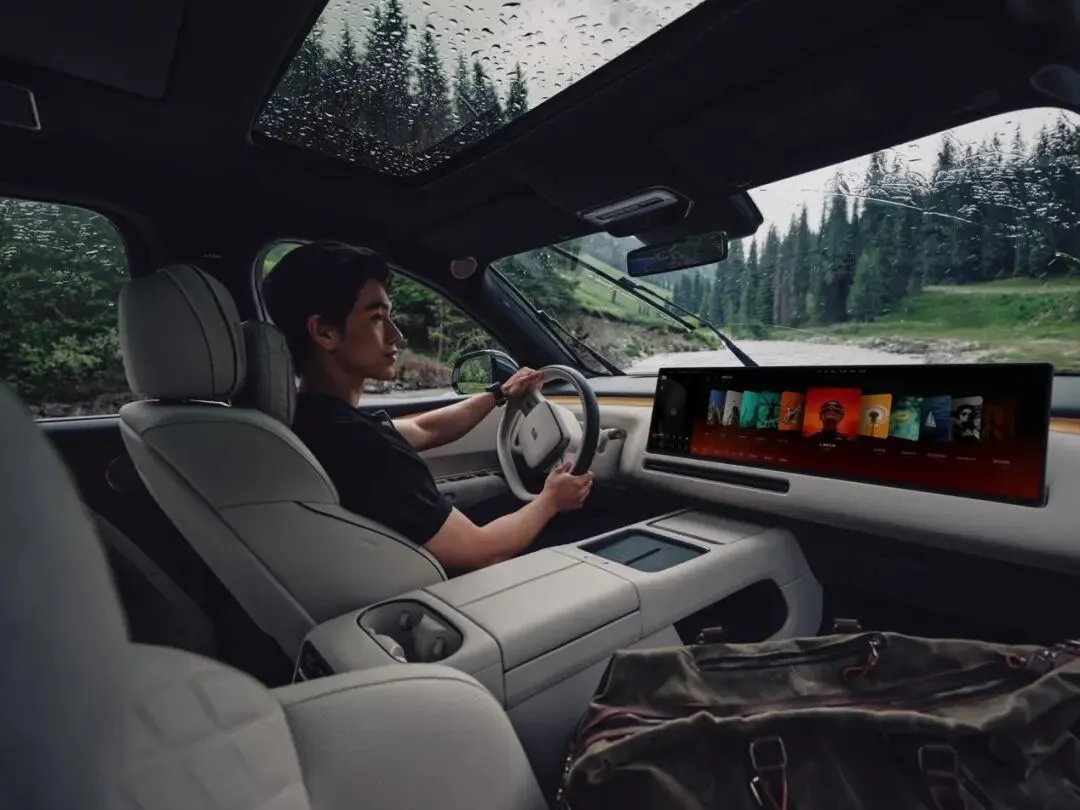
Entering 2026, the all-new Li L8's competitors are no longer fuel vehicles but established domestic new energy premium models.
The Aito M8, leveraging Huawei's intelligent driving and full-stack ecosystem, is the most recognizable model in the intelligent driving segment. The Zeekr 8X, with its plug-in hybrid + luxury positioning and premium feel, is gradually gaining traction. The NIO ES8 locks in customers with its battery swap ecosystem, while models like the XPeng GX and Leapmotor D19 are also making aggressive moves. The challenge for the all-new Li L8 to poach customers from these competitors is far greater than the 2022 effort to find incremental growth among fuel vehicle rivals.
Therefore, as the flagship "embodied intelligent vehicle" for the brand, the all-new Li L8 must focus its differentiation on experiences that other brands cannot replicate. Especially in a mature market where mere hardware parameter comparisons have lost their edge, consumers are more drawn to uniqueness. The Li L8's "long-sentence road navigation planning" and "wake-word-free communication outside the vehicle" exemplify the tangible manifestations of an embodied intelligent vehicle, rather than just chip computing power and cabin space.
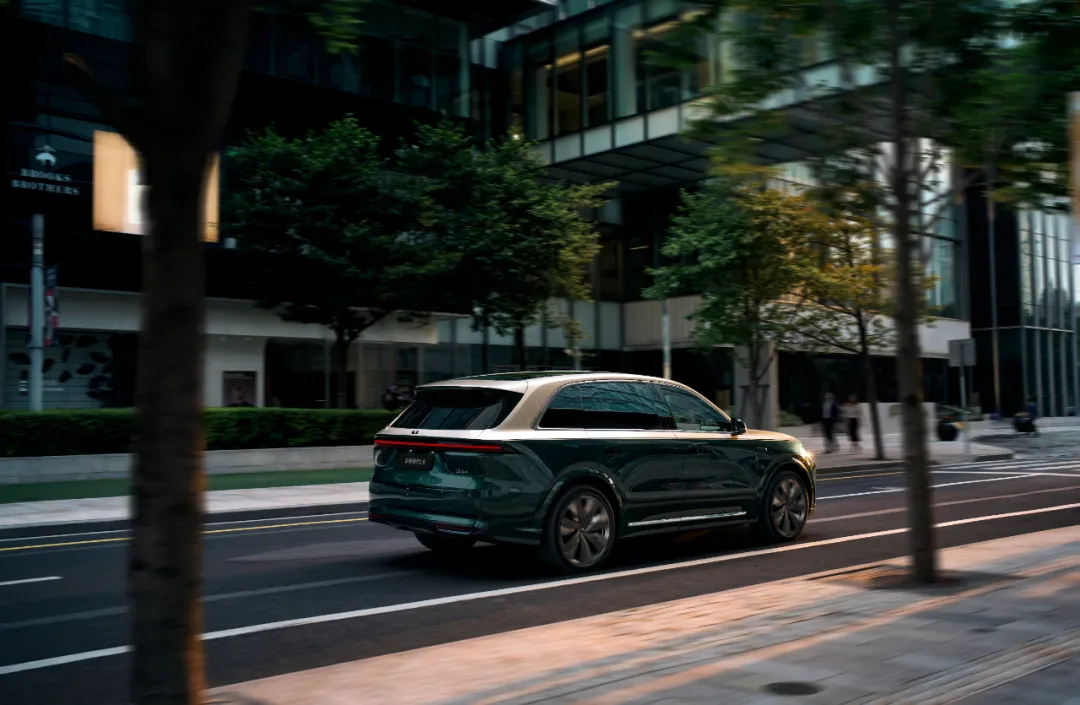
Additionally, when facing competitors, the all-new Li L8 must also clarify the positioning distinction between the i8 and the new L8. On one hand, the price overlap between the i8 and L8 will inevitably lead to some customer overlap. On the other hand, given the common perception in the new energy vehicle market that "newer is better" and the fact that the new L8's range and charging experience are close to those of pure electric vehicles, how Li Auto clearly differentiates its products to achieve a 1+1≥2 effect has become an unavoidable challenge.
Commentary
As Li Auto enters a strategic transformation phase, the significance of the all-new Li L8 extends beyond "the launch of a new model." It is a pivotal vehicle that will determine whether Li Auto's extended-range product line can shed its label and return to prominence. This launch can be seen as Li Auto's realignment of its brand positioning, adopting a "defend and attack" market strategy in the new model's positioning. However, with most consumers currently only recognizing Li Auto's "mobile home" family label and lacking awareness of its embodied intelligence layout, the extent to which embodied intelligence can justify brand premium pricing remains a significant question mark.
(This article is original to Heyan Yueche and may not be reproduced without authorization.)
-
![]()
OFILM Reports Colossal 460 Million Yuan Loss: Founder Quietly Shifts Focus to Optical Modules!
-
![]()
Yutong Optics and Zeiss Forge Partnership to Develop Quality Measurement System and Launch "Optical Communication Joint Measurement Class"
-
![]()
AutoNavi Revises Splash Screen Ads with Precision Amid Controversy
-
![]()
Unlicensed Vehicle Disputes: AutoNavi Ensnared in the Aggregation Model
-
![]()
Agent: The 'Hard Requirement' for Entering Core Enterprise Systems for the First Time
-
![]()
Global Auto Market Outlook: Sales Decline in China, US, and Europe, Chinese Exports Approach 10 Million
-
![]()
AI Pioneer Breaks Free from the 'Doldrums'
-
![]()
Valuation Exceeds $26 Billion! Three Chinese "Gold Medalists" Shake Up the AI Industry