After End-to-End, Has the Real Competition in Autonomous Driving Just Begun?
 08/13 2026
 498
498
As autonomous driving enters 2026, the end-to-end technical route has become a consensus, with nearly all leading players having completed the switch to end-to-end architectures. However, the widespread adoption of end-to-end systems has not brought about the expected technological leap. While data is exploding and fleet sizes are expanding, the pace of system improvement is slowing. Many companies have entered a state where progress appears to be made, but there is no qualitative improvement in user experience.
In fact, in the field of autonomous driving, the competition after end-to-end has just begun.
01 How Far Can the Data-Stacking Approach Go?
End-to-end autonomous driving involves inputting camera pixels and outputting steering wheel angles, with no manually defined module boundaries in between. This architecture bypasses the issue of cascading errors in traditional modular architectures, but new problems have arisen.
In many open-loop evaluations, a clear power-law relationship exists between model performance and data volume, but this pattern does not hold in closed-loop evaluations that more closely resemble real-world driving. Research involving 1,400 complex driving tasks conducted both open-loop and closed-loop simulations revealed that simply expanding data volume is insufficient to solve autonomous driving problems; data distribution quality and scenario coverage are equally crucial. The addition of a small amount of long-tail scenario data can significantly enhance model performance in corresponding complex scenarios.
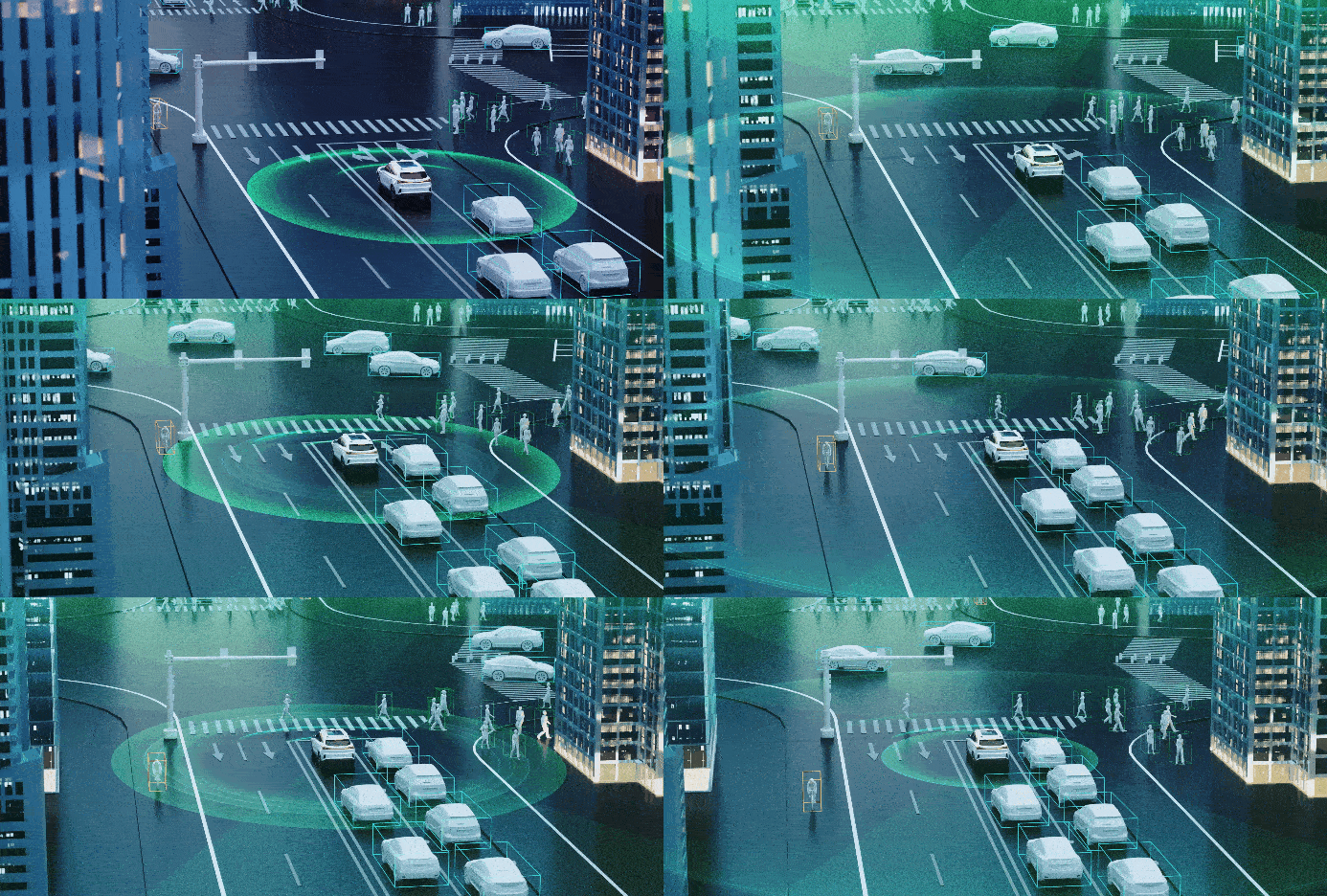
Image Source: Internet
Other studies have found inconsistencies in the data volume patterns observed in closed-loop evaluations, suggesting that the research focus in autonomous driving should shift from merely expanding data volume to optimizing data distribution. This is because end-to-end models are essentially imitation learning systems that learn how humans drive rather than why they drive in a particular way.
When faced with long-tail scenarios never encountered in training data, their performance degrades sharply. In other words, they can only act based on what they have seen, not what they understand. Additionally, vehicles generate massive amounts of video data daily, but only a tiny fraction of these clips are truly valuable for model training. A large volume of normal driving data not only contributes little but also dilutes the model's ability to learn from critical samples.
NVIDIA's MOSAIC framework, proposed at CVPR 2026, offers a new solution. It first clusters data by scenario type, then estimates the benefit curves of each data cluster for various driving metrics, and finally adds data clusters to the training set in descending order of marginal benefit.
This mechanism prioritizes data that offers the greatest improvement within limited computational resources. Experimental results show that MOSAIC achieves or exceeds the baseline performance of traditional full-data training methods with 80% less data. Beyond data efficiency, end-to-end autonomous driving training faces two other significant constraints.
Professor Li Shengbo from Tsinghua University pointed out at the High-Level Forum on Intelligent Electric Vehicle Development in April 2026 that, in addition to data screening efficiency, insufficient data volume and limited computational power are also prominent bottlenecks. He provided a specific reference: the autonomous driving field requires approximately 100 million video clips to cross the threshold for model training, and model parameter counts ranging from 1 billion to 10 billion can generally support intelligent driving functions.
Currently, the industry's data accumulation and model scale are still far from this threshold, leaving significant room for improvement.
02 From Seeing to Understanding: What Do VLA and World Models Bring?
Pure end-to-end models lack an understanding of the physical world. They do not know that slippery road surfaces increase braking distances, that overhanging branches might fall, or that puddles could conceal deep potholes. While they can fit some superficial patterns through large amounts of data, they cannot establish causal reasoning abilities. This is why VLA and world models have emerged following the rise of end-to-end systems.
VLA unifies vision, language, and actions within a single model framework, enabling the system to generate driving actions directly from inputs such as video streams and navigation instructions. It addresses the question of what actions to take. World models, on the other hand, learn the motion patterns, spatial relationships, and causal structures of traffic environments from massive video data by predicting the next frame or state. They address the question of what will happen after taking certain actions.
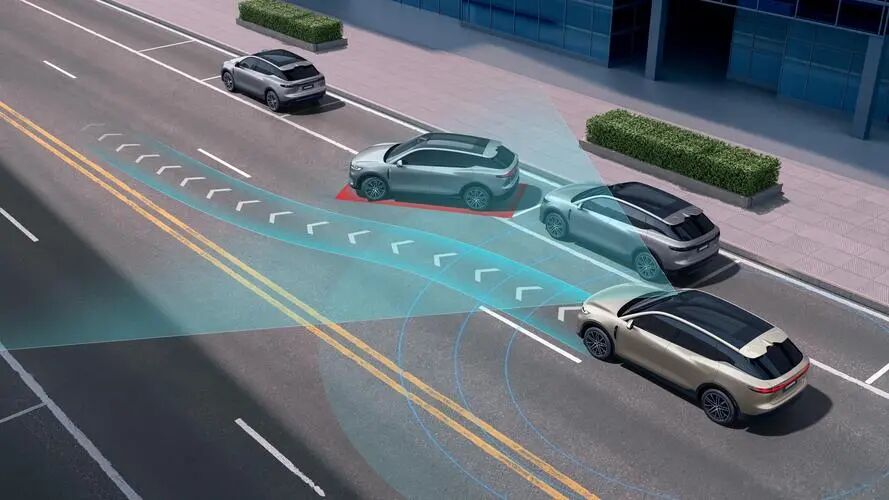
Image Source: Internet
Since end-to-end models lack an understanding of why things happen, world models can establish this understanding by predicting future states, while VLA translates that understanding into specific driving actions. When combined, the system can both comprehend the logic of how the world operates and know what actions to take. Along this direction, multiple companies and research institutions introduced new work in 2026, attempting to achieve both world prediction and action decision-making within a unified framework.
The HyWorldVLA paper published by BYD's New Technology Research Institute is a typical example. Its core innovation lies in adopting a hybrid world model that simultaneously uses pixel-level and latent-space world models during pre-training, leveraging the strengths of both approaches. Pixel-level predictions provide fine-grained spatiotemporal reasoning but are sensitive to noise; latent-space models are robust against interference but have limited interpretability. HyWorldVLA attempts to strike a balance between the two, achieving a PDMS score of 90.59 on the NAVSIM v1 benchmark, reaching a leading level among publicly reported results.
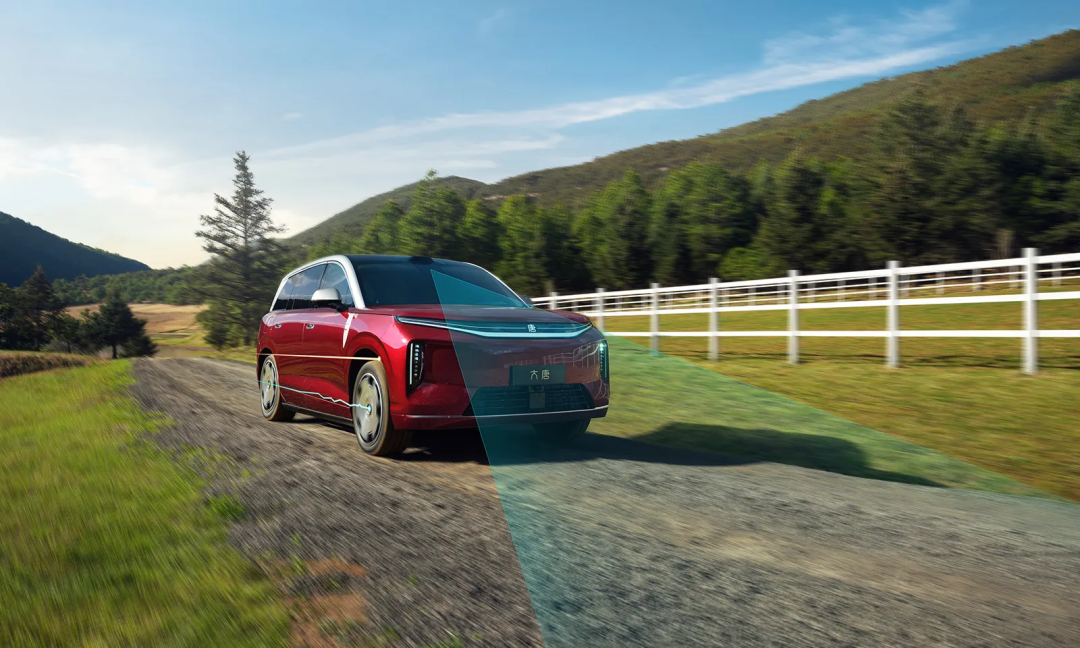
Image Source: Internet
Additionally, there are many similar efforts. WCogVLA proposes a dual-level world cognition VLA framework that combines semantic world prediction with generative world evolution. CoWorldVLA is a multi-expert world reasoning framework that uses world representations as explicit conditions to guide action planning. The commonality of these works is that they no longer treat VLA and world models as separate technical routes but instead attempt to tightly integrate them at the representation level.
03 Data Loop: From One-Time Training to Continuous Evolution
If VLA and world models address the issue of model understanding capabilities, then data loops address the issue of model evolution capabilities.
In the past, the process from data collection to model deployment was linear. Vehicles collected data, which was then manually annotated, used to train models, and finally deployed on vehicles. The entire cycle was lengthy, taking days or even longer from collection to deployment. As fleet sizes expanded, the data volume increased, but processing bottlenecks further amplified delays, resulting in accumulating data while the model's understanding updated slowly.
The new approach transforms this linear process into a cycle. Vehicles collect data while driving, and the system automatically identifies noteworthy challenging scenarios from this data. These scenarios can be directly used for model training, and after training is complete, the updated model is pushed to the fleet via OTA. The fleet then operates with the new model, continuing to collect new data. With each cycle, the system evolves once.
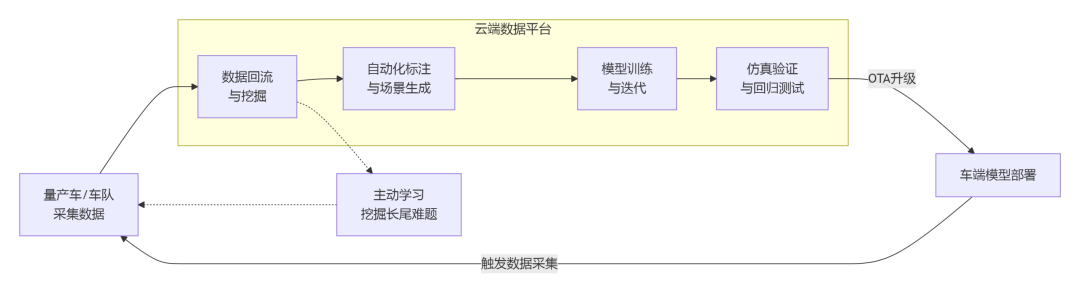
Image Source: Internet
The efficiency of this loop depends on the degree of automation in each link (Note: " link " is kept as is for context, but in a full English translation, it would be "stage" or "step"). Can initial screening be performed on the vehicle to reduce useless data uploads? Can the system accurately identify scenarios that offer the greatest model improvement? Can training iterations be completed quickly? Can OTA deployments be done safely and efficiently?
These stages are interconnected; if any one stalls, the entire cycle slows down. The term "data loop capability" often heard refers to the ability to keep this cycle running quickly and stably. In the data mining stage, Mobileye introduced two AI tools at CVPR 2026: Meteor and Genario.
Meteor is a hypothesis-driven data mining engine, while Genario is a directed scenario simulator. Both aim to systematically identify and address long-tail problems in autonomous driving. Meteor is Mobileye's multi-agent AI data analysis platform for autonomous driving, aggregating millions of hours of driving data from different countries, weather conditions, road types, and traffic environments. It can automatically identify reproducible failures, derive causal hypotheses, retrieve similar scenarios, and generate training samples, all operating automatically and at scale.
Genario, based on Meteor's output, generates photorealistic synthetic driving scenarios, expanding the coverage of directed training data by switching controlled variables such as lighting, weather, and obstacle positions. The core idea of these tools is not to passively wait for long-tail scenarios to occur but to proactively mine safety-critical rare cases from massive data. In the annotation stage, the combination of AI pre-annotation and manual refinement is transforming traditional data production methods.
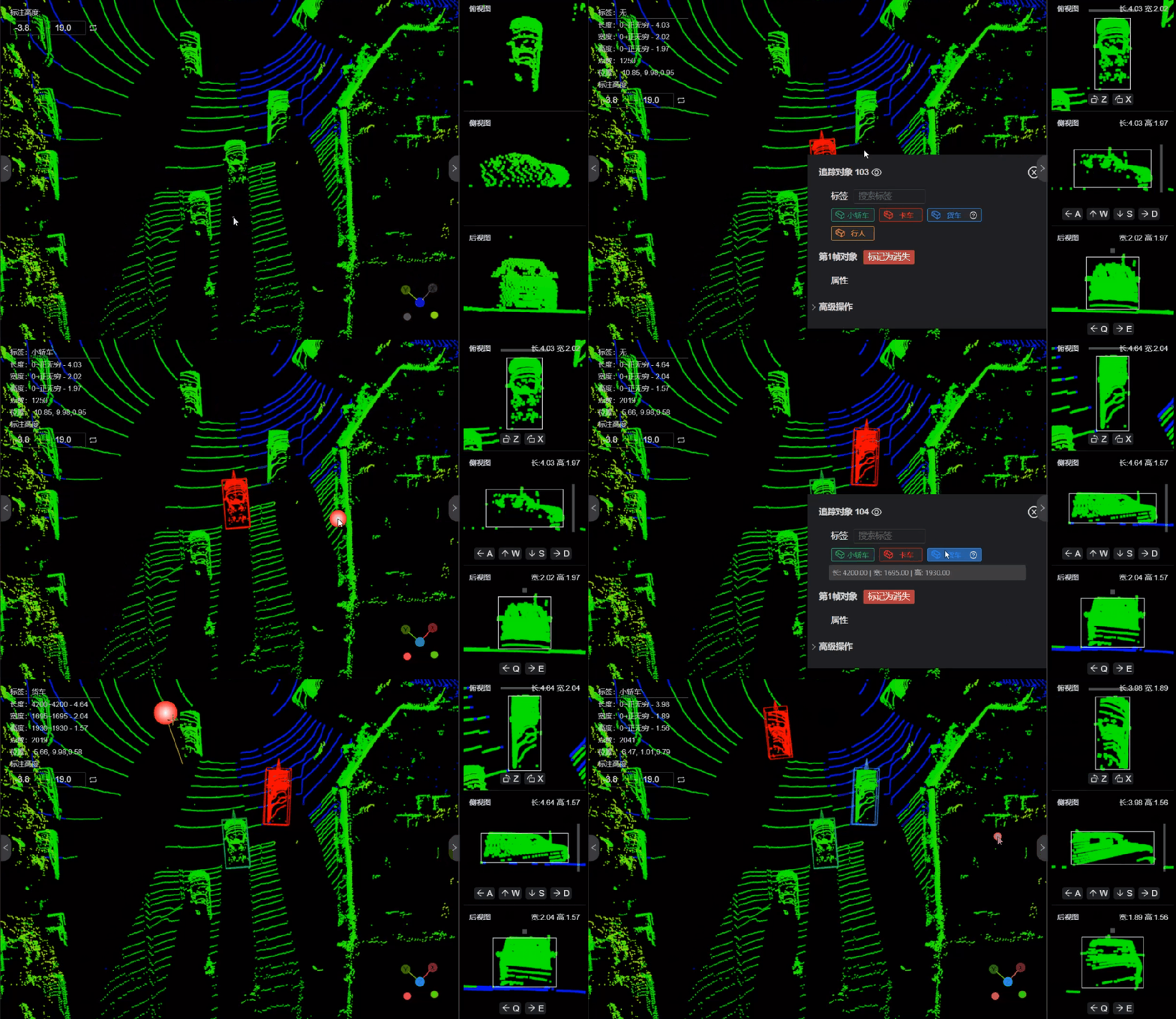
Image Source: Internet
The integration of unsupervised, weakly supervised, and few-shot supervision techniques is creating a semi-automatic annotation mode that reduces, minimizes, and refines annotations, improving efficiency by over 70% compared to traditional manual annotation. In the iteration stage, OTA has become standard. When the automation level of each stage in this pipeline is sufficiently high, it ceases to be a project and becomes a self-iterating, continuously evolving system.
04 Final Thoughts
The competition in end-to-end autonomous driving is shifting from algorithmic contests to system operations contests. In the past, the focus was on who could design better network architectures or who could implement end-to-end systems first. Now, the focus is on whose data loop runs faster, whose long-tail scenarios are mined more accurately, and who can advance further in integrating VLA and world models. The technological gaps between leading companies are fluctuating monthly, with no single player able to establish a long-term advantage through a single technological breakthrough.
For these companies, the real barrier lies not in a single model but in a complete closed-loop system spanning data collection, scenario mining, model training, and OTA deployment. The operational efficiency of this system determines the pace of model evolution.
While data scale remains important, how effectively data is utilized is more critical than how much data is available. VLA and world models offer the possibility of enabling models to understand the world, but this The premise (Note: " Premise " is kept as "prerequisite" in a full translation) is having sufficiently high-quality data and a sufficiently efficient loop to support their continuous evolution. #AutonomousDriving #End-to-EndAutonomousDriving #WorldModel
-
![]()
Tencent Makes a Bold Move on AI, But Will the Capital Market Buy In?
-
![]()
How Deepseek V4 Pro Outperformed Claude: The Scaling Up of China’s Super-Nodes
-
![]()
The Real Story Behind Zhong Shanshan’s ‘Criticism’ of E-commerce
-
![]()
Summer Blockbuster Season Sees 3% Market Share for Panoramic Cameras: Far from the Mainstream Imaging Trend
-
![]()
Summer Blockbuster Season Captures 3% Market Share: Panoramic Cameras Remain Outside Mainstream Imaging Trends
-
![]()
Why Are Giants Like Alibaba Remaining Silent Amid Zhong Shanshan's Criticism?
-
![]()
Which Automakers Have Achieved Over One Million Export Units for Two Straight Months?
-
![]()
Leapmotor Also Builds a MINI Cooper