Who Exactly Opposes Sleeping in Electric Cars During Self-Drive Tours?
 08/13 2026
 491
491
Lead
Introduction
The clash between electric vehicles (EVs) and the tourism sector is escalating in public discourse.
During this year's summer break, the topic of "new energy vehicles disrupting the tourism industry" ignited heated online discussions.
Many observed that airports and hotels, typically bustling during summer, seemed notably quieter this year. Airfare prices plummeted, with some routes offering discounts as steep as 70-80%. Occupancy rates at certain guesthouses in Dali dropped from 80% in previous years to around 50%. Car rental businesses along western scenic routes also faced idle fleets, marking the end of an era characterized by vehicle shortages during peak seasons.
All indicators point to the rapid adoption of new energy vehicles as the primary cause.
By 2025, China's production and sales of new energy vehicles both surpassed 16 million units, with passenger vehicle penetration nearing 60%. This momentum continued into the first half of 2026, as more drivers opted for EVs for self-drive travel. Leveraging the benefits of low-cost travel and convenient charging, they bypassed traditional expenses such as airfare and hotels, significantly reducing local tourism spending and transforming conventional tourism consumption patterns.
To investigate this phenomenon, Auto Business conducted small-scale interviews and discovered that many EV owners actively chose to sleep in their vehicles during self-drive trips. One respondent remarked, "The cost-saving and hassle-free advantages are clear. Electricity costs less than 30 yuan per 100 kilometers—the farther we drive, the more we save. Long-distance travel costs are far lower than traditional methods like booking flights and hotels."
However, some netizens voiced complaints, arguing that sleeping in cars could never match the comfort of hotels. One stated, "If I can't afford a hotel, I wouldn't travel at all." The debate rages on, with both sides presenting compelling arguments. Yet, the issue has evolved beyond a simple right-or-wrong dichotomy, as new complications arise, deepening the conflict between EVs and tourism and sparking broader industry reflection.
01 Self-Drive Travel: More Than Just Cost Savings for Owners
For vehicle owners, choosing EV self-drive travel is not a spontaneous decision but a calculated choice driven by multiple advantages.
The most apparent benefit is cost efficiency. With rising fuel prices, the combined cost of off-peak electricity rates (including service fees) at public charging stations along national highways averages around 1 yuan per kWh. Mainstream EV models consume less than 20 kWh per 100 kilometers, translating to electricity costs below 30 yuan per 100 kilometers. Long-distance trips can thus be completed for a few hundred yuan in electricity fees.
Compared to traditional methods like air travel and car rentals, transportation costs are reduced by more than half. For budget-conscious travelers, this advantage is highly attractive and a key reason for abandoning conventional tourism models.
Convenient energy replenishment has also alleviated owner concerns.
Public data from the National Energy Administration reveals that by June 2026, China's EV charging infrastructure exceeded 23 million units, marking a 43.2% year-on-year increase. High-speed service areas and national highway routes now offer near-complete coverage. Even popular self-drive routes like the G318 highway ensure hassle-free energy replenishment.
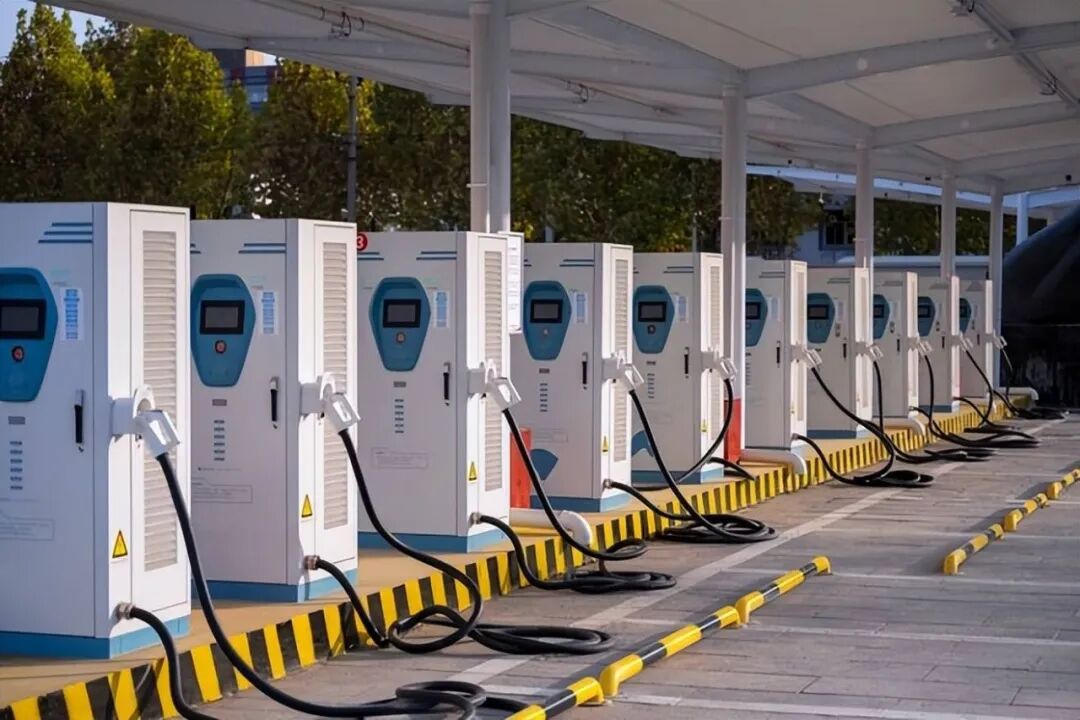
Long-distance self-drive trips no longer necessitate frequent fuel stops, greatly enhancing travel freedom. Owners can plan itineraries at will without being constrained by energy issues, further boosting the popularity of EV self-drive travel.
Upgraded driving experiences have made long-distance EV travel viable.
Most modern new energy vehicles feature intelligent driving assistance systems like urban NOA and highway NOA, enabling assisted cruising on national highways and expressways. Paired with seat ventilation and massage functions, long-distance driving is no longer physically taxing, even for journeys spanning thousands of kilometers. Additional features like in-car screens, refrigerators, and external power discharge enhance the travel experience, allowing occupants to brew coffee or cook meals while parked, transforming travel into a pleasure.
Critically, EVs integrate "travel and accommodation," drastically reducing lodging costs.
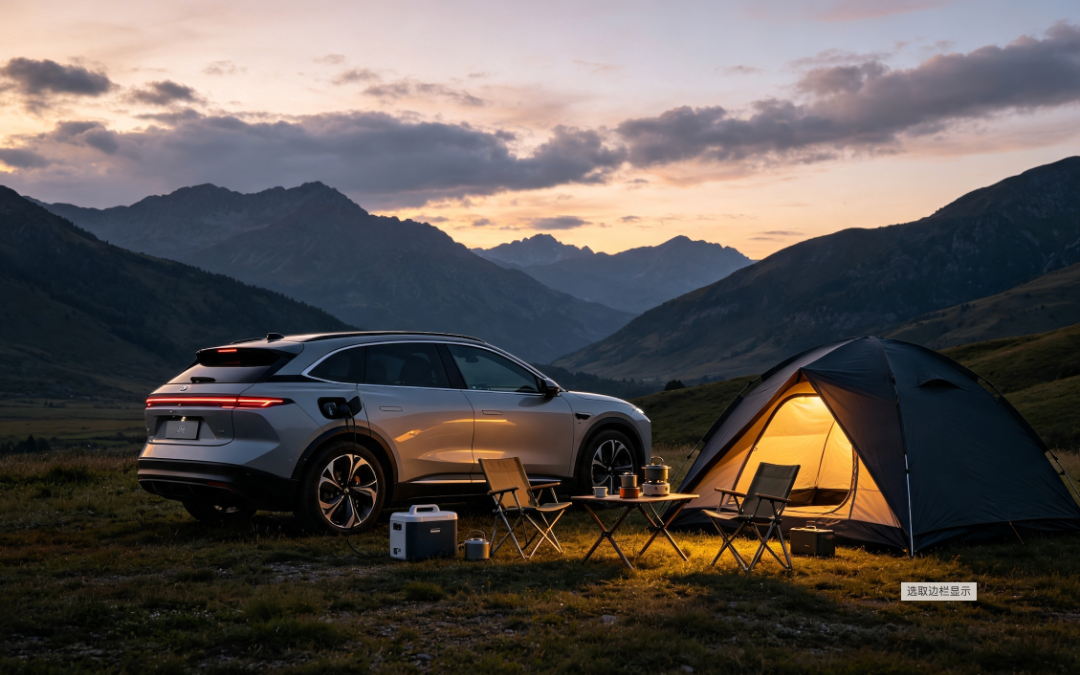
New energy vehicles can run air conditioning without engaging the powertrain while parked, minimizing exhaust poisoning risks. Overnight operation costs just a few yuan in electricity. Combined with flat-folding seats, privacy curtains, and car mattresses, they create comfortable mobile sleeping quarters, meeting overnight needs.
Many owners also note that dining in scenic areas is overpriced and hotels offer poor value. Sleeping in their vehicles saves money while adding novelty, even becoming a trendy choice.
Notably, this trend isn't limited to EV owners. Many gasoline vehicle owners now try RV camping, driven by cost savings and novelty, further diverting hotel customers.
02 Hotel Struggles: Finding a Way Out
In contrast to owners' flexible travel choices, hotel operators face mounting challenges.
A blogger shared that a hotel manager in Delingha, Qinghai, admitted, "While we achieved full occupancy this summer, revenue was only 60% of last year's. Price cuts of 30-50 yuan failed to attract customers, with new competitors offering 50% discounts." Industry competition has intensified sharply.
Given the changing environment, many hotels are trapped between "no customers without price cuts" and "no profits with price cuts." Peak-season benefits have diminished, creating unprecedented operational pressure.
Hotels face additional frustration as some self-drive travelers not only avoid staying but also camp in public areas near hotels, using restrooms and water without paying for services.
This "freeloading" behavior exacerbates operational pressures, diverting potential demand. Hotels cannot effectively stop it or profit from it, creating a dilemma and deepening conflicts with self-drive travelers.
Under rising tensions, irrational fee structures have emerged.
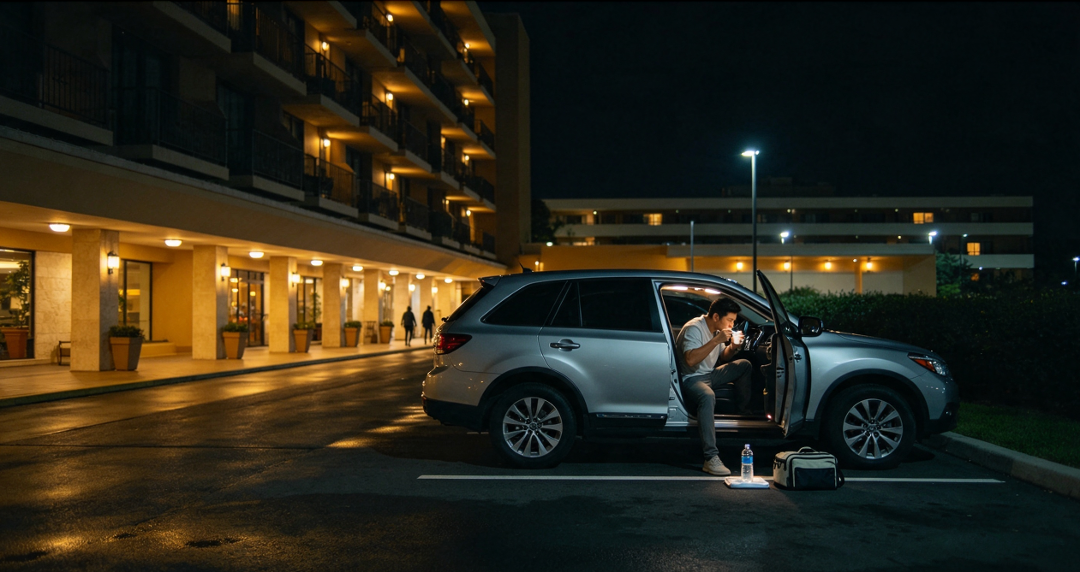
A traveler, unable to secure a hotel room, had a companion sleep in their vehicle for two nights. Upon checkout, the hotel charged an extra 150 yuan for "overnight vehicle parking." The traveler questioned, "I paid parking fees. Why charge for sleeping in my own car?" Police intervention was needed before the hotel refunded the fee and compensated the traveler 1,000 yuan.
This incident sparked online debate. While some criticized, "Don't travel if you can't afford hotels," others condemned the hotel's unreasonable fees, highlighting deepening divisions.
Faced with this supply-demand conflict, the industry is exploring solutions.
Several regions have introduced regulations for recreational vehicles, prohibiting unauthorized setup of canopies or open-fire cooking in public spaces and clarifying boundaries for parking, overnight stays, and camping. The industry also suggests creating low-cost overnight parking zones with basic services like charging and showers. Hotels could sell ancillary services like bathing and water supply separately, filling the market gap between free parking and formal accommodations.
Ultimately, owners seek cost savings and novel experiences, while hotels strive to maintain operations and seek breakthroughs. Neither perspective is inherently wrong. New energy vehicles have altered tourism spending allocation rather than causing the industry's downturn. Deeper issues like supply-demand imbalances and shifting consumer expectations demand attention.
This EV-tourism clash warrants ongoing observation and discussion. Balancing stakeholder interests and achieving win-win outcomes will be critical for the future of cultural and tourism development, requiring collective industry exploration.
Editor: Li Sijia Copy Editor: He Zengrong

THE END
-
![]()
Tencent Makes a Bold Move on AI, But Will the Capital Market Buy In?
-
![]()
How Deepseek V4 Pro Outperformed Claude: The Scaling Up of China’s Super-Nodes
-
![]()
The Real Story Behind Zhong Shanshan’s ‘Criticism’ of E-commerce
-
![]()
Summer Blockbuster Season Sees 3% Market Share for Panoramic Cameras: Far from the Mainstream Imaging Trend
-
![]()
Summer Blockbuster Season Captures 3% Market Share: Panoramic Cameras Remain Outside Mainstream Imaging Trends
-
![]()
Why Are Giants Like Alibaba Remaining Silent Amid Zhong Shanshan's Criticism?
-
![]()
Which Automakers Have Achieved Over One Million Export Units for Two Straight Months?
-
![]()
Leapmotor Also Builds a MINI Cooper