Leapmotor A05: No Rush to Outpace Geely and BYD
 08/13 2026
 373
373
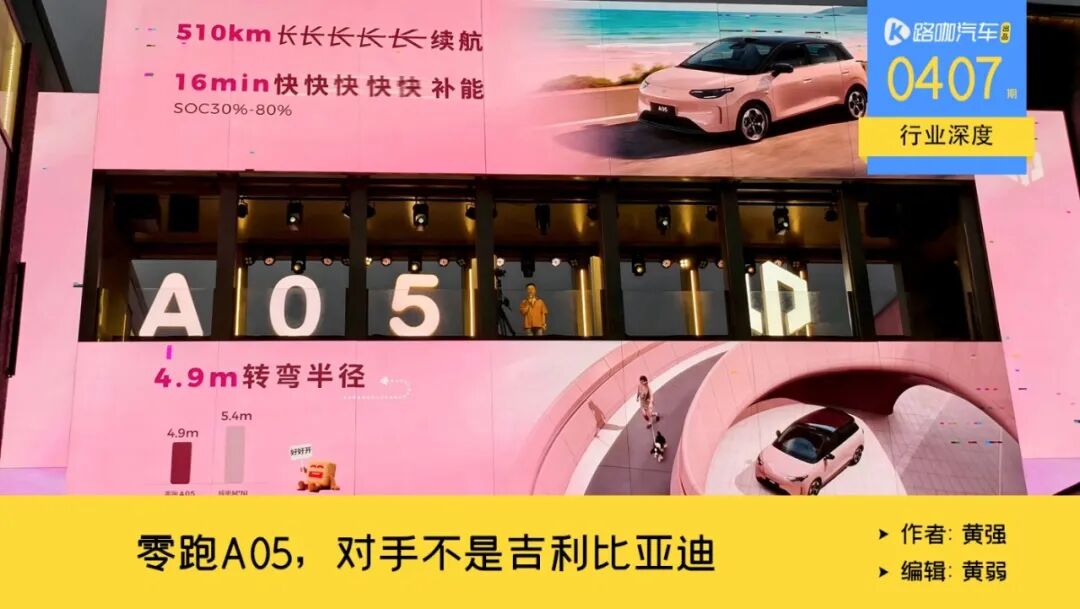
This assessment could either overestimate Leapmotor's potential or underestimate the might of Geely and BYD.
Barring any unforeseen circumstances, Leapmotor's sales could potentially exceed the combined sales of SAIC Volkswagen and FAW-Volkswagen in the coming months of 2026.
However, Zhu Jiangming, the CEO of Leapmotor, is not in a hurry. His response to my inquiry was, "Leapmotor is not chasing short-term gains. After a decade in the automotive industry, our goal is steady growth in sales." The underlying message is clear: Leapmotor is adopting a traditional, strategic approach in the automotive market, rather than resorting to unconventional tactics.

Such projections and rhetoric would have seemed far-fetched five years ago, almost unimaginable. Yet, the reality is stark: the monthly sales of SAIC Volkswagen and FAW-Volkswagen have been hovering around 150,000 units in recent years. Considering that Leapmotor's monthly sales surpassed 100,000 units in July this year, with the Leapmotor D99 just beginning deliveries in August and a backlog of orders yet to be fulfilled, coupled with the recent launch of the Leapmotor A05,
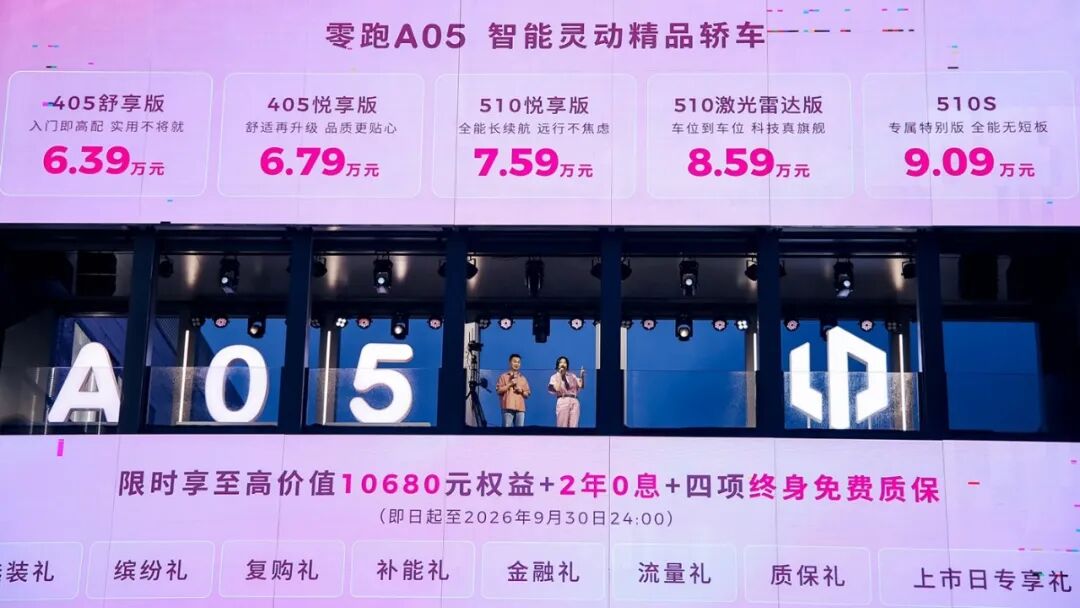
it suggests that if production capacity and order flow remain steady, Leapmotor could surpass the 150,000 monthly sales mark within this year, overtaking Great Wall Motors and securing the fourth position in the Chinese automotive market.
Of course, the linchpin in this scenario is the newly launched Leapmotor A05. Leapmotor's sales target for 2026 is to reach one million units. With 457,800 units already delivered from January to July this year, it needs to average 108,500 units per month in the remaining five months to hit the one million mark. To sustain or even boost sales in such a fiercely competitive market, the Leapmotor A05 is strategically positioned to compete with models like the Geely Starwish, BYD Seagull, Chery QQ, Wuling Binggo, MG4, Ora 5, and Arcfox T1 in terms of product definition.

New Car Advantage Period: Starting at 2 Months?
Before the launch of the Leapmotor A05, many automakers in the A0-class pure electric segment or the RMB 60,000-90,000 price range were on edge.
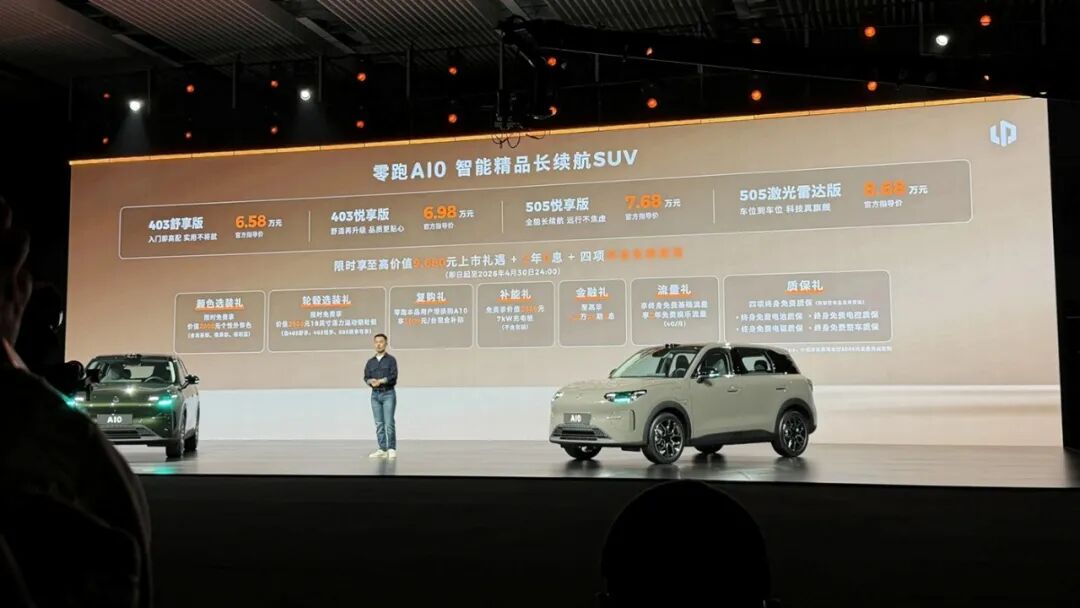
This tension stemmed from the earlier launch of the Leapmotor A10 in March this year. With a price range of RMB 65,800-86,800, Geely Starwish responded by offering benefits to existing owners, while Chery significantly reduced the launch price of its pure electric QQ from the pre-sale price.

Like all automakers, Leapmotor essentially laid its cards on the table in 2026, revealing many highlights of the vehicle before its launch. Thus, only two mysteries remained to be unveiled at the press conference: the specific configuration options for different model versions and Leapmotor's final pricing strategy.
The rationale behind the product definition is clear. With a 65% self-researched and self-produced component ratio, surpassing traditional giants like BYD, Leapmotor can cascade many advanced technologies and configurations downward. By identifying and addressing long-standing pain points of models in the RMB 50,000-100,000 range, it can create a stark contrast in consumer perception and ultimately secure more transactions.
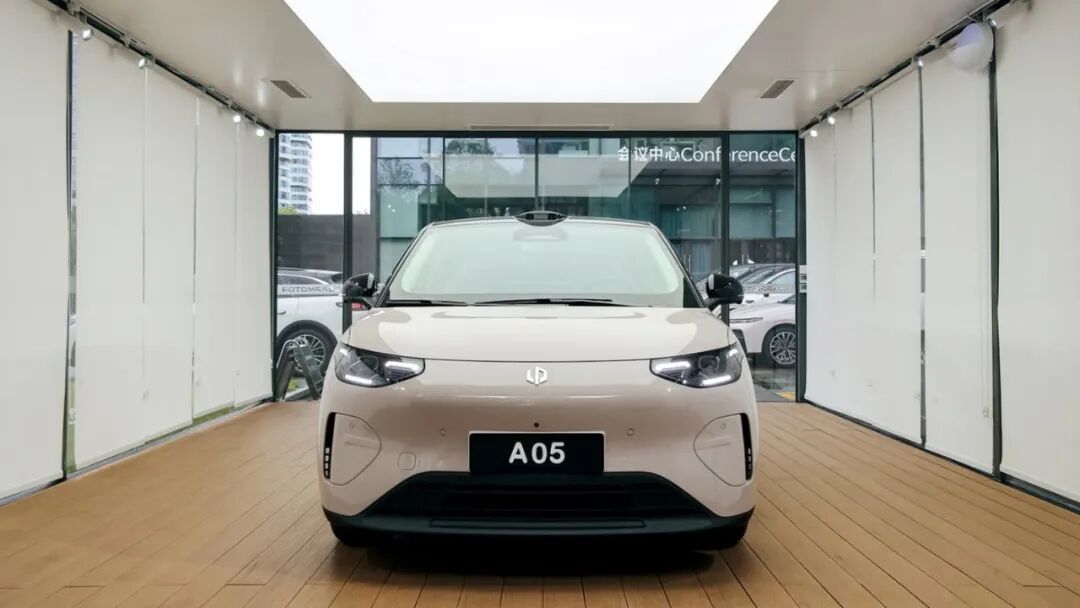
Therefore, understanding Leapmotor should not be reduced to traditional notions like 'low price' or 'cost-effectiveness.' The long-standing pain point has been that affordable small cars are often perceived as rough, with at most one technological highlight. The Fit has i-VTEC and spaciousness, the Toyota Yaris has durability and fuel efficiency, and the Volkswagen Polo is relatively well-rounded but more expensive. The same applies to pure electric small cars: the Wuling Hongguang MINI EV is cheap but undemanding. After the emergence of the Geely Starwish, the BYD Dolphin seems too expensive, while the BYD Seagull lacks sufficient configuration.
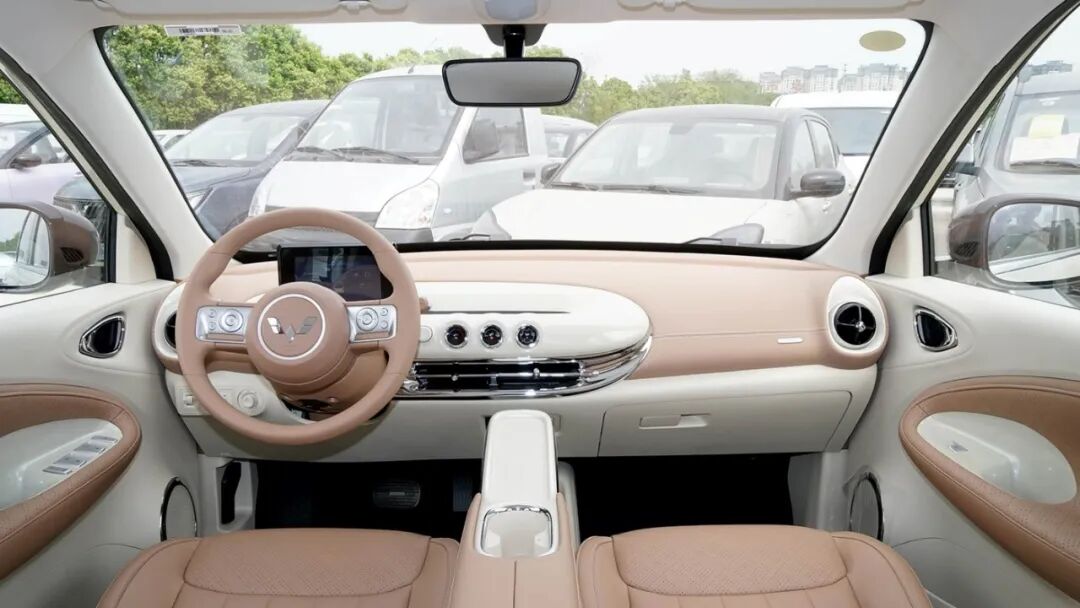
Under this logic, the most frequent complaints are about the abundance of hard plastics throughout the car, the low configuration of base models, and concerns about safety with smaller dimensions. Leapmotor's solutions are clear: slightly larger dimensions than competitors, slightly lower prices, significantly higher configurations, and the realization of many features that were previously impossible in this market segment.

From a market competition perspective, 80% of the Leapmotor A05's market entry logic is similar to how the Geely Starwish seized the sales crown from the BYD Seagull and Dolphin upon its launch. The Geely Starwish's approach was to offer the dimensions, configuration, and range of the Dolphin at the Seagull's price. The differing 20% logic is that the Leapmotor A05 integrates advanced driver-assistance systems with lidar into an RMB 80,000 price range, cascading many materials, configurations, and technologies previously found in RMB 300,000 models down to the RMB 60,000-90,000 Leapmotor A05. This is not a forced alignment, as seen in many press conferences, where sharing a supplier with a luxury brand is exaggerated into exclusive leadership.

The core logical difference here is that Leapmotor, like NIO, BMW, and Mercedes-Benz, cascades technologies, materials, and configurations uniformly to models like the Firefly, MINI, and Smart. In contrast, most existing models in the same class follow the logic of Volkswagen and Toyota, removing existing technologies to meet cost targets and ultimately offering a cost-effective commuter car.

Zhu Jiangming's ambitions are clearly substantial. He compares the Leapmotor A05 to the MINI COOPER for BMW and the Leapmotor A10 to the MINI COUNTRYMAN. Such expressions and the underlying logic have not been seen before in the cases of the previous Honda Fit or Geely Starwish.
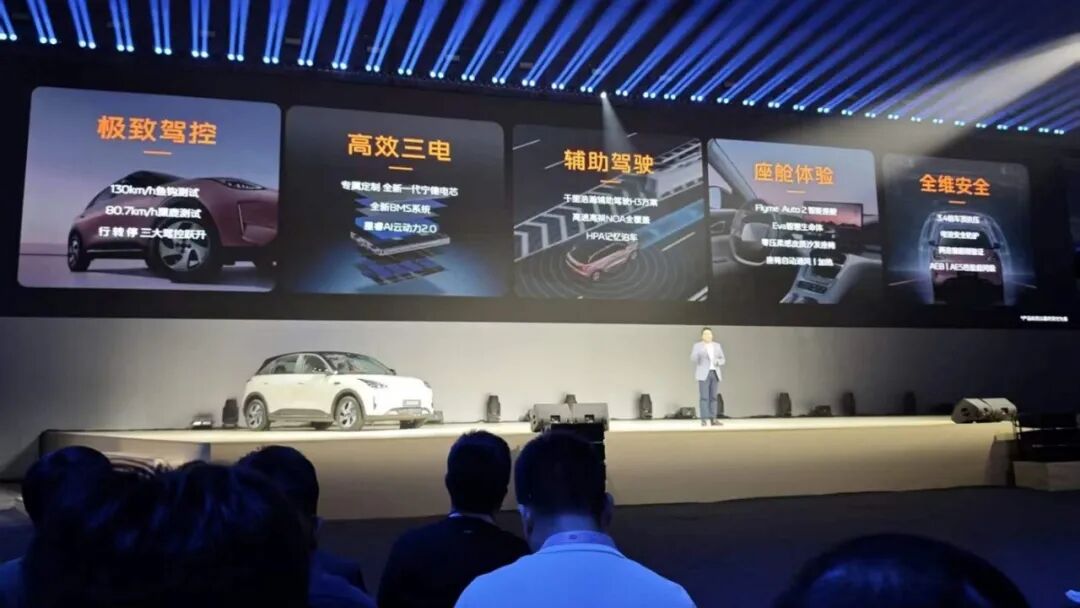
Of course, grand principles hold little sway over consumers. Currently, the Leapmotor A05 has advantages in price, configuration, technology, and philosophy, but other companies are not to be underestimated. The more meaningful question is how long the Leapmotor A05 can maintain its first-mover advantage in the market.
Currently, the first-mover advantage is expected to last at least two months.
Leapmotor A05: No Rush to Outpace Geely or BYD?
The reason for a first-mover advantage lasting at least two months is that many new models in the same class are not sitting idle. For example, the BYD Seagull is expected to undergo significant upgrades soon.
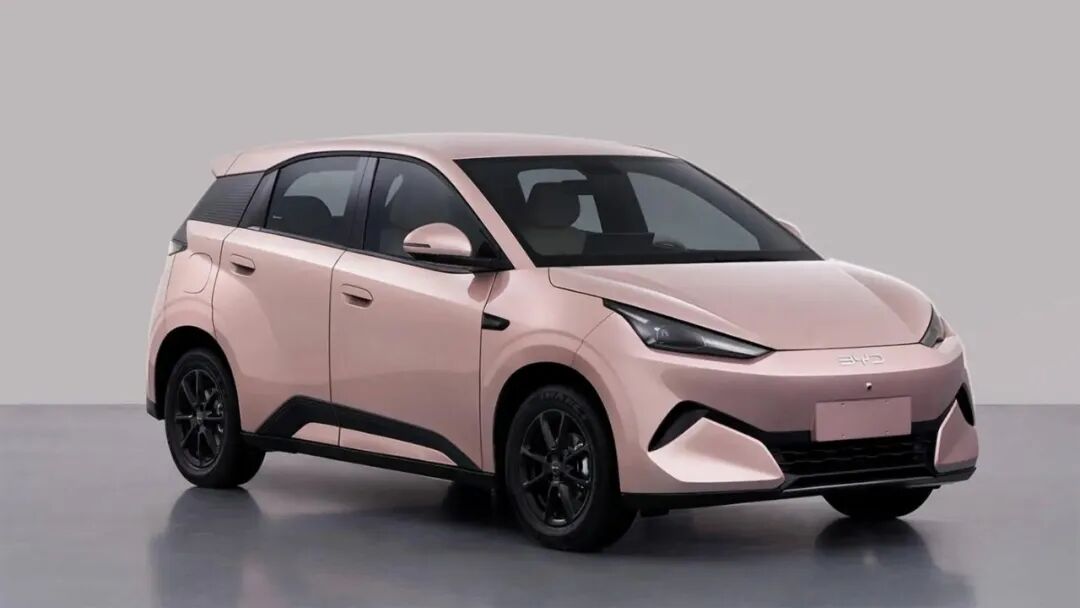
Let's first examine the extent of the Leapmotor A05's current advantages. Setting aside the absolute strength of its park-to-park advanced driver-assistance system, it competes dislocatively against all models on the market from the perspectives of price and range, which are the most pressing needs.
The Leapmotor A05's 405km range version is priced at RMB 63,900 and RMB 67,900, while the 510km range version is priced at RMB 75,900, RMB 85,900, and RMB 90,900.
The Geely Starwish's 310km range version is priced between RMB 64,800 and RMB 71,800, while the 410km range version is priced between RMB 71,800 and RMB 94,800.
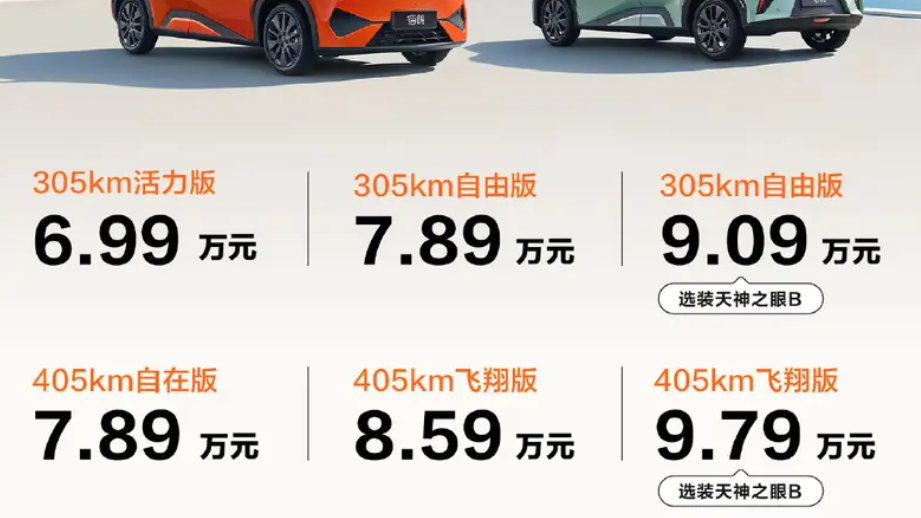
The BYD Seagull's 305km range version is priced between RMB 69,900 and RMB 78,900, while the 405km range version is priced between RMB 78,900 and RMB 85,900.
The Chery QQ3 EV's 310km range version is priced between RMB 58,900 and RMB 67,900, while the 420km range version is priced between RMB 68,900 and RMB 78,900.
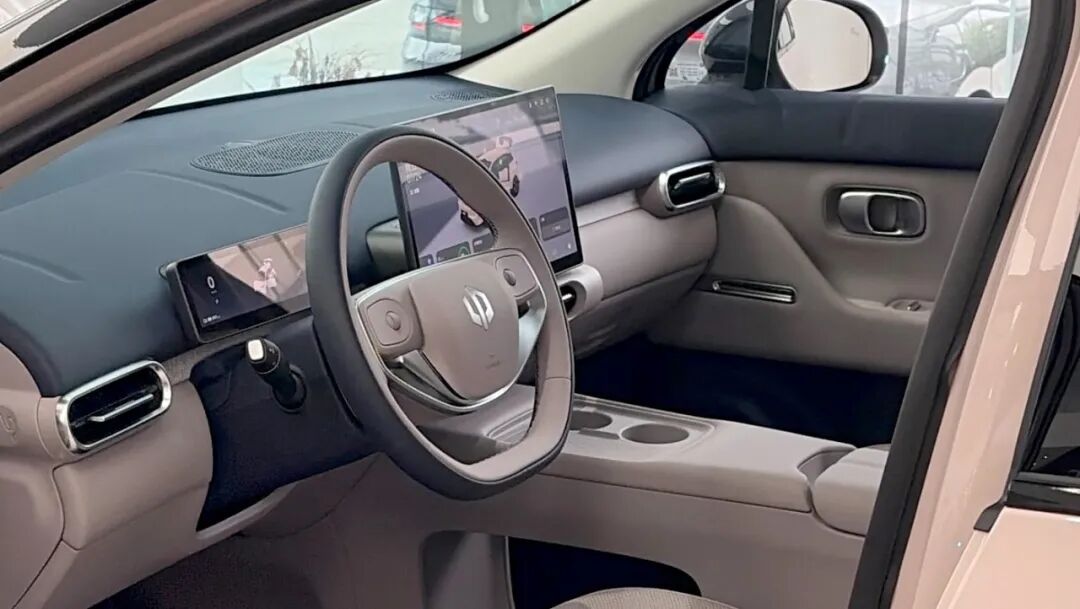
Comparing these hard needs, it's evident that the Leapmotor A05 offers the range and configuration of high-end models at the price of low-end models, meaning the competition is not on the same level. Additionally, in terms of details such as interior soft-touch materials, design sophistication, and oil-cooled motors, these are all bonus points that facilitate transactions.
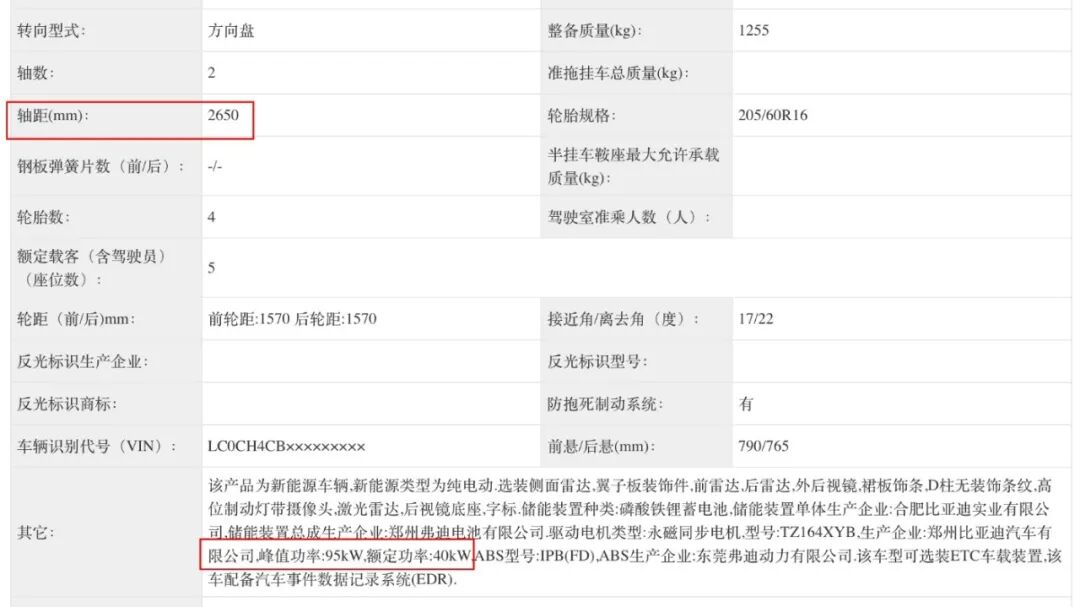
However, the new BYD Seagull has already been declared on July 10th, with a launch scheduled for the third quarter of this year. The body has been lengthened by 425mm, the wheelbase increased by 150mm, and the motor power upgraded from the current 55kW to 95kW, although it's uncertain whether the entire lineup will receive a 40kW upgrade. Additionally, it is expected to feature second-generation blade batteries and megawatt flash charging, while also supporting urban advanced driver-assistance systems like the Divine Eye, likely as an option.

With such product strength, the Seagull can meet the latest demands for intelligent driving assistance and long range, just like the Leapmotor A05. However, the question remains how BYD will price it. If it follows the current model of charging RMB 10,000+ for the Divine Eye option, there will likely be a price difference of over RMB 15,000 with the Leapmotor A05. In this price-sensitive market, a RMB 15,000 price difference is not easy to justify.
'The Leapmotor A05 seeks blue oceans within red oceans,' as concluded by Leapmotor's senior management team, summarizes the current market situation.

Key data from the previous Leapmotor A10 includes that over 65% of users are male, the 505km range version accounts for 70% of sales, the version with lidar has the highest proportion, and a significant portion of users are in first- and second-tier cities.
This set of data indicates that it operates in a different market segment from models like the Geely Starwish, BYD Seagull, Chery QQ3 EV, and MG4. Previously, A0-class commuter cars, whether fuel-powered or new energy, relied on mid- to low-end versions to drive sales.
The Leapmotor A05 is the sedan version of the Leapmotor A10. Prior to its launch, the order data showed an extremely high proportion of female buyers, with a significant percentage opting for models equipped with LiDAR or long-range capabilities. In other words, the Leapmotor A05 continues to target the market segment around RMB 80,000. Interestingly, the Geely Starlight and BYD Seagull currently focus on selling versions priced between RMB 70,000 and RMB 75
Furthermore, when delving deeper into these three strategies, notable differences emerge. For example, the integration of vertical integration and the 65% self-developed and self-manufactured component ratio empowers the Leapmotor A05 to capitalize on a wealth of software and hardware capabilities and experiences gleaned from the Leapmotor D99. Upon closer inspection, this advantage even extends to areas such as Lean Production 5.0. Given that R&D is inherently a cohesive, top-down core strategy, the A05 and A10 can also inherit the features and innovations found in the D99 and D19 models. This, combined with flexible production switching, not only uncovers new opportunities for cost control but also enhances competitiveness in terms of production and delivery speed.
In brief, there are numerous such examples, too many to enumerate individually, so we will not delve into each one here.
In Conclusion
Hence, the adage holds true: when making judgments, one should not solely focus on superficial factors while overlooking the core operational logic beneath the surface.
In the short term, the Leapmotor A05 may indeed attract some potential customers away from Geely and BYD. However, with the introduction of new product launches, a rebalancing of the market is highly probable. This has already occurred once between the Geely Starlight and the BYD Dolphin + BYD Seagull models.
As for the Leapmotor A05, its primary focus lies in market segments that several major domestic automakers have yet to penetrate. This strategic approach is akin to how NIO Firefly successfully tapped into the new sub-segment around RMB 120,000.
Moreover, Leapmotor's ambitions extend beyond internal competition within the Chinese market; the company even aspires to capture the core market share previously held by European models such as the Volkswagen Golf.
-
![]()
Cambrian Technologies Records 2.3 Billion Yuan Net Profit in Six Months, Earning the Title of 'Profit-Generating Powerhouse'
-
![]()
Tencent Makes a Bold Move on AI, But Will the Capital Market Buy In?
-
![]()
How Deepseek V4 Pro Outperformed Claude: The Scaling Up of China’s Super-Nodes
-
![]()
The Real Story Behind Zhong Shanshan’s ‘Criticism’ of E-commerce
-
![]()
Summer Blockbuster Season Sees 3% Market Share for Panoramic Cameras: Far from the Mainstream Imaging Trend
-
![]()
Summer Blockbuster Season Captures 3% Market Share: Panoramic Cameras Remain Outside Mainstream Imaging Trends
-
![]()
Why Are Giants Like Alibaba Remaining Silent Amid Zhong Shanshan's Criticism?
-
![]()
Which Automakers Have Achieved Over One Million Export Units for Two Straight Months?