Chevrolet Stops Sales in China, Buick Ramps Up: SAIC-GM's Bold Survival Strategy Unveils Tough Realities
 08/14 2026
 470
470
Joint Venture Brands Set Sail on a New Voyage.
The landscape of joint venture automakers in the Chinese market is evolving at an unprecedented pace.
Over the past two years, a wave of contract renewals has swept through the joint venture sector. Numerous brands nearing the end of their agreements have officially extended them, with terms spanning from 10 to 20 years.
Notably, SAIC-GM has secured a 20-year extension, pushing its joint venture term to 2047, marking the longest renewal among current joint venture automakers.
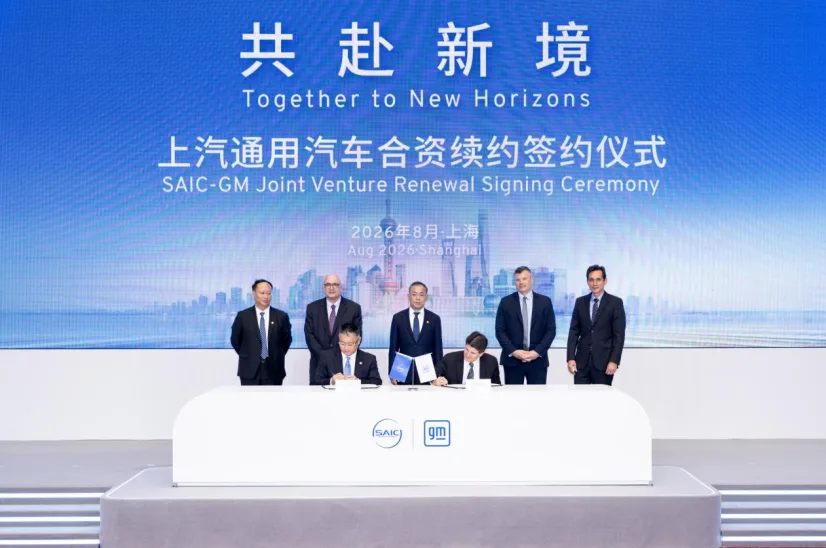
(Image Credit: SAIC-GM)
Press releases announcing these renewals highlight two recurring themes: bolstering local R&D efforts in China and vigorously pursuing electrification.
These shifts underscore the increasing significance that overseas brands attach to the Chinese market and its technological advancements.
However, amidst these developments, Chevrolet, a brand that once sold 767,000 vehicles annually in China and boasted over 7 million owners, has officially announced the cessation of sales in the country this year. These two events signal a nuanced transformation in the development model of joint venture brands in China.
So, what implications does this transformation hold? Beyond further localization, what other strategies can joint venture brands adopt in China?
For General Motors (GM), China's significance is undeniable.
GM's approach in China diverges from that of other joint venture brands. China is not just a vital sales market for GM; it's also a key production base and export hub within its global industrial strategy.
Several models under SAIC-GM are manufactured locally in China and then exported to various regions worldwide, including the Middle East, Latin America, Africa, and the Asia-Pacific.
Consequently, despite the declining market share of joint venture brands in China, SAIC-GM has maintained profitability for several consecutive quarters, showcasing relatively stable operations in the Chinese market.
This stability likely explains why both SAIC and GM are willing to extend their partnership by another two decades.
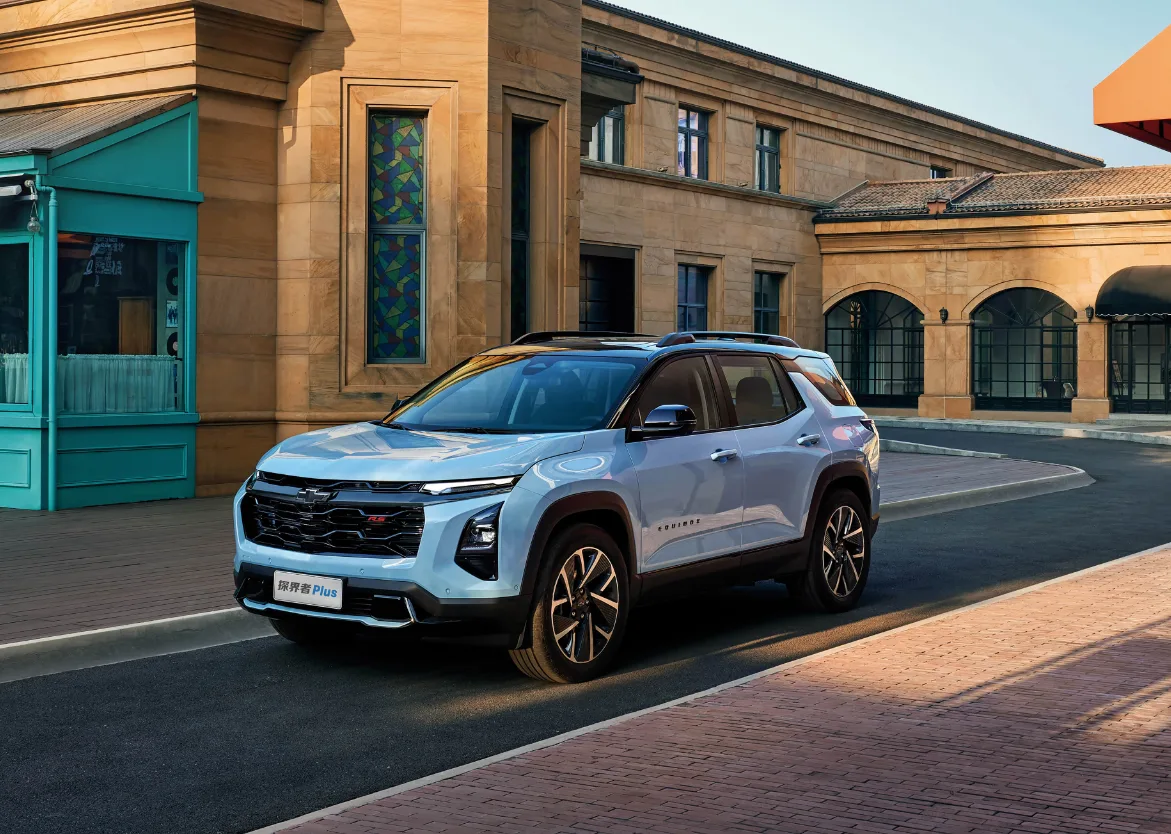
Given the relatively promising outlook for their collaboration, why did Chevrolet ultimately cease sales? The answer is straightforward: Chevrolet's market positioning in China has been eclipsed by Buick.
(Image Credit: Chevrolet)
According to SAIC-GM's current product lineup, the Buick brand now spans the price range of 100,000 to 200,000 RMB, which was previously Chevrolet's stronghold, and even offers models priced below 100,000 RMB.
Moreover, within a similar price bracket, SAIC-GM-Wuling, another joint venture under SAIC-GM, also competes. Retaining Chevrolet for sales in the Chinese mainland market would result in internal brand competition, failing to boost sales while potentially causing unnecessary friction.
Therefore, SAIC-GM's decision to halt Chevrolet's sales in China while maintaining production is a strategic move.
What does 'halt sales but not production' entail? It means discontinuing the Chevrolet brand's operations and sales in the Chinese mainland market while continuing to produce Chevrolet vehicles for export to overseas markets.
Currently, the Chevrolet Sail sold in the South American market is produced and exported from China. Additionally, models like the Baojun Yep Plus and Wuling Xingguang S from SAIC-GM-Wuling are also rebadged and exported overseas under the Chevrolet brand.
Overall, SAIC-GM's future development trajectory in China appears to focus on concentrating resources on the Buick and Cadillac brands, with Buick advancing models under the 'Zhijing' mode, led by the Chinese team and tailored to the Chinese market. Meanwhile, Chevrolet will serve as a representative brand for overseas sales, enabling more markets to receive GM vehicles made in China.
For joint venture brands, R&D and business models in China have undergone significant changes from their early days.
During the era when joint venture automakers dominated the domestic market, their R&D models primarily involved overseas headquarters handling vehicle platforms, powertrains, and design, while the Chinese team adapted the models to domestic regulations, road conditions, and consumer demands.
The advantage of this approach was that Chinese partners in joint ventures did not need to invest heavily in R&D to produce mature and stable models. However, the downside was that these models sometimes fell short of meeting certain domestic user needs.
Now, in the new energy era, domestic brands command a significant market share. Models designed around Chinese user demands, featuring spacious interiors and 'fridge, TV, and large sofa' configurations, are naturally more appealing to consumers. Coupled with the continuous emergence of new technologies, domestic users have embraced advanced technologies like intelligent cockpits, voice interaction, urban assisted driving, and 800V fast charging much faster than many overseas markets.
This poses a challenge: if joint ventures continue to wait for the overseas headquarters to develop a product and then localize it for China, the product rhythm may already be a step behind, and the technological level may be more than a generation behind. Such products are destined to struggle in the fiercely competitive Chinese market.
Honda's electrification transformation in China in recent years serves as a case in point. The two pure electric models, P7 and S7, from the Ye series, primarily developed by the Japanese side, have seen sluggish sales since their launch and cannot compete with domestic new energy models.
Therefore, more and more joint venture brands now recognize that only by meeting Chinese users' demands can they maintain sales in China. And the ones who understand Chinese users best are Chinese R&D teams.
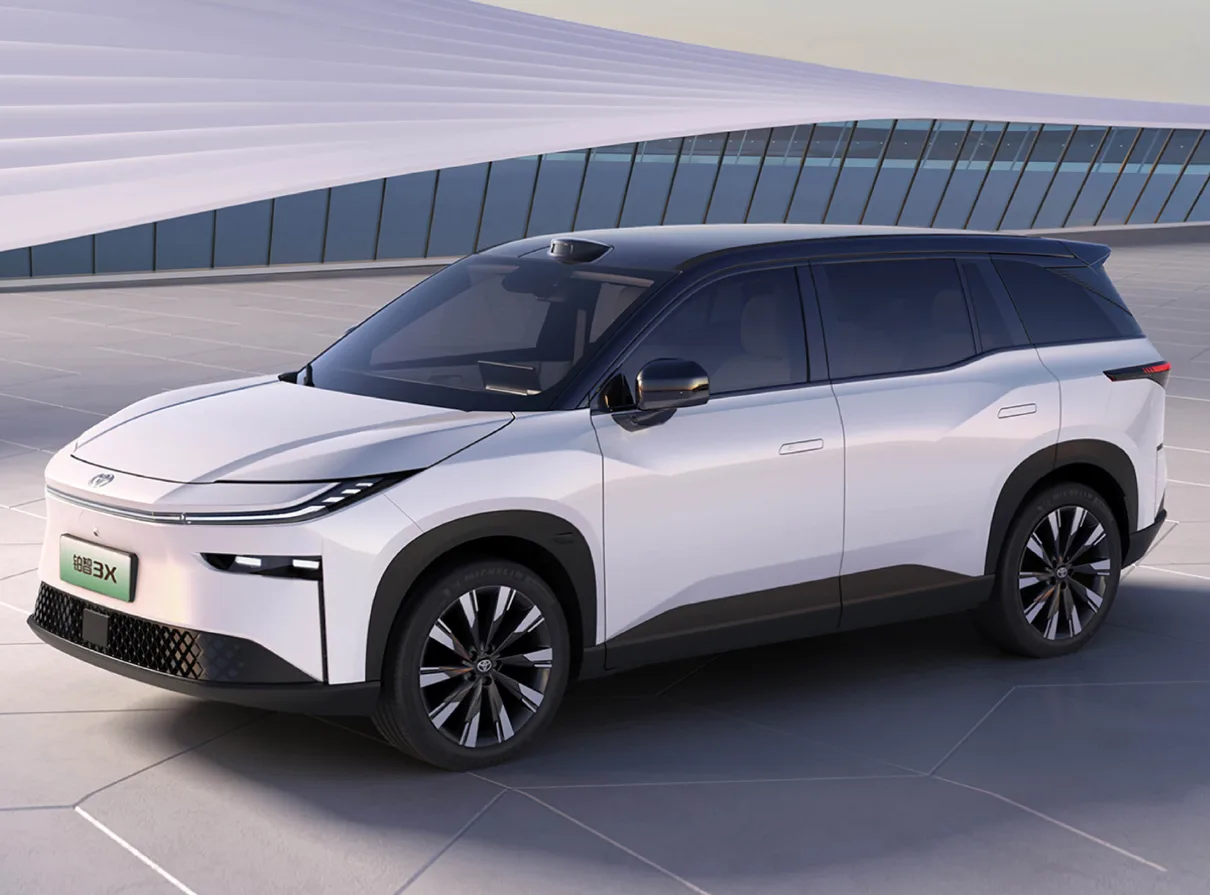
Toyota is a prime example. Although Toyota's headquarters has been hesitant in its electrification transformation, in the Chinese market, Toyota has already implemented a chief Chinese engineer system, with Chinese engineers leading product development, launching products like the bZ3X and bZ7.
(Image Credit: GAC Toyota)
Volkswagen's changes are also noteworthy. Its three joint ventures in China all have new energy models primarily developed by local Chinese teams, such as SAIC Volkswagen's ID.ERA series, FAW-Volkswagen's ID. AURA, and Volkswagen Anhui's models developed in collaboration with XPENG, the Avatr 08 and Avatr 09.
Previously, joint ventures involved overseas brands providing model solutions, with Chinese teams only responsible for localization and compliance with domestic regulations. Now, Chinese teams directly participate or even lead the solution formulation. This marks a significant shift into the 2.0 era of joint venture brands.
Of course, some brands still cling to the previous stage, continuing to adopt the approach of introducing global models to China as they did in the fuel car era. However, such models have generally underperformed in terms of sales.
For joint venture automakers, developing in China does not necessarily mean earning money solely from Chinese consumers. They can also leverage Chinese technology and manufacturing to earn profits from consumers worldwide by developing and producing in China and then selling globally.
SAIC-GM-Wuling, mentioned earlier, is a prime example. It exports mature models sold domestically to overseas markets by rebadging and adjusting configurations, thereby generating profits from multiple markets.
Similarly, Mazda, through its joint venture with Changan, has developed models like the Mazda 6e and Mazda CX-6e based on Changan's existing model platforms, selling them in markets like Europe and Australia.
Therefore, the more significant change brought about by the 'joint venture brand 2.0 era' is the redefinition of the role of joint ventures in China.
With the continuous development of new energy vehicle technology, the Chinese automotive market no longer relies on introducing foreign brands and models to drive industrial development and meet consumer demand for automobiles.
Instead, China's advanced automotive technologies provide these overseas brands with a rare opportunity to create world-class models based on Chinese technology, starting from China.
Therefore, what joint venture automakers truly need to consider is not just whether they can continue selling cars in China but whether they can enhance their global competitiveness through the capabilities of the Chinese automotive industry.
GM-Chevrolet Joint Venture
Source: Leikeji
Images in this article are from the 123RF royalty-free image library. Source: Leikeji
-
![]()
Top Domestic Computing Power Supplier Exceeds Net Profit Forecasts for First Half of the Year
-
![]()
Wanwei Advanced Materials Plans to Raise 2.3 Billion Yuan through Private Placement to Boost PVA Optical Film Production!
-
![]()
Tencent Launches WeChat AI + WorkBuddy: A Strategic Long-Term Play
-
![]()
Tencent's Grand Move: Leveraging WeChat AI+WorkBuddy
-
![]()
AR Optical Film Sees 110% Surge! Rijiu Optoelectronics’ Q2 Net Profit Rockets 135% QoQ
-
![]()
Global Panel Giant Finds No Buyers
-
![]()
OpenAI Shuts Down Atlas: Who Has the AI-Powered Browser Yielded To?
-
Stay Alert! Avoid Over-Reliance on AI Chats—It Can’t Address Core Issues