Tencent's Grand Move: Leveraging WeChat AI+WorkBuddy
 08/14 2026
 566
566

On August 12, Tencent unveiled its financial performance for the first half of 2026.
During this period, Tencent's operating revenue soared to 204.79 billion yuan, marking an 11% year-on-year increase. Net profit attributable to shareholders also rose slightly, reaching 56.022 billion yuan, up 0.7% from the previous year.
Tencent Shifts Focus to WeChat, Beyond Benchmarks
Shifting our gaze from broad financial metrics to Tencent's strategic maneuvers,
Martin Lau, President of Tencent, emphasized during a conference call that Tencent is more interested in the practical value of AI models in real-world applications, rather than merely chasing benchmarks and rankings.
Expanding on this perspective, the AI transformation of WeChat and Tencent's significant investment in WorkBuddy emerge as pivotal topics for discussion today.
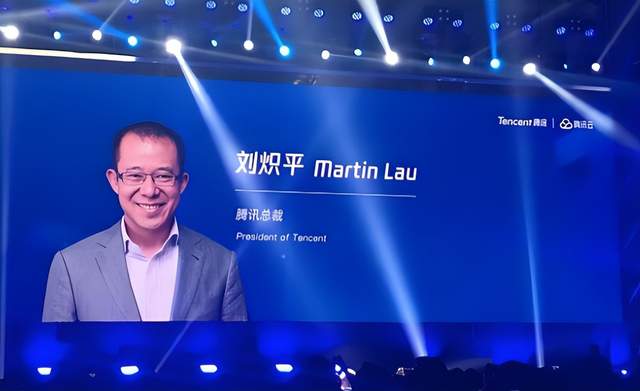
Once again, it was Martin Lau speaking at Tencent's Q2 2026 earnings call.
Discussing the feedback from the testing phase of WeChat's AI assistant, 'Xiaowei,' Lau drew parallels from the PC and mobile internet eras to illustrate his points:
"In the PC era, QQ was predominantly a communication and social tool. WeChat, however, magnified QQ's value manifold in the mobile internet era."
Lau believes that just as WeChat expanded the reach of 'online socializing' from young people to all age groups through 'mobile number-based socializing' in the mobile internet era, it can now leverage the burgeoning Agent ecosystem to become the primary gateway for people to experience AI. Agents can facilitate transactions and manage daily life tasks.
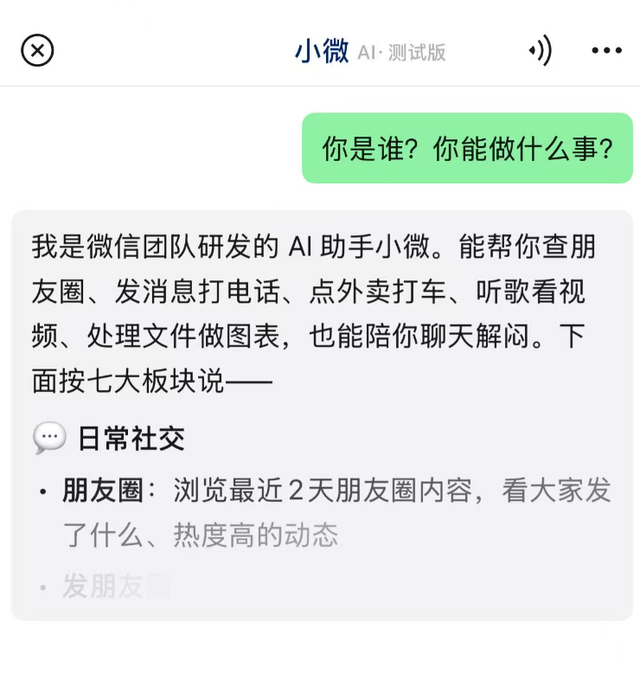
Much like how Mini Programs transformed WeChat from a mere social tool into a 'super platform' integrating services, content, and transaction entry points, the advent of Xiaowei and the Agent concept is propelling WeChat towards a gradual transition from 'connecting people with services and content' to 'connecting people with intelligent agents.'
Data reveals that as of the end of the second quarter, the combined monthly active accounts of WeChat and Weixin had reached 1.439 billion.
This vast user base not only offers unparalleled advantages in terms of push notifications and potential user reserves for new features but also positions WeChat to be the first to achieve a virtuous cycle of 'high-frequency use—data feedback—model iteration' within the Agent ecosystem, thereby securing a leading position in terms of capabilities.
WorkBuddy: A New Lever for Growth
Turning our attention to WorkBuddy,
whether it's reports of 'Pony Ma's personal involvement in product meetings' or 'the nearly unimpeded approval of project demands for computing power, technology, and market resources,' it's evident that WorkBuddy is pursuing a more aggressive strategy compared to WeChat's steady and orderly advancement of its Agent ecosystem.
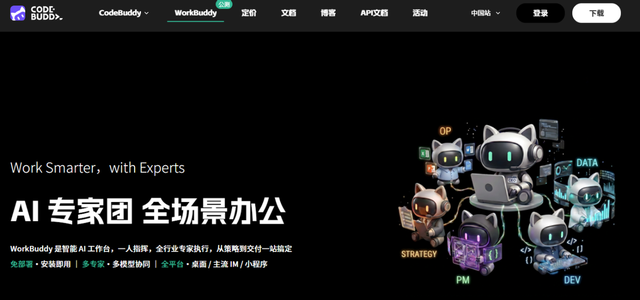
Chronologically, WorkBuddy's precursor was CodeBuddy, an AI programming tool launched by Tencent Cloud in 2023. Subsequently, inspired by the official release of Claude Cowork, the head of CodeBuddy developed the initial version of WorkBuddy.
Over time, the popularity of OpenClaw gave rise to QClaw, a 'lobster product' within Tencent. WorkBuddy, which absorbed some members of QClaw and was influenced by multiple factors, further enhanced its product competitiveness. Eventually, by integrating with Tencent Docs, Tencent Meeting, WeCom, and other family products, it amassed a large and loyal user base.
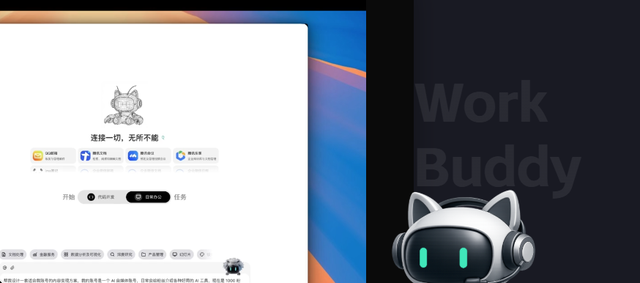
In terms of data, WorkBuddy emerged as the top domestic office intelligent platform in the second quarter of 2026, with 20.97 million monthly PC visits. Media reports indicate that WorkBuddy currently boasts monthly active users in the 20 million range and daily active users in the millions.
When discussing the product's phased progress, James Mitchell, Tencent's Chief Strategy Officer, remained composed. He revealed that the gross margins of WorkBuddy (for paying users) and Tencent's model services are already on par with those of Tencent Cloud as a whole.
This revelation underscores one key point:
although the current AI productivity scenarios for consumer users are primarily centered around programming and office work, WorkBuddy has not only pioneered a viable commercial pathway but also demonstrated market potential that suggests related businesses could serve as 'growth engines' for companies in the AI race.

It is foreseeable that with the continuous iteration of model capabilities, the decline in inference costs, and the platform's expanding reach from programmers to ordinary office workers, the 'Tencent AI Production Matrix' centered around WorkBuddy will generate substantial economic benefits and user growth in the future.
Tencent, Poised at the AI Table, Awaits the Winds of Change
Financial report data reveals that in the second quarter of 2026, Tencent's capital expenditures surged by 176% year-on-year to 52.78 billion yuan, while R&D spending increased by 35% year-on-year to 27.28 billion yuan.
When questioned about the allocation of these funds and the company's future moves, the responses from Martin Lau and James Mitchell converged on several key points.
In terms of expenditures, Tencent is indeed making substantial investments in computing power. However, it's crucial to note that AI-related business construction is not a 'continuous expense.' Model construction or card pools, for instance, are primarily fixed costs. Once 'sufficient computing power' is acquired, investing 'X yuan' this year does not necessitate an additional 'X yuan' investment every subsequent year.
Moreover, selling computing power itself can yield certain returns for the company.
Returning to the financial report, Tencent revealed its focus for the third quarter on three levels: intelligence, applications, and infrastructure, to construct an 'AI-empowered new Tencent.'

In terms of progress, the official release of the Hy3 full version provides users with a cost-effective solution and lays the technical groundwork for Hy to achieve industry-leading status in the future. The evolution of WorkBuddy and WeChat, coupled with the advancement of computing power procurement plans, also furnishes Tencent with strategic advantages at the application and infrastructure levels.
As for the more distant future,
media reports indicate that internally, Tencent maintains a cautious and restrained approach to AI investment. Before the 'true opportunity for explosive growth' materializes, they will not blindly expand their investment scale.
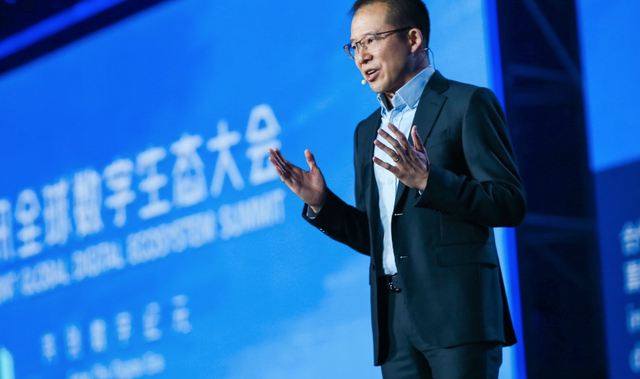
This stance aligns perfectly with Martin Lau's statement:
"We have always believed that AI is a long-term track, and we will continue to make long-term investments. As the scale expands, commercial benefits will gradually emerge, ultimately leading to profitability. More importantly, we have a fallback plan: even if we cease developing our own applications and simply lease our computing power externally, the related business can still be profitable. Therefore, we dare to make long-term investments."
References:
Lanjing News: Tencent's Martin Lau: Still Awaiting a Definitive AI Breakthrough Opportunity
Dahe Finance: Tencent Releases First-Half Financial Report! Net Profit Grows 10%, WorkBuddy Achieves Rapid User Growth
Jiemian News: Tencent Pushes WorkBuddy to the Forefront
Sina Tech, Kuaikeji: Martin Lau Discusses Tencent AI: Currently Cautious, Still Waiting for a True Breakthrough Opportunity
-
![]()
Samsung Galaxy Z Fold 8 Review: Ultra-Slim Dual Design Shines, but Telephoto Absence is a Bummer
-
![]()
Dongfeng VOYAH’s New Car Makes a Splash, Targeting More Than Just the 30s and 40s Crowd
-
![]()
Annual Salary of 700 Million Fails to Retain Him! AI Genius Jiahui Yu Departs Meta to Launch His Own Startup
-
Qianwen Seeks to Move Beyond Its 'Alibaba Identity'
-
![]()
How Can We Comprehensively Resolve Ctrip's Monopoly Issue?
-
![]()
From Computing Power Supply-Demand Dynamics to Capital Integration: Jin Jing New Energy Embarks on a New Business Phase
-
![]()
Top Domestic Computing Power Supplier Exceeds Net Profit Forecasts for First Half of the Year
-
![]()
Wanwei Advanced Materials Plans to Raise 2.3 Billion Yuan through Private Placement to Boost PVA Optical Film Production!