Li Shufu Resigns as Chairman of the Board, 'One Geely' Is No Longer Just a Slogan
 08/19 2026
 490
490
Author | Bishan
Source | Bowang Finance
On August 17, Geely Auto released two pieces of news to the market on the same day.
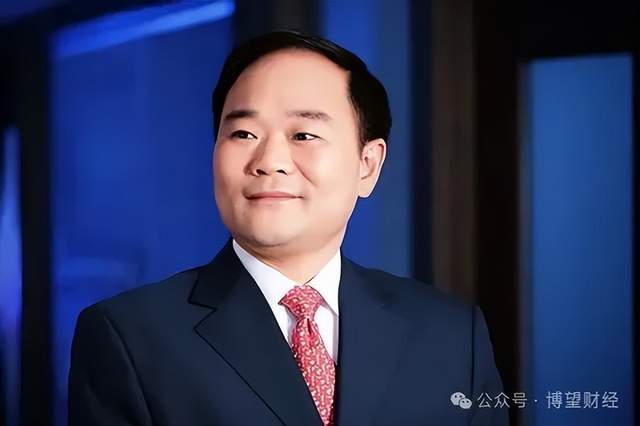
One was the financial report. The 2026 interim results showed that the total revenue in the first half of the year was 173.6 billion yuan, a year-on-year increase of 15%, reaching a record high and maintaining positive growth for six consecutive years. The core net profit attributable to the parent company was 9.68 billion yuan, a year-on-year increase of 46%, significantly outpacing revenue growth. The other was a personnel order: Starting from August 18, Li Shufu would resign as Chairman of the Board and Executive Director of Geely Automobile Holdings Limited and be appointed as Lifetime Honorary Chairman. He would be succeeded by An Conghui, who has worked within the Geely system for a full thirty years.
The market's reaction to this transition was quite direct—Geely Auto's Hong Kong-listed shares closed up 4.77% on August 17, at HK$18.67, with a market capitalization of HK$202.54 billion. Proactively completing the power transition at the peak of performance amid the intensifying price war in the 2026 automotive market makes this event worth examining closely.
01 A Pre-announced Transition
Judging from the announcement, this adjustment is not an "exit of the founder" as easily misinterpreted by the outside world, but rather an orderly arrangement planned in advance.
According to the announcement released by Geely Auto on the Hong Kong Stock Exchange, Li Shufu resigned as Chairman of the Board and Executive Director of the listed company "Geely Automobile Holdings Limited." He continues to serve as Chairman of Zhejiang Geely Holding Group and remains the major and controlling shareholder of the listed company, explicitly stating that he has no short-term plans to reduce his holdings. The title of "Lifetime Honorary Chairman" is honorary and does not constitute part of the company's corporate governance structure. The announcement also clarified that this appointment is an orderly succession arrangement, consistent with the long-term succession plan disclosed in the company's announcement on June 5, 2026—meaning this move was at least scheduled more than two months ago.
Looking beyond the announcement's wording, the actual changes involve four individuals. An Conghui takes over as Chairman of the Board of the listed company. He was appointed CEO of Geely Holding Group in January this year, and now the core decision-making power of both the holding group and the listed platform is concentrated in one person's hands. Li Donghui resigns as Vice Chairman of the Board but continues to serve as an Executive Director. Gui Shengyue transitions from CEO to Vice Chairman of the Board, shifting his responsibilities from operations to oversight and communication. Gan Jiayue, a talented post-80s executive, is appointed CEO, responsible for the company's daily operations. With each of the four individuals taking a step, the strategic coordination, governance oversight, and daily operations lines are streamlined in one go.
Li Shufu's statement at the interim results briefing can be seen as the official annotation of this transition: "The automotive industry is a never-ending marathon. Corporate inheritance and value orientation determine the company's sustainable development capabilities." He described An Conghui as an "excellent professional talent cultivated within the Geely system" and expressed "full confidence" in his performance after taking over. Gui Shengyue was more direct at the results briefing—this management change reflects Li Shufu's values regarding corporate inheritance and serves as Geely's declaration of "de-familization." The company is moving from a founder-driven startup phase to a maturity phase driven by systems and teams.
02 How Was the 46% Profit Growth Achieved?
What gives this transition strong confidence is the interim report dubbed the "best ever," with its strongest aspect being the profit end.
In the first half of the year, Geely's total sales volume was 1.423 million units, a slight year-on-year increase of about 1%. While sales remained relatively flat, profits surged by 46%, a discrepancy worth examining closely. From the expense side, the administrative expense ratio decreased by 0.2 percentage points year-on-year to 1.7%, R&D investment as a proportion of revenue decreased by 0.3 percentage points to 5.2%, and the sales expense ratio remained flat. However, the absolute amount of R&D investment did not decrease; instead, it increased by 8% year-on-year to 9.06 billion yuan. In other words, money was not spent less but more efficiently, with cost savings superposition (overlapped) with an upward shift in product structure, ultimately driving profit elasticity.
The biggest contributor to this structural upgrade was Zeekr, whose sales volume nearly doubled in the first half of the year. Official data shows that Zeekr's sales volume exceeded 178,000 units in the first half, accounting for 12.5% of total sales, with revenue accounting for 31.7% of the group's total income, up 13.8 percentage points year-on-year. The average selling price was around 350,000 yuan, surpassing the transaction thresholds of traditional luxury brands like BBA. The other three brands were responsible for stabilizing the basics: Lynk & Co's sales volume exceeded 144,000 units in the first half, continuing to expand its layout; Geely Galaxy's sales volume approached 520,000 units, ranking among the top three global new energy vehicles; China Star's sales volume exceeded 580,000 units, securing its 10th consecutive year as the best-selling Chinese brand fuel passenger vehicle—a title that defended Geely's fuel vehicle basics amid a significant contraction in the domestic fuel vehicle market.
If Zeekr explains where the profits come from, overseas markets answer where the growth comes from. In the first half of the year, Geely's overseas sales volume exceeded 474,000 units, a year-on-year increase of 158%, surpassing the total export volume for the entire year of 2025 in just six months. In June and July, overseas sales volume exceeded 100,000 units for two consecutive months, ranking third among Chinese automakers going global. The company subsequently raised its full-year overseas target from 640,000 units to 920,000 units, aiming to Sprint 1 million units. Supporting this goal is an "asset-light" approach: collaborating with partners such as Volvo, Proton, Renault, and Ford to share production capacity and channels. In the first half of the year, 12 overseas factories were operational, with overseas production capacity exceeding 650,000 units, set to exceed 840,000 units by the end of the year. Overseas offline channels surpassed 2,000, covering 114 core markets.
However, a complete review of the report reveals that this interim report is not without concerns. Complete performance data disclosed by IT Home shows that Geely's net profit attributable to the parent company in the first half was 9.091 billion yuan, a year-on-year decrease of 2%. Operating cash flow was 19.924 billion yuan, a year-on-year decrease of 67.98%. The officially promoted "core net profit attributable to the parent company +46%" excludes certain non-recurring items, and the difference between the two metrics suggests that while Geely's book profitability improved in the first half amid ongoing price wars, the pressure on cash collections also increased. Additionally, sales volumes of Galaxy and Lynk & Co declined slightly year-on-year, with growth primarily driven by Zeekr and exports, indicating structural differentiation.
03 'One Geely' Moves from Slogan to Personnel
Viewing the announcement on August 17 alone might lead one to interpret this adjustment as an isolated personnel event, but placed within the timeline, it is actually the latest move in a two-year combination strategy.
In September 2024, Li Shufu released the "Taizhou Declaration" in Taizhou, proposing five directions: strategic focus, strategic integration, strategic synergy, strategic stability, and strategic talent. Geely thus shifted from years of expansion and mergers and acquisitions to consolidation and integration. Subsequent actions followed suit: Geometry was merged into Galaxy, Zeekr acquired Lynk & Co, and Zeekr was privatized and delisted from the New York Stock Exchange to return to the listed company system. In January 2026, Geely released the "One Geely, Comprehensive Leadership" 2030 strategic goal. In June, Li Shufu publicly stated at the Chongqing Auto Forum that Geely Automobile Group would orderly shut down, merge, or transfer redundant entities, concentrating superior resources to strengthen the core listed platform 0175. In early August, Geely Automobile Group Sales Corporation was established, completing the integration and closure of the marketing end.
Brand consolidation, marketing integration, and supply chain connectivity—reaching this stage, personnel adjustments were almost inevitable. During the previous phase of brand autonomy, R&D efforts were fragmented, and channels were uncooperative. Zeekr and Lynk & Co even established sizable intelligent driving teams independently. Integration requires breaking down barriers across R&D, procurement, manufacturing, and marketing, which cannot be achieved through documents alone but requires structural power arrangements. Having the CEO of the holding group simultaneously serve as the chairman of the listed company maximizes synergistic efficiency, likely the direct reason for An Conghui's current prominence.
In response to Li Shufu's resignation as Chairman of Geely Auto's Board, Gui Shengyue, Vice Chairman of Geely Auto's Board, stated at the 2026 interim results briefing that this marks Geely Auto's declaration of de-familization, signaling that the company will no longer rely on individual charisma and authority. Future governance will be more transparent, and decision-making will be more professional and scientific.
04 The Real Test Begins After the Transition
For Geely, the good news is that the transition occurs during a period of relatively strong financial health: cash reserves on hand of 69.56 billion yuan are at a historical high. In the first half of the year, the company repurchased 1.885 billion HKD worth of shares. In late July, it implemented a dividend payout of 0.5 HKD per share, a year-on-year increase of 51.5%, with a core profit payout ratio exceeding 30% for five consecutive years. Since the start of 2026, Geely has been the only Chinese passenger vehicle stock with positive share price growth among A-shares and H-shares, with 46 institutions increasing their holdings or establishing new positions in the first half of the year. With ample cash on hand and an upward-trending share price, it is indeed an optimal time for governance adjustments.
However, the successor is not inheriting an easy scorecard. The export target has surged from 640,000 units to a Sprint (sprint) of 1 million units within a year, an extremely fast pace. Meanwhile, tariff and compliance thresholds in European markets are rising, and while the asset-light model expands quickly, its profitability and control are relatively limited. Overseas brands acquired by Geely in earlier years are still in a phase of financial support. Public financial reports show that Polestar incurred a net loss of 2.357 billion USD in 2025, while Lotus recorded a net loss of 464 million USD, both requiring continued investment. Domestically, the automotive market is under overall pressure following the phase-out of purchase tax incentives. Data from the China Passenger Car Association shows a nearly 20% year-on-year decline in narrow passenger vehicle retail sales from January to May. Geely Galaxy and Lynk & Co face significant growth pressure, with new models like Galaxy TT, Zhanjian 700, and Zeekr 9X Glorious expected to drive sales volume in the second half of the year.
A more long-term issue lies in the governance model itself. Both An Conghui and Gan Jiayue are veterans cultivated within the Geely system, understanding the business and identify with (identifying with) the culture, which is an advantage. However, the combination of "founder setting the strategy and professional managers executing" has no precedent among domestic private automakers. The synergy between the board and management, as well as the interest balance between the controlling shareholder and the listed platform, will require time to validate. Li Shufu has taken a step back but has not exited—the steering wheel of the holding group remains in his hands, while the steering wheel of the listed company has been passed to An Conghui. How smoothly this "dual-track" system runs will be voted on by the market with each subsequent financial report.
Thirty years ago, Li Shufu started his automotive venture in Taizhou; thirty years later, he handed over a listed company with a first-half revenue of 173.6 billion yuan to a professional manager he personally cultivated. The transition itself is merely an announcement; the real challenge is whether the organization can continue to make correct decisions without the founder's direct presence afterward.
-
![]()
Exclusive! Dongfeng Peugeot Citroen Automobile (DPCA) Embarks on a Fresh Start: A New Joint Venture Entity Emerges, with the Original DPCA Focusing Exclusively on Manufacturing
-
![]()
63-Year-Old Li Shufu Paves the Way for Leadership Transition: Geely Shifts from Family Control, What Will Great Wall and BYD Do?
-
Can the Elephant Turn Around? Volkswagen Takes Only Three Years to Reshape Its 'Soul'
-
![]()
DeepSeek Hikes Prices as 'Price Butcher' Liang Wenfeng 'Retreats'
-
![]()
Starting at 1799 yuan! Dimensity 7500 with 10,000mAh battery, who is the iQOO Z11S for?
-
![]()
BMW 5 Series Price Plummets to 280,000 Yuan: Early BMW Owners Lament 'Significant Losses'; BMW Dealers Offer 285,000 Yuan for Base Model, Financing Deals More Affordable Than Full Payment
-
![]()
Geely's Strategic Shift: Unpacking a Key Question and a Major Anticipation Post Li Shufu's Departure
-
![]()
Starting at 3399 Yuan! iQOO Neo11 Supreme Edition Launched: Featuring the Dimensity 9500M and Exceptional Battery Life