BMW 5 Series Price Plummets to 280,000 Yuan: Early BMW Owners Lament 'Significant Losses'; BMW Dealers Offer 285,000 Yuan for Base Model, Financing Deals More Affordable Than Full Payment
 08/19 2026
 462
462
The BMW 5 Series has seen its price drop to 280,000 yuan, with BBA implementing widespread price reductions—are luxury cars losing their premium and value-retaining status?
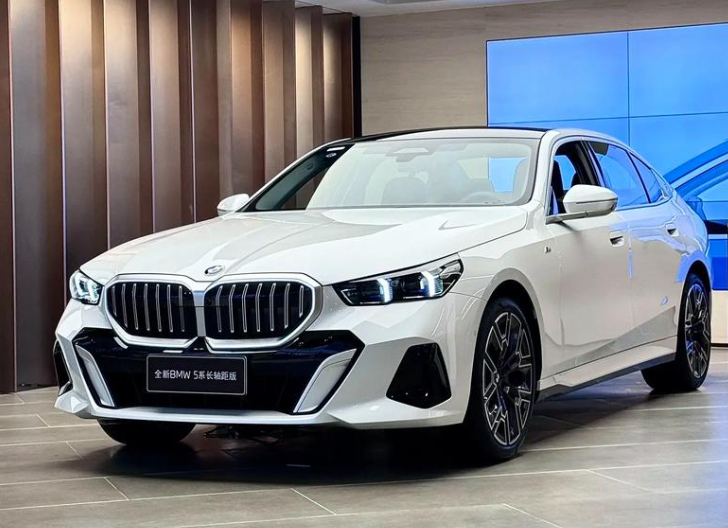
Recently, the topic "BBA Price Cuts: BMW 5 Series Falls to 280,000 Yuan" has trended on social media, sparking heated discussions. Many lament that the BMW 5 Series, once priced at over 400,000 yuan and endowed with a prestigious aura (meaning it was inherently associated with high-end features and exclusivity), has now dropped to the 280,000 yuan range—a price that was unimaginable just a few years ago. This development has shattered (meaning it has completely broken) the traditional price barriers of luxury fuel-powered vehicles.
According to Yicai, a sales manager at a Beijing BMW 4S dealership revealed that the BMW 525Li, with an official guide price of 368,000 yuan, can now be purchased for as low as 280,000 yuan after dealer discounts and financing incentives. Meanwhile, the starting price for the 3 Series is now just 258,000 yuan. At these prices, BMW models are even cheaper than domestic new energy SUVs like the Li Auto L7 and NIO ES6.
In response to inquiries about purchasing a BMW 525Li for 280,000 yuan, a Beijing BMW dealer informed New Insight Research Institute that the current online quote for a base model is 285,000 yuan. Both long-wheelbase and standard-wheelbase models are priced similarly, with further negotiations possible in-store.
When asked about financing options, the dealer stated that both zero-down-payment and full-payment plans are available, with flexibility in the price range. Generally, higher loan amounts result in slightly lower car prices, while the full-payment online quote starts at over 290,000 yuan.
According to Yicai, reporters consulting a local BMW 4S dealership in Hangzhou learned that the current full-payment quote for a base BMW 525Li is 281,000 yuan, with a total cost of around 320,000 yuan including taxes and fees. Opting for financing can reduce the total cost to approximately 300,000 yuan, significantly lowering the purchase cost.
This price-cutting trend is not limited to BMW but reflects a collective adjustment across the entire BBA luxury lineup.
According to a May report by Chengshi Interactive, BMW had already adjusted prices for 31 models by early 2026, with over 80% seeing price reductions exceeding 10%, and several models dropping by more than 20%. For instance, the 2026 BMW X3 long-wheelbase version introduced a financing plan of "49,900 yuan down payment and 1,599 yuan monthly payments," substantially lowering the entry barrier.
Market visits revealed that the Mercedes-Benz E-Class and Audi A6L have seen maximum terminal price reductions exceeding 100,000 yuan, with some high-end models offering discounts over 200,000 yuan. In addition to direct price cuts, Mercedes-Benz, BMW, and Audi are also offering incentives such as financial subsidies and exclusive discounts for corporate clients to boost sales.
Behind these sustained price reductions lies dual pressure on BBA's sales and profits in China.
Public data shows that in the first half of 2026, the overall sales of the three German luxury brands in China declined by over 200,000 units year-on-year.
Mercedes-Benz delivered 210,200 vehicles in China in the first half of the year, down 28.3% year-on-year—the largest drop among the three. Growth in international markets failed to offset the shortfall in China, with its market share in China dropping from 32.6% to 25.1%.
BMW Group delivered 262,000 vehicles in China in the first half of the year, a 20.4% decline, relying on slight growth in Europe and the U.S. to barely stabilize its global performance.
Audi Group delivered 233,000 vehicles in China in the first half of the year, down 19% year-on-year, with China still contributing over one-third of its global sales.
Alongside the sales decline, profitability has also significantly eroded. In the first half of 2026, Mercedes-Benz passenger cars reported an adjusted operating margin of just 4%, BMW's automotive business had an EBIT margin of 2.3%, and Audi's operating margin stood at 3.8%.
Just a few years ago, all three brands maintained profit margins generally above 8%. The once highly profitable business is now teetering near the break-even point.
Industry experts and netizens widely attribute the collective price cuts by BBA to the rapid rise of domestic new energy vehicles.
In the past, consumers accepted the high premiums associated with BBA luxury cars, with pricing in the 400,000–500,000 yuan range considered normal.
Today, domestic high-end new energy models from brands like NIO, Li Auto, and Zeekr offer richer configurations, stronger performance, larger interiors, and cutting-edge intelligent cockpits and advanced driver-assistance systems at similar price points.
After comparisons, consumers are no longer willing to pay tens of thousands or even 200,000 yuan more for brand premiums.
Domestic new energy vehicles are not only seizing market share but also breaking the traditional luxury car price monopoly, forcing BBA to exchange price for volume and ultimately delivering tangible benefits to ordinary consumers.
Netizens' opinions on the significant price cuts are sharply divided. Many celebrate the opportunity to purchase luxury cars at more affordable prices, fulfilling their dreams of owning a premium vehicle.
Others caution against blindly following the trend, noting that the BMW 5 Series has shed its "high-end and scarce" image, transitioning from "over-the-top luxury" to "standard transportation." They also point out potential cost-cutting in specifications, with workmanship and material standards declining compared to older models, and resale values likely to continue falling. For those not in urgent need of a car, waiting may be advisable.
Many early buyers who paid high prices for BBA models lament "significant losses." One owner stated that their BMW 5 Series, purchased for over 400,000 yuan, now costs around 320,000 yuan for a new model, with the resale value of their used car plummeting—a loss of nearly 300,000 yuan in just a few years, creating a stark contrast.
The current luxury fuel-powered vehicle market landscape has been reshaped, and the era of BBA relying on brand premiums for effortless profits has ended. With sustained pressure from domestic new energy vehicles, luxury car price cuts may just be the beginning, and future competition will intensify further. Faced with sharply discounted BBA models, would you choose to buy one or stick with new energy vehicles?
-
![]()
BYD Addresses Acquisition Rumors of SAIC Motor, Netizens Propose Acquiring Xiaomi Auto Instead
-
![]()
岚图 Chairman: A Car with 'Two Degrees More' Than Maybach, Netizens: 'Implications' for Xiaomi?"],"abstract":["VOYAH Zhiguang S, New Energy, Extreme Stunts, Huawei ADS 5.0, Cost-Effectiveness
-
![]()
Yu Chengdong’s AITO M9 Dominates Sales Charts, Netizens Weigh In: ‘Pricing Too Low for Luxury Buyers’
-
![]()
Final Verdict: Li Shufu Maintains Control; Stays at the Helm of Geely
-
![]()
Xiaomi’s Auto Sector Revenue Hits 23.9 Billion Yuan! Q2 Financial Results Unveiled
-
![]()
Exclusive! Dongfeng Peugeot Citroen Automobile (DPCA) Embarks on a Fresh Start: A New Joint Venture Entity Emerges, with the Original DPCA Focusing Exclusively on Manufacturing
-
![]()
63-Year-Old Li Shufu Paves the Way for Leadership Transition: Geely Shifts from Family Control, What Will Great Wall and BYD Do?
-
Can the Elephant Turn Around? Volkswagen Takes Only Three Years to Reshape Its 'Soul'