63-Year-Old Li Shufu Paves the Way for Leadership Transition: Geely Shifts from Family Control, What Will Great Wall and BYD Do?
 08/19 2026
 508
508
As the first generation of entrepreneurs gradually reaches retirement age, a critical question arises: what path should their companies follow? Geely has offered a response to this conundrum.
On August 17, Geely made a surprising announcement regarding a significant personnel shift. Geely Automobile Holdings Limited (Geely Auto, 00175.HK) declared adjustments to its management team. Starting from August 18, 2026, Li Shufu will step down as Chairman of the Board and Executive Director of Geely Auto, assuming the role of Lifetime Honorary Chairman of the company instead. He will retain his position as Chairman of Zhejiang Geely Holding Group. Following Li Shufu's departure, An Conghui will be appointed as Chairman of the Board of Geely Automobile Holdings Limited. The company stated that he will spearhead the new board in strengthening corporate synergies, enhancing collaboration with controlling shareholders, and solidifying and reinforcing "One Geely."
This management reshuffle at Geely Auto also encompasses the following changes: Li Donghui will resign as Vice Chairman of the Board of Geely Automobile Holdings Limited but will continue to serve as an Executive Director. Gui Shengyue will step down as CEO of Geely Automobile Holdings Limited and will be appointed as Vice Chairman of the Board, while remaining an Executive Director to improve communication and coordination efficiency between the board and management. Gan Jiayue will be appointed as CEO of Geely Automobile Holdings Limited, responsible for the company's daily operations, leveraging his extensive management experience and industry expertise to propel the implementation of the company's long-term strategic goals.
Geely Auto stands as the core asset of Geely Group, and this personnel change embodies three key facets: Firstly, the first generation of Geely entrepreneurs, led by Li Shufu, collectively step aside, allowing the new generation of management to take the helm. Secondly, Geely moves away from family control. The entire management team is predominantly composed of professional managers, with the Li Shufu family fully retreating into the background, achieving a transition from "founder-driven" to "system-driven" by professional managers. This represents a modern system characterized by a moderate separation of management rights and ownership. Thirdly, An Conghui holds dual positions as "CEO of Geely Holding Group + Chairman of the Board of Geely Auto's listed company," fostering integration between group strategy and listed platform execution, resolving past issues of fragmented coordination between parent and subsidiary companies.
Subsequently, in response to Li Shufu's resignation as Chairman of the Board of Geely Auto, Gui Shengyue, Vice Chairman of the Board of Geely Auto, further elaborated at the 2026 interim results briefing, stating that this marks Geely Auto's declaration of de-familization, signaling the company's shift away from reliance on individual charm and authority. Future governance will be more transparent, with more professional and scientific decision-making processes. In fact, over the past five years, Li Shufu has been gradually stepping back from various subsidiaries, moving into a more advisory role. During this period, he has successively resigned as Chairman of several companies, including Geely Commercial Vehicles, Zeekr, and Geely Energy.
This time, as Li Shufu resigned as Chairman of Geely at the age of 63. Li Shufu, the founder of Geely Auto, was born in June 1963 in Taizhou, Zhejiang. In March of this year, the Li Shufu family ranked 81st on the 2026 Hurun Global Rich List with a wealth of 195 billion yuan. In traditional career trajectories, 63 is often considered the age for "retirement." Li Shufu's decision to hand over the reins at this pivotal juncture can be interpreted as Geely's definitive choice between family control and professional management. Previously, there was widespread speculation that Li Shufu's son, Li Xingxing, would take over and become the leader of Geely.
According to reports, Li Xingxing was born in 1985. After returning from studying in the UK, he did not immediately enter Geely's core management but started from the motorcycle division. Public reports indicate that he led the Guangyuan Auto Trade City project, served as the head of the CMA division, and even gained experience in sales, R&D, and other full-chain businesses through grassroots positions. This "grassroots-up" training model reflects Li Shufu's stringent requirements for his successor. The CMA division later evolved into Lynk & Co, and from this brand, it is evident that Li Xingxing attempted to introduce some fresh perspectives.
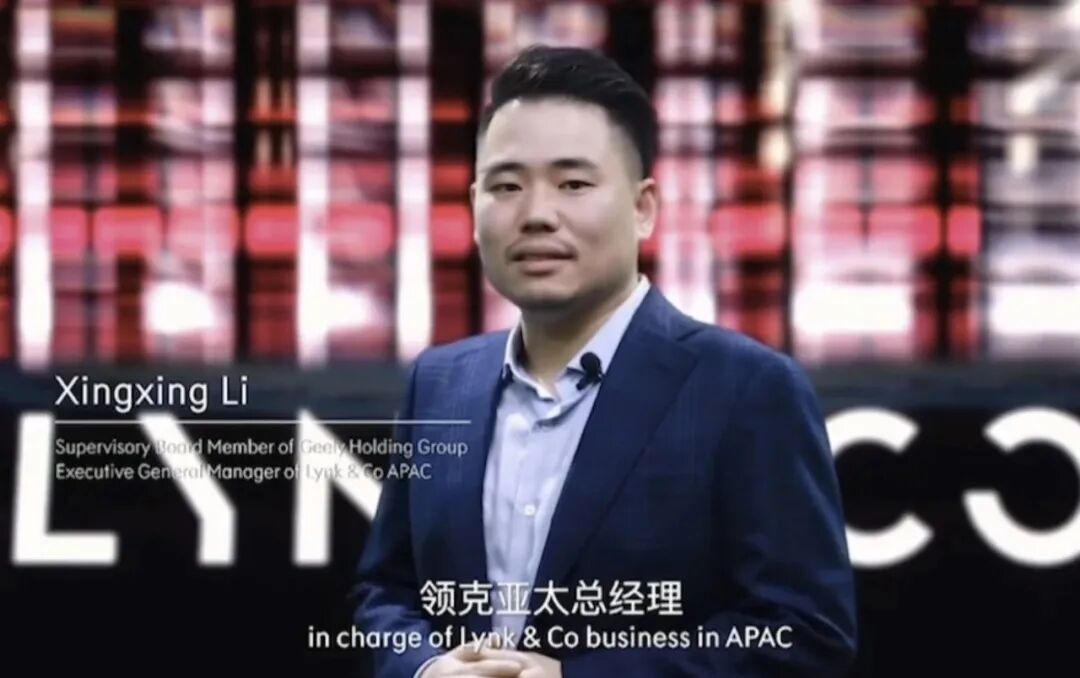
In 2021, Li Xingxing made a rare public appearance at the Lynk & Co brand's "Asia-Pacific Plan" launch event. At that time, his title was Supervisor of the Board of Geely Holding Group and General Manager of Lynk & Co Asia-Pacific. Many believed this was a sign that Li Xingxing was about to assume leadership. However, Geely's ultimate decision was to embrace de-familization, a move more in line with the practices of century-old international automakers. For example, Porsche, Toyota, Ford, and the renowned BMW Group have all entrusted their management to professional managers. German automakers, in particular, have almost perfectly demonstrated the "longevity" formula for family businesses. These automakers entrust specific companies to professional managers, who are all homegrown executives within the company. The family, acting as the supervisory board, is responsible for the most critical decisions.
Of course, the family does not remain completely detached but intervenes at the most critical moments. For instance, Ford and Toyota have almost always alternated between professional managers and family heirs in the role of CEO. This depends entirely on the company's business situation and the environmental changes it faces.
In the automotive industry, four private automakers are currently at such a crossroads: In addition to Geely, there are BYD, Great Wall, and Seres. Among them, BYD Chairman Wang Chuanfu was born in 1966 and turned 60 this year. Great Wall Motor Chairman Wei Jianjun was born in 1964 and is 62 this year. Seres Chairman Zhang Xinghai was born in 1963 and is also 63 this year. It is evident that these years will be a crucial period for these private automaker leaders to consider the next generation of management. In fact, the currently highly personalized "NIO, XPeng, and Li Auto" also face this issue.
Among these automakers, except for BYD, which has maintained a mysterious stance, Great Wall and Seres have both had related news emerge. According to media reports, in July 2019, a shareholding change occurred at Baoding Aihecheng Education Technology Co., Ltd., a subsidiary of Great Wall Holdings Group. The new legal representative was a young woman who had recently taken over as Chairman of Aihecheng—Wei Zihan.
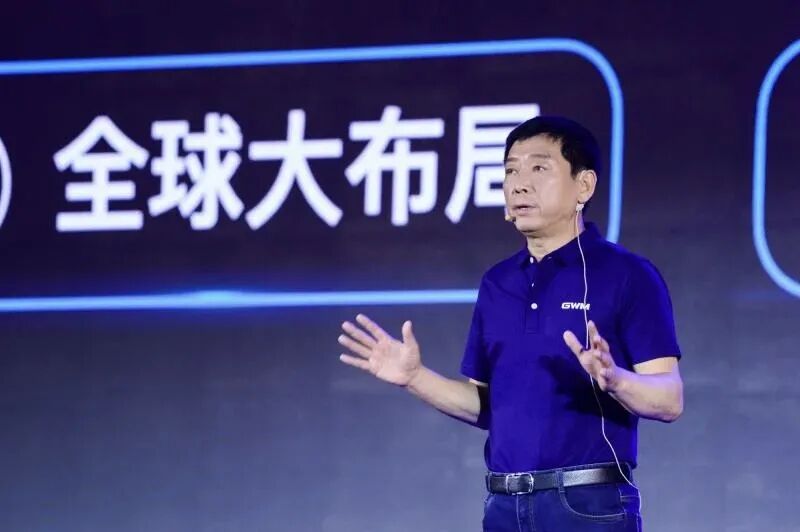
Later, people found this name again in the prospectus for the corporate bonds of Great Wall Holdings Group. It showed that her relationship with Wei Jianjun and his wife, the ultimate beneficiaries of the group, was "relative." At this point, people discovered that this post-90s individual who had been pushed to such a high position was none other than the only daughter of the renowned Great Wall Motor Chairman Wei Jianjun. Media reports stated that Wei Zihan had already started working at Great Wall Motor and had rotated through multiple departments. However, it is currently unclear whether she still holds positions in these departments.
With Great Wall Chairman Wei Jianjun stepping into the spotlight in recent years and building his personal brand, the second-generation management at Great Wall seems to be on hold for a while. Various signs indicate that Wei Jianjun intends to personally lead Great Wall through the most challenging phase of the automaker's transformation.
In contrast, Zhang Xinghai's successors have already entered the enterprise and become pioneers of corporate reform. In 2016, in Silicon Valley, Zhang Zhengping, then only 27 years old, took advantage of the rise of smart electric vehicles to establish a new energy vehicle company named SF Motors. He is the son of Xiaokang Group Chairman and Founder Zhang Xinghai. In 2018, SF Motors launched two electric SUVs—the SF5 and SF7—in Silicon Valley. That same July, SF Motors also completed its brand launch in China. After establishing this company, Zhang Zhengping officially joined Xiaokang and began serving as a director in 2017.
Little known is that SF is the predecessor of Seres, which later collaborated with Huawei to incubate the Aito brand. In November 2020, Huawei officially announced its cooperation with Xiaokang to develop the "Huawei Inside" vehicle business. It was also from this time that Zhang Zhengping's title changed to Executive Director and Rotating Chairman of Xiaokang Group. On June 5, 2026, Seres Automobile Co., Ltd. completed its industrial and commercial registration changes. Founder Zhang Xinghai officially resigned as Chairman, and his son Zhang Zhengping took over. Thus, the power transition at Seres was largely completed. Similar to Li Shufu, Zhang Xinghai retreated to the position of Group Chairman.
Among China's private automakers, there are numerous cases of second-generation succession. For example, in 2019, to save Lifan, Yin Mingshan began grooming his eldest granddaughter, Yin Anni. In 2017, Huatai Motor's Zhang Xiugen transferred the position of Chairman to his son, Zhang Hongliang. More than a decade ago, Youth Automobile Chairman Pang Qingnian selected his daughter, Pang Caiping, as his future successor. Additionally, a decade ago, Dachen Auto Chairman and CEO Wu Xiao was also a second-generation entrepreneur in the automotive circle. Wu Xiao's father is Wu Jianzhong, the former Chairman of Zotye Auto.
However, most of these automakers have already faded into history, struggling to transition from the first to the second generation. From this perspective, how enterprises structure their second-generation management and achieve a transition from entrepreneur-driven to system-driven is an extremely challenging decision. So far, Geely has undoubtedly provided a commendable example.
-
![]()
Geely: Riding the Wave of Overseas Expansion, Can It Mirror BYD's Success?
-
![]()
New Cars Swarm Chengdu Motor Show, Competing for Market Share in the Second Half of the Year
-
![]()
Q2 Sees 100,000 Vehicle Deliveries Amid 2.6 Billion Yuan Loss! Xiaomi Automobile Places Its Bets on Pengcheng
-
![]()
BYD Addresses Acquisition Rumors of SAIC Motor, Netizens Propose Acquiring Xiaomi Auto Instead
-
![]()
Xiaomi Addresses Claims of Pengcheng Battery Thermal Runaway, Exceeding New National Standards; Lei Jun Highlights 1,230 Rigorous Tests
-
![]()
岚图 Chairman: A Car with 'Two Degrees More' Than Maybach, Netizens: 'Implications' for Xiaomi?"],"abstract":["VOYAH Zhiguang S, New Energy, Extreme Stunts, Huawei ADS 5.0, Cost-Effectiveness
-
![]()
Yu Chengdong’s AITO M9 Dominates Sales Charts, Netizens Weigh In: ‘Pricing Too Low for Luxury Buyers’
-
![]()
Final Verdict: Li Shufu Maintains Control; Stays at the Helm of Geely