Harmony Intelligent Mobility Alliance Advances Further in the Automotive Realm
 08/24 2026
 375
375
Detective of Baker Street
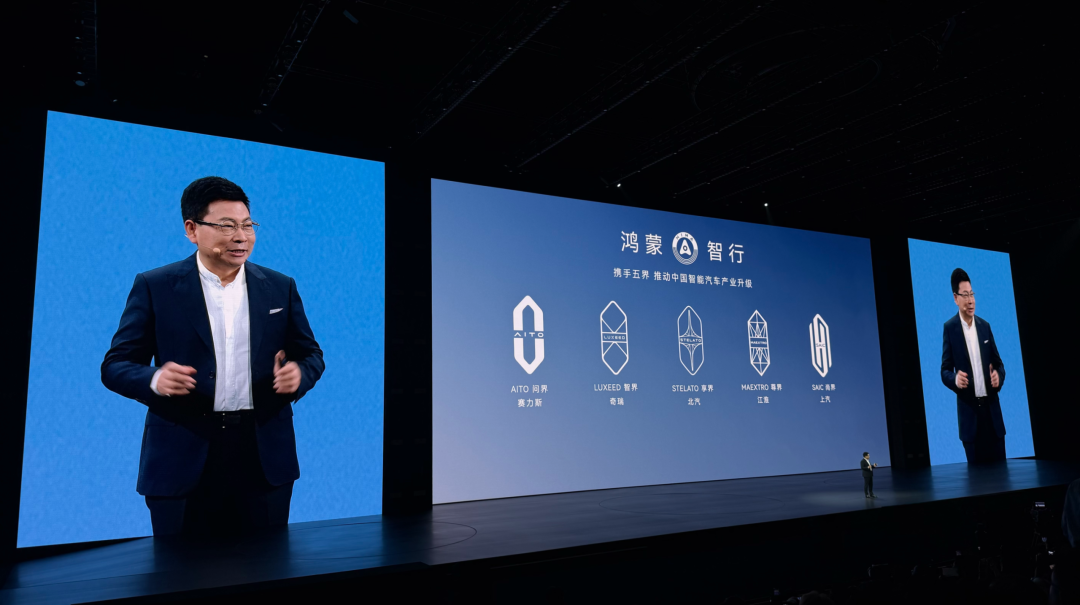
Huawei: Reshaping the Automotive Industry, Not Just Building Cars
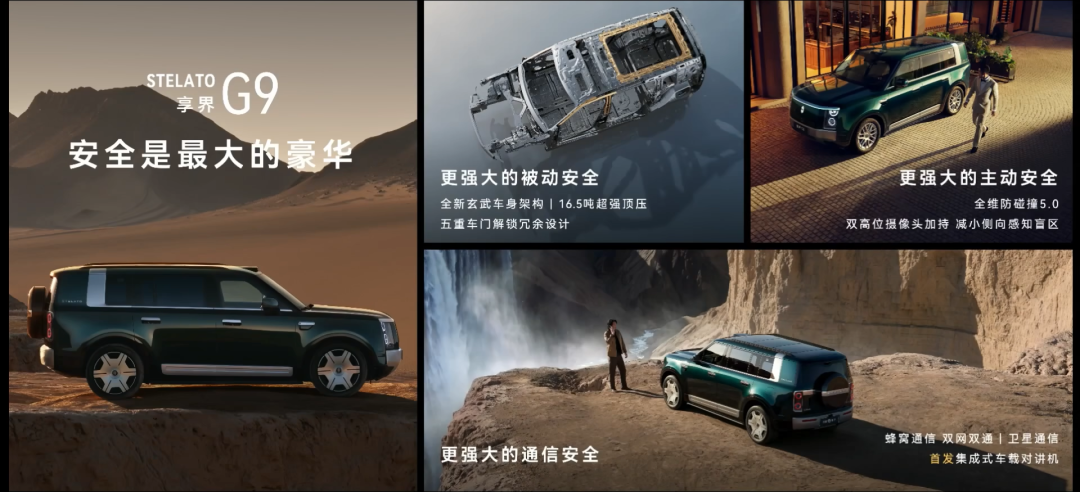
Recently, the Harmony brand has been making waves with a series of new model launches. First came the ultra-luxury MPV, the MAEXTRO V800, priced at over a million yuan, followed by the release of the luxury off-road SUV, the SERESE G9, with a price tag ranging from 429,800 to 549,800 yuan. These vehicles are equipped with Huawei's pioneering adaptive differential lock electric drive system, ensuring precise control and safety during travel. Additionally, they feature an integrated vehicle intercom system that supports cellular communication, dual-network connectivity, satellite communication, and other functions, enhancing safety in remote areas.
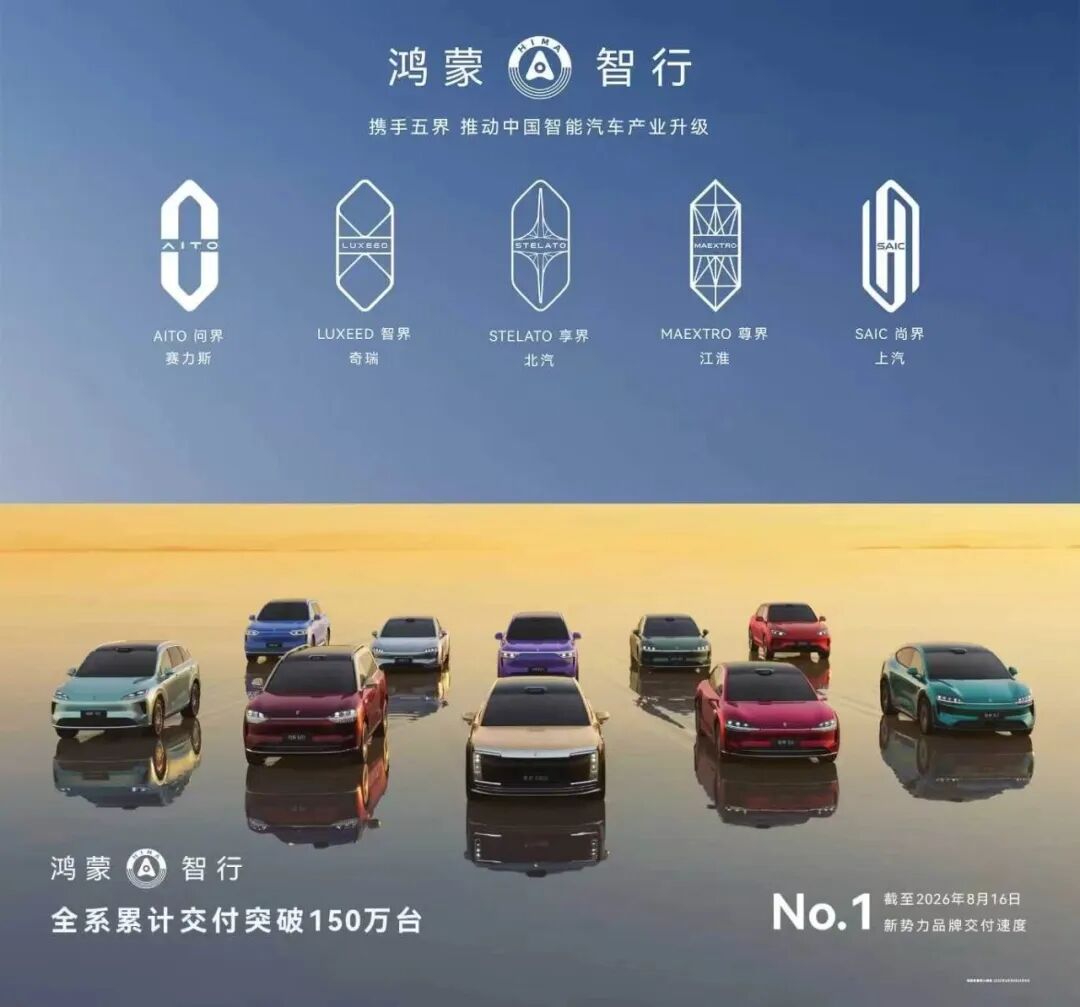
Despite some perceptions that Huawei's five-series car lineup is priced high, the market has embraced them. Cumulative deliveries across the entire lineup have surpassed 1.5 million units, with sales of high-end models steadily increasing. Previously, Huawei's Yu Chengdong announced on his social media that pre-orders for the MAEXTRO V800 and V680 exceeded 10,000 units in just 23 days, with the MAEXTRO V800 accounting for approximately 80%.
For a long time, Chinese automotive brands have struggled to gain a foothold in the high-end market. While their products may be highly capable and well-equipped, convincing consumers to pay million-yuan prices for Chinese brands has been a challenge.
High-end cars are not just about specifications; they represent brand prestige, technological innovation, identity, product experience, and the long-term trust consumers place in a company.
The pre-sale orders for the Harmony Intelligent Mobility Alliance's MAEXTRO V800 demonstrate that Chinese automotive brands are rapidly breaking through the previously formidable price ceiling. From AITO's entry into the 300,000-500,000 yuan market to SERESE's foray into the high-end sedan market, and now MAEXTRO's direct targeting of the million-yuan luxury market, the brand strategy of Harmony Intelligent Mobility Alliance is rapidly expanding upwards.
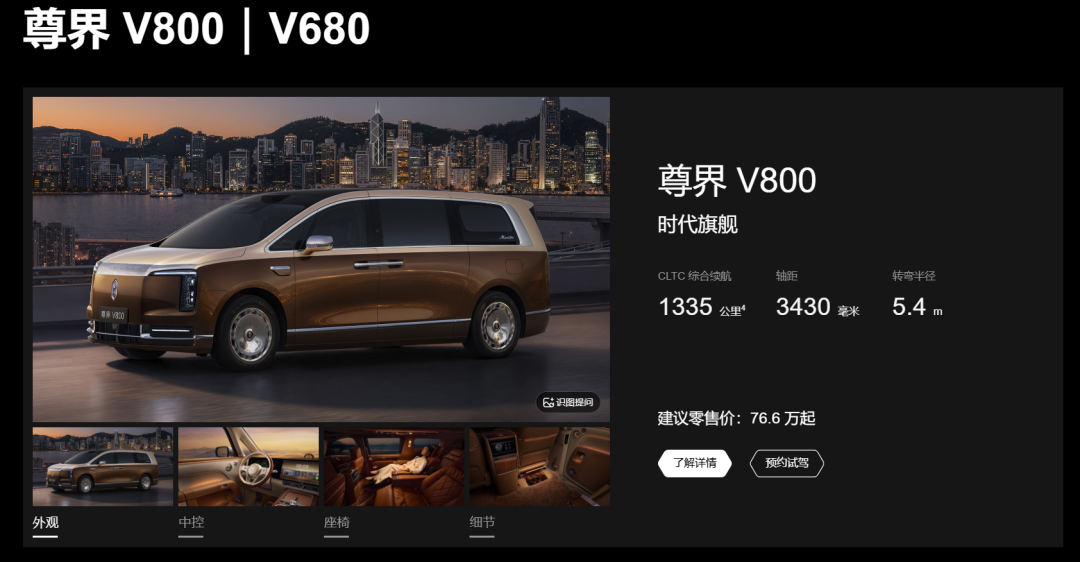
When considering these products collectively, it becomes evident that Harmony Intelligent Mobility Alliance's ambition extends beyond creating a few blockbuster models. It aims to establish a comprehensive smart car system catering to different price ranges, consumer groups, and vehicle markets. The MAEXTRO V800 represents a significant stride in advancing this system into the high-end market.
Therefore, the market needs to re-evaluate Harmony Intelligent Mobility Alliance. It should not be viewed merely as a supplier brand "where Huawei participates in car-making," at least not in the traditional sense of a "Tier X" supplier like Bosch.
01 Harmony Intelligent Mobility Alliance Disrupts the Industry with Product Definition Power
From the automotive industry's perspective, the true significance of Harmony Intelligent Mobility Alliance lies not in the sales figures of AITO, Luxeed, SERESE, MAEXTRO, and STELATO, nor solely in Huawei's intelligent driving technology leadership. What Harmony Intelligent Mobility Alliance truly transforms is who defines the products, owns the users, controls intelligence, shapes the brand, and captures the highest value in the automotive industry chain.
The traditional automotive industry rules have persisted for over a century: automakers handle R&D and manufacturing, suppliers provide components, dealers manage sales, and after consumers purchase a vehicle, their high-frequency interaction with the automaker largely ends.
However, the emergence of new energy vehicles, especially smart cars, is disrupting these rules. Cars are evolving from "mechanical products" to "intelligent terminals," from one-time transactions to ongoing software services, and from mere transportation tools to super entry points connecting smartphones, homes, AI, and internet services. Harmony Intelligent Mobility Alliance emerges at this pivotal moment of industrial transformation.
Thus, the question today is not "whether Huawei will build cars" but whether Huawei can replicate its capabilities from the smartphone industry—operating system, AI, terminals, ecosystem, channels, branding, and user operations—into the automotive industry.
If successful, the potential of Harmony Intelligent Mobility Alliance may far surpass that of a traditional automotive company.
When discussing Harmony Intelligent Mobility Alliance, people often first think of Huawei's intelligent driving. While intelligent driving is undoubtedly crucial in today's industry landscape, from a higher vantage point in the industrial chain, it is merely one technological module.
The value of Harmony Intelligent Mobility Alliance lies in helping Huawei enter the most core and difficult-to-control segment of the automotive industry chain for suppliers: product definition. Simply put, while the "five series" cooperating with Harmony Intelligent Mobility Alliance belong to different automakers, consumers primarily perceive them as models using Huawei's Harmony Intelligent Mobility Alliance system.
In the traditional automotive industry, suppliers typically address "problems posed by automakers." Automakers inform suppliers of the desired system specifications, components, and performance, and suppliers are responsible for R&D and delivery.
However, in the era of smart cars, vehicles are increasingly resembling smartphones. Consumers are no longer solely concerned with engines, transmissions, and chassis but rather with the quality of intelligent driving, the usability of the infotainment system, the intelligence of voice interaction, seamless connectivity between phones and cars, continuous OTA updates, AI's ability to truly understand humans, and the effectiveness of automatic parking.
Even today, consumers are beginning to care about a broader question: Can this vehicle serve as my intelligent lifestyle entry point? This represents the industry breakthrough point that many new automotive forces and cross-border tech companies aspire to, but it is an area where Huawei excels.
What Huawei has accumulated over decades is not just single hardware capabilities but a comprehensive consumer electronics product system: product management, software engineering, hardware engineering, chip and communication technologies, operating systems, brand marketing, channel operations, and a vast user ecosystem.
Therefore, after Huawei enters the automotive industry, the real change is not just "adding an intelligent driving system to cars" but redefining automobiles with consumer electronics logic. This is the most significant difference between Harmony Intelligent Mobility Alliance and traditional automakers. Harmony Intelligent Mobility Alliance is not simply participating in car-making but is involved in defining what kinds of cars are worth purchasing for consumers.
The importance of this endeavor may even surpass technological leadership in a single area. In any mature industry, the most valuable aspect is often not "manufacturing" but "definition." Take Apple as an example: Apple's most profitable endeavors are not manufacturing every screen and chip but controlling product definition, operating systems, branding, users, and ecosystems.
Harmony Intelligent Mobility Alliance is attempting to bring a similar logic into the automotive industry.
02 Cars Are Becoming "Smartphones," and Huawei Excels in Intelligent Terminals
The next phase of the automotive industry may not simply be electrification but intelligence, AI integration, and Agentification.
The first stage is electrification, where engines are replaced by electric motors, the importance of transmissions declines, and the powertrain system becomes core. The second stage is intelligence, where cars begin to feature cameras, millimeter-wave radar, LiDAR, domain controllers, intelligent cockpits, and advanced driver-assistance systems. The third stage is AI integration, where cars truly understand human language, intentions, and needs.
In its ultimate form, smart cars may achieve Agentification, where cars no longer just execute commands but can proactively complete tasks for users.
For example, a user might say, "I need to go to the airport at 8 PM." A truly intelligent car in the future may not just inform you that "navigation has started" but will understand your schedule, calculate traffic conditions, plan routes, determine if charging is needed, remind you of parking time, and even coordinate with your smartphone, home devices, and other services.
At this stage, cars are no longer traditional transportation tools but genuine AI terminals. With years of accumulation, Huawei already possesses a vast array of terminals, including smartphones, tablets, computers, wearables, smart home devices, as well as the HarmonyOS operating system and ecosystem.
Thus, the true strategic significance of Harmony Intelligent Mobility Alliance is that cars have the opportunity to become a super node within Huawei's entire terminal ecosystem. Just as smartphones serve as an intelligent entry point, cars can become the next entry point.
When smartphones, cars, earphones, watches, computers, and home devices are all connected, the value of cars extends beyond "four wheels." They become a massive screen within Huawei's ecosystem, a mobile computing platform, and an important carrier for future AI Agents.
This represents the deepest difference between Harmony Intelligent Mobility Alliance and traditional automakers. What Huawei is doing is upgrading from "supplier capabilities" to "platform capabilities," which is the key to understanding Harmony Intelligent Mobility Alliance.
When Huawei first entered the automotive industry, it was primarily perceived by the market as a supplier of automotive components and intelligent solutions. However, the supplier model has inherent limitations.
If Huawei only provides chips, LiDAR, intelligent cockpits, and intelligent driving systems, it earns money from components and technical services. What truly transforms industrial value distribution is moving further upstream into product definition, R&D, design, intelligence, branding, channels, and user operations.
Harmony Intelligent Mobility Alliance extends Huawei's capabilities from "providing a set of technologies" to "jointly completing a product." This operational model reconstructs industrial division of labor: automakers handle automotive industrial capabilities, while Huawei handles intelligence and product capabilities. Both parties jointly bring a vehicle to market, which is clearly different from the role of traditional Tier 1 suppliers.
If this model continues to mature, the automotive industry may undergo a significant change: automakers no longer need to develop all intelligent capabilities in-house but can rapidly acquire smart car capabilities through platform-based companies. This model will significantly lower the barrier for traditional automakers to transition to smart cars.
Once this vision is realized, Huawei's Harmony Intelligent Mobility Alliance can replicate its technological capabilities across more brands and models, which is the core value of platformization.
03 The Future of Harmony Intelligent Mobility Alliance
The truly formidable aspect of Harmony Intelligent Mobility Alliance may not be the strength of a single model but its scalability—"one technology, reused across multiple brands."
One of the most capital-intensive aspects of the automotive industry is R&D. Designing, developing, and mass-producing a single model requires substantial investment. If each brand and model were to independently develop intelligent driving, intelligent cockpits, and electronic electrical architectures, costs would be extremely high. However, Huawei's advantage lies in its platformization capabilities: the same intelligent driving technology can be applied to different brands, the same intelligent cockpit can cover various models, and the same HarmonyOS ecosystem can penetrate different price ranges.
As the number of models increases, R&D investments can be amortized across more products. Simultaneously, an expanding user base generates more data, driving rapid software iteration and ultimately forming a virtuous cycle: "technology platformization → increased models → increased users → increased data → software iteration → enhanced product competitiveness → increased sales → further amortization of R&D costs."
This is why evaluating Harmony Intelligent Mobility Alliance should not focus solely on the sales performance of a single model but rather on whether Huawei can replicate a unified smart car platform across more brands and models. If achieved, Harmony Intelligent Mobility Alliance's business model will no longer be merely "selling cars" but participating in broader automotive value creation through platform capabilities.
Meanwhile, Huawei possesses another advantage that traditional automakers find difficult to replicate: "super branding and channel entry points." A new automotive brand starting from scratch must address brand recognition, advertising, store construction, sales systems, and user trust. However, Huawei already has a vast consumer electronics user base and mature channels.
Consumers may originally visit Huawei stores to purchase smartphones, computers, tablets, earphones, or smart home devices but may encounter cars in the process, leading to "cross-terminal customer acquisition." Once cars become part of the Harmony ecosystem, users are no longer just purchasing a vehicle but an integrated experience of "car + Harmony ecosystem + intelligent cockpit + intelligent driving + smartphone connectivity + smart home." This ecological advantage cannot be replicated by traditional automakers through advertising alone.
More significantly, the Harmony Intelligent Mobility Alliance is reshaping the value distribution landscape within the automotive industry. Traditionally, automakers wielded control over brands and users, suppliers provided essential components, and dealers managed sales. However, in the era of smart vehicles, value is increasingly migrating towards software, algorithms, operating systems, AI, data, intelligent cockpits, intelligent driving solutions, and user access points.
While manufacturing retains its importance, it no longer constitutes the whole picture. The entity that controls user access points gains greater power to define products; the one that dominates the operating system stands a better chance of ruling the ecosystem; and the one that masters AI and data may acquire sustained capabilities for value creation.
Historically, profits from vehicle sales were primarily concentrated in manufacturing and branding. Looking ahead, selling a smart car could potentially yield continuous revenue streams from software, services, ecosystems, and AI-driven value. From this vantage point, the Harmony Intelligent Mobility Alliance is not merely challenging a specific automaker but rather the traditional logic governing value distribution in the automotive sector.
Huawei must maintain a firm grip on technology and ecosystems while ensuring that partner automakers achieve sufficient sales, brand value, and commercial benefits. Only by establishing a stable profit-sharing mechanism can more automakers be enticed to join this ecosystem on a long-term basis.
Ultimately, when viewed from the perspective of a single vehicle, the Harmony Intelligent Mobility Alliance may appear as just another outstanding automotive brand. However, from a broader standpoint, it has already forged four layers of capabilities: the first layer comprises automotive brands such as AITO, Luxeed, SERESE, MAEXTRO, and STELATO; the second layer encompasses intelligent driving, intelligent cockpits, electronic electrical architectures, chips, LiDAR, and other intelligent automotive technology platforms; the third layer integrates smartphones, cars, tablets, computers, wearables, and smart home devices within the Harmony terminal ecosystem; and the fourth layer represents the most imaginative future potential of AI terminals.
As cars evolve further into crucial carriers of AI Agents, consumer logic in vehicle purchasing will also undergo transformation. In the past, consumers asked, "How powerful is this car?" Subsequently, they inquired, "How good is this car's intelligent driving?" In the future, they may pose the question, "Can this car truly understand me and even perform tasks on my behalf?"
Should cars ultimately reach this stage, the intelligent cockpit, Harmony ecosystem, intelligent driving system, and terminal connectivity capabilities established by the Harmony Intelligent Mobility Alliance today may emerge as essential infrastructure for the next generation of smart cars. Hence, the Harmony Intelligent Mobility Alliance's grandest ambition may never have been simply to become the largest automotive brand.
A brief review reveals that traditional automakers focus on selling cars, whereas the Harmony Intelligent Mobility Alliance resembles an automotive platform. If it can facilitate the integration of more brands and models into Huawei's intelligent system in the future, its value may evolve from that of an automotive brand to an automotive industry platform. This is what renders the Harmony Intelligent Mobility Alliance truly deserving of long-term industry attention.
Conclusion
Over the past few decades, the automotive industry has vied for supremacy in engines, transmissions, and supply chains. Today, however, competition in the smart car sector is gradually shifting towards software, AI, operating systems, ecosystems, and user access points. From this perspective, the true focus of HONGMENG IMAX should not be solely on the number of models it launches or the volume of vehicles it sells, but rather on its endeavor to address a broader question: As cars metamorphose from mere transportation tools into intelligent terminals, who will possess the capability to become the "operating system" of the next-generation automotive industry?
The launch of the ZUNJIE V800 is merely a microcosm of this ongoing transformation. What is truly unfolding behind the scenes is the transition of China's automotive industry from 'building a great car' to 'constructing a smart car ecosystem.' In the future, automotive competition may no longer be confined to brands or models but may extend to platforms, ecosystems, and intelligent terminals.
If HONGMENG IMAX can continue to harness Huawei's capabilities in AI, operating systems, terminals, ecosystems, channels, and branding, and achieve scalability through more partners, then its ambition will transcend merely capturing market share in the automotive sector—it could potentially secure the gateway and rule-setting power for the next generation of the smart car industry.
In the latter half of the automotive race, the competition may no longer revolve around who can build a better car but rather about who can transform cars into truly intelligent terminals that understand, connect with, and serve you. And this, perhaps, is where HONGMENG IMAX truly warrants re-evaluation.
© THE END
All materials are sourced from official public information.
This article does not constitute any investment advice.
This article is original content from Baker Street Detective and may not be reproduced without permission.
Images are sourced from publicly available materials. If there is any infringement, please contact us for removal.
-
![]()
CHN Energy Teams Up with Chery, Further Strengthening Green Power Alliance Between Power Generation and Auto Companies
-
![]()
Insights from the Chengdu Motor Show: Overseas Brands Step Up Their Game
-
![]()
Chengdu Auto Show: Some Brands Opt Out, While Others Go All-In with 'Pavilion Dominance'
-
![]()
8.2 Billion Yuan Invested to Launch a New Entity: Dongfeng Peugeot Citroen Automobile Reboots After Years of Inactivity
-
![]()
Why Are Once-Prominent 'Honored Guests' Now Mostly Missing from the Chengdu Motor Show?
-
Kuaigo’s ‘Inverted’ Valuation vs. Kling: Who Has Misjudged the Pricing?
-
![]()
Harbor Weekly Review | Dreame's 200,000-Yuan Smartphone: A Symbolic Gesture with Limited Impact
-
![]()
Harbor Weekly Review | Dreame’s 200,000-Yuan Smartphone: A Symbolic Gesture Lacking Substance