8.2 Billion Yuan Invested to Launch a New Entity: Dongfeng Peugeot Citroen Automobile Reboots After Years of Inactivity
 08/24 2026
 383
383
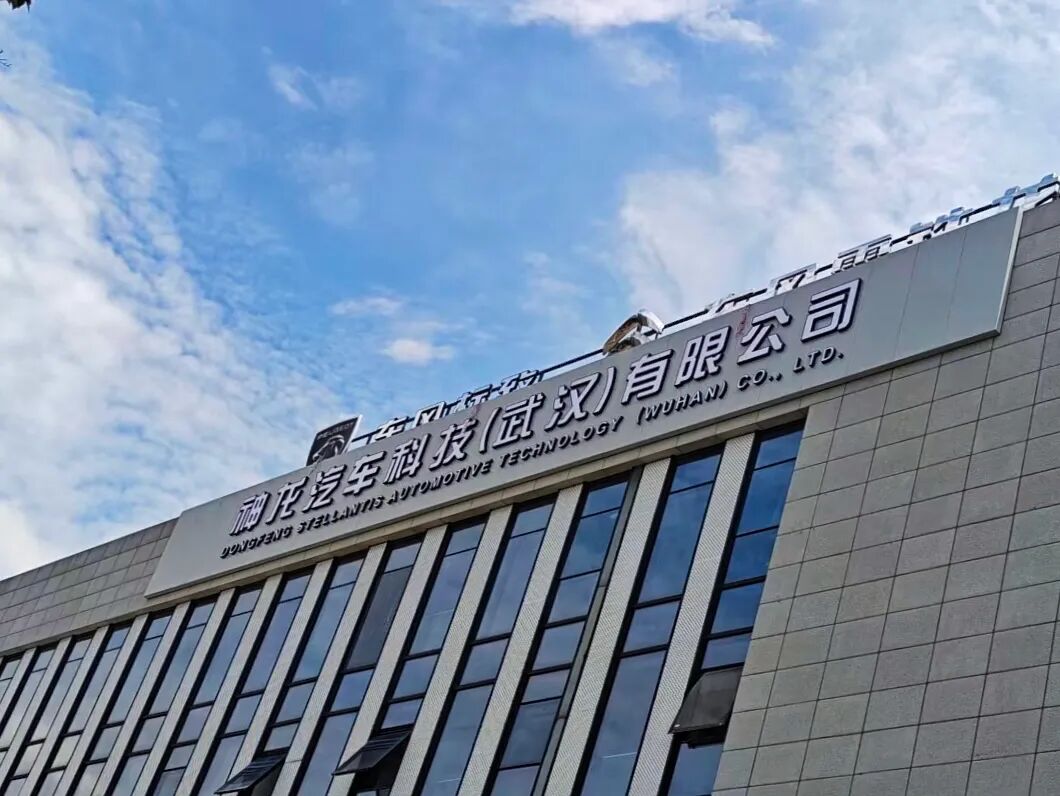
The automotive sector has been abuzz with news this year, yet joint venture automakers have largely remained out of the spotlight. Thus, when a new French joint venture automaker completed its industrial and commercial registration in 2026, it naturally garnered significant attention. On August 17, Dongfeng Peugeot Citroen Automobile Technology (Wuhan) Co., Ltd., or simply Dongfeng Peugeot Citroen Automobile Technology, was established in the Wuhan Economic and Technological Development Zone, boasting a registered capital of 8.195 billion yuan. Its legal representative is Huang Yong, who serves as the Deputy General Manager of Dongfeng Motor Corporation and Chairman of Dongfeng Peugeot Citroen Automobile.
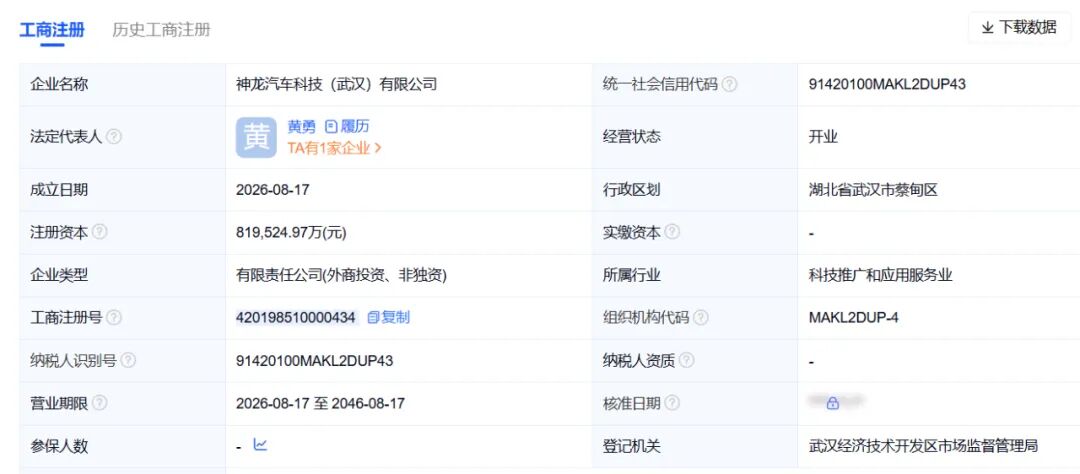
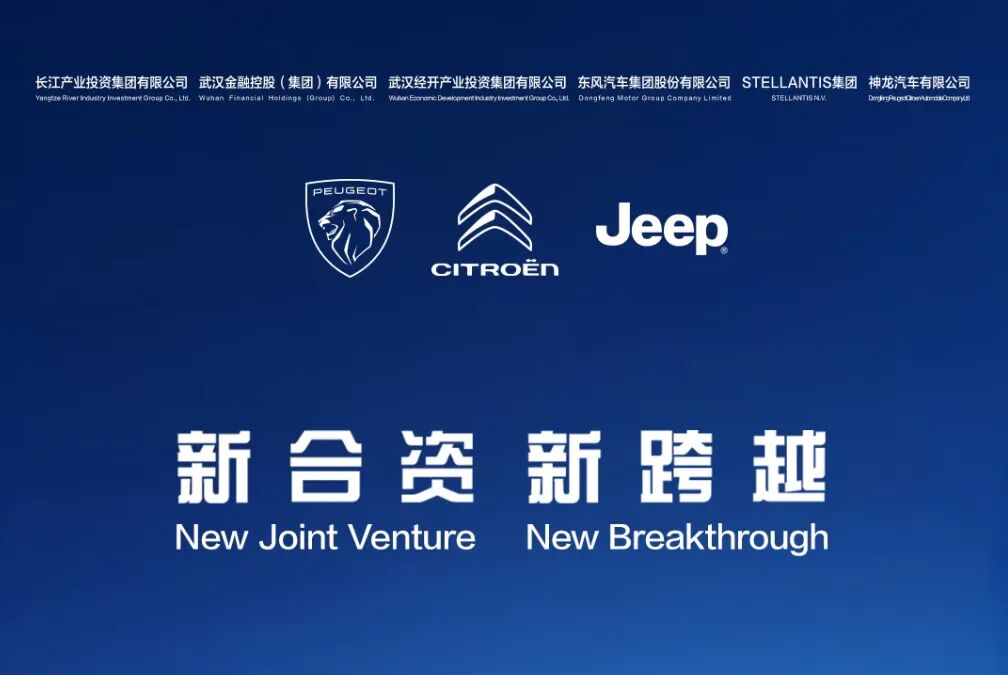
Two months prior, the former Dongfeng Peugeot Citroen Automobile Co., Ltd., Dongfeng Motor Group, Stellantis Group, and three local state-owned asset platforms in Hubei—namely, Changjiang Industrial Investment Group, Wuhan Financial Holdings Group, and Wuhan Economic and Technological Development Industrial Investment Group—signed a cooperation agreement involving a total investment exceeding 8 billion yuan. After more than three months of negotiations and the completion of all formalities, the new company was officially established.
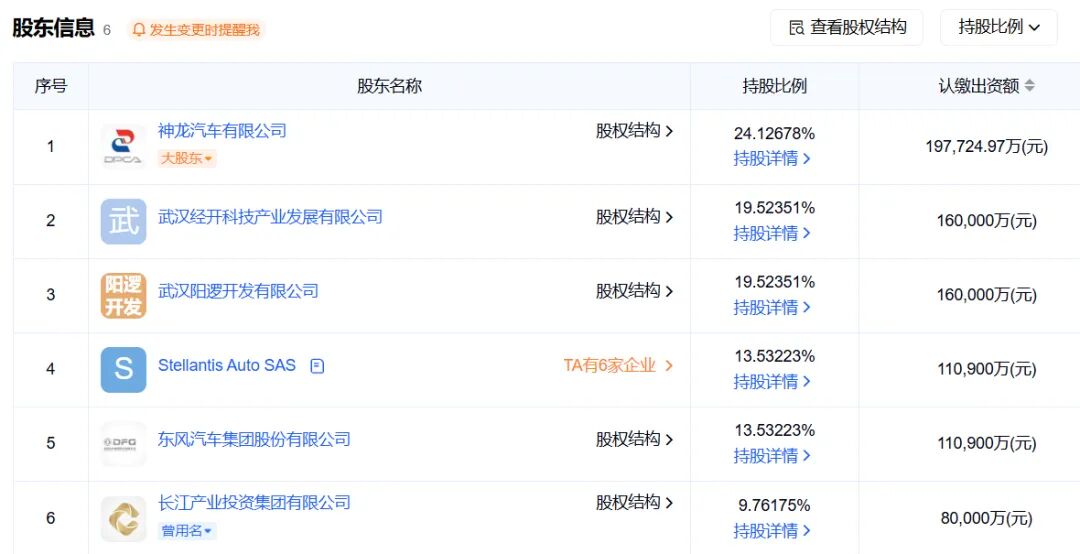
A closer examination of the shareholding structure reveals a significant departure from traditional joint ventures. The former Dongfeng Peugeot Citroen Automobile is the largest shareholder of the new entity, with a subscribed capital contribution of 1.977 billion yuan, holding 24.13% of the shares. Dongfeng Motor and Stellantis each contributed 1.109 billion yuan, accounting for 13.53% each. The three local state-owned assets collectively hold approximately 49% of the shares, with Wuhan Financial Holdings and Wuhan Economic and Technological Development Industrial Investment each holding 19.52%, and Changjiang Industrial Investment Group holding 9.76%. Together, the provincial, municipal, and district-level local state-owned assets account for nearly half of the shares. This deep integration of multiple capitals not only provides ample financial support for the transformation but also firmly establishes the foundational position of the local automotive industry chain in Hubei.
With the establishment of the new company, the overall business structure of Dongfeng Peugeot Citroen Automobile has been clearly delineated, with the old and new entities fulfilling distinct roles. Dongfeng Peugeot Citroen Automobile Technology is responsible for the research and development of new energy vehicle models, product planning, brand operation, marketing, and import and export businesses, driving incremental development. Meanwhile, the original Dongfeng Peugeot Citroen Automobile has been transformed into an investment entity, focusing on the production and manufacturing of existing fuel-powered vehicle models, supply chain maintenance, and after-sales support. It seamlessly inherits the original user and dealer system, ensuring the stable operation of existing business.
What is particularly noteworthy is the significant shift in the division of labor between the Chinese and French partners. Traditionally, the foreign side provided the technology, while the Chinese side handled sales. Now, Dongfeng Motor contributes core technologies in new energy and intelligence, while Stellantis provides brands, design, and global sales channels. Stellantis will still contribute the brand assets of Peugeot and Jeep, its accumulated experience in chassis tuning, and its global distribution network, but it will no longer dominate daily operations and research and development decisions. This complementary model of "Chinese new energy technology + European brand global channels" has become the focal point of this reform.
From multiple perspectives, this adjustment has ushered in new development opportunities for Dongfeng Peugeot Citroen Automobile.
The joint involvement of multiple capitals has primarily alleviated the financial strain associated with new energy research and development and production line upgrades. The previously underutilized vehicle production capacity in Wuhan can now be logically revitalized. The localization of Jeep's new energy vehicle models in Wuhan not only addresses the past gap in the intelligent and electric transformation of French vehicles but also enriches the product lineup of Dongfeng Peugeot Citroen Automobile. Moreover, it leverages Stellantis' existing channels to sell vehicles made with Chinese technology globally. This not only sets a precedent for other aging joint ventures stuck in a transformation deadlock but also provides steady support for Hubei's local automotive supply chain and related employment positions that have been operational for decades. According to the currently publicly released plan, starting from 2027, the Wuhan factory will successively launch new energy vehicle models of Peugeot and Jeep, covering both pure electric and plug-in hybrid routes, with simultaneous domestic sales and overseas export strategies.
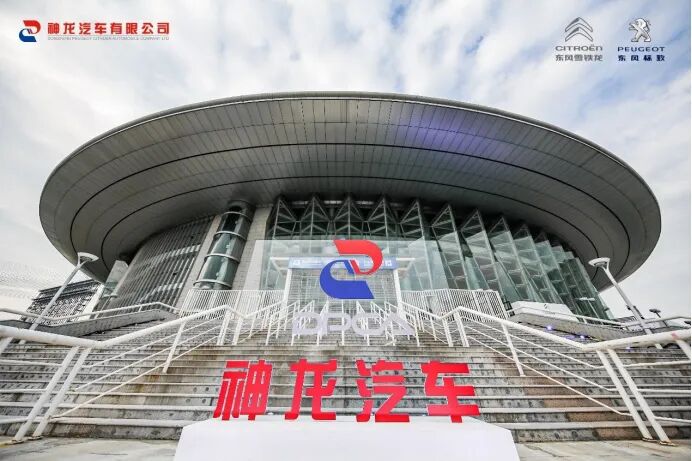
However, beneath this promising blueprint, Dongfeng Peugeot Citroen Automobile's new round of transformation still faces numerous challenges, with multiple practical issues demanding urgent resolution.
As more overseas brands opt for deep localization, tap into the domestic mature component supply chain, and select highly versatile electric platforms, intelligent driving solutions, and cockpit architectures available in the market, a practical problem has arisen: the more thorough the localization, the more pronounced the phenomenon of product homogenization and convergence. Localization is merely the basic prerequisite for participating in domestic competition. What truly determines a brand's ability to gain a foothold is its differentiated competitiveness. Ultimately, consumers will only pay for tangible product strength and brand authenticity.
The greater industry shift lies in the fact that following the widespread adoption of electrification, local independent brands have firmly established themselves as the mainstream in the market, and overseas automakers no longer enjoy the inherent prestige they once had in the fuel era. The brand appeal and product premiums accumulated over the years have continued to diminish. The vast majority of overseas brands, upon entering the electric vehicle arena, find themselves in a passive chasing position. Even if they launch brand-new electric vehicles, breaking through remains a formidable challenge.
Joint venture brands like Volkswagen, Toyota, and Nissan at least boast notable new energy flagship models—such as Volkswagen's ID series, Toyota's bZ3, and Nissan's N series—that have already established a certain market presence. In contrast, the newly established Dongfeng Peugeot Citroen Automobile Technology currently lacks mature new energy products to introduce to the market. At the same time, the new car launch rhythms of the Peugeot and Jeep brands have been sluggish in recent years, and their offline sales channels have continued to shrink, with their popularity among domestic consumers steadily declining. Regaining user trust is by no means achievable by launching one or two new models in the short term. It requires long-term product refinement, channel reconstruction, and market cultivation, making short-term breakthroughs challenging.
Frankly speaking, the establishment of an 8.2 billion yuan new platform marks just the beginning of the transformation journey. The current domestic new energy vehicle market is fiercely competitive, with leading local automakers and new entrants firmly occupying the mainstream market with mature products. At least for now, most joint venture automakers find themselves in a vulnerable position. The past struggles faced by Dongfeng Peugeot Citroen Automobile are well-known. Whether it can ultimately create products that resonate with consumers and revive the reputation of French brands will be put to the test by the market following the launch of new models in 2027.
(Image source: Internet. Remove if infringement occurs.)
-
![]()
Exploring MiniMax Design: Can Video Editing Be as Simple as Speaking?
-
![]()
Why Can SenseTime Achieve Profitability While CloudWalk Still Faces Challenges, Despite Both Adopting Large Models?
-
![]()
Domestic Car Chassis Revolution Part 3: Suspension Systems Transform Vehicle Posture, from Vibration Absorption to Active Force
-
![]()
Hainan is Going on a Crazy Satellite-Building Spree
-
![]()
Optics Determines Success in the XR Era: Wafer Production Reaches Millions, Industry Giants Join the Fray!
-
![]()
Zhejiang’s AI Industry Surges Forward: Who Will Be the Next Wave of ‘Tech Rising Stars’?
-
![]()
Disappointing, Utterly Disappointing, Falling Short on All Fronts. Yet, Brighter Days Lie Ahead...
-
![]()
New Cars Launched at Chengdu Motor Show: Domestic Brands Ascend, Joint Ventures Concede, and Intelligent Driving Goes Rural