Hainan is Going on a Crazy Satellite-Building Spree
 08/24 2026
 343
343
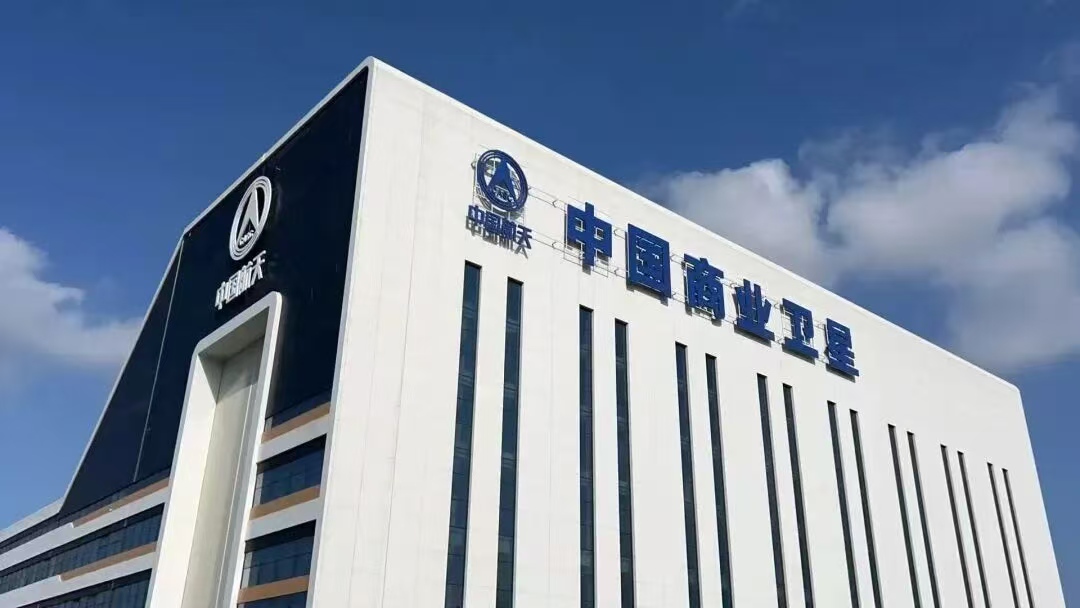
Zhuque-3 is Just the First Domino.
By Hua Shang Tao Lue, Zhang Jingbo
The successful recovery of Zhuque-3 sparked nationwide jubilation.
From state-led teams to private enterprises, China's commercial spaceflight sector has achieved a historic leap in recovery technology. While everyone gazes skyward, another covert thread of China's space endeavors has quietly unfolded.
June 2026, Wenchang, Hainan.
A satellite mega-factory passes expert inspection and is poised to enter trial production, with a designed annual capacity of 1,000 satellites.
How wild is this figure? Over the past few decades, China has launched just over 1,000 satellites in total.
In 2025, China is expected to orbit approximately 350 satellites. All launch sites combined, busy for a year, send up only as many satellites as this factory can produce in four months.
Four months to accomplish what the entire country does in a year. Is this madness?
[01 Orbits Don't Wait]
Why such frenzy? The answer lies not in Wenchang, but in the skies.
Wenchang, located on the eastern coast of Hainan Island, was once a tranquil seaside town, a tourist destination with coconut groves and ocean breezes. After the launch site's completion in 2014, occasional rocket launches provided local entertainment.
Few anticipated that this town would become the new epicenter of China's commercial spaceflight.
China's commercial spaceflight plans two constellations: Qianfan with 15,000 satellites and the National Satellite Network with 13,000, totaling 28,000, to be completed by 2035.
At the 2025 annual rate of approximately 350 satellites orbited, it would take 80 years to build 28,000.
The problem is, orbital resources won't wait.
The International Telecommunication Union operates on a "first come, first served" basis. If you don't launch your satellite within seven years of claiming an orbital slot, the frequency band is reallocated to others.
Eighty years is an eternity no one can afford.
Elon Musk's Starlink has already launched 12,000 satellites. Qianfan and the National Satellite Network combined have fewer than 500. Last year alone, Musk launched over 3,000 satellites, more than eight times China's total.
For the past two decades, China's manufacturing sector has been most concerned with overcapacity. Today, China's commercial spaceflight sector's greatest fear is insufficient capacity.
It's not that satellites can't be built, but that they're built too slowly.
Why not build more production lines? Because traditional satellites aren't built on assembly lines.
Under traditional commercial spaceflight models, a satellite's journey from concept validation to delivery takes at least a year and a half, and up to three to five years. Even with ten production lines and significant investment, only a few dozen satellites could be built annually.
The issue isn't the number of production lines but the manufacturing model.
[02 Building Satellites Like Cars]
How are traditional satellites built?
A satellite remains fixed at a workstation, with engineers from various disciplines—structure, thermal control, electronics, software—taking turns to work on it. Assembly, debugging, and testing proceed piece by piece, a time-consuming and costly process, often running into hundreds of millions of yuan.
This island-style manufacturing works for building one satellite but becomes impractical for building 1,000.
As commercial spaceflight enters a boom era, with targets in the tens of thousands, this approach fails. Satellites must transition from being sculpted artworks to mass-produced industrial goods.
Elon Musk pioneered this transformation.
He applied Tesla's manufacturing logic to SpaceX: standardized components, modular design, automated assembly, and assembly line rhythm.
Satellites are no longer one-off designs but models produced continuously in the thousands.
Starlink's production line churns out 6-10 satellites daily, with each costing around $500,000. The cost of building one traditional large satellite could fund hundreds of Starlink satellites.
Musk proved that satellites can be built like cars.
China soon followed suit. In 2021, Geely and Time and Space Dao Yu (Time and Space Daoyu) collaborated to establish China's first satellite mega-factory in Taizhou, Zhejiang.
Wang Yang, founder of Time and Space Daoyu, previously worked within the system, with 14 of the 18 founding members hailing from aerospace research institutes. They brought Geely's automotive pulse-line production into the satellite workshop.
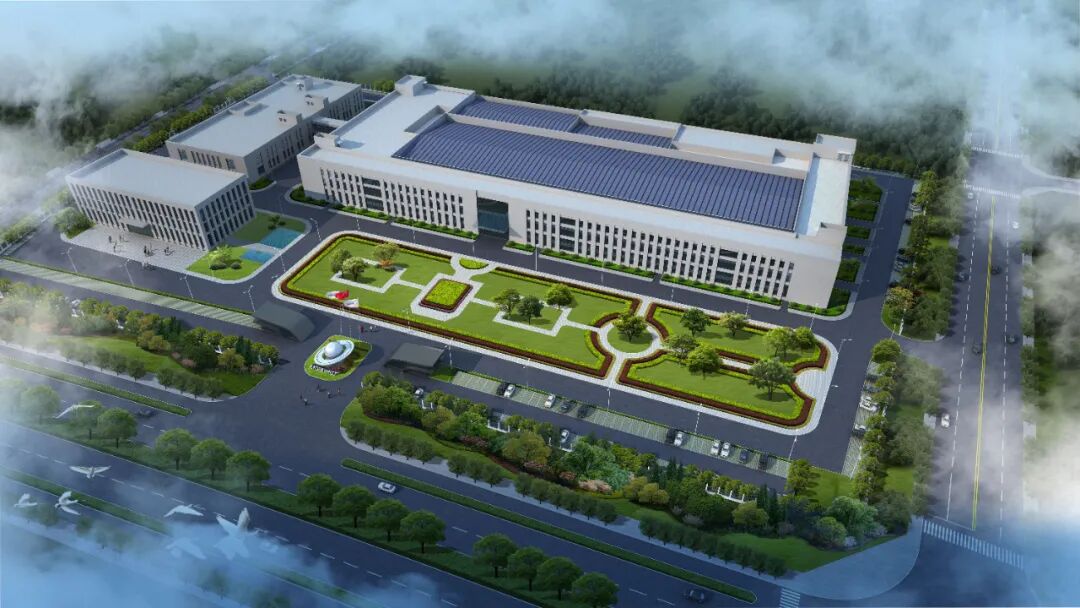 ▲ Taizhou Xingkong Zhilian Intelligent AIT Center, Source: Geely Technology Group
The results were significant: a satellite rolled off the line every 28 days, costs dropped by 45%, and the designed annual capacity reached 500.
Subsequently, Galaxy Space, Shanghai G60, and MicroNano Starry Sky also established intelligent factories. Galaxy Space produces 100-150 satellites annually, while Wuxi MicroNano Starry Sky exceeds 150.
Xu Ming, founder of Galaxy Space, set a goal: reduce the cost of traditional low-Earth orbit satellites from hundreds of millions of yuan to the million-yuan range.
This isn't merely a price cut but a revolution in satellite manufacturing.
The person who took this to the extreme is Dong Guanghong, head of Wenchang's satellite mega-factory.
This is a state-led initiative, with the factory jointly funded by China Aerospace Science and Technology Corporation (CASC) and the Wenchang local government, situated beside the launch site.
Factory head Dong Guanghong hails from the CASC system, described by colleagues as "frugal." But his frugality isn't about saving on a few screws; it's about recalculating aerospace economics with commercial manufacturing logic.
In the past, success rates were paramount in aerospace, but cost is the primary concern in commercial spaceflight.
Dong set a simple goal: transform satellites from luxury items into mass-produced industrial goods, reducing manufacturing costs by another 40-45%.
To achieve this, the team embarked on a cross-disciplinary integration.
On one side were traditional aerospace engineers; on the other, automotive manufacturing talent. Two vastly different cultures collided on a single production line.
Ultimately, they proposed pulse-line production, where satellites move like cars, with each workstation maintaining a fixed rhythm, completing a manufacturing node every four hours. Overruns affect the entire line.
In the past, aerospace cycles were measured in months.
Now, they're measured in hours. The total assembly cycle for a whole satellite is compressed from a week to a day, with the fastest production rate being half a satellite per day, boosting efficiency by over threefold.
To cultivate the first batch of satellite industry workers, Dong did something unique.
He selected over 30 students from local Hainan institutions and sent them for training in Beijing, Shanghai, and Tianjin. They will work on this assembly line in the future.
When asked how to cultivate these young people's precision manufacturing skills, his answer was simple: copy a page of text daily, whether from Dream of the Red Chamber, English textbooks, or circuit fundamentals. The reasoning is that those who can write neatly won't fare poorly at screwing.
It may sound like a joke, but those experienced in precision manufacturing know it's wisdom.
Steady hands require a calm mind. A calm mind ensures screws won't loosen. In space, a loose screw could mean the loss of hundreds of millions of yuan.
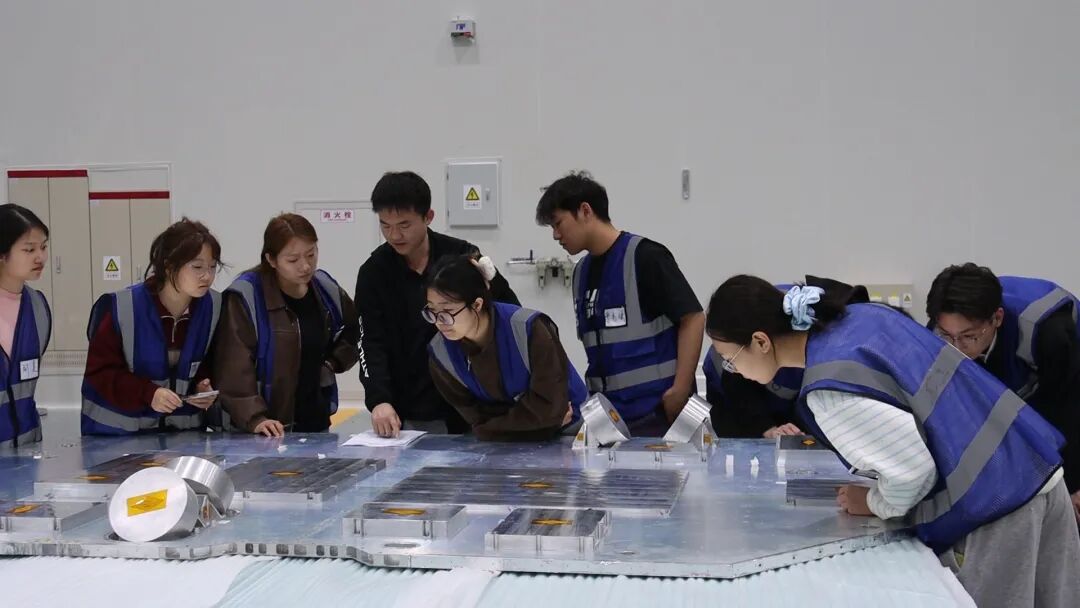 ▲ Source: China Aerospace News
[03 A Few Kilometers: From Factory to Launch]
The assembly line is up and running, but many factories face a common bottleneck: how to launch the satellites after building them?
After assembly in Taizhou, satellites are transported 2,000 kilometers to Xichang for launch. Similarly, satellites built in Nantong, Shanghai, or Wuxi must all be transported.
Satellites are delicate instruments. Thousands of kilometers of travel by road, rail, and air, with any vibration potentially loosening internal components.
Upon arrival at the launch site, they must be unpacked, retested, and jointly debugged to confirm everything is normal before being loaded onto the rocket.
Transportation and retesting alone consume several weeks.
Manufacturing occurs in one place, while launching happens in another. Commercial spaceflight has long been hindered by this invisible barrier, which everyone must overcome.
Until the emergence of Wenchang's satellite mega-factory.
Wenchang has placed the factory right beside the launch site, just a few kilometers from the factory to the launch pad, eliminating the need for long-distance transportation, unpacking inspections, and re-debugging, truly achieving: launch immediately upon leaving the factory.
In other factories, the first stop after a satellite rolls off the line is logistics. In Wenchang's factory, the first stop is the rocket.
Behind this lies Wenchang's unique "1+1+8" system: one satellite mega-factory, one testing and inspection center, and eight core single-machine development units.
Manufacturing, testing, and launching are compressed into the same park.
Twenty-six industrial chain (industry chain) enterprises have one after another set up shop, forming a complete industry chain closed loop (closed loop) for the first time, from R&D and core components to final assembly, launch, and data application.
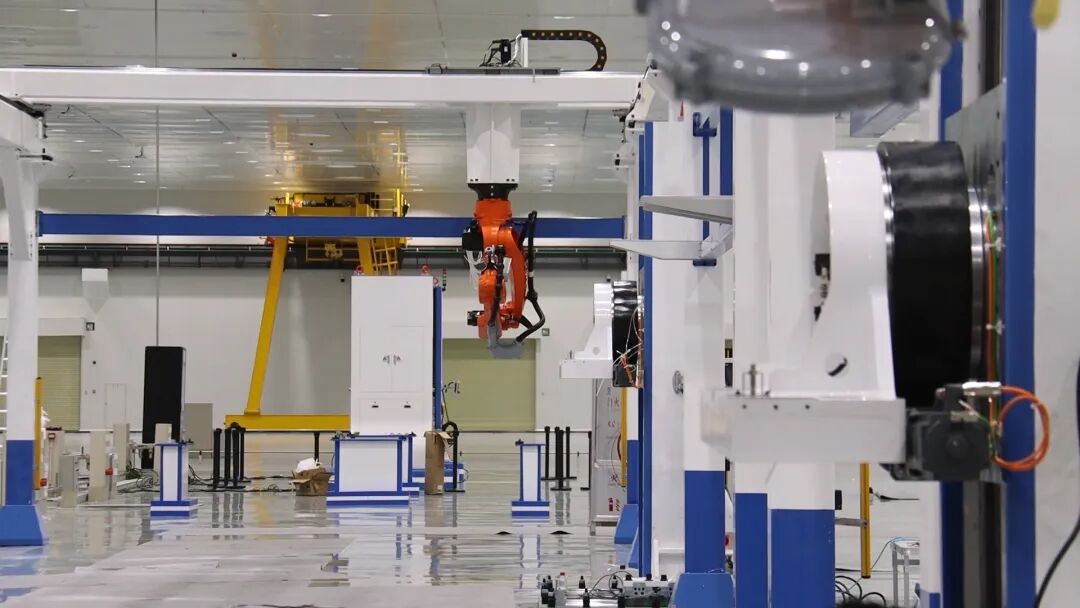 ▲ Source: China Aerospace News
Wenchang has been preparing for these few kilometers for many years.
In 2024, China's first commercial spaceflight launch site was completed in Wenchang, jointly built by the Hainan local government, CASC, and China Aerospace Science and Industry Corporation (CASIC), with Hainan Commercial Spaceflight Development responsible for construction and operations.
Led by Yang Tianliang, chairman of Hainan Commercial Spaceflight Development, the team transformed a coastal wasteland into a commercial spaceflight launch base in just 878 days.
Currently, it's still ramping up capacity.
In 2025, it completed nine launches, sending 92 satellites into orbit. Once all four launch pads are operational, the annual launch capacity will exceed 60.
Assuming 20 satellites per launch, up to 1,200 satellites could theoretically be launched annually, matching the annual capacity of Wenchang's satellite mega-factory.
Wenchang's low latitude also plays a significant role.
Located near the equator with a low latitude, rockets can reach farther and carry larger payloads. The same rocket launched from Wenchang has an advantage over those launched from Jiuquan.
Don't underestimate this advantage. With over 20,000 satellites to launch in the future, sending a bit more each time can significantly reduce the number of rockets needed.
From the assembly line to the launch pad, the journey that once spanned thousands of kilometers now covers just a few in Wenchang, reducing the wait from months to days. This isn't just speeding up; it's changing the racecourse.
But even so, what Wenchang has strive for (strived for) is merely speed.
The orbital windows in the sky are closing day by day. The real countdown hasn't ended.
[04 The Global Race to Launch Has Begun]
What Wenchang truly aims to catch up with isn't itself but SpaceX.
Musk's Starlink has already launched 12,000 satellites, with new satellites entering orbit almost daily. China's Qianfan and National Satellite Network combined don't even reach a fraction of that.
The time we have left is running out.
Therefore, Wenchang's satellite mega-factory has decided to go all in. In the past, factories were built after orders arrived. Wenchang reversed this, building the factory first to seize the time window.
During the 2026 Spring Festival, Wenchang's satellite mega-factory entered a crucial phase of production line joint debugging.
Engineer Xiaohua led a team from Beijing to Hainan. Previously, he participated in building China's first satellite pulse production line. This time, he aimed to replicate that experience in Wenchang.
While others returned home for reunions during the Spring Festival, his team debugged eight giant rotary positioners in the factory.
Li Xiangyang, deputy general manager of a commercial satellite company under CASC, specially came to oversee the progress. Xiaohua said, "The production line is aimed at mass production. Currently, satellites aren't being mass-produced, but the production line must be built first."
On New Year's Eve, he called home to apologize and then returned to the factory to continue debugging equipment.
Half a year later, on June 30, 2026, the expert review panel completed the inspection, concluding: the production line passed the Penetration testing (integration test) and could officially enter the trial production stage.
This means that henceforth, Hainan Wenchang's mega-factory will operate at full capacity, Crazy satellite building ( Crazy manufacturing of satellites , Crazily manufacturing satellites , madly building satellites).
[05 Epilogue]
Many years later, when people look back at China's commercial spaceflight, what they may remember isn't a specific rocket launch but Wenchang's factory.
What truly transforms the industry isn't just a successful launch but a production line capable of continuously replicating success.
In the past, satellites were works of art.
In the future, satellites will roll off factory lines like cars and smartphones.
Just over a month after Wenchang's factory passed inspection, Zhuque-3 achieved China's first terrestrial recovery.
On one side is the ability to build quickly and in large quantities; on the other is the affordability and frequency of launches.
When the technological curves of satellite mass manufacturing and rocket reusability converge in the summer of 2026, China's commercial spaceflight will truly transition from the laboratory era to the era of large-scale industrialization.
What Wenchang has truly built isn't just a factory but a production line for China's commercial spaceflight to move from the laboratory era to the era of large-scale mass production.
[References]
[1] "Star Arrows Unite: Exploring Hainan's Mega-Factory," CCTV Economic Half-Hour
[2] "Major Projects in Progress: New Updates on Commercial Spaceflight Launch Pads and Towers," CCTV News Client
[3] "A Unique Spring Festival for a Group of 'Star Creators' at China Aerospace Science and Technology Corporation," China Aerospace News
——END——
Welcome to follow【Hua Shang Tao Lue】to learn about influential figures and strategic legends.
All rights reserved. Unauthorized reproduction is prohibited.
Some images sourced from the internet.
For infringement, please contact for removal.
-
![]()
Registered Capital Slashed to 372 Million Yuan! Yutong Optical Finalizes Industrial and Commercial Change Registration
-
![]()
Zhuque-3 Successfully Lands, and 'Time Traveler' Secures Another ¥100 Million in Funding: China's Commercial Space Industry Experiences a 'Dynamic August'
-
![]()
Autohome Faces a Shrinking Window of Opportunity
-
![]()
Even a Titan Like Musk Has Faced Setbacks in Fulfilling Promises
-
![]()
AI Office: The End of the Racing Era, Context Becomes the Key to Success
-
![]()
Domestic Vehicle Chassis Revolution ②: The Steering Wheel Remains, But Mechanical Connections in the Steering System Are Decreasing
-
![]()
Exploring MiniMax Design: Can Video Editing Be as Simple as Speaking?
-
![]()
Why Can SenseTime Achieve Profitability While CloudWalk Still Faces Challenges, Despite Both Adopting Large Models?