The Moment Has Come: Why Optics Is Commanding Massive Resources in the XR Industry
 07/15 2026
 500
500
At present, within the XR industry, capital, industry chains, cross-sector enterprises, and key players are all closely monitoring a particular trend: the focus on optics.
Let's take a look at the industry's advancements in XR optics over the past three months.
Firstly, in terms of breakthroughs in optical production lines and fundamental technologies, the domestic optical supply chain has recently achieved substantial progress in micro-nano optical manufacturing and new optical waveguide technologies:
For instance, in June 2026, Goertek Aolai Optics, a joint venture between Goertek and Sunny Optical, officially began production of its 12-inch transparent substrate wafer AR glasses micro-nano optical product project in Shanghai Lingang. This marks China's first large-scale production base for 12-inch AR micro-nano optical wafers. The project, with a total investment of approximately 3.28 billion yuan and covering an area of 261,000 square meters, focuses on the mass production of high-end optical components such as AR waveguide sheets, electrochromic lenses, and microlens arrays.
Also in June, Nika Optics unveiled the world's first automated production line capable of producing holographic waveguides in volumes of up to a million units in the Huayuan Science Park of Tianjin Binhai High-Tech Zone, thereby advancing the localization of core materials and technologies.
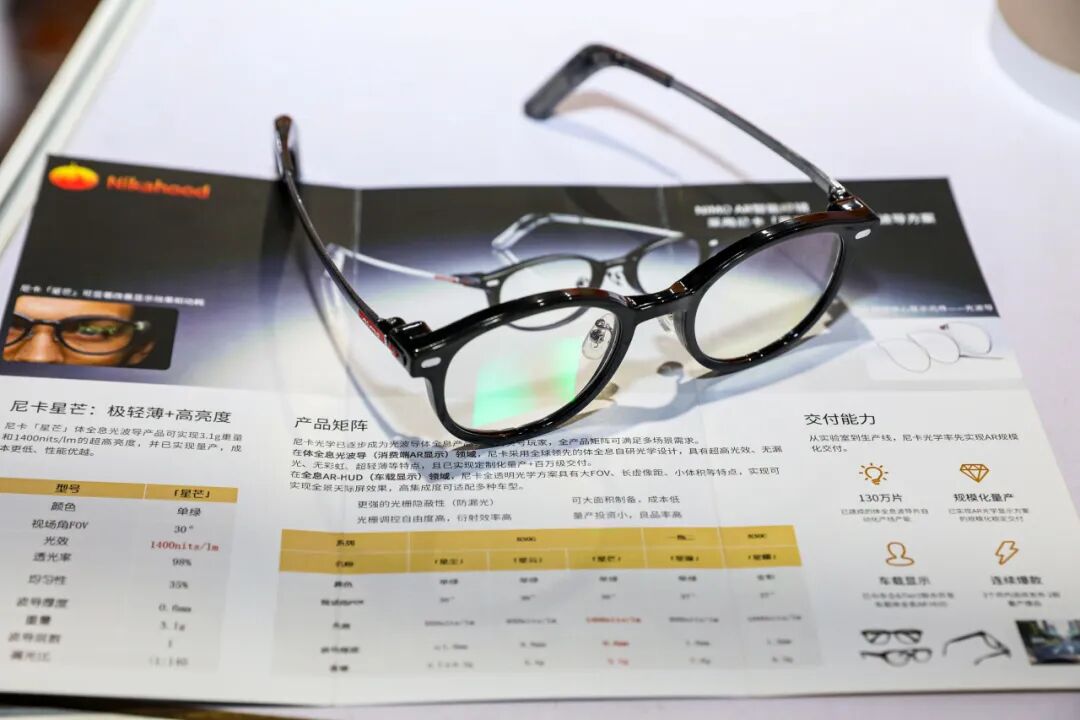
Glasses featuring Nika Optics' waveguides. Image source: VRAR Planet
In July, LetinAR, a Korean optical manufacturer, introduced its self-developed PinTILT optical technology, which precisely controls light paths through tilted mirror structures. Compared to traditional solutions, this technology can expand the virtual display size by approximately 2.5 times while reducing the overall device weight by about 55%.
Secondly, regarding the launch of core new products and brand developments, we have also witnessed optical innovations from various brands over the past three months:
For example, XREAL Aura, the world's first XR glasses equipped with the Android XR system, made their debut. These glasses boast the largest practical 70° field of view among consumer-grade AR products while maintaining thin and lightweight lenses.
In May, Thunderbird Innovation launched the GT Max audio-visual AR glasses and the V4 lightweight AI camera glasses. Among them, the GT Max features a newly developed glass-plastic hybrid prism architecture, achieving the industry's largest 59° field of view. Additionally, by optimizing the light path design, the optical engine thickness is reduced by 29%, providing a cinema-level giant screen experience with a far thinner and lighter design than traditional solutions.
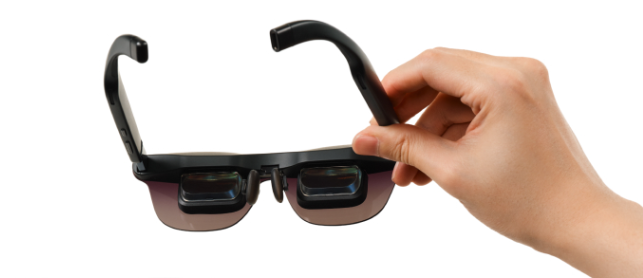
Thunderbird GT Max, showcasing different optical designs. Image source: Thunderbird Innovation
Huawei's HarmonyOS AI glasses went on sale offline in June this year. Equipped with a self-developed HarmonyOS-dedicated AI chip, the product features a 1/2.8-inch ultra-large sensor that supports HDR Vivid photography, aiming to tackle challenges in various shooting scenarios.
Ingentec continues to invest in AR core optical technology research and development, continuously innovating around optical modules, display systems, and overall device engineering capabilities to drive ongoing iteration of core technologies and accelerate the large-scale adoption of consumer-grade AR glasses.
These new products and their optical solutions all underscore that XR industry optical technology is transitioning from addressing basic display issues to pursuing ultimate spatial computing experiences and seamless daily wearability.
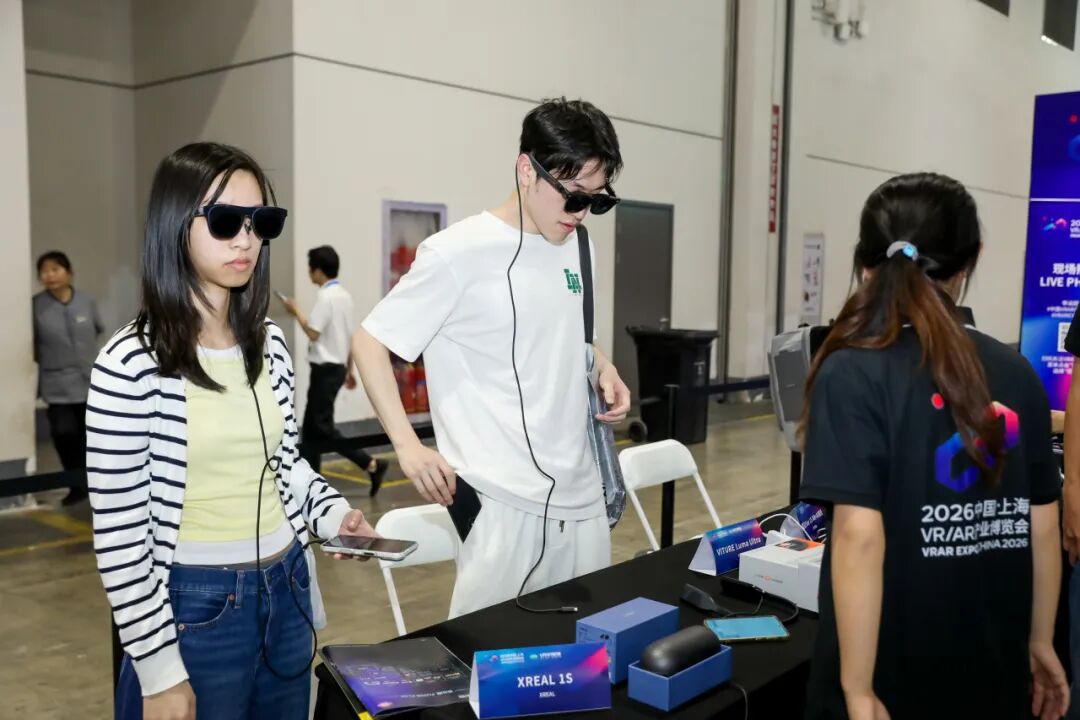
Image source: VRAR Planet
Another notable trend is the transformation of optical companies from single-component suppliers to "technology + complete device" ecosystem collaborators. Consequently, we have frequently witnessed such news in recent months:
Quectel released XR reference designs. In July 2026, Quectel launched the Hawk series AR glasses and Dolphin XR computing units, offering one-stop manufacturing capabilities covering optical waveguide and BirdBath solutions, thereby lowering the barrier to XR product mass production.
iFLYTEK's cross-sector collaboration. iFLYTEK signed a strategic cooperation agreement with Wanxin Optical Group, a leading domestic optical enterprise, to promote the deep integration of artificial intelligence and the optical industry.
Goertek Optics and Conant Optics reached a collaboration. The partnership precisely targets specialized custom lenses, optical waveguide eyepieces (including myopia-corrected and non-corrected types), and optoelectronic components integrating advanced functions such as electrochromism and eyeball tracking.
Finally, let's examine the capital markets. In recent months, capital markets have been highly focused on core XR upstream optical components, with leading companies accelerating their market expansion through capital increases, production expansions, or IPO preparations.
Recently, Mojie Technology completed an integrated Series A and A+ round of financing, raising a total of 600 million yuan. The investment lineup includes first-tier venture capital firms such as Legend Star, Yida Capital, DT Capital, CMB International, and Changshi Capital.
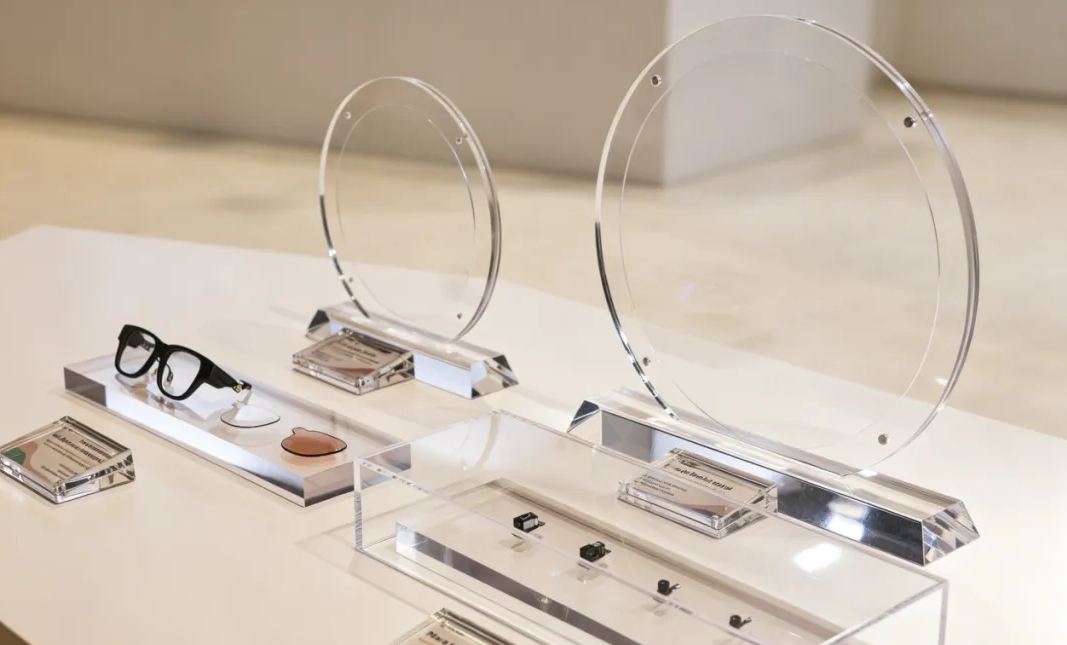
Image source: Mojie Technology
In June, Goertek and Ningbo Sunny Optics announced separate capital increases of 500 million yuan each (totaling 1 billion yuan) into Goertek Optics to support its expansion in micro-nano optical components, XR optical lenses, and modules.
In July, LetinAR completed a 27.8 billion won Pre-IPO round of financing, bringing its total financing to 62.5 billion won. The company plans to go public in 2027, with funds earmarked for expanding production capacity and accessing customers in China, the US, and Europe.
In summary: Why has optics become such a hot topic? It is actually building upon the foundation laid by the XR industry. The gradual rise of XR has drawn attention to XR optics from all quarters.
From the perspective of XR industry challenges, lightweight design, long battery life, and low cost form an "impossible trinity" for widespread XR adoption, and XR optics lies precisely at their intersection. Whoever can first break through the optical bottleneck will gain control over the user experience and pricing power of terminal products. Optical capabilities will largely determine whether the XR industry can surpass the scale inflection point in 2027.
This is why capital is flocking to it, companies are increasing their investments, the industry chain is integrating in this direction, and optical manufacturers are forming deep partnerships. This is not merely an "arms race" in underlying technologies but also a supply chain positioning battle among giants to secure entry tickets for the next-generation computing platform. The golden age of XR is emerging from the solid foundation of optical advancements.
By Qingniao Yinqin
(All images not specifically credited are sourced from the internet)
-
AI's Richest Person Revealed: A Native of Zhanjiang!
-
Standing at a Distance, Behind Xiaomi's Phone Slowdown and Layoffs", "Xiaomi Phone, Declining Sales, Offline Stores, Product Strategy, Comprehensive Ecosystem of People, Vehicles, and Homes", "Accordi
-
![]()
ByteDance Enters Physical AI, Igniting the Second Wave of 'Feast'?
-
![]()
Phoenix Optics Forecasts a Nearly 70% Drop in First-Half Net Profit, Yet Optical Business Profit Shows Growth!
-
![]()
A Staggering 50.16% Reduction in Losses Projected! COST's Interim Report Signals a Pivotal Moment
-
![]()
Nearly 19% of National Total! Guangdong Boasts 164 Registered Large Models as New AI Personification Regulations Take Effect
-
![]()
BYD’s Baosha, Sought After by Australians, Makes a Triumphant Return to China
-
【Focus】Analysis of Downstream Demand Sectors and Key Enterprise Development for Acrylic OCA Optical Adhesives in China by 2026