Works Even Without Power! Musk's New Starlink Product, Battery from China
 11/05 2026
 493
Musk is probably the entrepreneur best at creating hype in this era.
Colonizing Mars, returning to the Moon, sending AI compute into space, and installing SpaceX thrusters on the new-generation Roadster sports car... Every so often, he throws out a new goal that makes people half-believe it, and his name is always on the trending list.
But if you only treat him as the "King of Hype," you'd be greatly mistaken.
01 A business quietly making a fortune
On June 12 this year, SpaceX went public on the US stock market, raising $75 billion, becoming the largest IPO in history, with a market cap once exceeding $2.6 trillion. Commercial spaceflight thus became the hottest track in global capital markets, and more than ten domestic commercial space companies are sprinting toward IPOs. What people talk about most are reusable rockets, Starship, and increasingly dense launches.
On October 20, SpaceX delivered its second quarterly report after going public: quarterly revenue of $14.6 billion, up 161% year-over-year. Among that, the AI business contributed $7.6 billion, and together with Starship, it almost grabbed all the headlines.
What's truly worth a closer look is the connectivity business where Starlink sits.
This business is big enough: Q3 revenue of $5.25 billion, with the first three quarters cumulative at nearly $12.8 billion. Profitable enough: quarterly operating profit of $2.37 billion, a margin of about 45%, accounting for more than 80% of SpaceX's operating profit for the quarter. Growing fast enough: revenue up 69% year-over-year, with consumer subscribers reaching 13.6 million, up about 89% year-over-year. At the end of 2023, that number was only 2.3 million, and it has nearly doubled every year since.
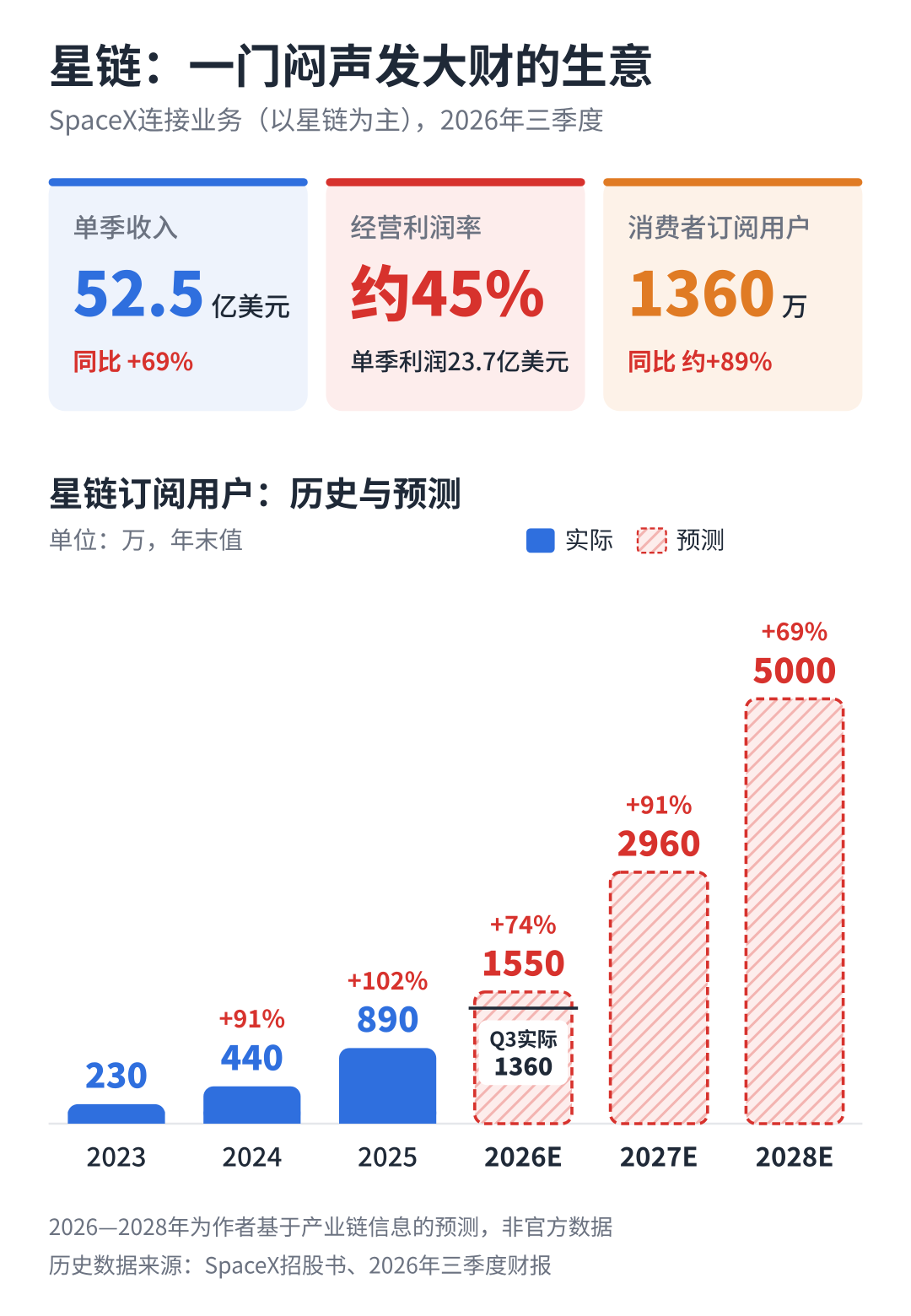
The ceiling is still far off. In its prospectus, SpaceX estimated that for home broadband alone, the addressable market is $660 billion, corresponding to 1.8 billion households worldwide; and about 40% of the global population lives in rural areas, where terrestrial broadband is hard to cover economically.
Hype fades, cash flow doesn't. Starlink is that business of Musk's quietly making a fortune.
The next growth point for this business is a new terminal that hasn't been officially released yet, with a built-in battery. According to industry chain sources, its cells come from ATL and Zhuhai CosMX.
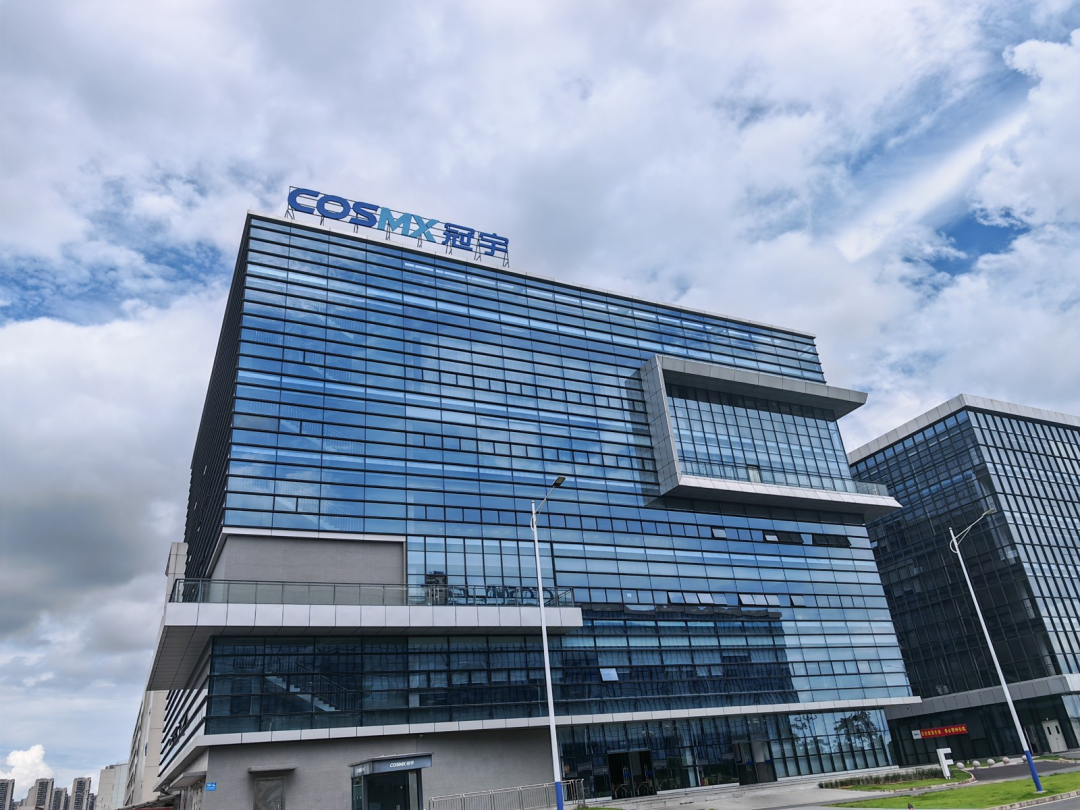 Image: Zhuhai CosMX
02 The next hit: works even without power
This new product is the second-generation Starlink Mini.
In June this year, Musk publicly stated that a ruggedized version of Starlink Mini with a built-in battery and USB-C charging support was already in production. In July, engineer Oleg Kutkov, who has long studied Starlink firmware, further discovered that the second-generation Mini had entered mass production, with hardware version number mini2_prod1, panel circuit board dimensions of 225×273 mm, slightly smaller than the first generation's 236×276 mm, and an extra battery inside the body.
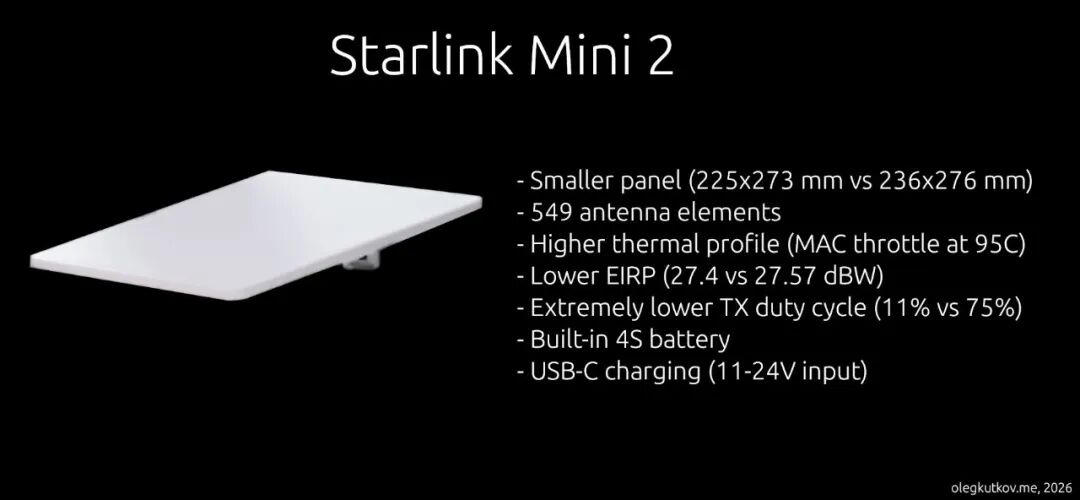
Image: Mini 2 parameters compiled by Starlink firmware researcher Oleg Kutkov (Source: olegkutkov.me)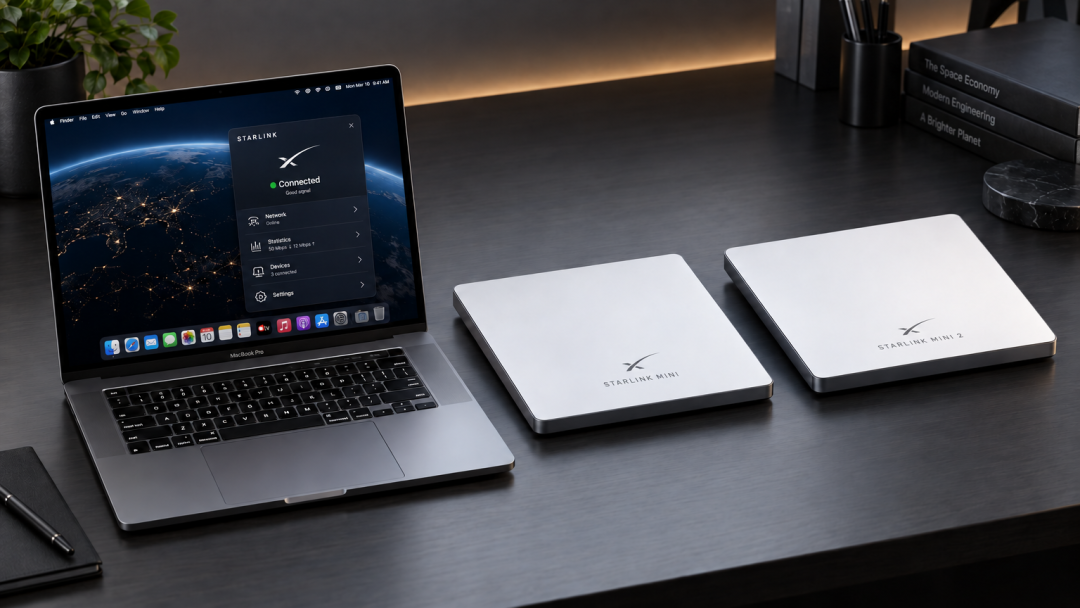 Starlink Mini 2nd gen (right) is slightly smaller and slightly thicker than Mini 1st gen (left). Mini 2 has a built-in battery, with cell suppliers ATL and Zhuhai CosMX. Graphic: AR Circle
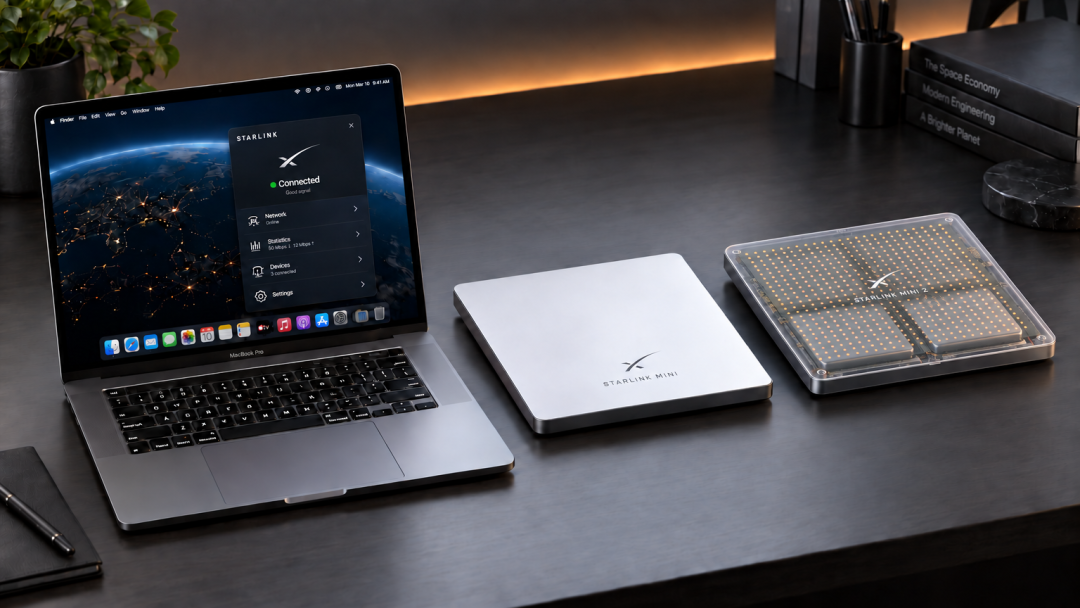 Starlink Mini 2nd gen (right) has a built-in high-performance battery, with cell suppliers ATL and Zhuhai CosMX. Graphic: AR Circle
Another signal comes from the price. When launched in June 2024, the first-gen Mini was priced at $599, then dropped all the way to $299 and $199; on October 2 this year, the US official website listed a promotional price of $149, which the market widely believes is clearing inventory for the new product. SpaceX has not yet announced the name, price, or release date of the Mini 2, but compared with the repeatedly delayed Optimus V3 humanoid robot, it is clearly closer to ordinary users.
ATL and Zhuhai CosMX are no strangers in the consumer electronics circle: the steel-shell stacked batteries for the iPhone and the AI hardware OpenAI is about to launch also use cells from them. This time, their batteries have been installed in Starlink terminals.
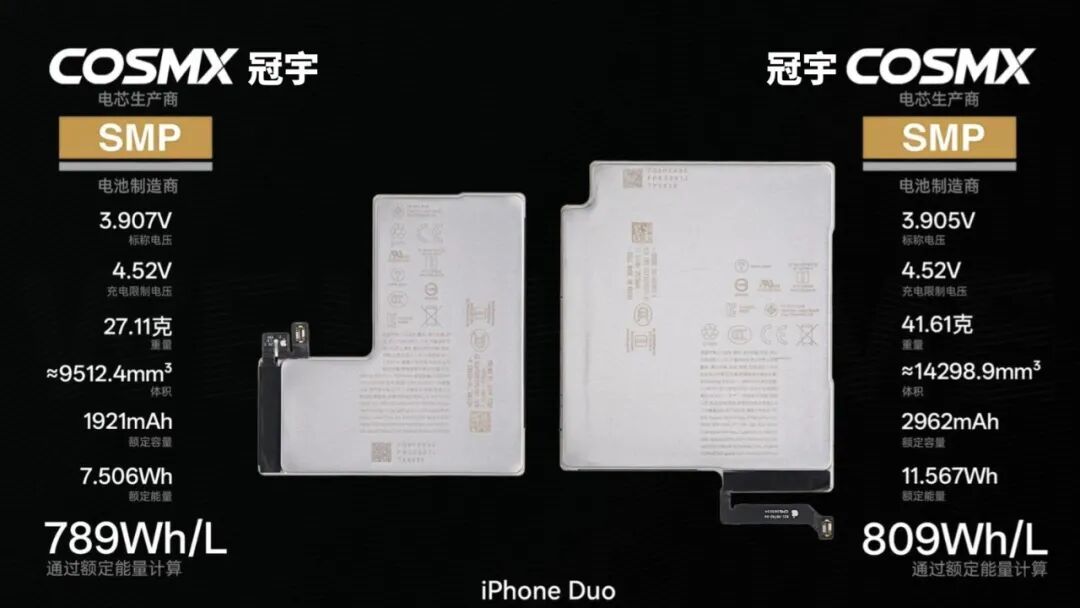 Image: Teardown shows the cell of the iPhone steel-shell battery is labeled COSMX (Zhuhai CosMX) (Source: Weiji Fen teardown video)
Why is a battery so important?
The Mini has always been Starlink's most "mobile" terminal. The antenna and router are integrated into a tablet the size of a book, which can be carried in a backpack, and one person can set it up in a few minutes; it is also one of the few Starlink terminals officially supported for use while in motion, installed in RVs, pickup trucks, or boats, connecting while on the go. But the first-gen Mini has an unavoidable shortcoming: it has no battery of its own. Peak power at startup can reach fifty to sixty watts, requiring an external hundred-watt-class USB-C power supply or vehicle DC power; ordinary power banks simply can't handle it, and many users have to buy a separate outdoor power station costing one to two hundred dollars.
What Mini 2 fills in is precisely this last shortcoming, turning it from "carryable" to "usable anytime." Campers and road-trippers no longer need to hunt for outlets everywhere; field survey and construction teams can connect to the internet as soon as they power on; emergency rescue teams can restore communications immediately in disaster areas without power; offshore fishing boats and households in emerging markets with unstable grid power also gain another option.
Every additional use scenario means another batch of terminals sold, and subscription revenue rises accordingly. Hardware opens new markets, subscriptions keep the money coming in — this is precisely the underlying logic behind Starlink's sustained rapid growth.
03 How much thought is hidden in a battery
It sounds like just "adding a battery," but from the firmware information disclosed by Kutkov, SpaceX has redesigned almost the entire device for it.
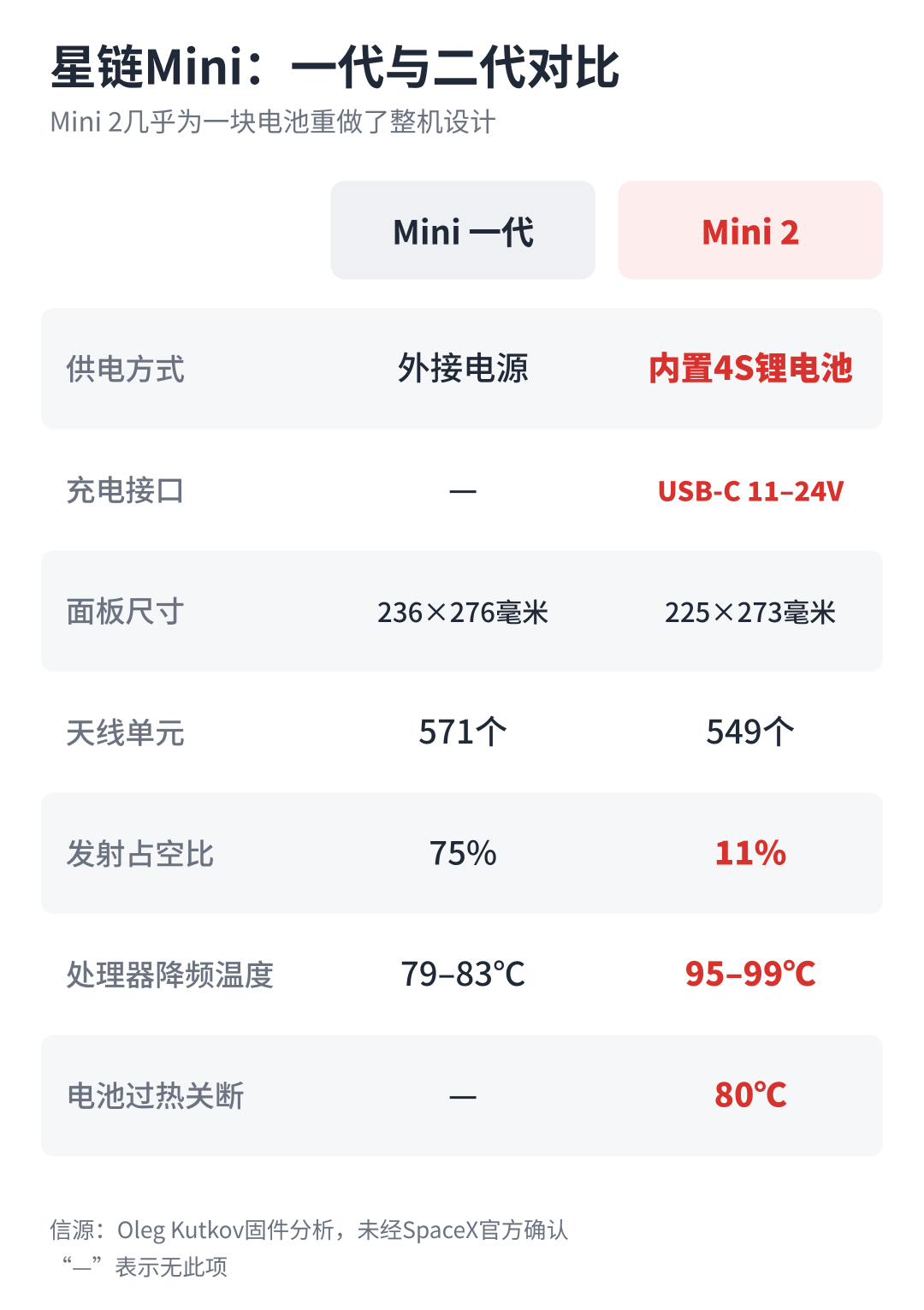
First, the battery itself: multi-cell series, high-performance cells. Firmware shows that the Mini 2 has a built-in 4S lithium battery pack, with a nominal voltage of around 15 volts. The reason for series connection is that the Starlink antenna power is as high as tens of watts; at the same power, higher voltage means lower current, lower line loss and heat, and it can directly interface with 11 to 24 volt USB-C fast charging input. The cells chosen are pouch type. According to industry chain sources, the reason is straightforward: this is a device meant to be carried around, and the first-gen whole unit already weighs about 1.1 kg, so weight reduction is the top priority. Pouch cells packaged in aluminum-plastic film are lighter, more freely shaped, and have higher energy density — this is exactly the opposite approach from phones choosing steel-shell stacked batteries for extreme space utilization.
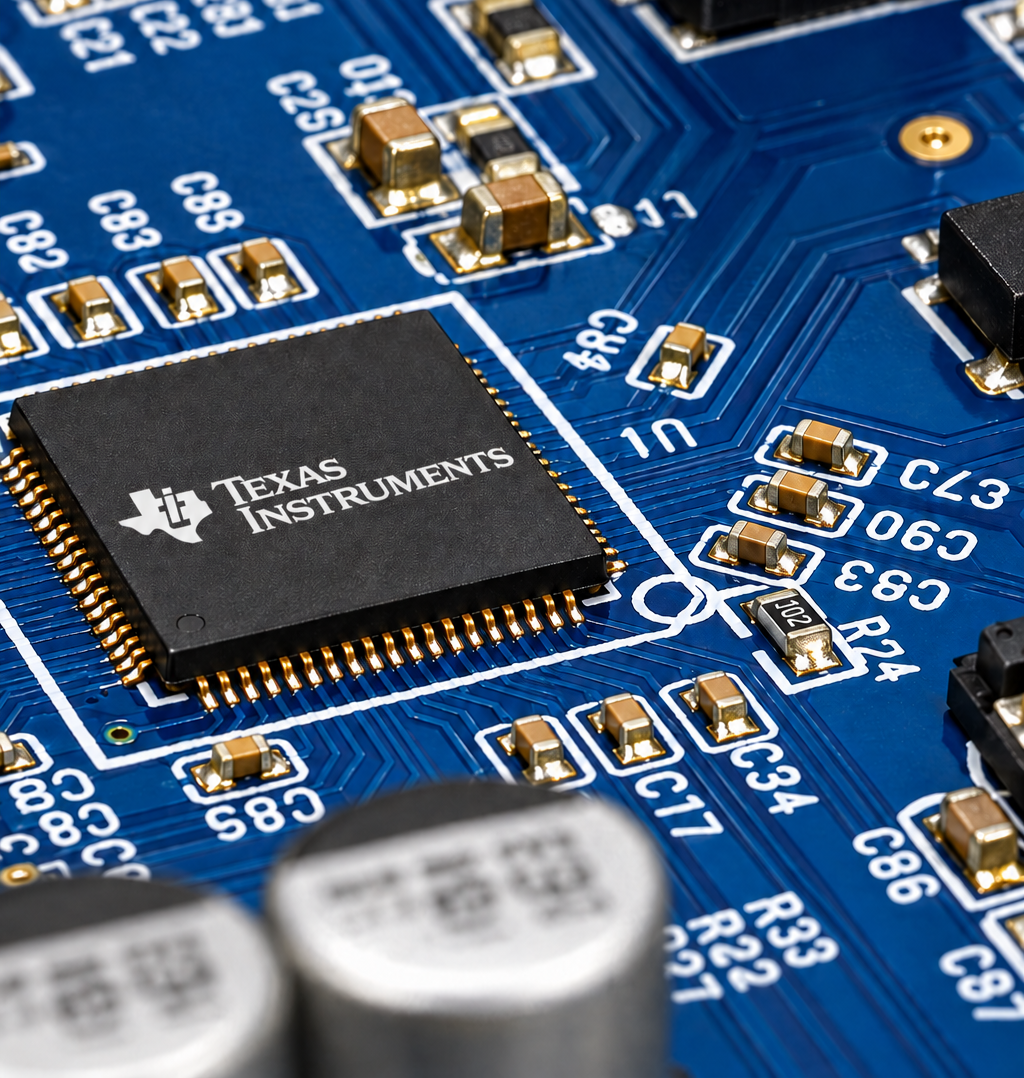
Next, management: giving the battery a "brain." For multi-cell series battery packs, the biggest fear is overcharging, over-discharging, or imbalance in any one cell. The Mini 2 uses Texas Instruments BQ40Z series battery management chips to calculate power level, health, and remaining usage time in real time, and enter protection mode when abnormal. The firmware also adds a dedicated "auto shutdown" status code for the Mini 2; when the battery is too low or overheated, the terminal will actively cut power.
The hardest part is heat. Phased array antennas are themselves major heat generators, and outdoors they also endure direct sunlight. Lithium batteries age faster at high temperatures, and safety risks rise, so the firmware sets a hard shutdown line of 80°C for the battery; at the same time, the processor's frequency reduction threshold is raised from 79–83°C to 95–99°C. This means the whole device's thermal design has been redone for this battery: the battery holds the safety bottom line, the chip endures higher temperatures, and only then can the terminal continue working under the scorching sun. For battery life, a bit of performance is also sacrificed. The most power-consuming part of a satellite terminal is transmitting signals into space. Firmware shows that the Mini 2's transmit duty cycle has been greatly reduced from the first generation's 75% to 11%, trading less transmission time for longer battery life, at the cost of somewhat lower upload speed. For portable connectivity, it's enough for browsing web pages, sending messages, and video calls — this trade-off is clearly worth it.
It needs to be light, heat-resistant, able to handle high currents, and fit enough power into limited space; devices with built-in lithium batteries also face stricter requirements for air transport, sea transport, and certification in various countries. There are only a few cell manufacturers worldwide that can do all of this at once and still achieve stable mass production.
04 Behind the hype, first principles
Looking back at the changes in Starlink terminals over the past few years, a very clear line emerges.
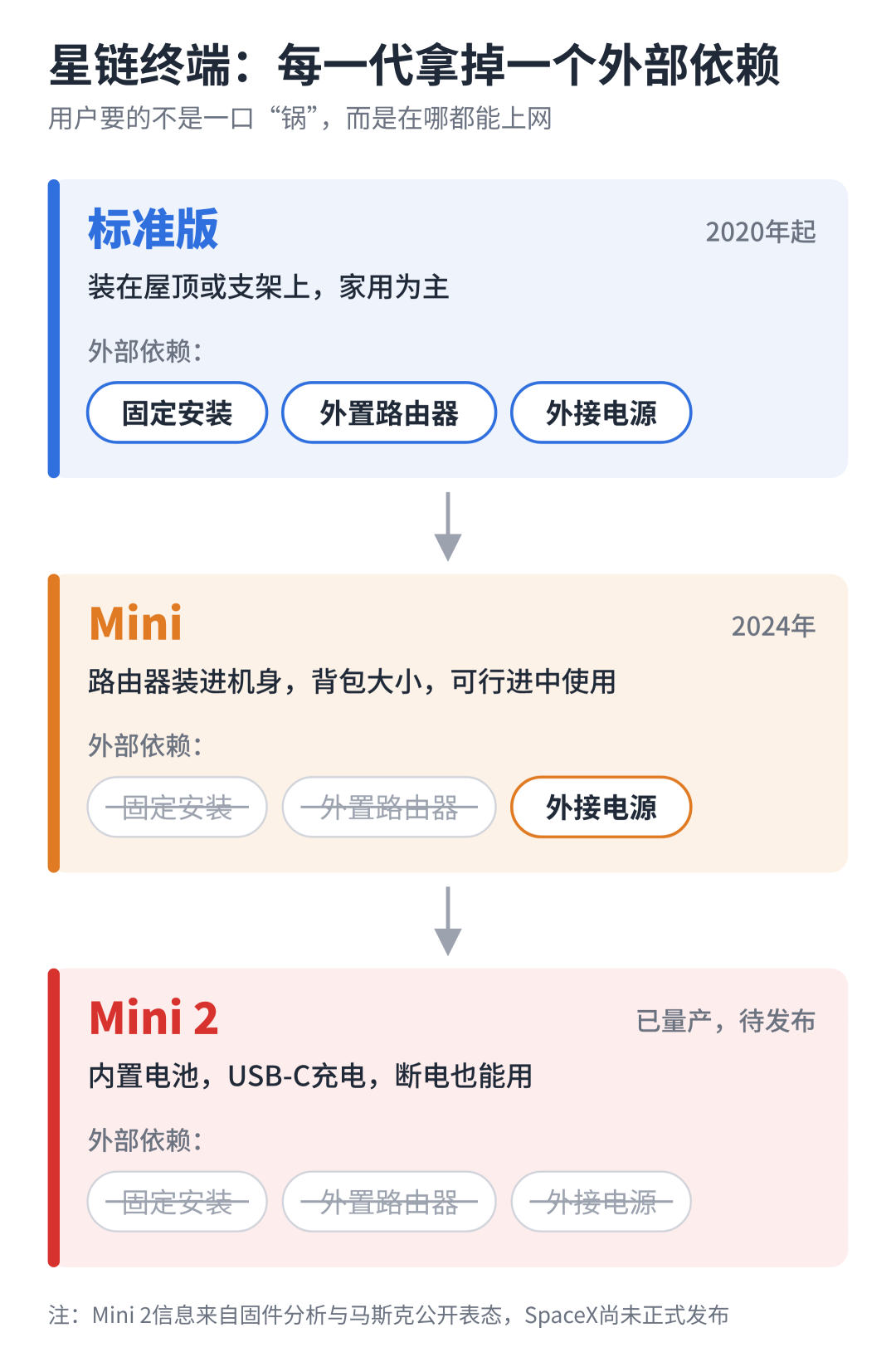
What users want has never been a "dish," but the ability to access the internet anywhere. Following this goal, each generation of Starlink terminals removes one external dependency: from the large antenna that needs to be fixed on a roof and connected to an external router and power adapter, to the Mini that has the router built into the body and can be carried on your back, to the Mini 2 that doesn't even require you to find a power source.
On this path, SpaceX designs the terminals itself and builds its own factories for assembly, while the cells that determine whether it can "work even without power" are entrusted to a handful of leading battery manufacturers with mass production capability.
No matter how bustling commercial spaceflight gets, rockets and satellites ultimately come down to a terminal on the ground. How many places the terminal can go determines how big this business can become.
Musk is certainly not perfect. His timelines often slip, Optimus V3 has been repeatedly delayed, and many grand visions remain at the launch event stage to this day. But from this inconspicuous terminal, one can see that beyond the hype, he is indeed doing something very simple: breaking the product down to the most fundamental physical constraints, and then solving them one by one.
This time, it's the battery's turn.
END
-
Can AI Save Television? Only If Manufacturers Dare to Abandon Path Dependence
-
![]()
Works Even Without Power! Musk's New Starlink Product, Battery from China
-
![]()
Yipu Optoelectronics and Neusoft Japan Sign MoU to Jointly Advance Pre-Integrated Vehicle HUD Solutions
-
![]()
Fujian Forecam Optics Posts 84.13 Million Yuan Loss in First Three Quarters as Transformation Stalls in the "Transitional Gap"
-
![]()
Are AI Imaging Features About to Become Paid? Rising Cloud Token Costs for Phone Makers Make On-Device Computing Power the Right Path
-
![]()
Why Is MONA Accelerating Its Split from XPeng—Planning Dedicated Stores for 2027 and Leaving the Door Open to Independence
-
![]()
Apple Is Also Starting to "Save Tokens": The AI Money-Burning Frenzy Has Reached Its Reckoning
-
Behind Musk's Election Campaign Defeat: Who Pays the Bill for AI Expansion?