Unitree Admits Mistake, DeepSeek Steps In
 10/14 2026
 421
421
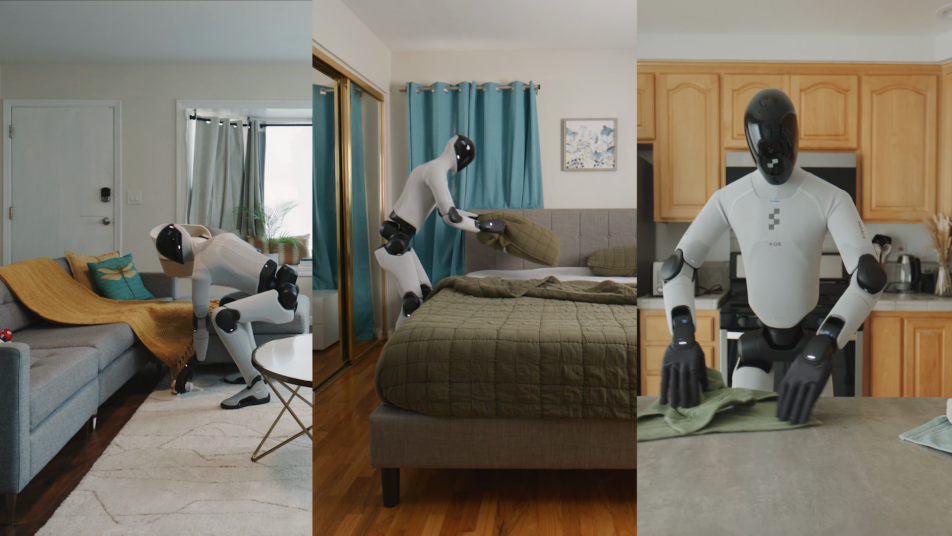

The Collaboration Between Embodied AI and Large Models May Define the True 'Humanoid Robot'
Image Source | Internet (Please contact for removal if infringing) Partially AI-generated
At the opening ceremony of the 26th Industrial Expo, Unitree's founder made a statement that silenced the room for a few seconds: 'The biggest mistake I’ve made over the past decade is not believing enough in AI.' Coming from someone who has led their robotics company to the top of global shipments, these words carried significant weight.
On the same day, IDC released data showing that global humanoid robot shipments would reach nearly 25,000 units in the first half of 2026, a staggering 432.1% year-over-year increase.
On one side, there’s digital euphoria; on the other, the industry’s leading figure openly admits a mistake. This contrast alone is worth examining closely.
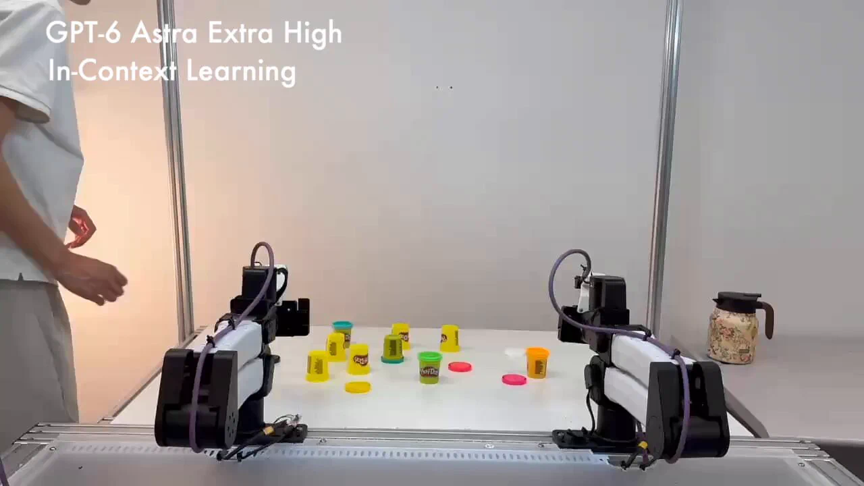
Wang Xingxing mentioned a specific test: after GPT-6 was released, the team deployed it across various robots for tasks, 'with excellent results.'
Based on these findings, he offered a more aggressive prediction than before: the critical point for embodied AI could arrive within one or two years, especially since GPT-7’s release next year 'might directly solve embodied AI challenges.'
From 'one to two years, or two to three years, at most three to five' at the 2025 World Robot Conference, to 'two to three years at best, five to ten at worst' in August this year, and now 'one to two years' at the Industrial Expo, Wang’s timeline keeps shrinking.
Each reduction reflects a leap in AI model capabilities.
When a robotics company openly reflects on its 'insufficient belief in AI,' it acknowledges that the key to success in this field is shifting from 'the body' to 'the brain.'

Shorter Iteration Cycles
For a long time, the robotics industry’s core competitiveness lay in hardware—how precise the joints were, how smooth the motion control, how long the battery lasted, and how low the costs were.
Unitree has excelled in this area. With over 5,500 units shipped in 2025 and a net profit margin of approximately 34.8%, their main products are semi-sized models like the G1, priced at tens of thousands of yuan, primarily serving research and education.
But impressive shipment numbers don’t mean robots are truly at work.
Wang also spoke candidly at the expo: 'Robots haven’t yet entered factories on a large scale,' a stark contrast to the bustling exhibition halls.
More critically, he assessed that most companies’ robot model development remains 'primitive,' with engineers relying heavily on manual processes for paper research, model writing, training, and testing.
This suggests that the so-called 'year of mass production' is more about shipment numbers than actual productivity gains.
Wang also revealed that Unitree is developing a 'physical AI self-evolving' system, where AI handles the entire lifecycle of code writing, model training, deployment, testing, and feedback—a self-sustaining loop.
In essence, this means letting AI build the robot’s 'brain,' an endeavor far more significant than creating any new hardware.
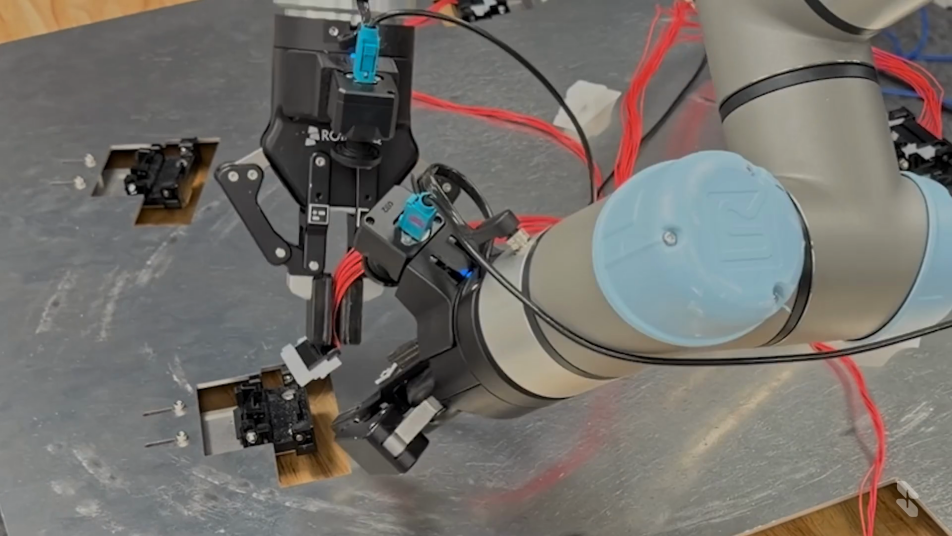

The 'Fusion' of Embodied AI and Large Models
While large models and robots seem like a perfect match, implementation faces numerous hurdles. Based on current industry practices and technical analysis, at least three conditions must align.
Condition 1: Models Must Overcome the 'Physical Common Sense' Barrier
Language models process digital codes within strictly defined vector spaces, where inputs and outputs are reversible and largely lossless.
However, every robotic input and output introduces deviations and losses. For example, during movement, assembly, or handling tasks, the overall trend may be correct, but fine-tuning in the final centimeters or millimeters often fails to correct tactile errors, causing success rates to plummet.
This is why GPT-6’s release excited the industry. It demonstrated not just improved language capabilities but a qualitative leap in understanding the physical world.
Stanford researchers connected GPT-6 to Unitree’s G1 robot for kitchen tasks without retraining on new environmental data—and it succeeded.
A robotics startup founder revealed that GPT-6 achieved a 95% success rate in robot control tasks, up from just 40% for its predecessor. This leap suggests large models are beginning to develop 'physical common sense.'
Condition 2: Architecture Must Shift from 'All-in-One' to 'Fast-Slow Separation'
This is the central technical debate in embodied AI. The mainstream approach was once end-to-end large models: feeding camera feeds and language instructions into a single model that directly outputs actions.
While elegant in theory, implementation struggles with timing. Understanding scenes and language is a 'slow' process requiring large parameter counts; controlling joints is 'fast,' needing dozens or even hundreds of calculations per second. Delays of even tens of milliseconds can cause failures.
Industry engineering analysis shows that end-to-end embodied models with billions of parameters require 50–100 milliseconds per inference on robotic onboard chips, supporting only 10+ control actions per second. Yet dexterous operations typically need 20–100 controls per second—a clear gap.
The most accepted solution now is a 'brain + cerebellum' division: the slow system interprets environments and instructions; the fast system translates goals into smooth joint movements.
This architectural shift acknowledges a fundamental truth: robots don’t need an 'all-knowing brain' but a coordinated 'nervous system.'
Condition 3: Data Loops Must Evolve from 'Manual Feeding' to 'Self-Evolution'
Wang’s 'physical AI self-evolving' system points in this direction. Powered by AI large models, it enables autonomous retrieval of academic papers and open-source solutions, automatic coding of robot controls, and a hybrid evaluation mechanism combining model autonomy with human review.
Once this loop is established, as foundational models iterate monthly or yearly, the self-evolving system’s capabilities will grow in tandem, creating a virtuous cycle.
This direction is critical because embodied AI faces severe data bottlenecks.
Research estimates that by early 2026, the global volume of compliant, usable real-world physical interaction data stood at just 500,000 hours, while the industry believes at least 10 million hours are needed—a gap of an order of magnitude.
Roughly calculated, collecting 1 million hours of real-world data could cost up to 1 billion yuan.
Manually teaching robots to fold clothes or open doors one task at a time is unsustainable.
The only solution is letting AI become its own data producer and model iterator. This is why Unitree’s collaboration with DeepSeek is so significant at this juncture.

The Unitree-DeepSeek Collaboration
In August, DeepSeek invested approximately 141 million yuan in Unitree Technology, acquiring a 2.31% stake. The two signed a strategic cooperation memorandum covering three areas: joint R&D for general AI, deep collaboration on high-performance general-purpose robots, and AI large model development.
Operationally, DeepSeek will prioritize Unitree’s robotic products and technologies for embodied AI exploration under equal conditions; Unitree will prioritize DeepSeek’s technical services for large model adaptation and integration.
This 'mutual priority' arrangement establishes a complete closed loop (closed loop) from models to hardware, algorithms to scenarios.
More noteworthy is DeepSeek’s continuous investment in embodied AI. Besides Unitree, it led funding for a months-old robotics AI startup focused on robot-large model interaction, whose founder contributed to a key computer vision architecture.
This signals DeepSeek’s transition from a 'language model company' to an 'AI infrastructure provider for the physical world.'
From language models to agents, and now to physically capable robots, the next AI competition won’t be about model parameters but who can truly bring intelligence into the physical realm.
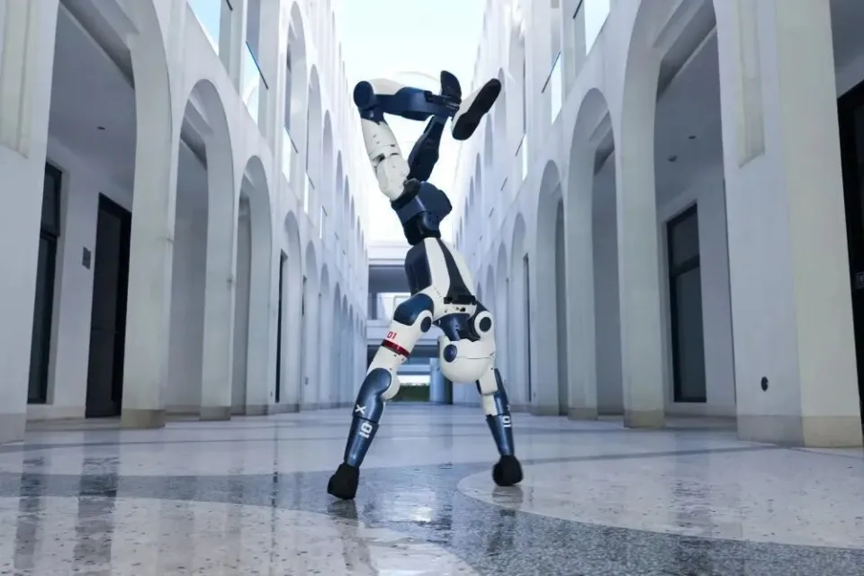
For years, the industry has held a view: those viral videos of robots dancing, punching, or somersaulting, while impressive, primarily showcased 'body and cerebellum' capabilities, not 'brain' capabilities.
A robot capable of backflips versus one that can clean your kitchen requires entirely different forms of intelligence.
True 'humanoid' status isn’t about human-like appearance but functional versatility.
The industry will only explode when general-purpose robots can complete ~80% of tasks in unfamiliar environments.
This 80% threshold tests not joint dexterity but the brain’s comprehensive ability (comprehensive capabilities) in environmental understanding, task decomposition, and real-time decision-making.
This raises a deeper question: combining large models with robots isn’t just adding a 'smarter brain' but creating a new form of intelligence.
Language models excel because they perform unsupervised learning on massive text, approximating linguistic patterns through next token prediction.
But the physical world offers no 'next tokens.' Every robotic action involves multidimensional coupling of force, speed, position, and touch, with each outcome altering the environment and influencing subsequent decisions.
When Wang says GPT-7 'might directly solve embodied AI,' he means that when foundational models’ reasoning is strong enough to grasp physical causality and seamlessly map language instructions to action sequences, robots won’t need task-specific training but will gain universal, generalizable capabilities.
This is the ultimate meaning of 'humanoid robots'—not machines that look human but physical entities with general intelligence.
Achieving this requires deep integration of large models and robots.

Returning to the Industrial Expo scene: a 400% shipment surge versus the sobering reality of 'no large-scale factory adoption.' This tension defines the 2026 humanoid robot industry.
Shipment numbers grow rapidly, but where do the robots go? Research, education, event demonstrations, verification purchases—mostly not in stable industrial use. Unitree’s H1 broke the human 1,500-meter world record in a 2026 humanoid robot half-marathon qualifier but lost control at 21km due to motor overheating.
'Can run fast' but not 'can run stable'—a critical flaw for industrial settings.
Wang’s 'admission' is less self-criticism than a strategic pivot signal.
When a company prioritizes AI model development above all else and lets AI participate in its own creation, it signals the industry’s shift from 'building bodies' to 'crafting souls.'
Unitree and DeepSeek’s partnership offers a compelling model: a robotics company with deep hardware and motion control expertise teams up with an AI firm strong in large models and reasoning, using capital ties and strategic synergy to bridge the 'last mile' from digital to physical intelligence.
Whether this path succeeds will become clear within a year or two.
But for now, the direction is correct.
Because in AI, the rarest commodity isn’t just compute power or data—it’s the right judgment.
-
![]()
September Sales Analysis: Top Five Independent Chinese Automakers Excel, with BYD Leading and All Expanding Overseas
-
AI with a Defined Trajectory is Energizing the Entire Industry Ecosystem
-
【Daily Science and Technology Innovation】ArcSoft: Why is Half of Its Revenue Invested in R&D? What is the Invisible Champion of Mobile Algorithm Betting On?
-
![]()
The Paris Motor Show is Set to Disrupt the European Luxury Car Market Again
-
![]()
When Plug-in Hybrid and Extended-Range Vehicles Flood the Fully Electric Era: Are You Prepared to Be the "Cannon Fodder"?
-
![]()
Unitree Admits Mistake, DeepSeek Steps In
-
![]()
ByteDance, The Super APP Factory
-
![]()
“The three-way cooperation among FAW, Toyota, and GAC was nearly called off!”