When Plug-in Hybrid and Extended-Range Vehicles Flood the Fully Electric Era: Are You Prepared to Be the "Cannon Fodder"?
 10/14 2026
 371
371
Lead
Introduction
This is the harsh reality of the automotive industry: when the market cycle shifts, only those present can compete for victory.
The pace of new car releases in September was frenetic. It seemed as though manufacturers were launching models without restraint.
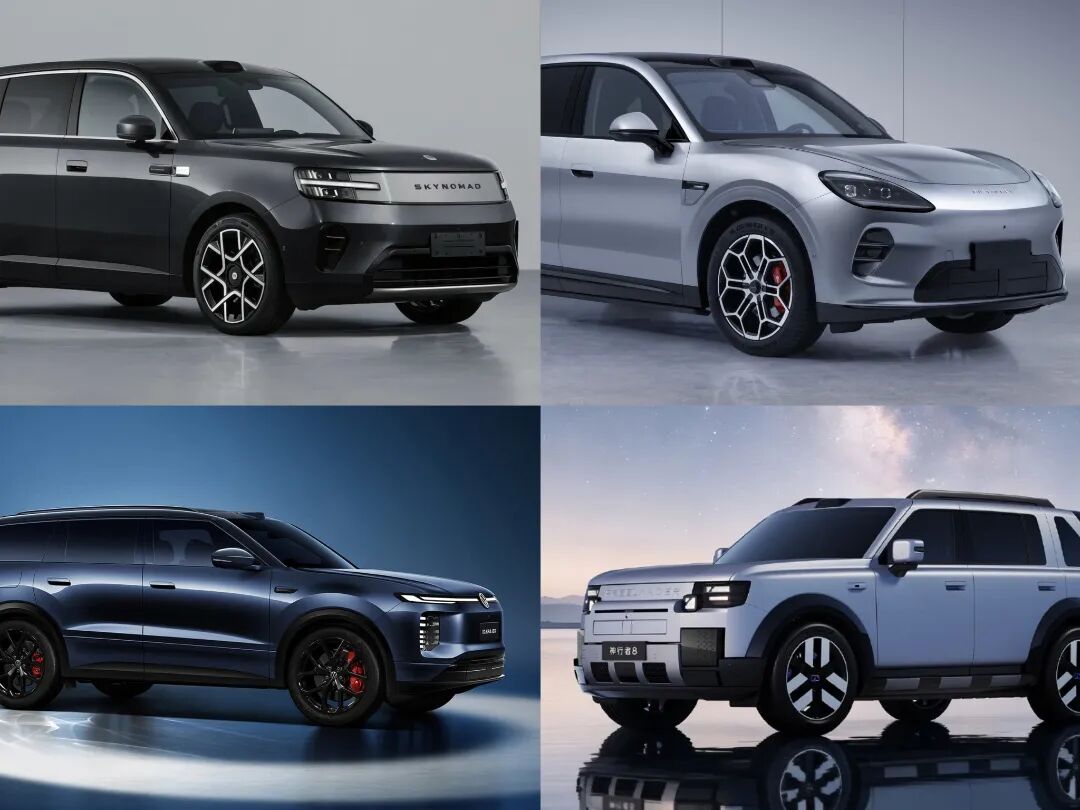
Focusing solely on extended-range vehicles, on September 7, Xiaomi unveiled two extended-range SUVs, the Pengcheng N70 and N90, simultaneously. On September 3, Jaguar Land Rover released the Discovery Sport 8. On September 4, the Qijing GX7 opened for pre-sale. On September 15, the Hongqi G919 started pre-sales, and on September 21, the Roewe Jia Yue 07 followed suit.
The plug-in hybrid segment was equally active. The GAC Trumpchi GS7 began pre-sales on September 2. On the same day, BYD launched the Sealion 08 PHEV. The Voyah Dreamer PHEV version opened for pre-sale on September 5. Later in the month, the Wey High Mountain PHEV Smart Edition made its debut, and the Cadillac XT5 PHEV also chose this month for its launch.
One after another, these vehicles took center stage, creating a vibrant atmosphere.
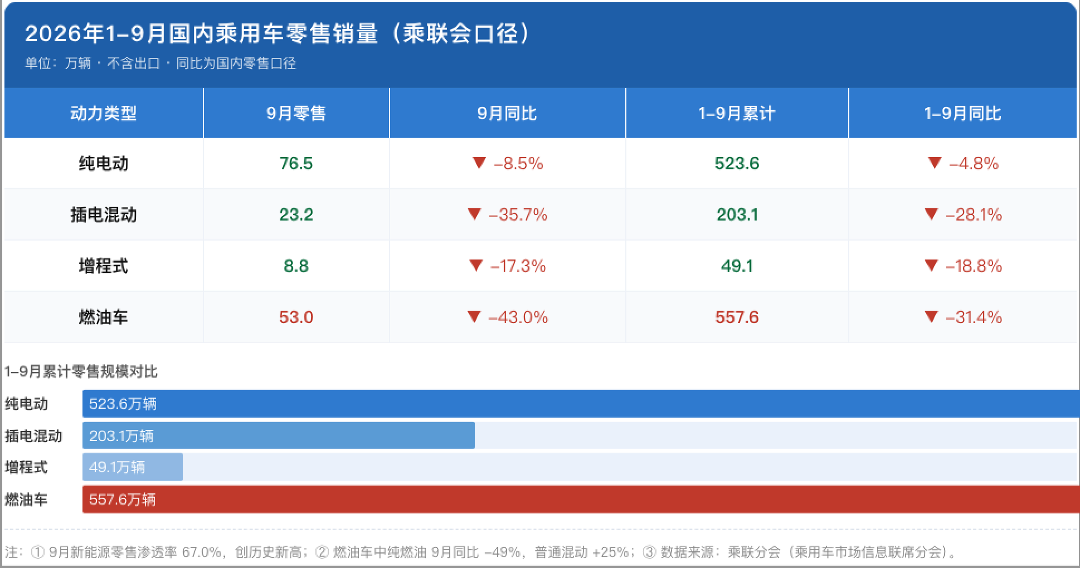
However, when examining the September retail data from the China Passenger Car Association (CPCA), a contrasting picture emerges. Fully electric vehicles sold 765,000 units in September, down 8.5% year-on-year—a relatively stable performance in this year's auto market. Plug-in hybrids fared worse, with 232,000 units sold, marking a 35.7% year-on-year decline. Extended-range vehicles also struggled, selling only 88,000 units, down 17.3% year-on-year.
On one hand, over a dozen new models are poised to enter the market. On the other, retail data for both segments are plummeting.
This visual impression of supply far exceeding demand seems unsettling in any industry. However, concluding that manufacturers are blindly following trends or collectively losing their minds based solely on these figures oversimplifies the situation.
01 Three Paths, Three Types of Decline
First, let's gain a comprehensive understanding to avoid frustration while reading.
According to the CPCA, in the first nine months of 2026, cumulative retail sales of fully electric vehicles reached approximately 5.236 million units, down 4.8% year-on-year. Plug-in hybrids sold about 2.031 million units, down 28.1% year-on-year, and extended-range vehicles sold around 491,000 units, down 18.8% year-on-year.
All three paths are experiencing declines, but in different ways.
Fully electric vehicles have seen the smallest decline. The reasons are straightforward—the widespread adoption of 800V fast charging, the elevation of range thresholds to over 600 kilometers, and the continuous expansion of charging networks mean that fully electric vehicles have long passed the stage of needing to convince buyers. A00-class small cars are declining, while high-end fully electric vehicles above the B-class are rising. The overall market is simply returning to normal after a period of explosive growth.
Plug-in hybrids have experienced an alarming decline. The plug-in hybrid boom in 2025 pushed the base numbers too high. This year, with the narrowing gap between fuel and electricity costs, the narrative of saving on fuel no longer holds sway. Coupled with the improved charging experience for fully electric vehicles, some users who were originally hesitant about plug-in hybrids have turned to fully electric vehicles instead.
What about extended-range vehicles? Last year, this segment was still highly sought after, with Li Auto dominating and new players flocking in. However, data from the first half of this year revealed weakness: only the Seres M7 averaged over 5,000 monthly retail sales among extended-range models, and only 14 extended-range models sold over 10,000 units cumulatively. Meanwhile, there were already over 80 extended-range models with actual sales records on the market. Over 80 models competing for a shrinking pie.
The situation for plug-in hybrids is even more exaggerated. Yiche's sales rankings show that in August, there were as many as 120 plug-in hybrid model series with retail records. This means that whether you're a leading manufacturer or a second-tier new player, without a strong offering, you're just running alongside the pack.
So why continue to invest? The pace of launches tells the story. According to Dongchedi statistics, over 600 new domestic models (including annual facelifts and configuration derivatives) were launched in the first half of 2026, averaging 100 per month or 3 per day. And that's just the first half.
Entering the golden September and October sales period, according to incomplete statistics from platforms like Autohome and Yiche, over 400 new energy models have been launched or opened for pre-sale in the first nine months, with plug-in hybrids and extended-range models accounting for a significant proportion. In September alone, mainstream media counted 12 entirely new extended-range and plug-in hybrid model series.
Cui Dongshu, Secretary-General of the CPCA, provided another figure: the cumulative number of new energy vehicle models in the tax exemption catalog from January to September reached 22,760, with 355 new models added in September alone. Behind this is a nearly frenetic pace of new product launches.
The red ocean is no longer just an adjective; it's a fact.
02 Most Will Be Cannon Fodder, But You Can't Afford Not to Participate
To put it bluntly: with so many new models flooding in, most are destined to be cannon fodder.
The Pareto principle in the auto industry has always been ruthless. Among 120 plug-in hybrid model series, only a handful sell over 10,000 units per month. Among over 80 extended-range models, no more than 20 can deliver consistently. The rest make a big splash at launch, sell a few hundred units per month after release, and quietly face a facelift or discontinuation six months later, barely making a ripple.
Looking back, research and development funds have been poured in, supply chains have lined up to support, and dealers are stuck with inventory—this is classic internal competition and typical resource waste.
But the question is, can you afford not to participate?
Consider the data for fuel-powered vehicles. In September, retail sales of fuel-powered vehicles declined 43% year-on-year, with pure fuel-powered vehicles plummeting 49%.
By brand, Chinese brand fuel-powered vehicles fell 47%, mainstream joint ventures dropped 42%, and luxury brands declined 41%. From Chinese brands to joint ventures to luxury brands, no one was spared; all saw declines. High fuel prices were a direct driver, but the fundamental reason is clear: the user base for fuel-powered vehicles is evaporating at a visible pace.
Meanwhile, in September, the retail penetration rate of new energy passenger vehicles reached 67%, a historic high. This means that for every 10 cars sold, nearly 7 are new energy vehicles. The remaining 3 fuel-powered vehicles must fight over a shrinking pie. For any automaker relying on fuel-powered vehicles as its core, this isn't a choice; it's a matter of survival.
Volkswagen is the most typical example.
SAIC Volkswagen has been very active this year. The ID.ERA 9X, launched a few months ago, targets the hottest large six-seater SUV market. Its initial order performance has been decent, though its long-term viability remains to be seen. At least it proves that Volkswagen can compete in the extended-range segment.
Next came the ID.ERA 5S, targeting the A-class family sedan segment—not a random choice, as the Lavida once sold 400,000 to 500,000 units annually, and existing users need an upgrade option.
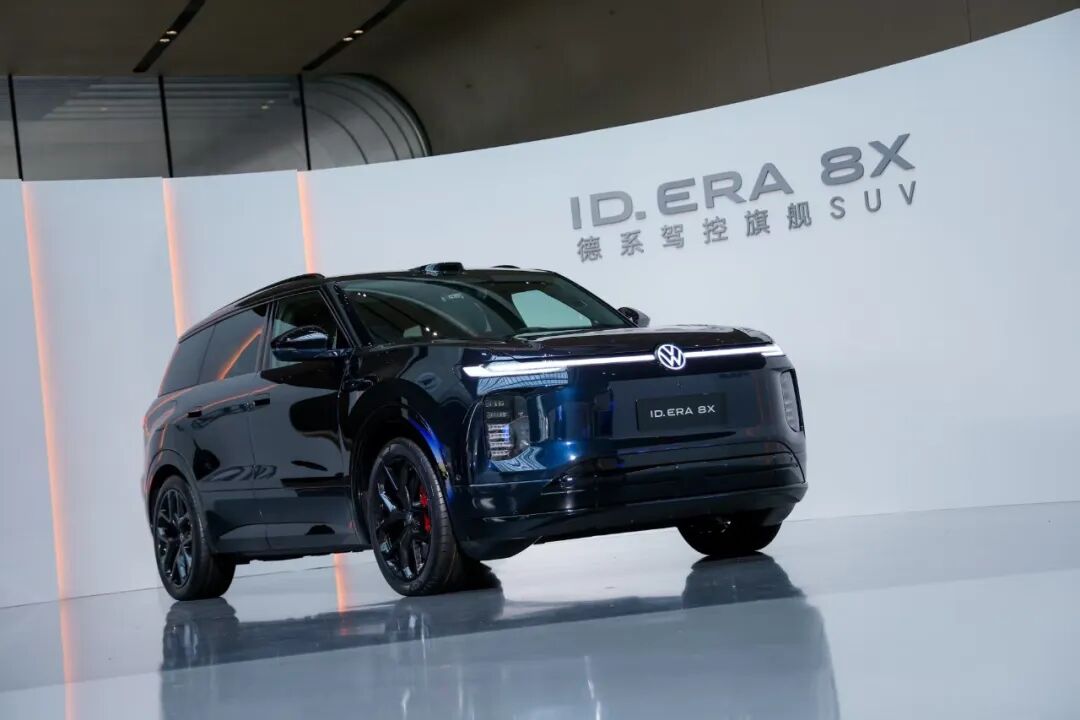
Then, on October 12, the ID.ERA 8X was launched, with a limited-time price starting at 206,800 yuan. This large five-seater extended-range SUV measures 5020mm in length with a 2970mm wheelbase, features an EA211 1.5T range extender, and Momenta R7 advanced intelligent driving. Priced and sized to compete directly with volume models like the Li Auto L6 and Seres New M5.
But there's another layer—the reputation and user base built by the Teramont in the mid-to-large SUV market also need a new energy successor.
To summarize: the 9X handles the large six-seater segment, the 5S targets the A-class family sedan, and the 8X takes on the large five-seater market. Volkswagen isn't just launching a single model; it's redrawing its product map.
Several more practical reasons lie behind this.
First, channels can't sit empty. With hundreds of 4S stores nationwide, showrooms can't just display fuel-powered vehicles; otherwise, customers will leave immediately, and the channel network will quickly shrink.
Second, supply chain and R&D investments need to be amortized. Electric vehicle platforms, batteries, and intelligent driving systems are all capital-intensive; launching fewer models means higher per-unit costs.
Third, customers are waiting for you to act. Brands like Volkswagen and Toyota have large user bases wanting to switch to new energy but hesitant about new players. If you don't launch models, they'll buy from BYD and Li Auto instead.
Internal competition is indeed inefficient. Most new models will become denominators. But without participating, you don't even qualify to be a denominator.
This is the harsh reality of the industry: when the market cycle shifts, you must be present to even compete for victory. Surviving across cycles may sound like motivational talk, but in today's Chinese auto market, it's the plain truth.
Editor-in-Chief: Du Yuxin Editor: He Zengrong

THE END
-
![]()
September Sales Analysis: Top Five Independent Chinese Automakers Excel, with BYD Leading and All Expanding Overseas
-
AI with a Defined Trajectory is Energizing the Entire Industry Ecosystem
-
【Daily Science and Technology Innovation】ArcSoft: Why is Half of Its Revenue Invested in R&D? What is the Invisible Champion of Mobile Algorithm Betting On?
-
![]()
The Paris Motor Show is Set to Disrupt the European Luxury Car Market Again
-
![]()
When Plug-in Hybrid and Extended-Range Vehicles Flood the Fully Electric Era: Are You Prepared to Be the "Cannon Fodder"?
-
![]()
Unitree Admits Mistake, DeepSeek Steps In
-
![]()
ByteDance, The Super APP Factory
-
![]()
“The three-way cooperation among FAW, Toyota, and GAC was nearly called off!”