“The three-way cooperation among FAW, Toyota, and GAC was nearly called off!”
 10/14 2026
 568
568
Introduction
Introduction
This is not just a handshake between two joint ventures but also a pathbreaking move towards achieving balance through cooperation for the entire joint venture sector.
The Book of Changes states, 'When stuck, change; change leads to progress; progress ensures endurance.'
But what is the purpose of change? It is not change for its own sake but to find a new equilibrium.
The biggest news in China's automotive industry in 2026 revolves around 'achieving balance through cooperation.' While most people see only the superficial 'cooperation,' what matters more is the underlying 'balance.'
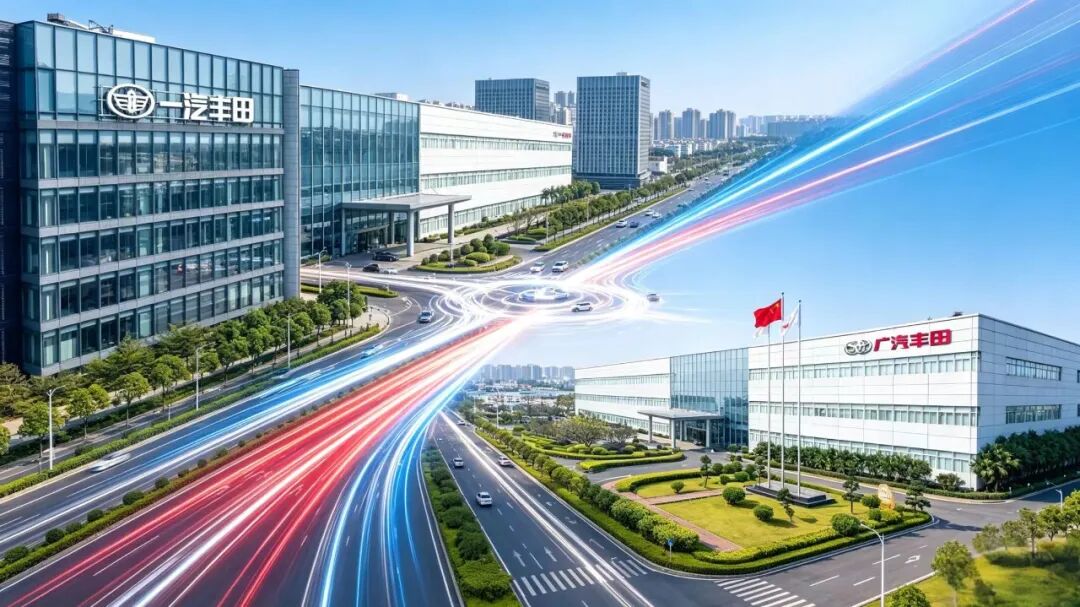
On October 8, China FAW Group, Toyota Motor, and GAC Group signed a strategic cooperation framework agreement in Guangzhou. GAC intends to acquire a 50% stake in FAW Toyota held by FAW through share issuance. FAW Toyota will continue to operate independently, and FAW will become a significant strategic shareholder of GAC Group.
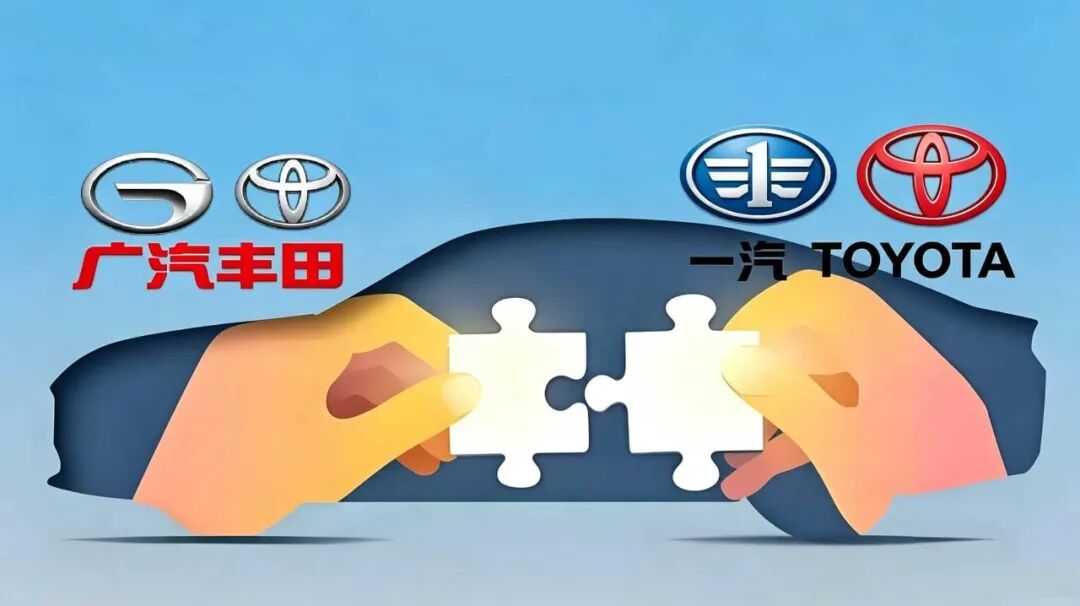
The restructuring of FAW and GAC, with Toyota facilitating the integration of Uni-Toyota, essentially represents the search for a way forward by automotive groups, joint ventures, and overseas giants.
No one denies that China's rise has been propelled primarily by its manufacturing sector, with the automotive industry being its crown jewel. China's auto industry has thrived on two pillars: domestic brands and joint ventures.
Domestic brands have surged ahead, capturing 64.6% of the market share by 2025, while joint ventures have declined to 35.4%, a historic low. In March of this year, the joint venture share shrank further to 20.2%. Given the trend, it is only a matter of time before domestic brands penetrate 70% or more of the market.
However, the core mission of China's automotive industry is not to measure the gap between domestic and joint venture brands but to leapfrog in electrification and intelligence, leading globally, and then return to traditional norms rationally: quality, standardization, balance, and sustainability.
A healthy industrial ecosystem cannot thrive on one leg alone. Without a halt to price wars, without adherence to quality standards, and without buffers for globalization, consumers and the entire supply chain will ultimately suffer. Joint ventures are not burdens but balancing forces. The challenge is that joint ventures must find new paths forward.
Who will lead the way for joint ventures? FAW has taken the first step, GAC has accelerated the pace, and Toyota has extended a hand.
'I arrived in China the day before yesterday, marking my first visit as president,' said Toyota President Konishi Kenta, who rated the plan he participated in during his first visit to China as the 'optimal solution under current conditions.'
Uni-Toyota shifts from competition to collaboration under the new framework, 'China ONE TOYOTA.' It is not about one entity swallowing another but about directing resources to where they are most efficient. This move sets a referential precedent for joint venture automakers in China.
01 'Nearly Called Off' VS 'Must Integrate'
No one expected that the biggest industry news of 2026 would nearly falter.
'During the process, there were times when it seemed impossible to proceed, and we even thought it might be called off,' Konishi Kenta admitted candidly at a media exchange. 'But we did not give up. We resolved to try once more, to put in our best effort and see.'
Negotiations spanning over two years involved three parties, each burdened with vast asset systems, personnel structures, and local interests. FAW is a central state-owned enterprise, while GAC is a local state-owned enterprise, previously competitors in the market.
Toyota China's Chief, Ueda Tatsuro, added that FAW and GAC faced far greater difficulties and exerted much more effort than Toyota. Both companies possess their strengths and strong pride, making reaching a cooperation agreement truly challenging.
This 'perseverance' reflects the 'resilience' inherent in Eastern philosophy. It is not passive endurance but steadfastness after recognizing the direction. On the negotiating table, it means understanding each other's difficulties and finding common ground rather than engaging in a zero-sum game.
So, why was integration necessary?
In 2025, FAW Toyota sold approximately 805,500 vehicles, while GAC Toyota sold about 772,700, totaling around 1.578 million for both. Including Lexus's sales of over 180,000 in China, Toyota's overall scale in China reached nearly 1.78 million, making it the only Japanese brand with positive growth that year.
According to the China Association of Automobile Manufacturers (CAAM), Uni-Toyota accounted for 17.03% of joint venture passenger vehicle sales. This volume places them third on China's automotive sales chart, surpassing FAW-Volkswagen and trailing only BYD and Geely.
However, scale does not equate to efficiency. FAW Toyota's 800,000 and GAC Toyota's 770,000 are significant individually but pale in comparison to BYD's 3.485 million and Geely's 2.606 million. They remain mid-sized players.
Procurement bargaining power is fragmented, R&D costs are split across two systems, and channel resources cannibalize each other within the same brand. The Corolla vs. Levin, RAV4 vs. Wildlander, Sienna vs. Granvia—same platforms, same powertrains, same user base—yet they compete on price at the dealership level. This is not market competition but redundant construction.
In the first half of 2026, FAW Toyota sold 273,700 vehicles, down 27.4% year-on-year; GAC Toyota sold 341,100, down 6.3%. In an era of inventory competition, two R&D systems, two supply chains, and two channels no longer mean coverage but internal friction.
Why did FAW and GAC come together? The answer lies in complementarity.
FAW, a central state-owned enterprise, boasts the heritage of the Hongqi brand and a complete R&D and manufacturing system but lacks market-driven iteration and is slow in electrification. In 2025, FAW Group's new energy vehicle output was about 446,000, accounting for only 13.5%, with joint venture brands contributing just 61,000, while domestic new energy penetration exceeded 60%.
GAC, a Guangdong provincial state-owned enterprise, operates in the most densely concentrated new energy industry region in South China, with strengths in three electric systems, electrification, and C-end understanding. However, it struggles with brand upward mobility, reporting a net profit loss of RMB 4.467 billion in the first half of 2026.
FAW has the brand and the system; GAC has the technology and the market. Bestune needs technological infusion; Aion needs brand empowerment. Resource alignment eliminates the need to start from scratch.
The transaction design is also noteworthy. FAW exchanges a 50% stake in FAW Toyota for shares in GAC's listed company, becoming a strategic shareholder of GAC; GAC acquires the 50% stake in FAW Toyota to further integrate Toyota's business system.
FAW Toyota's net profit in 2025 was approximately RMB 4.234 billion, with a 50% stake corresponding to over RMB 2.1 billion in annual profit share, providing a solid foundation for the loss-making GAC. For FAW, relinquishing equity in the joint venture allows it to focus resources on Hongqi and Bestune, with focus being more critical than joint venture scale.
For Toyota, in the proposed unified sales company, Toyota will hold 50%, with FAW and GAC each holding 25%, transforming Toyota from a minority shareholder in two systems into a channel leader.
This aligns with a overarching principle: Mergers and acquisitions are not about expanding assets but enhancing efficiency, avoiding redundant construction, eliminating internal friction, improving operational efficiency, and increasing profitability. Scale is merely the result; efficiency is the goal.
02 The Essence of Eastern Philosophy
The integration of Uni-Toyota reaching the signing stage hinges critically on Toyota's management philosophy.
If the global automotive industry's power balance is shifting toward the East, Toyota exemplifies the return of Eastern culture and philosophy to the center stage of industry.
Toyota's management is deeply rooted in the Eastern philosophy of Confucianism, Buddhism, and Daoism. It does not pursue the 'exhaustive use of resources' for maximum efficiency but emphasizes 'using resources before they are exhausted,' adopting a soft, steady approach. This philosophy provides at least three layers of wisdom for the Uni-Toyota integration.
The first layer of wisdom is the 'on-site realism' of 'Genchi Genbutsu.'
In Toyota's philosophy, 'the site' holds the answers to all problems. When lost, one should not remain confined to office PPTs but go to the production line, the market terminal, and the users to discover real needs and solve fundamental problems.
Toyoda Akio designated 'Ba' (field) as the keyword for 2026, endow (fùyǔ, endow ) it four connotations: the 'field' rooted in value origins, the 'field' nurturing organizational vitality, the 'field' expanding industrial boundaries, and the 'field' bridging industrial divides.
The underlying logic of Uni-Toyota's integration is precisely this 'field' thinking—shifting from competition to collaboration, from dispersion to unity, and letting the real needs of the Chinese market drive product definition rather than speculative reasoning in a Japanese headquarters conference room across the sea.
Konishi Kenta's remarks at the media exchange are an extension of 'on-site realism.' He noted that China sees over 600 new car launches annually, with fierce competition and diverse players—a structure rare globally.
He acknowledged Toyota's experiences and failures in China, expressing a willingness to contribute these to the Chinese automotive industry. The underlying logic is that since the Chinese market is the most complex 'field,' it must be addressed in the most on-site manner.
The ONE R&D system transfers core decision-making power from Japan's headquarters to China, while the RCE system entrusts product definition to local engineers who better understand Chinese users. This is not passive 'localization' but proactive 'Genchi Genbutsu.'
The second layer of wisdom is the 'long-termism' of 'building things means building people.'
Toyota never views itself as a machine chasing short-term profits but as a field for cultivating and empowering people. Toyoda Akio said, 'I hope to hand over the field of challenge and practice to the next generation,' while Sato Tsunehiko emphasized that without 'profitability,' there can be no future challenges.
This mindset is evident in the Uni-Toyota integration. Ueda Tatsuro explicitly stated at the exchange that the cooperation agreement emphasizes leveraging local Chinese talent, reducing expatriate personnel, and empowering locally trained talent in planning and operations.
One of the biggest issues for joint ventures has been long decision chains, numerous expatriates, and local teams having execution but no definition rights. Now, Toyota aims to reverse this sequence, grounding the 'building things means building people' philosophy in the joint venture system.
Chinese philosophy, centered on Confucianism, Buddhism, and Daoism, emphasizes frugality, diligence, and eliminating waste. The core of the Toyota Production System (TPS) is precisely eliminating non-value-adding activities.
The parallel existence of two R&D systems, two supply chains, and two channels for Uni-Toyota represents the greatest 'waste.' The philosophical basis for integration lies not in scale worship but in lean thinking—directing resources to where they are most efficient and eliminating redundant construction.
The third layer of wisdom is the 'harmony in diversity' Collaborative view (xiétóng guān, Collaborative view ).
Konishi Kenta shared a story at the exchange: When Toyota closed its Australian factory, Toyoda Akio said decisions must visualize the affected people and consider their pain. He later personally announced the closure at the Australian factory.
A few months ago, when Akio revisited Australia, Konishi realized that one must not only think of those people during decision-making but also keep them in mind afterward. This 'benevolence' contrasts sharply with the cold ROI calculations of Western management.
Interestingly, Konishi himself is a finance graduate, yet he argues that 'numbers alone are meaningless; one must trace them to the people and processes behind them.' He advocates frequent site visits to encourage improvements, help employees solve problems, and foster a comfortable, high-performing work environment.
For a finance-trained individual to express such views indicates that Toyota's philosophy is not a personal preference but an organizational gene. This gene is now being infused into the new joint venture structure through the Uni-Toyota integration.
03 Joint Venture Automakers: Balancers, Not Burdens
Declining market share does not equate to the demise of joint venture automakers.
Li Yunfei, General Manager of Brand and Public Relations at BYD, candidly pointed out at a Tongji alumni event that the automotive industry is highly globalized, making it impossible for domestic automakers to eliminate joint ventures entirely. Thus, the market share of joint venture brands in China will stabilize at a certain level.
Joint venture automakers have never been mere 'vehicle sellers' in China's automotive industry. They are cultivators of the supply chain, maintainers of industry norms, and co-builders of technical standards.
Volkswagen jointly established Coretech with Horizon Robotics; Toyota, Honda, and Nissan collectively chose Momenta as their intelligent driving solution provider; Audi adopted Huawei's Qian Kun (Qiánkuī) system; BMW integrated DeepSeek's large model; Volkswagen collaborated with CATL to develop 6C ultra-fast charging batteries.
These collaborations not only enhance the competitiveness of joint venture products but also enable Chinese suppliers' technical standards to permeate the global supply chain. Just as Tesla propelled CATL's rise, Volkswagen, Toyota, Honda, General Motors, Nissan, and Ford will drive the growth of numerous Chinese supply chain enterprises and serve as new catalysts for their internationalization.
Joint ventures are also transforming in terms of pricing.
The bZ3X, priced from RMB 109,800, shatters the 'high-premium' label of joint venture brands; Dongfeng Nissan's N7, priced from RMB 119,900, invades the heartland of domestic brands, securing over 10,000 orders on its launch day. The era of joint venture and domestic vehicles competing at the same price point has arrived.
Joint ventures remain steadfast in safety standards.
Some joint ventures require 7,400 tests for intelligent driving assistance systems before mass production; Nissan's N7 battery passes the four-needle puncture no-thermal-runaway test, far exceeding national standards. As the industry be caught in (xiànrù, be caught in ) 'feature arms races,' exaggerates 'assisted driving' as 'autonomous driving,' and relaxes safety pursuits under the 'automobile = smartphone' mindset, joint venture automakers' adherence to pricing systems, quality standards, and safety norms becomes a differentiated advantage amid the intelligent driving wave.
A healthy automotive market has never been a solo act by a single force. As domestic brands surge ahead, a counterbalance is needed. The ultimate form of joint venture automakers is no longer a vague vision—they are no longer mere 'contract manufacturers' for others but an integral part of China's automotive industry and 'balancers' for its standardized development.
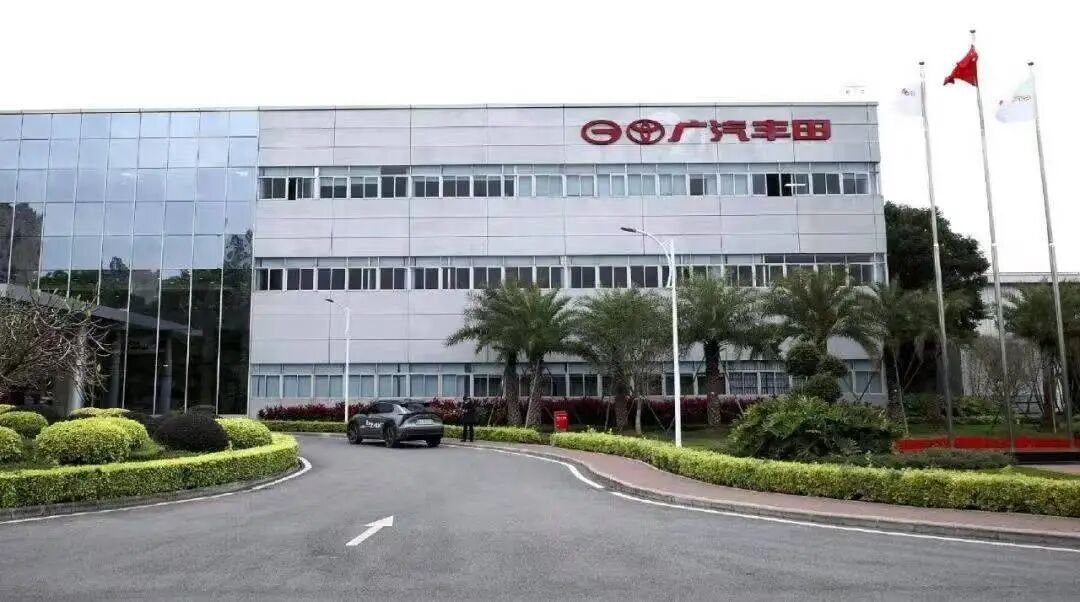
If China's ONE TOYOTA model succeeds, its significance will extend beyond Toyota. It will pave the way for joint venture transformation and provide a reference for the integration of domestic auto groups and the strategic layout (layout) of multinational automakers in China.
China's auto industry needs to successfully expand overseas. The export of complete vehicles represents the foundational stage, with industrial chains and technology marking the intermediate phase. Brand, culture, and industrial philosophy constitute the advanced stage. Once these three dimensions achieve global synergy, it will mark a milestone in China's auto industry achieving high-level global output.
04 Will Honda and Volkswagen Follow Toyota's Lead?
With Toyota making a move, pressure naturally shifts to Honda and Nissan, then to German and U.S. automakers.
Honda and Nissan have discussed a global merger. In December 2024, they signed a basic letter of intent for operational integration, planning to reach a final agreement by June 2025, with Mitsubishi also considering joining.
If successful, the new entity would become the world's third-largest automotive group, trailing only Toyota and Volkswagen. However, on February 13, 2025, the two companies officially announced the termination of merger negotiations, citing irreconcilable differences over integration methods and control: Honda proposed acquiring Nissan as a subsidiary, while Nissan sought an equal merger. The largest integration attempt in Japan's auto industry collapsed.
Yet the door isn't entirely closed. In August 2026, Honda and Nissan formally launched cooperation, signing a joint development agreement for next-generation software-defined vehicles, standardizing core components such as multiple electronic control units, in-vehicle operating systems, and middleware. From merger talks to partnership, the form of cooperation has evolved, but the integration logic remains unchanged.
Honda faces more urgent challenges in China than Toyota.
By 2025, Honda's cumulative terminal vehicle sales in China reached 645,300 units, while Dongfeng Nissan sold 601,000 units, both falling out of the top 10 automakers by sales. Combined, their sales total approximately 1.246 million units, roughly ranking seventh overall.
While this volume pales in comparison to BYD and Geely, it would at least provide Honda and Nissan with a scalable foundation to engage with leading players in the Chinese market.
More critically, Honda and Nissan's joint venture systems in China heavily overlap.
Dongfeng Honda and Dongfeng Nissan both fall under Dongfeng Motor Group. Models like the CR-V and X-Trail, Accord and Teana, Civic and Sylphy have been rivals for the past two decades. If Honda and Nissan merge globally, Dongfeng would simultaneously hold joint venture brands under the same global group, making integration even more logical than Toyota's case.
In fact, integration efforts are already underway. On December 31, 2025, Dongfeng Honda Engine Co., Ltd. completed its industrial and commercial registration changes, renaming itself GAC Honda Engine Co., Ltd., with GAC Honda achieving 100% ownership. This acquisition marked the end of Honda's "one project, two companies" engine business structure in China.
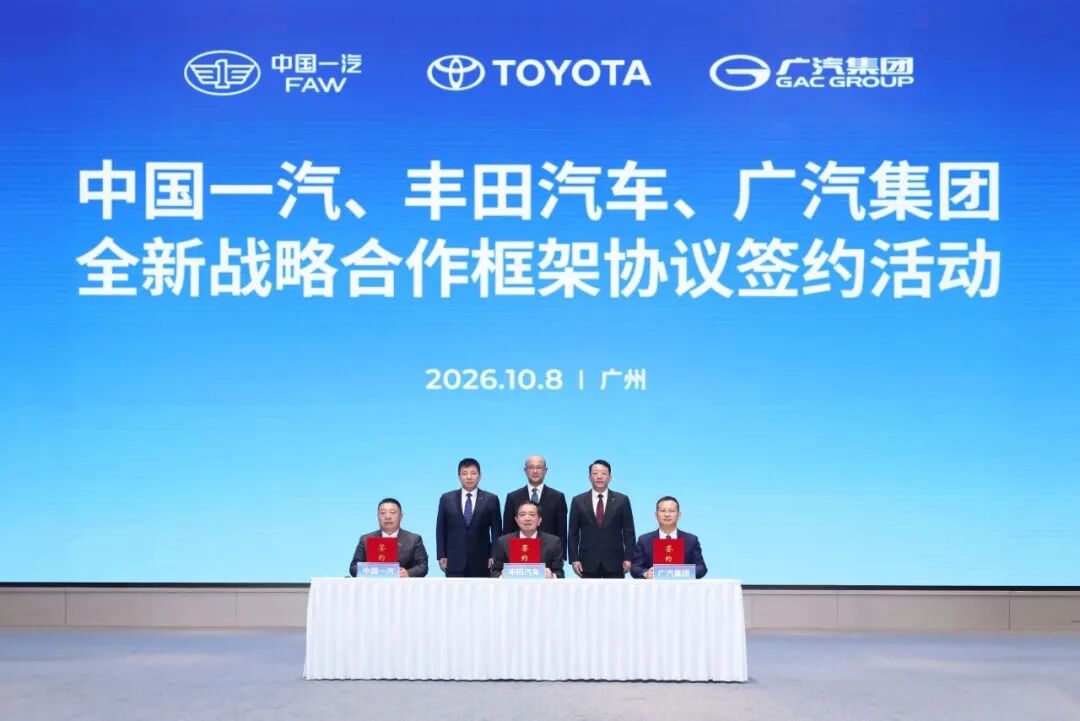
However, the challenges of a Honda-Nissan merger in Japan are evident. The integration of FAW Toyota and GAC Toyota had a natural prerequisite: only one layer of relationships needed restructuring, and Toyota's headquarters maintained a unified strategic vision for the Chinese market.
Honda and Nissan must Refactoring (restructure) relationships at both Chinese and foreign levels, involving twice as many stakeholders as the Toyota case. With GAC now integrated with FAW, GAC Honda lacks the parental support that GAC Toyota enjoyed when partnering with FAW Toyota. This isn't a technical issue but a governance challenge.
Will German automakers follow suit?
Volkswagen remains one of the few foreign automakers in China capable of sustaining two large joint ventures—FAW-Volkswagen and SAIC Volkswagen—along with Volkswagen Anhui as a third pillar. In 2026, Volkswagen will launch 13 new energy vehicle models in China, distributed across its three joint ventures. Volkswagen's strategy focuses on "expanding incremental growth" rather than "consolidating existing assets."
However, both FAW-Volkswagen and SAIC Volkswagen saw sales declines in 2025—FAW-Volkswagen down 4.8% year-on-year, SAIC Volkswagen down 11.4%. The appeal of integration grows as sales pressures mount.
Yet achieving synergy between FAW and SAIC will be far more challenging than for FAW and GAC. After the merger of FAW Toyota and GAC Toyota surpassed Volkswagen's sales, Wolfsburg could only watch helplessly, unable to immediately unite Changchun and Shanghai.
General Motors, Mercedes-Benz, and BMW will likely prioritize localization in R&D, supply chains, and intelligence before making equity-level moves. But the direction is clear: joint ventures have moved beyond simple product importation, entering a deep transformation phase of systemic restructuring.
It's conceivable that future joint venture integration will unfold in three steps: first, business synergies through centralized procurement, shared R&D, and complementary channels; second, cross-shareholdings to align interests via capital ties; and third, unified sales or capital platforms to eliminate internal competition. Whoever achieves this first will gain an edge in surviving market contraction.
05 Returning to Normalcy After the Euphoria
From Automobile Commune's perspective, China's auto industry overtaking rivals in recent years resembles adolescence—wild, rebellious, yet immature.
One cannot remain a carefree, rebellious youth forever; China's auto industry cannot rely on a single pillar—rejecting joint ventures in favor of domestic brands or prioritizing technology over safety.
Domestic brands' leadership in electrification and intelligence is commendable. But after the sprint, rationality must return to traditional tracks: quality, standardization, balance, and sustainability. The adherence of joint ventures to pricing systems, quality standards, and safety norms serves as the ballast on this path.
The merger of FAW Toyota and GAC Toyota sets a new course for joint ventures. It proves that in a shrinking market, consolidation—not just contraction—can create win-win outcomes. The restructuring of FAW and GAC, with Toyota's involvement, not only strengthens corporate resilience but also explores a new equilibrium for China's auto industry.
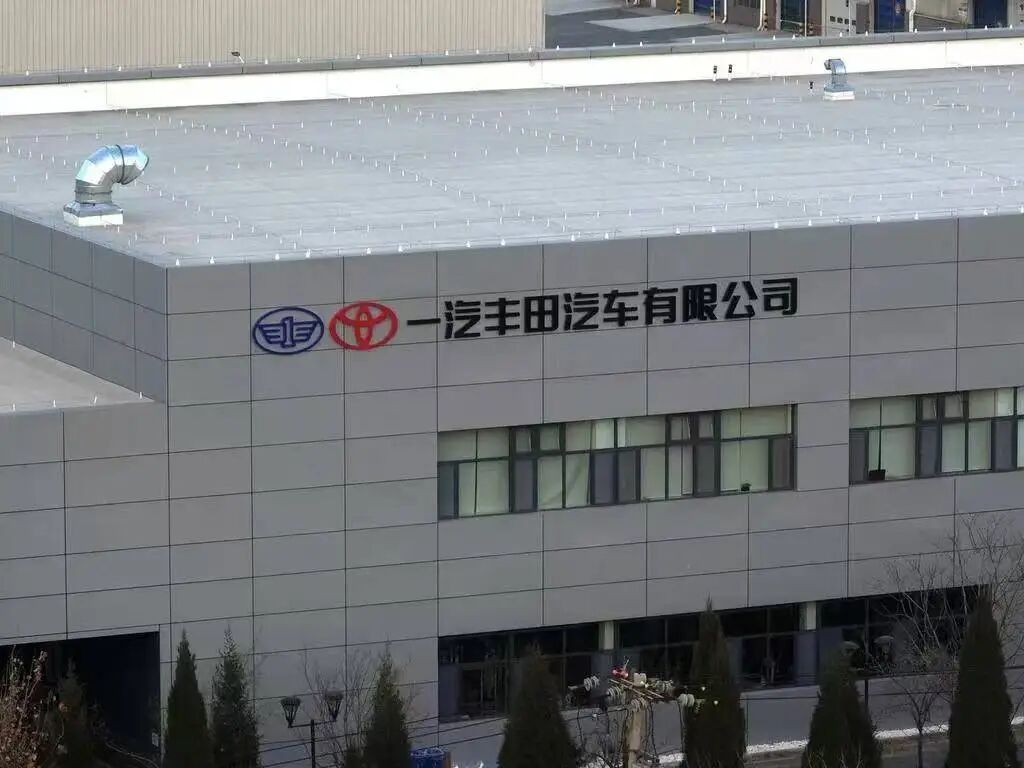
In his signing speech, Kenta Konishi recalled how Sakichi Toyota persuaded skeptics over a century ago by urging them to "open the window and see how vast the world outside is." While participating in a Toyota board meeting via video link from his Guangzhou hotel—the first time the board met outside company premises—he could see the Canton Tower through the window.
As the global balance shifts between East and West, this joint venture transformation originating in Guangzhou marks the return of Eastern culture and philosophy to the center of the industrial stage. For China's auto industry, that crucial window has been flung open.
Not all transformations require thunderous force. Sometimes, the answer lies in the unified Toyota emblem of FAW Toyota and GAC Toyota—still hanging above both factories' gates, but now with blueprints, production rhythms, and channel orders converging into a single stream. The water remains the same, but the riverbed has changed.
The *Book of Songs* states, "Though Zhou was an ancient state, its mandate was to renew." The same applies to joint ventures. Renewal lies not in tearing down and rebuilding but in returning resources to their rightful places. The window Sakichi Toyota opened over a century ago still lets in light today.
The light remains unchanged, but the path it illuminates has shifted direction.
Editor-in-Chief: Du Yuxin Editor: He Zengrong

THE END
-
![]()
September Sales Analysis: Top Five Independent Chinese Automakers Excel, with BYD Leading and All Expanding Overseas
-
AI with a Defined Trajectory is Energizing the Entire Industry Ecosystem
-
【Daily Science and Technology Innovation】ArcSoft: Why is Half of Its Revenue Invested in R&D? What is the Invisible Champion of Mobile Algorithm Betting On?
-
![]()
The Paris Motor Show is Set to Disrupt the European Luxury Car Market Again
-
![]()
When Plug-in Hybrid and Extended-Range Vehicles Flood the Fully Electric Era: Are You Prepared to Be the "Cannon Fodder"?
-
![]()
Unitree Admits Mistake, DeepSeek Steps In
-
![]()
ByteDance, The Super APP Factory
-
![]()
“The three-way cooperation among FAW, Toyota, and GAC was nearly called off!”