The Paris Motor Show is Set to Disrupt the European Luxury Car Market Again
 10/14 2026
 551
551
The more Chinese companies expand abroad, the lower foreign prices will be driven.
One particularly amusing observation is that the newly opened 2026 Paris Motor Show, while seemingly the top event in Europe, is essentially on par with the Chengdu Motor Show.
The strategy of scaling up and then redistributing has been proven once again at the latest 2026 Paris Motor Show, reaffirming a long-standing principle.
This year's Paris Motor Show is complicated by factors such as soaring oil prices, a slowing and increasingly volatile global economy, and global NEV sales surpassing those of fuel-powered vehicles for the first time.
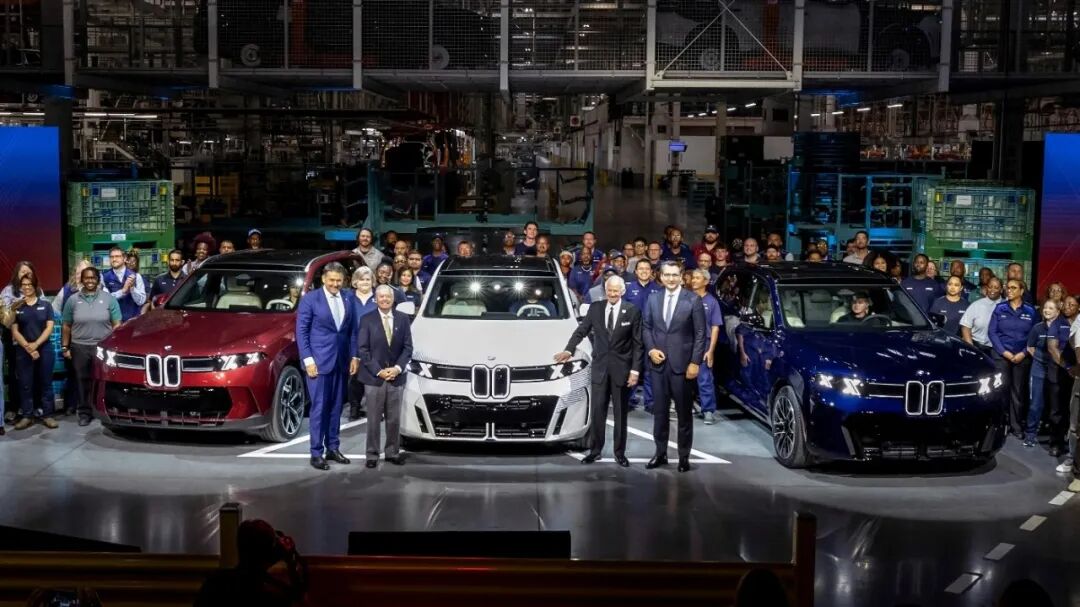
Too many issues have been overlooked. How significant is the cognitive divide? On one hand, the show's organizers are insisting that skipping the Paris Motor Show means being unable to sell cars in Europe. On the other hand, due to information gaps, BMW and MINI, initially confirmed to participate in January, canceled their attendance under cost-cutting pressure. Japanese brands like Nissan, Mazda, Mitsubishi, and Lexus also skipped the event, with only Toyota making a brief appearance without a formal booth. The same goes for ultra-luxury brands—Porsche, Ferrari, Lamborghini, Maserati, Jaguar Land Rover, Bentley, McLaren, and Aston Martin all stayed away.
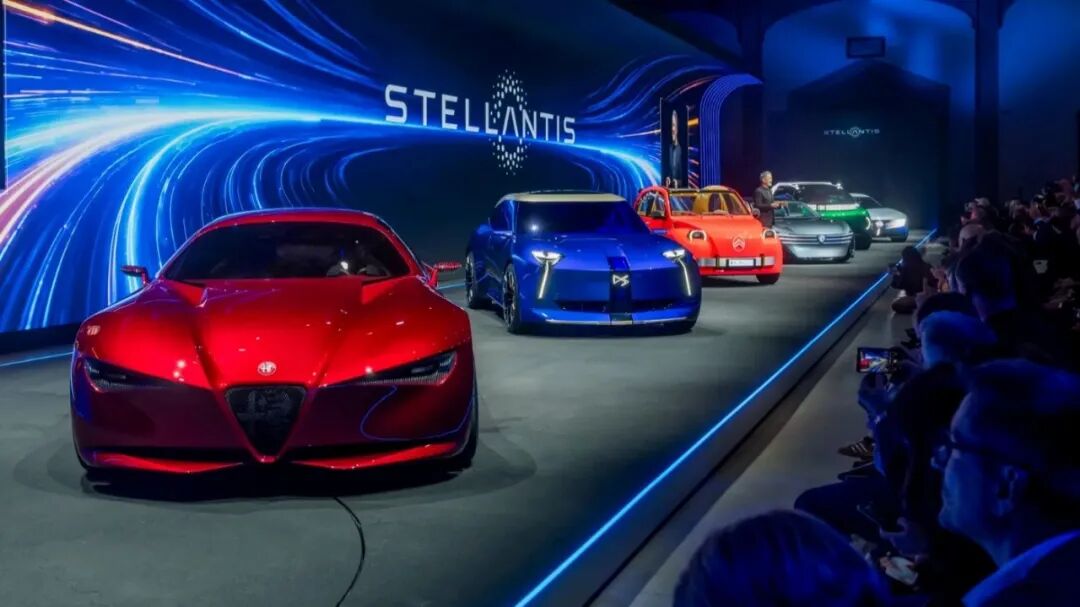
The logic of the business world mirrors that of nature: when one player exits, another must fill the void. With Chinese automakers eager to expand globally, the main narrative of this Paris Motor Show became the debut of over 20 Chinese brands, signaling a potential restructuring of the European auto market.
This Motor Show is Set to Disrupt the European Luxury Car Market
The restructuring means following the development patterns of the Chinese auto market.
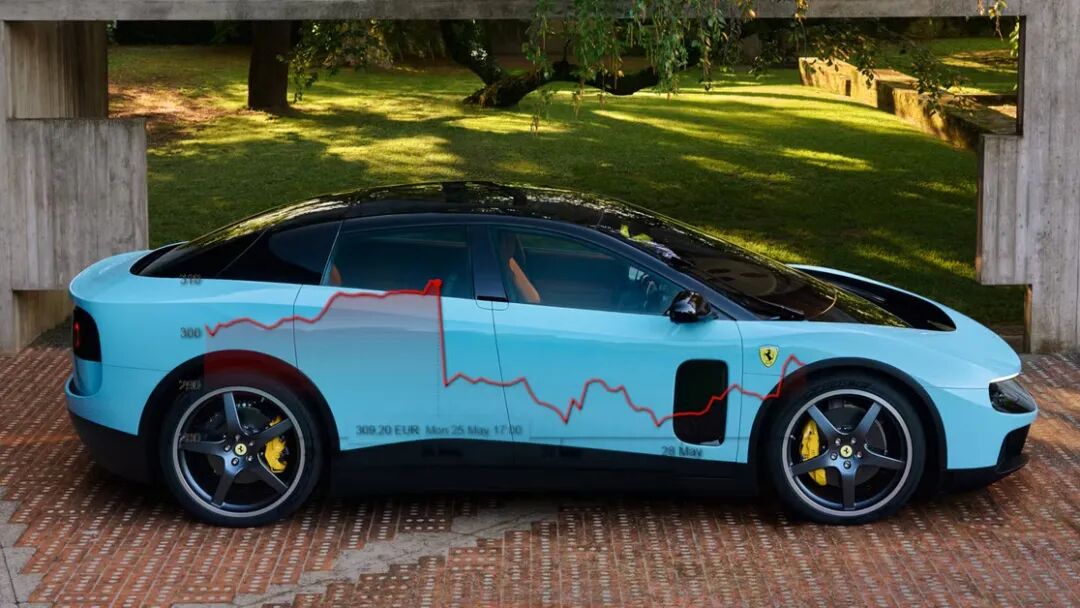
First, there is a rapid shift from fuel-powered vehicles to NEVs. However, unlike previous transitions, this shift is driven by Chinese automakers encroaching on the European market and eroding existing market share, forcing European brands to adapt or cede ground. Second, car prices are beginning to decline. Notably, Ferrari is the only brand that can maintain high premiums for its NEVs similar to its fuel-powered models. However, the controversy surrounding the Luce since its launch, including criticism of its design, is evident to all.
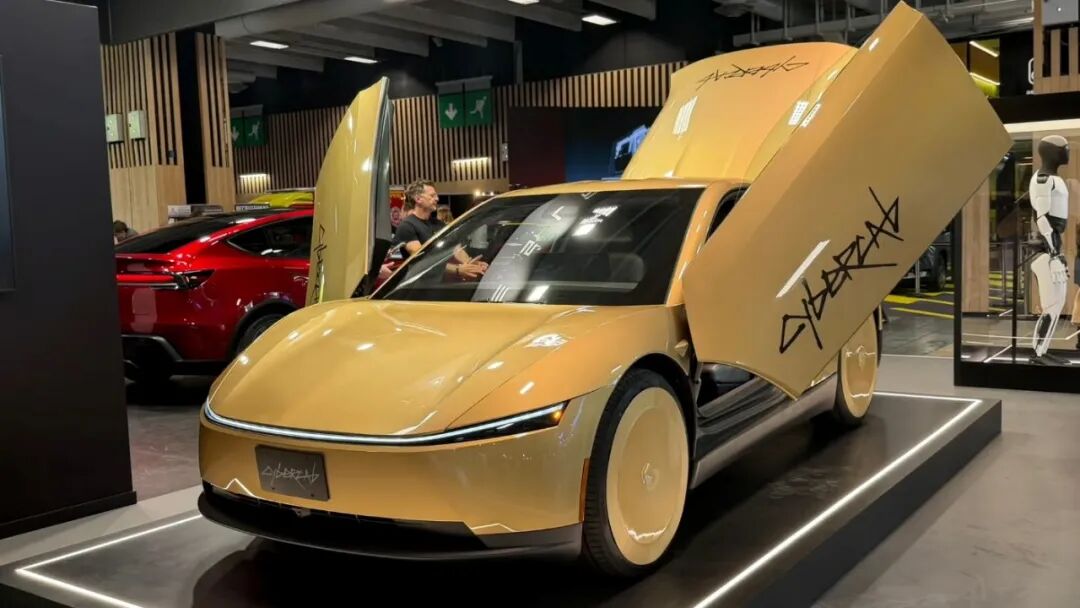
Additionally, the corresponding push for intelligence is gradually underway. However, due to Europe's stringent data privacy protections, the adoption of intelligent cockpits, voice interaction, intelligent driving, and autonomous driving technologies is progressing much slower than in China and the United States.
Thus, examining the key models at this motor show, two clear trends emerge.
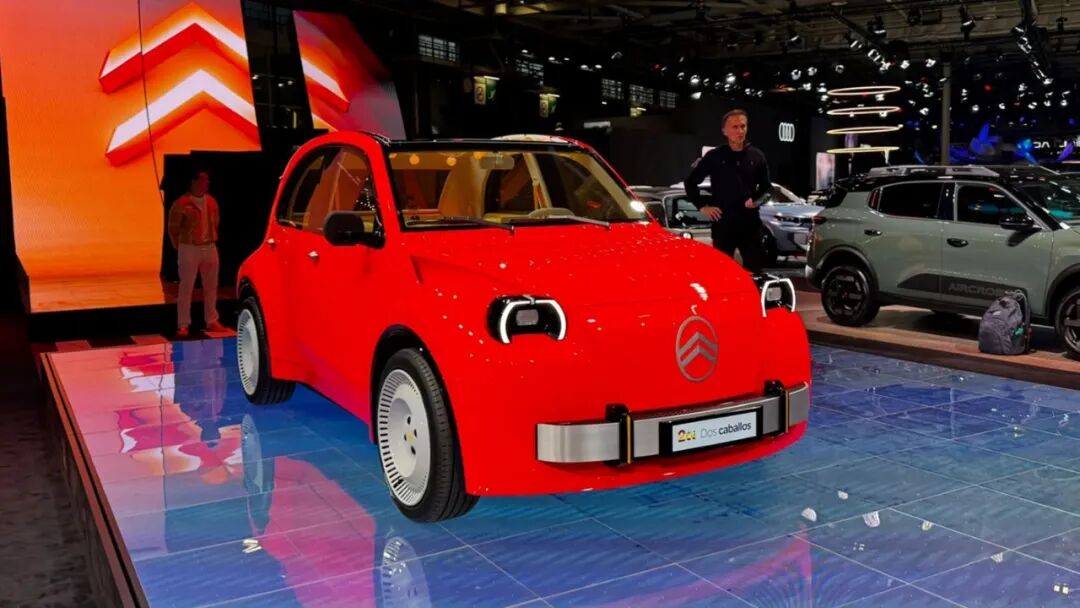
First, there is a return to retro design. New models from smart, Citroën, and Alfa Romeo are electrified versions of classic vehicles, including the iconic Citroën 2CV, which helped establish Citroën in France, and smart's most famous compact car. However, it is evident that even with the large-scale (mass) presence of Chinese brands at the Paris Motor Show, design leadership still resides in Europe.
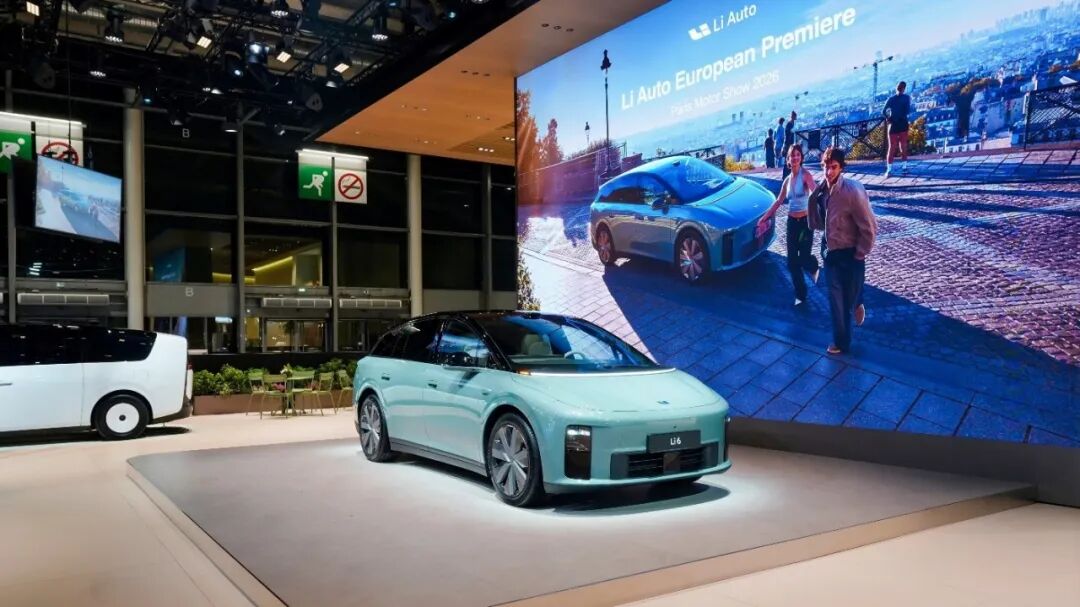
Among domestic cars, except for the European version of the Li Auto i6, which stands out in originality, design remains a recurring topic of discussion for many other models.
They look very similar to XX. Why the resemblance?
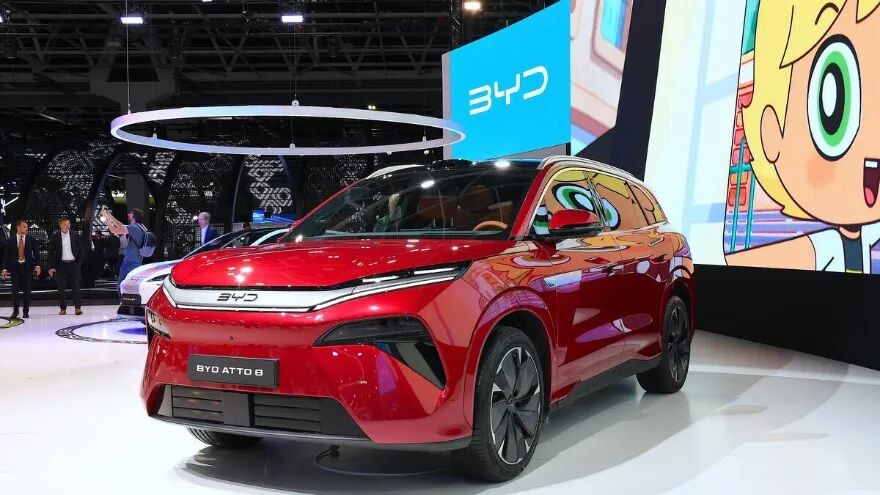
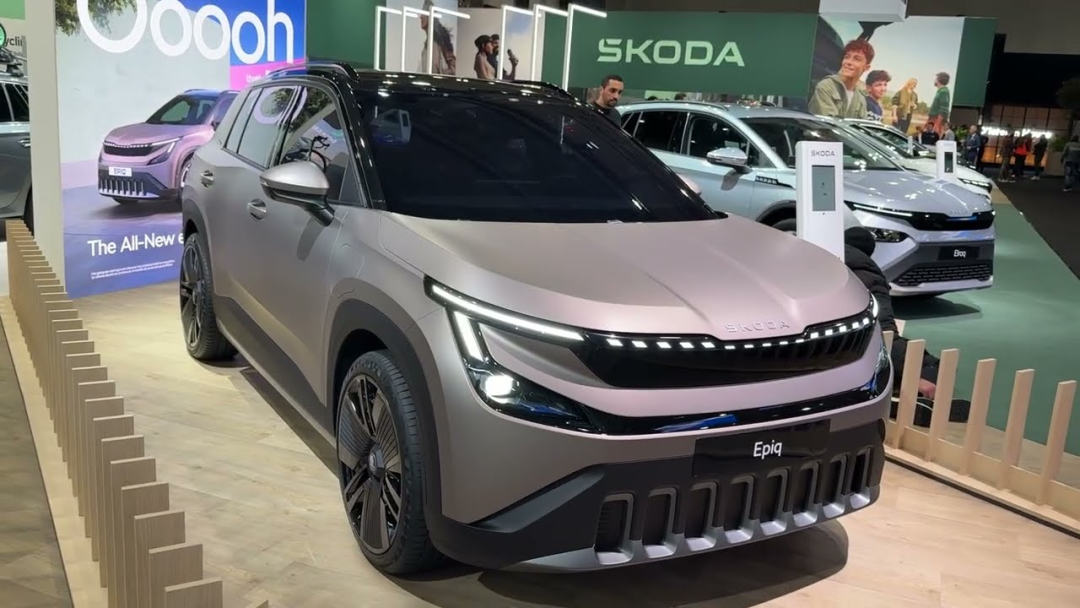
The second and most significant trend is the increasing launch of affordable NEV models. To break through, creating contrast is undoubtedly the best approach, such as pricing NEVs lower than fuel-powered vehicles. This strategy closely mirrors the Chinese auto market in 2023-2024, when domestic and joint-venture brands released posters with slogans like "electric cheaper than fuel" and "fuel cheaper than electric," engaging in public debate.
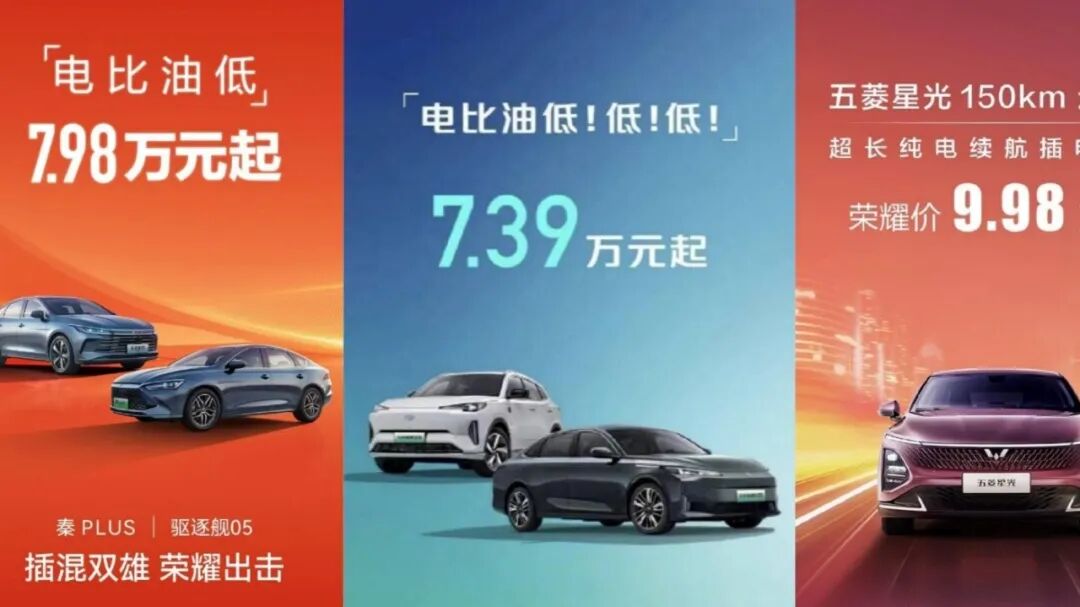
During that period, a series of affordable models emerged, including the Hongguang MINIEV, Geely Starry Wish, BYD Dolphin, BYD Seagull, Changan Nuomi, and Chery QQ Ice Cream.
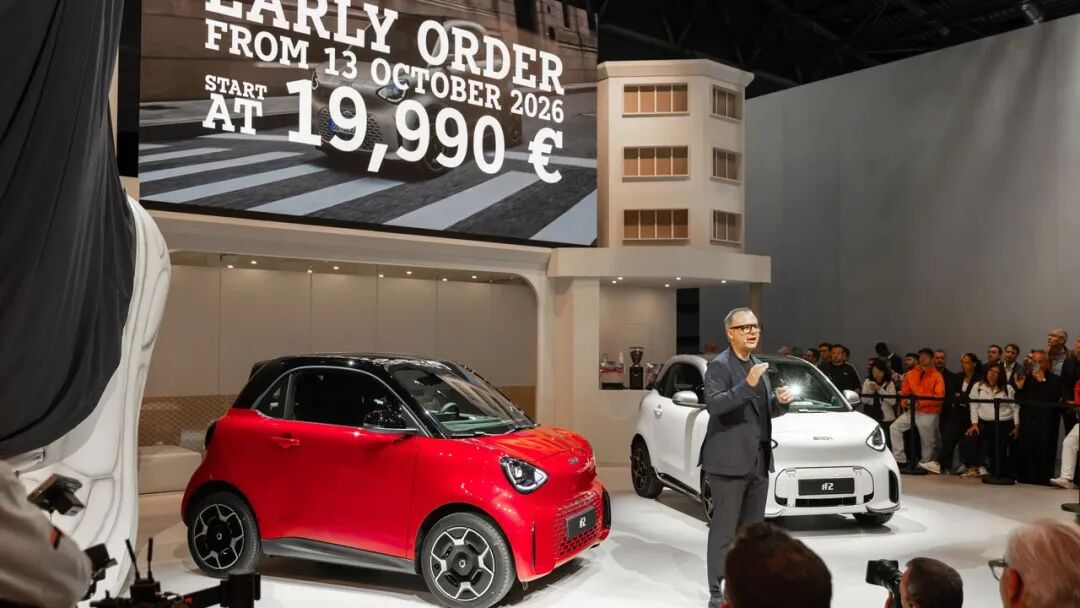
Thus, this is not just an impact from Chinese brands but a necessary phase. The Citroën 2CV electric concept car aims for a production price of around €15,000 and will be manufactured in Europe in 2028. The Smart #2, successor to the Fortwo, starts at €19,990 with a WLTP range of approximately 290 kilometers. The Volkswagen ID.Polo starts at around €24,995. Additionally, Chinese brands are upping their game: BYD offers the overseas plug-in hybrid version of the Dolphin, the Dolphin G DM-i, starting at approximately €23,990.
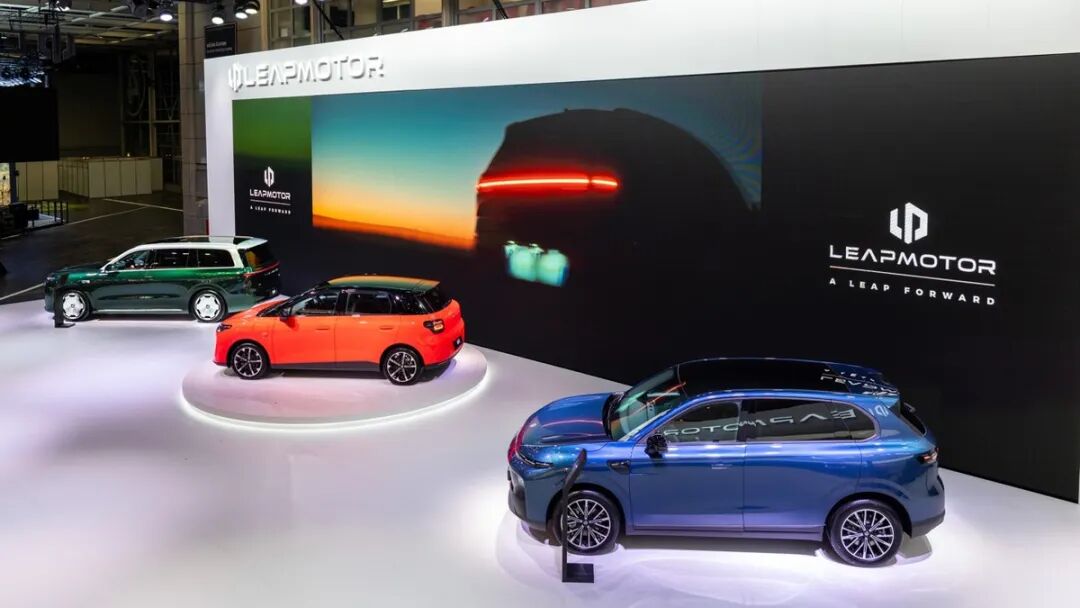
NEV models priced around €20,000 have always been a key battleground for automakers in Europe. However, more competitively priced products are on the horizon, such as those from Leapmotor. Leapmotor debuted the A05 at the Paris Motor Show, began production of the B10 at its Spanish factory, and brought the D19 to Europe. The Leapmotor A05 is likely to replace the existing Leapmotor T03 in European sales, meaning that with full subsidies, it could be purchased for just over €10,000 in some markets.
In summary, a clear trend this time is that with deeper integration of new Chinese models, pricing in the mass-market segment of the European auto market is set to decline. However, amidst this overarching trend, several contrasting signals have emerged.
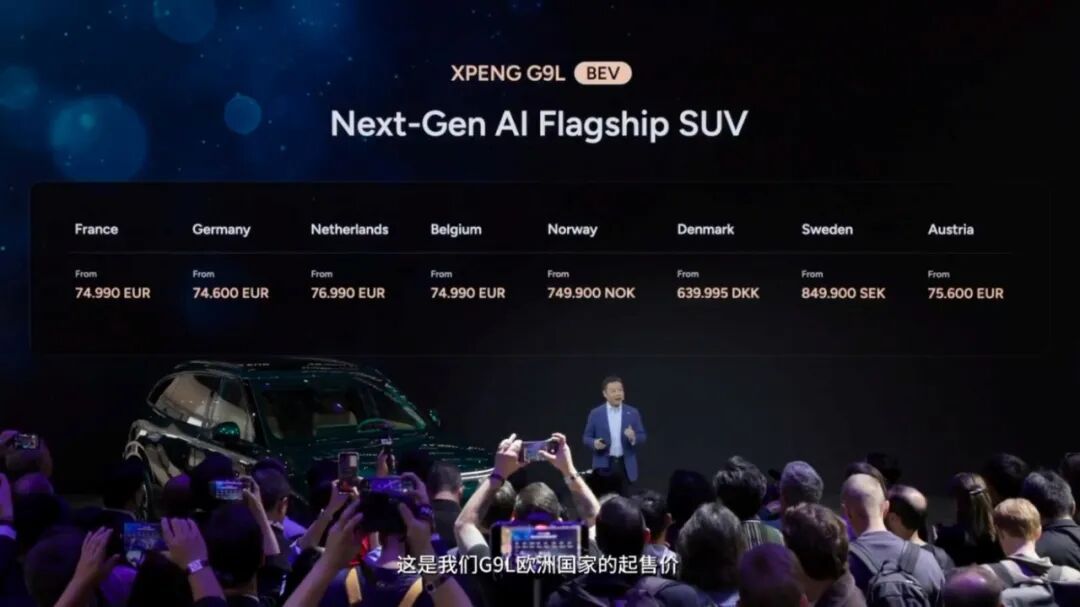
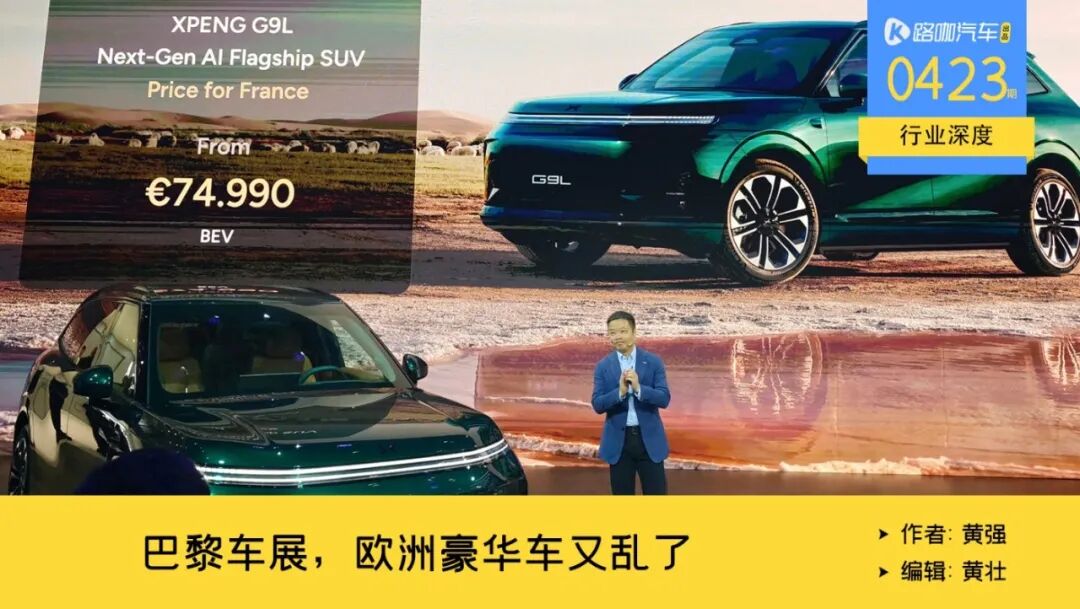
For example, when XPENG unveiled the pricing and variants of the G9L, Chinese media frequently used the word "surprisingly."
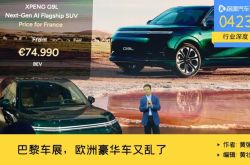
In terms of pricing, the G9L is priced at €74,990 in France, €74,600 in Germany, €75,990 in the Netherlands, NOK 749,900 in Norway, DKK 639,995 in Denmark, and SEK 849,900 in Sweden. For context, these prices are significantly higher than the starting price of €63,400 in Germany for the BMW iX3, whose 2026 production capacity is already sold out, and the starting price of €64,736 in Germany for the new Mercedes-Benz GLC EV.
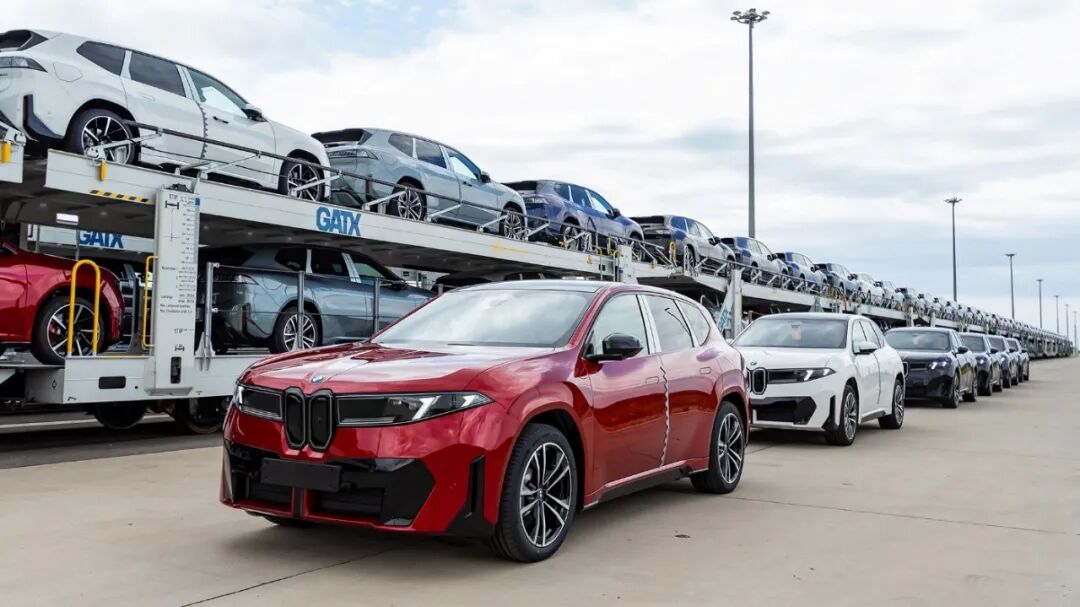
To put it in perspective, this is akin to a joint-venture brand in China launching an SUV priced ¥50,000 higher than the AITO M9.
Many questions arise, one at a time.
The rationale behind XPENG's pricing strategy remains unclear. However, if it can capitalize on the delayed transition of second-tier luxury brands and quickly occupy their ecological niches, the entire landscape of second-tier luxury brands in Europe could eventually be filled with more Chinese brands.
Despite XPENG's strong momentum in Europe, with monthly sales frequently exceeding 4,000 units in 2026, its sales structure resembles that of the Chinese market, relying heavily on the affordable XPENG G6. The long-range version of the G6 is priced at €47,600 in Germany, while the entry-level G9, priced at €59,600, sells around 400 units per month. Thus, the European pricing of the XPENG G9L appears highly unusual.
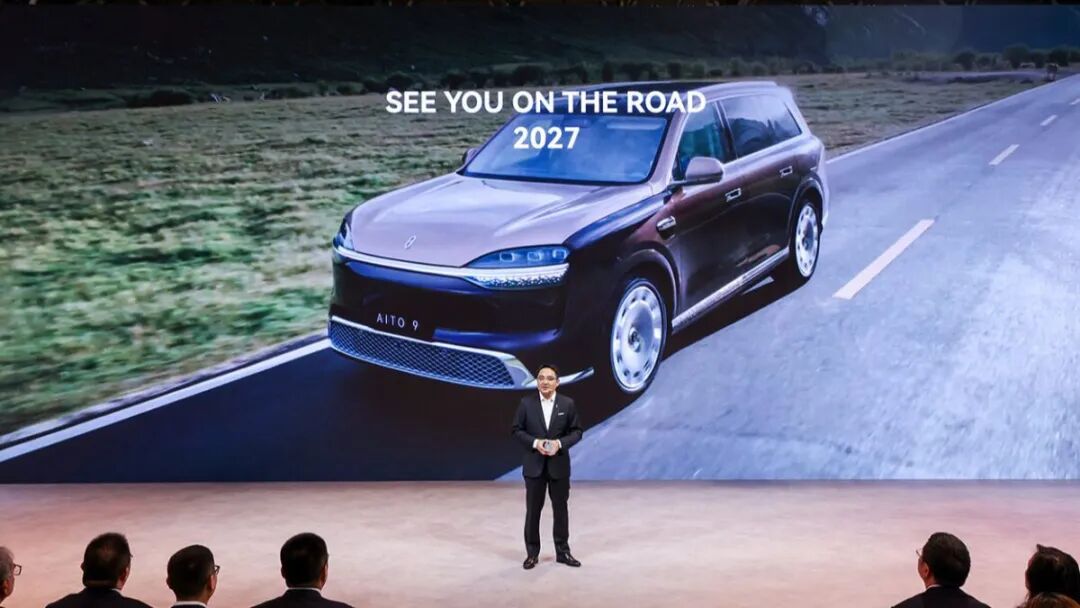
Regardless, XPENG's current pricing strategy for the G9L could benefit other Chinese automakers. If the European market accepts this pricing to some extent, the Li Auto i6, set to launch in the first quarter of 2027, will benefit, as will AITO in 2027, and subsequent pricing strategies for larger vehicles entering Europe will become more stable. If breaking through in sales proves challenging, it is not a major issue—either it helps other Chinese automakers avoid pitfalls or serves as advertising to establish local awareness that XPENG offers more than just affordable models.
As for the European luxury car market, which has already been increasingly chaotic this year, achieving certain progress amidst the turmoil could pave the way for subsequent expansion by Chinese brands.
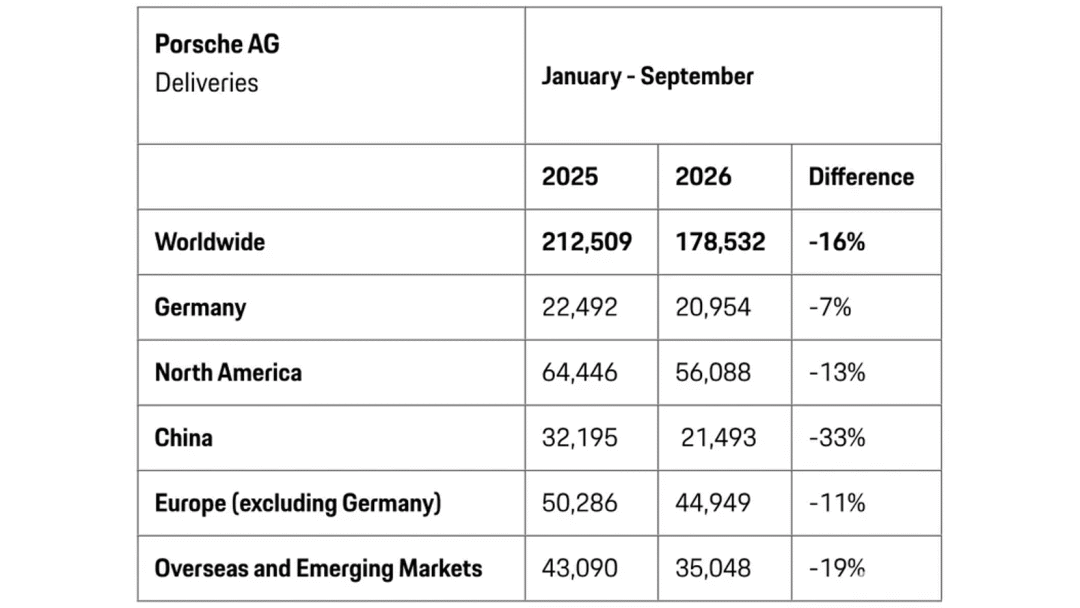
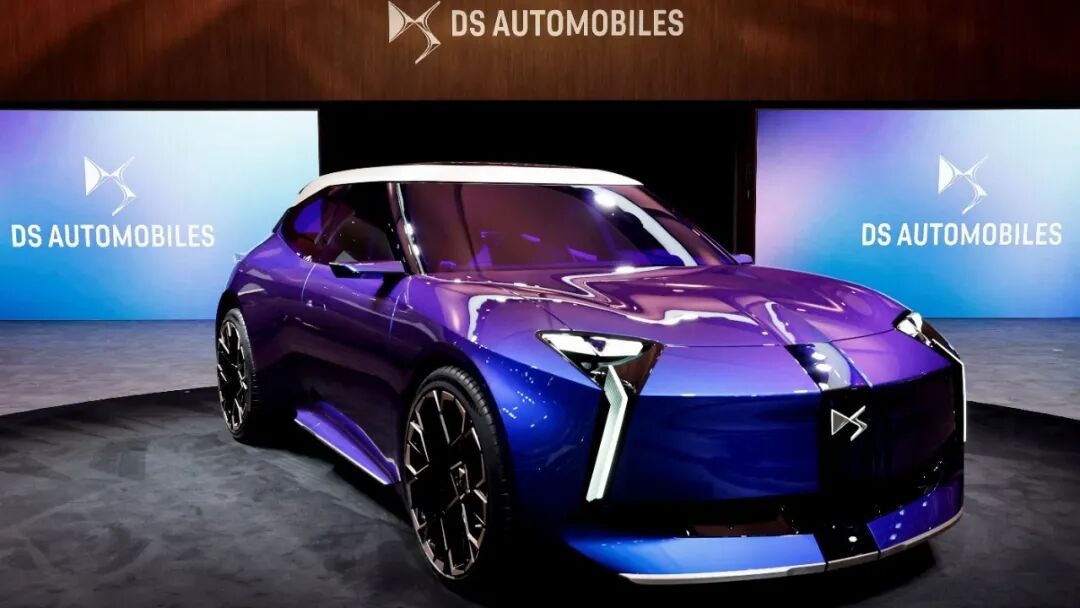
According to European new car registration data from January to August this year, Porsche's sales declined by 13.2%, with 40,616 units registered, compared to 46,772 units in 2025. Lexus performed poorly, with 35,418 units sold, down 7.3% from 38,188 units in 2025. Alfa Romeo saw a significant sales decline of 23.9%, with fewer than 30,000 units registered in eight months. DS sold only 16,711 units. Land Rover's sales decreased by 8.5% to 34,475 units, while Jaguar, awaiting new models, sold just 2 units in eight months.
Despite limited impact from Chinese automakers, the European luxury car market is already in disarray. However, amidst these declines, there is positive news: Germany's top three automakers have rebounded after adjustments. From January to August, BMW Group's sales increased to 524,246 units, up 4.8%. BMW's sales grew 3.2% to 440,372 units, while MINI's sales surged 14% to 83,874 units. Mercedes-Benz also saw sales rise by 3.5% to 375,055 units, and Audi's registrations reached 355,661 units, up 4.4% from 340,832 units in 2025.
In summary, with changes in trade policies, Chinese automakers must undergo a profound transformation in their global expansion strategies. The most significant shift is transplanting the Chinese ecosystem to Europe. At the Paris Motor Show, a vice president of XPENG stated that the company plans to expand its production in Europe to comply with new EU regulations on minimum local content for electric vehicles.
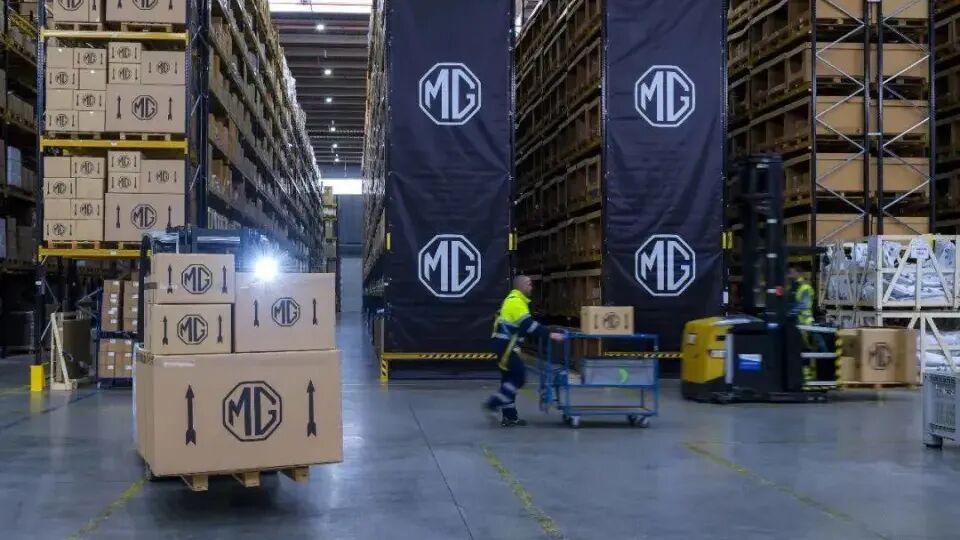
According to European media reports, BYD is closely studying the possibility of establishing a factory in France. Additionally, the latest news is that Geely's acquisition of Ford's Spanish subsidiary, Ford Spain, has been unconditionally approved by regulatory authorities. Furthermore, Leapmotor has commenced production at its Spanish factory, BYD has started production at its Hungarian factory, Chery has launched production at its Spanish factory and is undertaking contract manufacturing at a UK factory. Meanwhile, Changan aims to achieve a production capacity of 180,000 units in Europe by 2028.
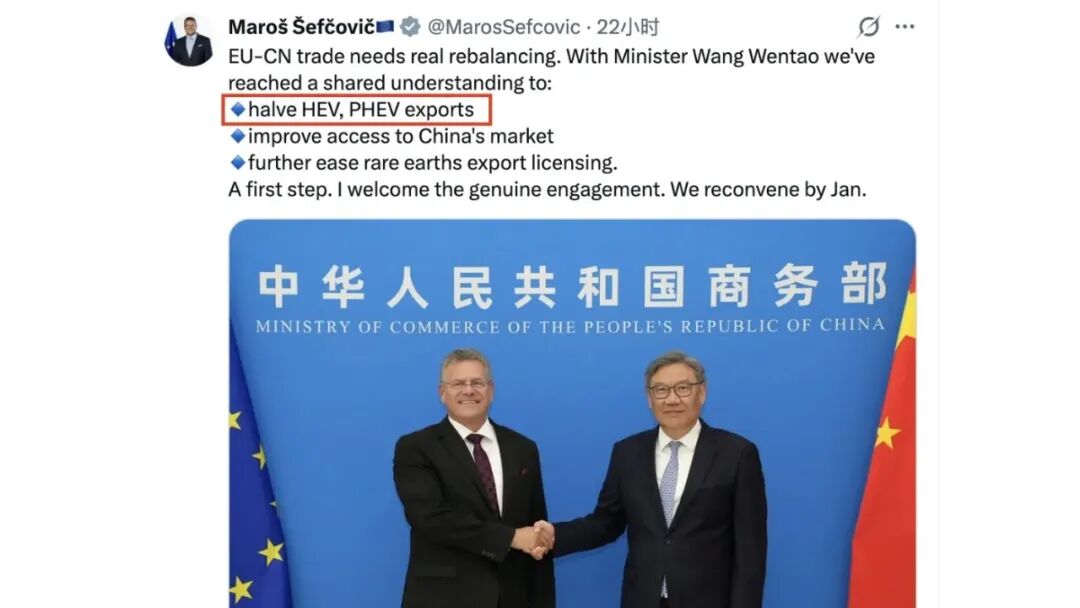
Of course, this also means that brands like Seres, GAC, and Li Auto, among others, will need to find ways to enhance their local production capacities if they wish to expand their presence in Europe. This is because, just before the opening of the Paris Motor Show, the latest China-EU automotive-related policies were agreed upon. It is expected that over the next four years, China will reduce its exports of millions of hybrid and plug-in hybrid vehicles to the EU, with Chinese hybrid vehicle exports expected to halve compared to previous projections.
Of course, this is also an inevitable path. After all, local production not only brings lower taxes but also spares customers from the hassle of waiting half a month for repairs after parts break down—a situation that has already occurred in Europe and has significantly impacted resale values.
Maintenance networks, parts supply, and insurance systems, repair cycles, parts inventory, warranty fulfillment, and residual values of used cars—everything is really just beginning.
In Closing
Finally, let's take a look at the highlights of Chinese automakers at this year's Paris Motor Show.
Avatr T09 made its global debut, while AITO is set to enter the European market in 2027. Both will attempt to challenge models like the Audi Q7 in the large SUV segment. GAC brought the Aion UT and the domestic Xiangwang S7, with foreign media even dubbing the Land Rover-esque Xiangwang S7 as a new challenger to Land Rover. Leapmotor showcased its new A05, preparing to shake up the European budget car market with its pricing. Chery officially announced its entry into all 27 EU markets by 2027. Changan is on the verge of entering the market. Geely remains tight-lipped, simply selling cars—its three brands have already surpassed 10,000 sales in September. Dongfeng Liuzhou Motor will use Europe as a starting point before gradually expanding to the Middle East, Africa, and beyond.
XPENG is in a phase of launching new models, Li Auto is in a display phase, and smart is in a phase of redefining itself. That's the general picture.
As for what overseas brands unveiled at this year's Paris Motor Show, apart from new models from Mercedes-Benz and Audi, the rest are hardly worth much attention. Have you noticed? It's not even as impactful as the Chengdu Motor Show for us.
-
![]()
September Sales Analysis: Top Five Independent Chinese Automakers Excel, with BYD Leading and All Expanding Overseas
-
AI with a Defined Trajectory is Energizing the Entire Industry Ecosystem
-
【Daily Science and Technology Innovation】ArcSoft: Why is Half of Its Revenue Invested in R&D? What is the Invisible Champion of Mobile Algorithm Betting On?
-
![]()
The Paris Motor Show is Set to Disrupt the European Luxury Car Market Again
-
![]()
When Plug-in Hybrid and Extended-Range Vehicles Flood the Fully Electric Era: Are You Prepared to Be the "Cannon Fodder"?
-
![]()
Unitree Admits Mistake, DeepSeek Steps In
-
![]()
ByteDance, The Super APP Factory
-
![]()
“The three-way cooperation among FAW, Toyota, and GAC was nearly called off!”