Beijing Computing Power Chip Company Initiates IPO Coaching; National AI Industry Fund Participates
 11/03 2026
 358
On October 28, the Beijing Securities Regulatory Bureau accepted a filing for listing coaching. Beijing Huixi Technology Co., Ltd. has thus launched its A-share IPO, with CITIC Securities serving as the coaching broker.
Records show that the company was established only in April 2022—just four and a half years before submitting its A-share IPO filing.
The filing report shows that the company's controlling shareholder is Hefei Yinxi Intelligent Technology Partnership (Limited Partnership), which holds 18.4280% of the shares but controls 68.7694% of the voting rights through special voting rights. The founder team holds less than 20% of the shares yet secures nearly 70% of the say—a structure designed to allow founders with technical backgrounds to retain control over the company's direction after dilution through multiple rounds of financing.
However, the Tianyancha app shows that Hefei Yinxi's shareholding is still 23.8255%, which does not match the 18.4280% in the filing report. The reason is actually not complicated: the B-round financing and the coaching agreement were both finalized on October 22, and the equity change has not yet completed the industrial and commercial registration process. The shareholding ratio in the filing report should be the more accurate figure.
For Huixi to reach an A-share IPO, changing tracks was key. Records show that Huixi initially made in-vehicle intelligent computing platforms and intelligent driving chips. In October 2024, it released its first 7nm automotive-grade chip, the Guangzhi R1, with 500 TOPS of computing power. Externally, it was described as twice that of NVIDIA Orin-X and was also the first domestic high-computing-power chip for high-level intelligent driving natively adapted to Transformer large models.
At the time, its goal was to become the fastest high-computing-power intelligent driving chip in China to reach mass production and installation in vehicles.
But that wish was ultimately not fulfilled. Public reports noted that in 2025 Huixi failed to secure the passenger-car mass-production cooperation it had originally planned, while the window for intelligent driving chips was closing. In the high-level intelligent driving market for self-owned brands, Horizon Robotics and NVIDIA together account for 60% of the share. Xiaomi and NIO, two early investors—one developing chips in-house and the other purchasing from NVIDIA—neither left Huixi a stable passenger-car designation.
As a result, with the robotics track booming, Huixi later shifted its focus to embodied intelligence. The Guangzhi R1 was originally designed to run large models at the edge, so its computing power characteristics found new use in robots.
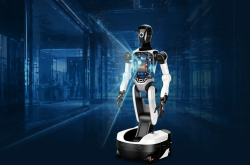
Starting in 2025, the RISE computing platform equipped with this chip began delivery. It was first installed in Agibot's Genie G2 and subsequently completed integration verification on Jiushi Intelligent's L4 unmanned logistics vehicles. At the World Robot Conference in August this year, the company unveiled the Huixi Embodied series. The R1 PRO for robots adopts a brain-cerebellum integrated architecture with 375 TOPS of computing power, accompanied by the RCM400 and RCM500 modules.
In less than two years, Huixi went from chips to modules to toolchains, packaging the computing power, perception, and motion generation required by robots into a complete set of supporting solutions.
From June 23 to 28 this year, eight Genie G2 units worked continuously for six days in the tablet quality inspection section of Longqi Technology's Nanchang factory, completing a cumulative 17,625 tasks with a success rate of 99.99%. The results achieved in practical application are more convincing than any computing power parameter.
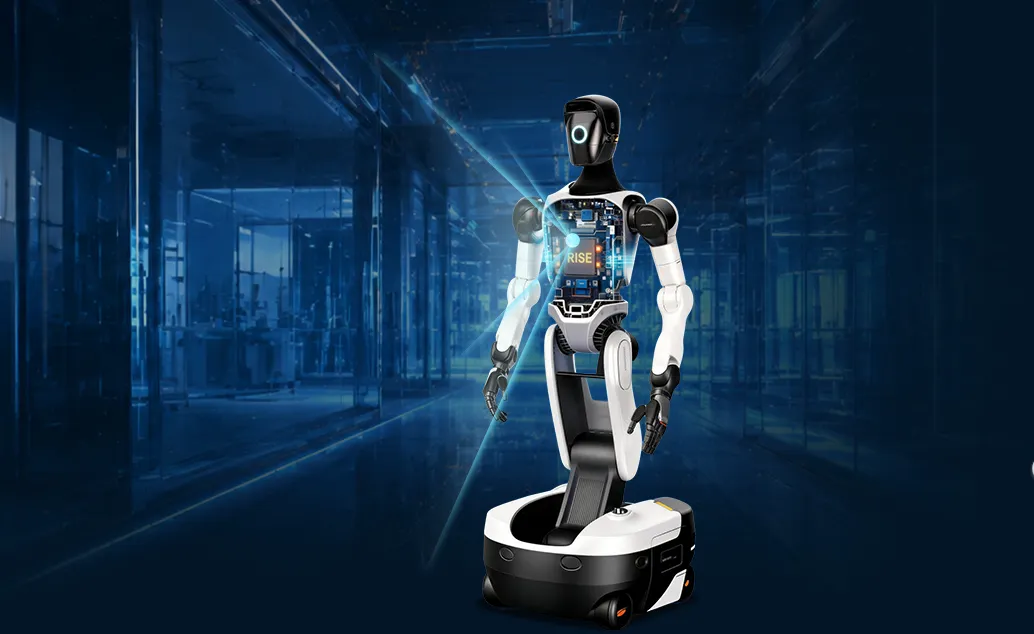
Image source: official website
Another hard-earned credential of Huixi is its technical team. Records show that founder Xu Ningyi studied electronic engineering at Tsinghua University for his bachelor's, master's, and doctoral degrees, served as chief architect of the intelligent chip department at Baidu, and led the design of the Kunlun cloud AI chip. Co-founder Zhang Jianyong is also a Tsinghua alumnus; he managed autonomous driving at NIO and led the first launch of the EyeQ4 and Orin platforms from samples to mass production. He Guanghui is a Tsinghua PhD and a professor at Shanghai Jiao Tong University, specializing in AI chips and architecture.
There is a saying in the industry that in this team some have worked on automotive-grade chips with cumulative shipments exceeding 1 billion units, and technologies led by others have been installed in more than 700 mass-produced vehicle models. The team now has more than 200 people, with an average of more than ten years of experience in chip design and autonomous driving mass production.
With the support of the team and its experience, in February this year Huixi completed a Pre-B round of more than 800 million yuan, with Agibot making a strategic investment. In October, it completed Pre-B+ and B rounds totaling about 1.7 billion yuan. The lead investor changed from Shunwei and Xiaomi to the Beijing Artificial Intelligence Industry Investment Fund, with the National Artificial Intelligence Industry Fund and the Beijing Robotics Industry Fund also entering.
Together with previous rounds, equity financing during the year exceeded 2.5 billion yuan. The change in lead investors explains the issue more than the fundraising amount itself: the company's technical direction has been incorporated into the industrial cultivation framework, rather than merely being a multiple-choice question for financial investors.
At present, the coaching filing did not disclose revenue and profit. Multiple media reports mentioned that Huixi has not yet been profitable. Black Sesame Technologies had revenue of 822 million yuan in 2025, but R&D expenses were 1.417 billion yuan, with a full-year loss of 1.425 billion yuan; Horizon Robotics had revenue of 3.758 billion yuan in the same year and R&D expenses of 5.154 billion yuan. In the high-computing-power chip business, before scale is achieved, burning money at both R&D and delivery ends is the norm.
In addition, high customer concentration is also one of the risk points. Agibot is both a shareholder and the first large-scale customer. Leju and Jiushi have completed verification, but whether orders can expand from one company to multiple companies determines whether Huixi can move from getting production lines running to generating profits. An industry survey offered a formulation that in the first half of the year Huixi's high-computing-power robot chip shipments accounted for about one-fifth of the global total in the same period, ranking second and first among domestic companies.
In other words, switching to the embodied intelligence track is only the first hurdle for it. From laboratory verification and production line trial runs to stable profitability, that is the real issue it will face after submitting the filing and before listing.
-
![]()
Beijing Computing Power Chip Company Initiates IPO Coaching; National AI Industry Fund Participates
-
![]()
Li Jiaqi Sells 2 Trillion Tokens in Half an Hour
-
![]()
AI Agents Enter the Oilfield Decision Chain: The Threshold for Industrial Intelligence Has Changed
-
![]()
Tank Sales Fall 30% Year-on-Year: Has the Hardcore Off-Road Dividend Peaked?
-
Does the China-Market iPhone Duo Cut Corners? Compared to the US Version, Is 1,000 Yuan in Cost Stripped Out?
-
![]()
Apple: The Storage Backlash Finally Arrives — Is the "Safe Haven" Facing AI About to Spring a Leak?
-
![]()
SpaceXSI Opens Global Ambassador Recruitment: Why Is Musk's AI Ecosystem Paying Increasing Attention to Developer Communities?
-
![]()
An Open-Source Model That Lets You Chat About DNA: 14B Parameters, Runs on a Laptop