SpaceXSI Opens Global Ambassador Recruitment: Why Is Musk's AI Ecosystem Paying Increasing Attention to Developer Communities?
 11/03 2026
 508
Competition in the AI industry is extending beyond model capabilities and product features into developer ecosystems and user communities.
On October 28, 2026, the ambassador program for Musk's SpaceXSI and Cursor officially opened a new round of applications. Unlike traditional brand ambassadors, this program does not focus solely on social media dissemination; instead, it seeks to recruit community builders who can help new users, organize technical events, conduct workshops, and provide feedback directly to product teams.
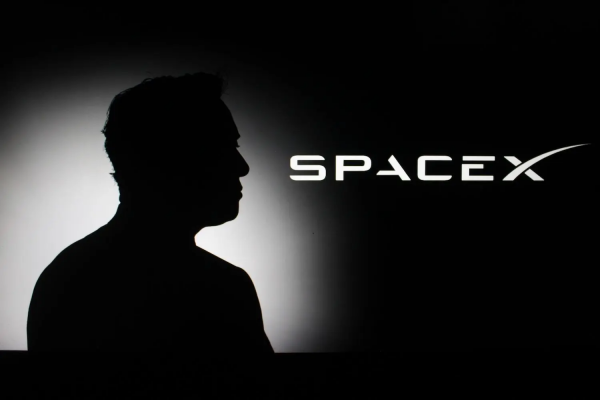
According to the public program description, selected ambassadors have the opportunity to receive early access to new features, personal usage credits, community event funding, exclusive communication channels, and support with promotional materials.
Behind this recruitment drive lies another background worth noting: Musk is reintegrating his artificial intelligence businesses.
On October 4, 2026, Musk confirmed on the X platform that SpaceXAI would be renamed SpaceXSI. "SI" stands for Super Intelligence. Prior to that, the AI programming tool Cursor had officially announced on August 14 that it was joining SpaceX.
From the Grok large model to the Grok Bot agent, and then to the Cursor programming tool and the X social platform, Musk's AI products are forming a product system covering models, development tools, agents, and information dissemination.
From these changes, it is not difficult to see that what SpaceXSI hopes to build is not a simple advertising promotion network, but rather a more direct connection among developers, technology enthusiasts, and product teams.
From user growth to community co-building
Why are AI companies paying increasing attention to developer communities?
In the past, internet products usually relied on advertising, search engine optimization, media reports, and social platform promotion to acquire users. But for AI development tools, the complexity of product features and the speed of technological iteration mean that users often need deeper learning and exchange.
For example, users encountering AI programming tools for the first time may not know how to use AI to complete a practical project. Offline workshops, developer exchange events, and real case sharing can lower the learning threshold for users.
This is also the important value of AI community activities: enabling users to move from "having heard of a product" to "actually being able to use this product."
Musk's layout in the AI field in recent years also reflects that artificial intelligence products are evolving from simple conversational tools into task execution platforms.
In August 2026, SpaceXSI launched Grok Bot, positioned as an AI agent capable of continuously executing tasks. Unlike traditional chatbots, Grok Bot has an independent computing environment and can, after authorization, use tools, handle work tasks, and request user confirmation when needed.
In October of the same year, SpaceXSI also launched a subscription service integrating Grok, Grok Bot, Cursor, and X Premium, attempting to connect artificial intelligence interaction, automated execution, software development, and social dissemination.
But increasingly powerful product features do not mean that ordinary users can immediately master these capabilities.
An excellent developer community can help users understand what problems these tools can actually solve through real cases, technical tutorials, and practical exchange.
The official Cursor community page shows that related developer communities have held more than 800 events in over 250 cities across more than 80 countries worldwide, forming a community network involving more than 300 ambassadors.
These events include technical meetups, programming workshops, and hackathons. They not only help new users learn about the products but also enable developers to form continuous exchange and collaboration.
From a business logic perspective, when AI tools gradually become daily productivity tools for developers, the community is no longer just a promotional channel, but may also become an important force driving product improvement, technology dissemination, and ecosystem development.
Chinese developer communities have unique value
China has an active group of software developers, indie developers, entrepreneurs, and AI technology enthusiasts.
With the development of AI programming, agents, and the one-person company model, more and more non-traditional programmers are beginning to try using AI to build websites, applications, and automation tools.
This means that the potential users of AI development tools are expanding from professional programmers to a broader group of entrepreneurs and content creators.
For SpaceXSI, the internationalization of developer communities is also of great significance.
Musk has previously established global technological influence through companies such as Tesla, SpaceX, and X, but the promotion of AI products cannot rely solely on the founder's personal influence.
Developers in different countries and regions have different language environments, usage habits, and technical needs.
For global AI companies, community building in the Chinese market means not only the dissemination of product information but also Chinese tutorials, real application cases, user feedback, and exchange among local developers.
For example, a Chinese indie developer may be more interested in learning how to use Cursor or Grok-related tools to develop a complete website; a small or medium-sized enterprise may focus on whether AI agents can help the team reduce repetitive work and improve operational efficiency.
These specific needs often require localized technical sharing, case demonstrations, and community exchange to be better addressed.
A Chinese tutorial that helps users understand a tool, or a technical sharing event spontaneously organized by developers, may have more long-term value than simple product advertising.
Of course, the actual use of global AI products in different markets also requires consideration of product availability, local laws and regulations, and users' specific needs.
In the AI era, community may become a new kind of competitiveness
The features of AI products can be updated rapidly, and model capabilities are also continuously improving. But a truly active developer community often requires long-term investment to form.
When users not only use the product but also share experience, help new users, offer improvement suggestions, and organize exchange events, a deeper relationship is established between the product and its users.
In Musk's business practice, one noteworthy characteristic is that he values technological breakthroughs while also being good at leveraging the attention of global users and developers to drive product dissemination.
From electric vehicles to commercial spaceflight, and then to artificial intelligence, his companies often enjoy high public attention.
But for AI development tools, attention does not directly equal user retention, let alone the maturity of the developer ecosystem.
From this perspective, SpaceXSI's opening of global ambassador recruitment reflects a direction worth noting: while building the AI technology and product system, it connects real users through community organizers, allowing technological capabilities to enter more practical application scenarios.
On October 22, 2026, SpaceXSI also announced the launch of the Super Intelligence Partner Network, establishing cooperation mechanisms for enterprise deployment, plugin development, and product integration. This is not the same as the developer community program, but both reflect that it is expanding an ecosystem beyond models.
In the future, the factors determining the competitiveness of AI products may not only be how strong the model is and how rich the features are, but also how many people are willing to learn, create, communicate, and continue building around it.
For Chinese developers and AI entrepreneurs, this also provides a new way to participate in the global technology ecosystem.
As artificial intelligence moves from answering questions to executing tasks, the value of developers and community builders is also being re-recognized.
Perhaps the next stage of AI competition will take place not only in computing centers and model laboratories, but also in developer communities around the world.
-
![]()
Beijing Computing Power Chip Company Initiates IPO Coaching; National AI Industry Fund Participates
-
![]()
Li Jiaqi Sells 2 Trillion Tokens in Half an Hour
-
![]()
AI Agents Enter the Oilfield Decision Chain: The Threshold for Industrial Intelligence Has Changed
-
![]()
Tank Sales Fall 30% Year-on-Year: Has the Hardcore Off-Road Dividend Peaked?
-
Does the China-Market iPhone Duo Cut Corners? Compared to the US Version, Is 1,000 Yuan in Cost Stripped Out?
-
![]()
Apple: The Storage Backlash Finally Arrives — Is the "Safe Haven" Facing AI About to Spring a Leak?
-
![]()
SpaceXSI Opens Global Ambassador Recruitment: Why Is Musk's AI Ecosystem Paying Increasing Attention to Developer Communities?
-
![]()
An Open-Source Model That Lets You Chat About DNA: 14B Parameters, Runs on a Laptop