Tank Sales Fall 30% Year-on-Year: Has the Hardcore Off-Road Dividend Peaked?
 11/03 2026
 550
Tank didn't get much of a boost from the Golden September and Silver October peak season. Great Wall Motor's October production and sales report shows that Tank brand sales that month were 15,389 units, compared with 22,306 units in the same period last year—a year-on-year decline of 31.01%, a drop of more than 30%. In the first ten months of 2026, Tank's cumulative sales were 158,200 vehicles, down 15.61% year-on-year. This is not a single-month fluctuation but a continuous downward curve. The decline in both monthly and cumulative sales speaks for itself.

By comparison, Fangchengbao sold 43,900 vehicles in October, up 41% year-on-year. Xiong Tianbo, general manager of the Fangchengbao business division, announced on October 30 that cumulative sales of the Ti 7 had exceeded 300,000 vehicles, and the model had ranked first in the boxy category for 12 consecutive months. One brand retreating while another advances—the landscape of the hardcore off-road track is shifting. Tank once defined the boxy market segment, but now that boxy vehicles have become a common choice in the market, Tank needs to prove its value again.
Competitors Are Pushing Boxy Car Prices Lower and Lower
First, look at Fangchengbao's product and pricing layout. The volume-selling Fangchengbao Ti 3 has a guide price of 143,800 to 169,800 yuan, the Ti 7 starts at 179,800 yuan, the Bao 5 has a guide price of 239,800 to 329,800 yuan, and the flagship Bao 8 fast-charging version is priced at 419,800 yuan. The models truly tasked with pushing prices down are the Ti 3 and Ti 7, while the Bao 8 anchors the range above 400,000 yuan. Fangchengbao did not cut prices across the board; instead, through new models with lower entry thresholds, it pulled the price anchor for boxy vehicles down to around 150,000 yuan.

Tank's pricing system has therefore come under direct pressure. The all-new Tank 300 launched in July this year starts at 199,800 yuan for the 2.0T gasoline version, 234,800 yuan for the 2.4T diesel version, 249,800 yuan for the Tank 300L Hi4-T, and 259,800 yuan for the Hi4-Z. The Ti 7's 179,800 yuan falls exactly in the price range between the Tank 300 gasoline version and the Hi4-T. Consumers with a budget of just over 200,000 yuan who want both plug-in hybrid power and boxy styling now have a new choice that does not require paying more for the Hi4-T.
Other players are also diverting the same demand. Jetour sold 58,443 vehicles in October, of which the Traveler series sold 23,306 units, up 62.1% year-on-year, and the boxy category has had monthly sales above 10,000 for 32 consecutive months. Relevant data show that light off-road models already account for nearly 70% of the off-road market, while hardcore off-road models account for only 31.5%. Most of the new demand in the track is not aimed at extreme escape scenarios.

Great Wall Motor President Mu Feng publicly stated at the June 2026 shareholders meeting that Tank and WEY would remain high-end independent brands and continue to move upward. This statement also reflects Great Wall's vigilance toward changes in category boundaries.
Urban Users Are Flowing to Other Brands
At this stage, Tank's customer base needs to be examined separately. One group is true off-road enthusiasts, who are familiar with body-on-frame construction, mechanical four-wheel drive and differential locks, and whose vehicle use includes real off-road scenarios. The other group is urban boxy-car users, who value a high seating position, styling recognition and an outdoor atmosphere, and mainly use their vehicles for urban commuting.

True enthusiasts have relatively limited choices. Hardcore models with body-on-frame construction and three locks are not numerous in the domestic market, and the Tank 300 still holds a solid position in the 200,000 yuan class. The all-new Tank 300, which completed its generational change in July 2026, covers multiple powertrains including gasoline, diesel, Hi4-T and Hi4-Z, with an entry price of 199,800 yuan, and its product strength and modification ecosystem remain complete. Judging from the current situation, the loss of this customer group is relatively limited.
The flow of urban users is clearly different. The boxy styling they value can be provided by the iCAR V23, Jetour Freedom and Ti 7, among which the Ti 7 is also equipped with plug-in hybrid power. Public information shows that the Jetour Freedom has a guide price of 114,900 to 154,900 yuan. When the entry threshold for hardcore styling drops to below 150,000 yuan, the reason to pay tens of thousands more for a brand badge is no longer sufficient.

The premium of the Hi4-T is even harder to justify to this type of user. The Tank 300 gasoline version starts at 199,800 yuan, while the Hi4-T is priced at 249,800 yuan—a difference of 50,000 yuan. True enthusiasts are willing to pay for hybrid four-wheel drive and low-speed torque, but users who mainly commute in the city and occasionally go camping on weekends find it difficult to confirm the actual value of this price difference. The situation of high-end models is also not easy. Tank brand sales fell 31.01% year-on-year in October. The contraction pressure on high-end fuel off-road vehicles in the domestic market can already be seen to some extent from this set of brand data.
The pace of iteration also needs to be viewed objectively. From the launch of the Tank 300 at the end of 2020 to its generational change in July 2026, the interval was more than five years—slow in a market rhythm where new energy models are rapidly updated. However, Great Wall has not stood still. Great Wall Motor's 2026 semi-annual report shows that Tank's domestic new energy penetration rate has reached 58.44%. The real challenge lies in product definition. When hardcore styling changes from a scarce label to a common feature, Tank needs to re-establish the basis for its premium.
Overseas Sales Growth Cannot Save the Domestic Market
At this stage, the overseas market is Tank's most prominent source of growth. Great Wall Motor's 2026 interim results show that Tank's overseas cumulative sales in the first half of the year were 34,500 vehicles, up 57.64% year-on-year. Its models have been sold to more than 30 countries and regions around the world, and the Tank 300 Hi4-T and Tank 500 Hi4-T have successively landed in markets such as Australia, Brazil and Pakistan. Great Wall's production and sales report shows that overseas sales in October were 62,862 vehicles, accounting for 52.2% of total sales that month. From January to October, cumulative overseas sales were 538,800 vehicles, and overseas business has already occupied half of Great Wall's sales.
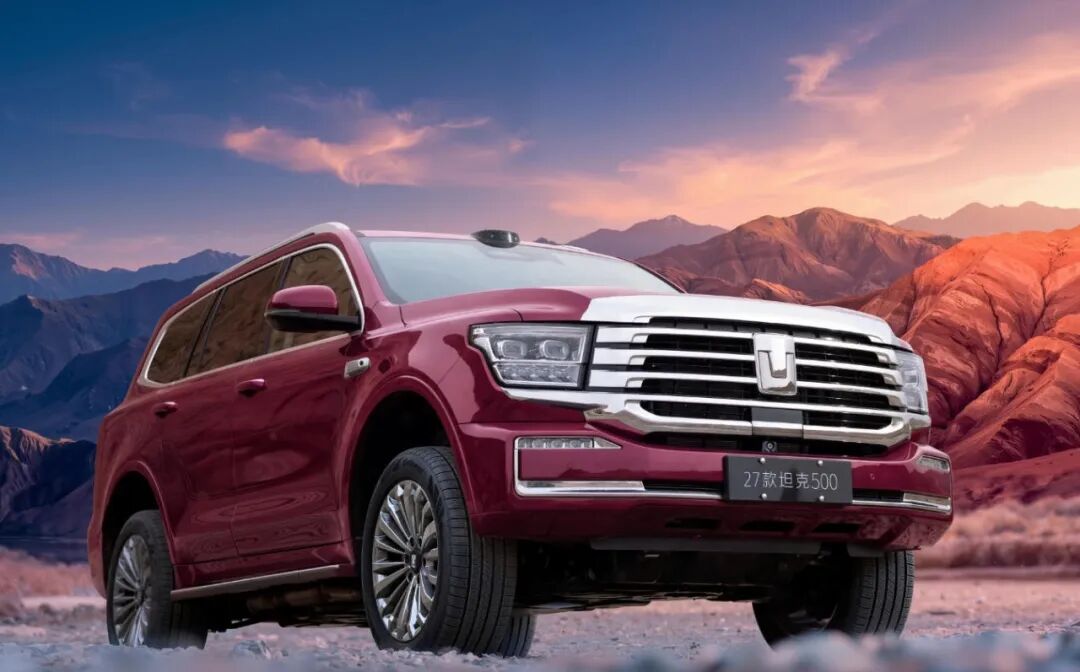
The weight of the overseas market can also be seen from the sales structure. Overseas sales already account for more than 52% of Great Wall's sales, and the overseas market is in fact providing a backstop for some models. A Galaxy Securities research report predicts that from 2026 to 2027, Tank brand export sales are expected to increase from 79,000 to 127,000 vehicles; in 2025, Tank's share in the overseas non-US market for body-on-frame SUVs has risen to 6.8%. It should be noted that the above export figures are institutional forecasts, and actual fulfillment still needs to be observed.
But in terms of scale, going overseas is still difficult to fully offset the domestic decline in the short term. Tank's global sales in the first half of the year were 90,200 vehicles, of which 34,500 were overseas, accounting for about 38%, while the domestic sales volume from January to October was 158,200 vehicles. There is still a gap in scale between the two. Overseas operations themselves also carry costs. Great Wall plans to complete a vehicle plant in Europe with an annual capacity of 300,000 vehicles before 2029, and heavy asset investment will continue to push up fixed costs. Plant ramp-up, tariff policies and exchange rate fluctuations all need continuous tracking. The Galaxy Securities research report also shows that Great Wall's net profit attributable to parent company in the first half of the year fell 61.1% year-on-year, and profit pressure has not been immediately alleviated by going overseas.
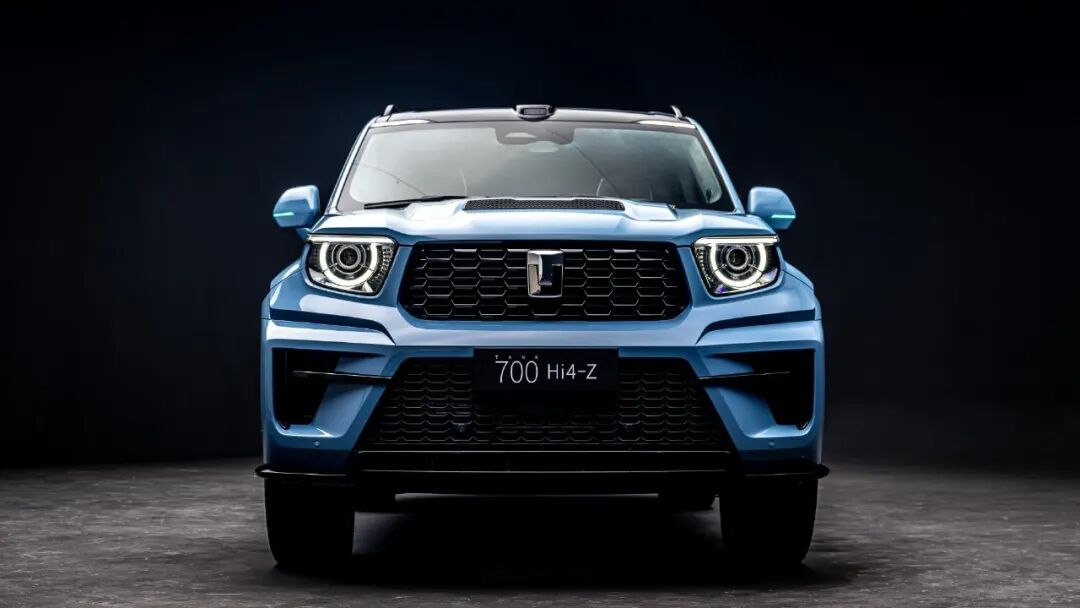
Another easily overlooked difference is the logic of competition. Tank is still mainly focused on fuel and hybrid off-road vehicles overseas, where its rivals are traditional models such as the Jeep Wrangler and Toyota Prado, and it relies on the cost-performance advantage of Chinese hardcore off-road vehicles. The anxiety in the domestic market comes from the reconstruction of the entire boxy-car track by new energy. Overseas and domestic are two different competitions, and overseas growth experience is difficult to directly translate into answers for the domestic product.
As for whether the hardcore off-road dividend has peaked, a more prudent judgment is that real demand for hardcore off-road still exists; what has faded is the premium window brought by boxy styling. As the Ti 7, iCAR V23 and Jetour Traveler continue to lower the entry threshold for hardcore styling, the stage in which Tank could achieve easy growth by relying on styling and category scarcity has most likely passed. The fundamental base of true enthusiasts remains solid, urban users' loyalty needs to be rebuilt, and going overseas can support sales but cannot yet resolve the anxiety over product definition at home.
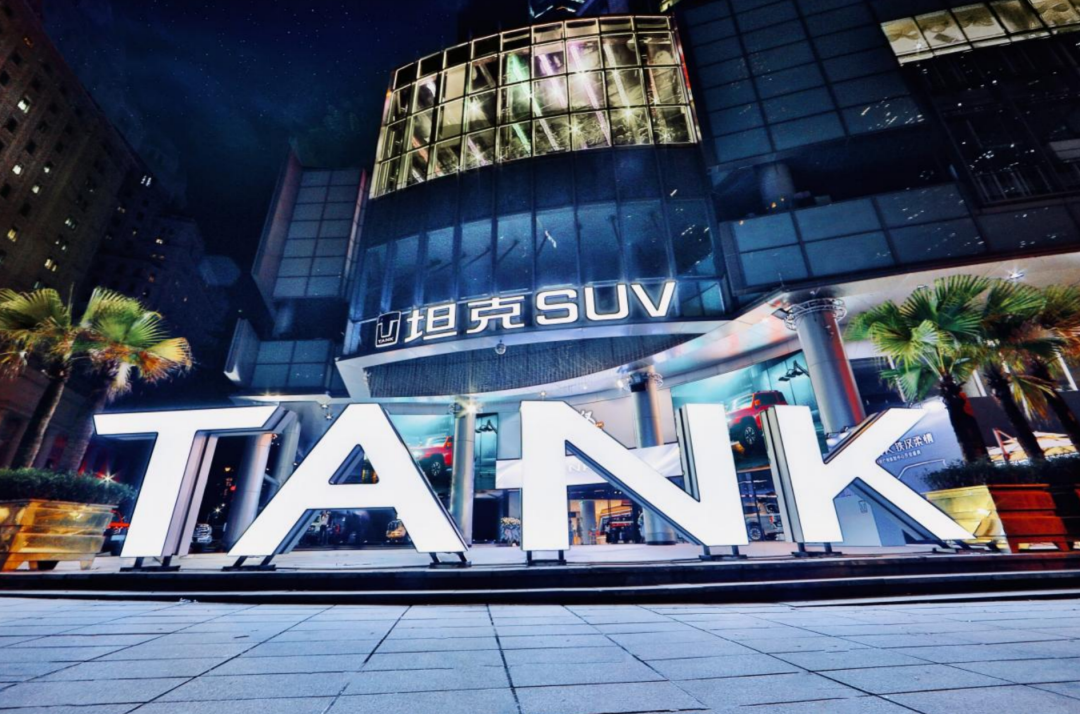
Tank's next task is not to repeatedly prove its off-road capability, but to provide consumers in each price segment with a clear reason to choose it in a market where boxy vehicles are widespread. The difficulty of this question is no less than a highly challenging climb.
-
![]()
Beijing Computing Power Chip Company Initiates IPO Coaching; National AI Industry Fund Participates
-
![]()
Li Jiaqi Sells 2 Trillion Tokens in Half an Hour
-
![]()
AI Agents Enter the Oilfield Decision Chain: The Threshold for Industrial Intelligence Has Changed
-
![]()
Tank Sales Fall 30% Year-on-Year: Has the Hardcore Off-Road Dividend Peaked?
-
Does the China-Market iPhone Duo Cut Corners? Compared to the US Version, Is 1,000 Yuan in Cost Stripped Out?
-
![]()
Apple: The Storage Backlash Finally Arrives — Is the "Safe Haven" Facing AI About to Spring a Leak?
-
![]()
SpaceXSI Opens Global Ambassador Recruitment: Why Is Musk's AI Ecosystem Paying Increasing Attention to Developer Communities?
-
![]()
An Open-Source Model That Lets You Chat About DNA: 14B Parameters, Runs on a Laptop