Tech Titans Clash in AI Race, with Workers Shouldering the Burden
 09/14 2026
 464
464
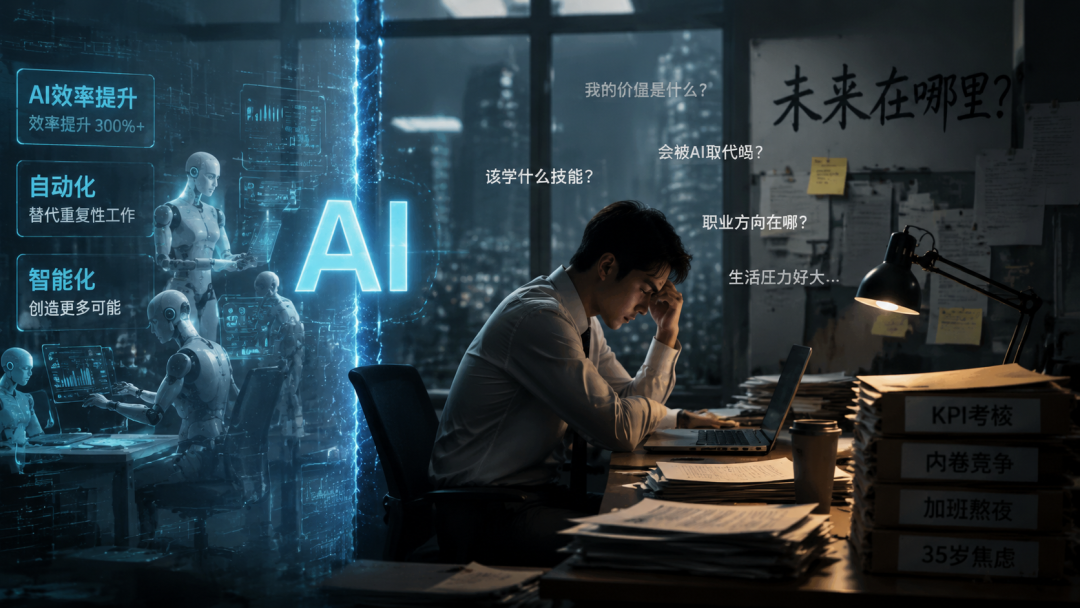

Workers' Plight Amidst Fierce AI Competition
Image Source | Internet (Please contact us for removal if infringement occurs) Partially Generated by AI
In early September, the AI race among internet tech giants witnessed two major developments.
ByteDance secured a syndicated loan of approximately $29.6 billion, marking the second-largest dollar-denominated loan transaction in Asia in 2026. Initially targeting $20 billion, the loan amount was expanded due to bank subscriptions surpassing $30 billion.
Meanwhile, Alibaba completed an 80 billion HKD new share placement in August, which was oversubscribed within an hour of launch, with total orders nearly tripling the amount raised. All proceeds were earmarked for AI infrastructure. This marked Alibaba's first new share placement since its return to Hong Kong for listing in 2019.
In another move, Alibaba led a $300 million funding round for AI training and evaluation startup UniPat AI, valuing the company at $2.5 billion. UniPat's founder, Li Kuan, previously worked at Alibaba's Tongyi AI Lab, focusing on post-training analysis and reinforcement learning. Thus, Alibaba is investing in a company founded by a former intern from its own lab.
Together, these events epitomize the 2026 AI race among internet tech giants: capital is pouring in frenziedly, talent is flowing rapidly, and no one dares to halt.
ByteDance's capital expenditure plan for 2026 reaches up to $70 billion, more than doubling from the previous year, and may further escalate to $100 billion in 2027.
Alibaba's three-year AI investment plan of 380 billion yuan has seen approximately 190 billion yuan invested by the end of the second quarter of this year, with quarterly capital expenditures reaching 67.678 billion yuan, a 75% year-on-year increase.
Tencent's capital expenditures in the second quarter reached 52.784 billion yuan, a 176% year-on-year increase, while its quarterly free cash flow turned negative at 13.8 billion yuan, the first time since single-quarter disclosures began in 2014.
Behind these figures lies a torrent of capital expenditure: Tencent's free cash flow turning from positive to negative in a quarter, Alibaba seizing the opportunity for its first new share placement since returning to Hong Kong for listing to raise AI funds. This is not a strategic choice but a reflection of survival anxiety.
What tech giants fear is not just failing to make money but being left behind in this technological wave that may redefine the industry landscape.
Thus, they are employing every available tool: financing, investing, issuing bonds, and placing shares. Organizational structures are being repeatedly adjusted. Tencent merged its Hunyuan Large Language Model Department with its Multimodal Model Department, while ByteDance solidified Wu Yonghui's position at the helm of Seed and introduced 'Doubao Shares' to retain talent.
However, all these grand narratives ultimately impact a specific group—the workers.

When Tokens Become KPIs
Initially, providing employees with Token quotas seemed like a perk.
Alibaba issued exclusive Token quotas to all employees, Tencent reportedly configured annual AI Token packages worth approximately 220,000 yuan for its employees, and ByteDance offered unlimited quotas in work scenarios and reimbursed 50% of AI product experience costs during leisure time. It seemed as if the companies were saying, 'Use AI tools freely; the company will cover the costs.'
But soon, the perk turned into an evaluation criterion. 'There are reports that a domestic tech giant is currently using Token usage as one of the criteria for probation, promotion, and layoffs.'
Some Tencent R&D teams explicitly require engineers to consume a specified quota of Tokens daily; otherwise, their performance ratings will be affected. Alibaba's ATH Business Group took the lead in shifting its core AI business metrics from Daily Active Users (DAU) to Token consumption, establishing a dedicated team to coordinate computing power allocation and encourage teams to 'actively consume.'
In Alibaba's e-commerce business, employees' OKRs include multiple AI metrics such as AI tool penetration rate and problem order resolution rate. At Meituan, AI-driven growth is quantified as a semi-annual key metric and incorporated into performance evaluations.
An earlier signal emerged in February this year. An internal letter from Kunlun Wanwei explicitly mandated all technical staff to use Codex or Claude Code, with a requirement to improve development efficiency by at least 50%. Those who failed to meet this target would face elimination, ranging from 5% to 20%. Yao Jinbo, Chairman of 58.com, put it more bluntly: 'The more Tokens used, the better.'
Incorporating Token consumption into performance evaluations is essentially a lazy management tactic.
'A feature launched days earlier may be credited to AI or simply a simpler requirement. An engineer submitting more code doesn't necessarily mean fewer defects.' AI's contributions are intertwined with trivial tasks like searching, discussing, writing code, and making decisions, making it difficult to separate them cleanly.
Tokens, on the other hand, are honest and easy to track. 'Managers ultimately chose it not because it's more accurate but because it's more convenient.'
Thus, an absurd scene emerged.
At Meta, employees spontaneously set up a leaderboard called Claudeonomics to track the top 250 Token consumers company-wide, awarding titles like 'Token Legend' and 'Cache Wizard' to leaders.
Within 30 days, the leaderboard recorded consumption exceeding 60 trillion Tokens, with the top employee consuming approximately 281 billion Tokens alone.
Amazon's approach was even more dramatic. The company launched an internal AI scoring leaderboard called 'Kirorank,' but employees started making unnecessary AI calls to boost their scores, causing computing costs to skyrocket. Amazon had to urgently shut down the system because the bill was too high.
Tech giants inadvertently fostered Token ranking and then shut it down because the costs were exorbitant.

The Absurdity of Paying to Work
On the flip side of Token evaluations, quotas are tightening.
Starting in June, Tencent employees noticed their Token quotas had shrunk. 'Previously, there was a $2,000 monthly quota; this month, it's only 1,400 yuan, gone in two days.'
Quotas varied greatly across departments. The Hunyuan Large Model team had a monthly quota of approximately 7,000 yuan, while the Youtu Lab had around 5,250 yuan. Some Tencent Entertainment outsourced employees reported a mere 1,000 yuan monthly quota.
At ByteDance, some departments reimbursed external model expenses at 50% of actual costs, with an annual reimbursement cap of 1,000 yuan for R&D positions.
What if the quota isn't enough? Pay out of pocket.
One Xiaohongshu user, louis, shared her bill: ChatGPT Pro via Apple subscription cost approximately $108, Claude Pro cost around $21.65 monthly, X Premium cost about $11.91 monthly, plus fluctuating expenses for API and Token calls, totaling approximately 1,400 to 1,500 yuan per month. She has spent over 9,000 yuan on AI for work.
An employee at a small design company in Hangzhou needs to spend 100 to 200 yuan monthly on AI monthly memberships, actively seeking discounts on Token memberships and buying low-priced single-day memberships on second-hand trading platforms to save money.
One interviewed employee summed it up accurately: 'I use my salary to buy Tokens, improve efficiency for the company, and AI model vendors make money. Only I'm paying to work, and my workload hasn't decreased.'
This is not an isolated phenomenon. From early 2024 to the end of June 2025, China's daily Token consumption soared from approximately 100 billion to over 30 trillion, a more than 300-fold increase in one and a half years.
A programmer at a Hangzhou internet tech giant used 9.16 billion Tokens in May, with estimated costs of around 60,000 yuan.
A programmer at a global top trading website consumes 2 billion Tokens daily, with departmental rankings for Token consumption. 'If you don't reach a certain monthly quota, you'll be called in for a talk.'
Tokens have transformed from a technical concept into a double burden hanging over workers' heads: using too few affects performance, while using too many requires personal expenditure.

The 'Feeder' Dilemma of AI
An overlooked question is: Are tech giants' AI ventures actually making money amidst all this spending?
In 2026, China's AI industry is transitioning from a 'hundred-model battle' to a new phase of head-to-head competition, with trillion-dollar AI companies like DeepSeek, Yuezhian, Zhipu, and MiniMax continuously setting new benchmarks. However, 'profitability remains to be verified.'
The commercialization of large models is still in its exploratory phase, but costs are already soaring. ByteDance, Alibaba, and Tencent have all seen capital expenditure growth exceeding 100%, with financing scales reaching hundreds of billions of dollars. Yet, no one can provide a definitive answer on how much revenue these investments will generate.
This has led to an awkward situation: Companies cannot clearly quantify the value created by AI, so usage itself has become a proxy for value. But a deeper issue is that when companies themselves cannot verify the return on investment in AI, they pass this uncertainty onto employees.
Ultimately, tracking Tokens is driven by a management dilemma: Bosses demand a 'full embrace of AI,' but companies cannot answer how much value these tools actually create. Before finding the answer, evaluations have already begun. And those being evaluated, in turn, become the fuel feeding this system.
More subtle changes are occurring. Some companies have trained departed employees as AI digital avatars to continue 'working' within the company. 'Your colleagues weren't laid off; they became Tokens to stay by your side.'
Developers have created tools like 'Anti-Distillation.skill' to replace core knowledge in Skill files with 'correct but uninformative' language, countering companies' attempts to extract employee knowledge.
Workers are being asked to replace themselves with AI while finding ways to avoid being replaced by AI.
Everyone Trapped in the System
Returning to the two events at the beginning.
Alibaba leading the investment in an AI company founded by a former intern and ByteDance securing a $29.6 billion syndicated loan beyond expectations reveal a harsh reality: Every dollar invested by tech giants in AI must ultimately be 'recovered' in some way.
Recovery may come through better products, higher efficiency, or larger market share.
But before recovery is achieved, costs must be borne by someone. Currently, these costs are not just reflected in capital expenditures and negative free cash flow on financial statements but also by workers subjected to Token evaluations, 'pay-to-work' employees buying AI memberships, and 'chat engineers' data manipulation on Token leaderboards.
In July 2026, 26 Meta employees sued the company in the U.S., alleging reliance on AI tools to measure productivity and Token usage during layoffs and incorporating 'AI adoption' into performance evaluations.
Amazon shut down its internal leaderboard after it was manipulated to exorbitant costs. Tencent internally 'opposes Token usage rankings and does not solely measure employee output by Token consumption.'
These signals indicate that even tech giants themselves recognize the problem. However, a vast gap remains between recognizing and solving it.
Before finding a better metric, Tokens remain the 'honest and easy-to-track' indicator, and honest numbers are often easier to wield as a yardstick than vague values.
Workers are trapped in this yardstick, just as tech giants are trapped in the AI arms race. Both know the direction may be wrong, but neither dares to stop first.
Perhaps the most ironic layer is that while everyone is using AI, the accounts for AI itself remain unclear.
Token economics, AI's return on investment, and the commercialization path of large models remain unresolved, but anxiety has already cascaded from boardroom decisions on capital expenditures to Token consumption leaderboards at workstations.
AI hasn't replaced anyone yet, but workers have already been forced to become its feeders.
And the job of a feeder has always been the most exhausting.
-
![]()
Internet Giants Are Competing for AI Talent
-
![]()
Tech Titans Clash in AI Race, with Workers Shouldering the Burden
-
![]()
Which would you choose: an iPhone costing 10,000 yuan or a domestic smartphone?
-
![]()
User Time Spent No Longer the Ultimate Currency
-
![]()
The US Accuses China of 'Distillation.' Mathematicians Echo the Question Back at OpenAI in the Same Week
-
![]()
Apple, Huawei, and Xiaomi Vie for Dominance in the 10,000-Yuan Smartphone Segment: Has the Smartphone Market Embraced the Luxury Era?
-
![]()
Chinese Air Conditioners Gain Momentum in Europe: Can Indian Companies Follow Suit on the Global Stage?
-
![]()
Xingyu Shares Cancels Contracts of 107 New Graduates—Not for Listing, but for a Far Grimmer Reason