How Did AI Customer Service, Which Transfers Calls to Human Operators After 660 Seconds, Turn into a ‘Talking Wall’?
 09/15 2026
 389
389
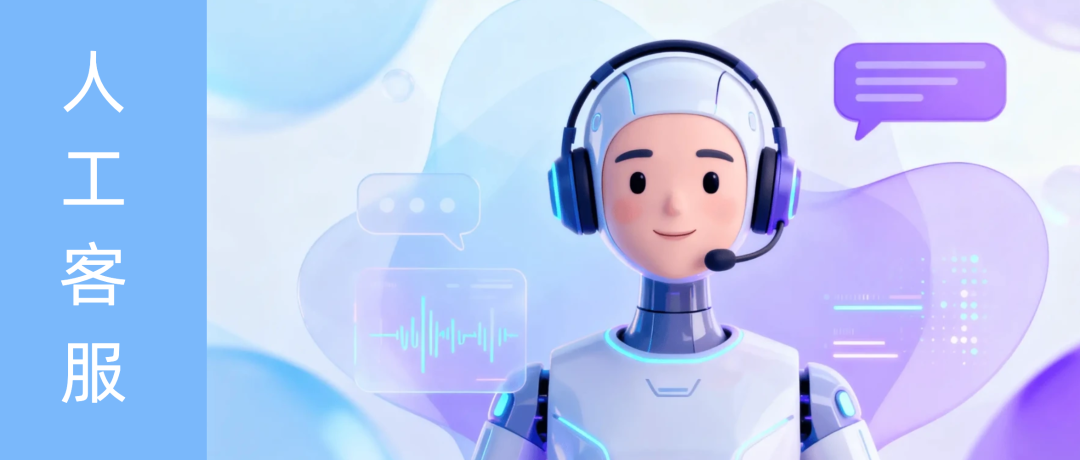
“Connecting to human customer service.”
“I get how you feel, sweetheart~”
“Transfer to human operator, please!”
“We’ve logged your request and will reach out soon~”
“HUMAN!!”
“Is there anything else I can help with?”
If you haven’t found yourself cursing at a chatbot in the dead of night, muttering something like “this useless robot,” then you’ve likely not yet been “put through the wringer” by online services. AI customer service was meant to be the ‘always-on receptionist,’ but now, it’s increasingly acting like a talking wall: it hears your voice but doesn’t grasp your meaning; it can field inquiries but can’t soothe your frustrations; it responds instantly with a saccharine “dear,” yet refuses to connect you with a real human.
In 2024, national market regulatory authorities received 6,969 complaints related to ‘intelligent customer service,’ marking a year-on-year increase of 56.3%. In the first half of 2026, data from the China Consumers Association revealed that after-sales service complaints accounted for 26.79% of the total, with AI customer service issues—such as irrelevant responses, false promises, and difficulty in reaching human operators—topping the list. Technology hasn’t taken a step backward, but the user experience has—is this AI’s fault? Partly, but not entirely.
AI hasn’t gotten dumber; companies have misaligned their KPIs
The economics behind AI customer service are straightforward: a basic intelligent customer service system costs a few thousand dollars annually, with per-interaction costs ranging from a few cents to a few jiao. In contrast, a human customer service representative costs three to four thousand dollars monthly, and with social security, workspace, and training, the annual cost starts at nearly ten thousand dollars. The cost difference is staggering—enough to make any executive’s eyes light up.
But the crux of the problem lies in the fact that some companies prioritize ‘interception rates’ over ‘resolution rates.’
Menus are buried three layers deep, with the option to transfer to a human operator hidden under ‘More—Other—Complaints—Press 0 again.’ AI is trained not to ‘solve problems’ but to ‘fallback respond.’ When users grow tired of shouting, fed up with waiting, and give up by taking screenshots and posting on social media, the backend metrics still look rosy. Some in the industry refer to this as the ‘natural filtration rate’—using algorithms to wear down patience and processes to discourage rights protection.
Chen Yinjiang from the China Law Society’s Consumer Law Research Association puts it bluntly: when the customer service department is viewed as a pure cost center and the primary goal is cost reduction, AI shifts from being an ‘assistant’ to a ‘filter.’ Su Haopeng is even more scathing: this isn’t cost reduction and efficiency improvement; it’s postponing, hiding, and converting problems into negative reviews, returns, public opinion crises, and brand collapse. What’s saved is wages, but what’s lost is trust.
The most costly aspect of cheap technology is that it absolves companies of the ‘human responsibility’ they should shoulder.
Behind the wall are three philosophies of laziness
The alienation of AI customer service isn’t fundamentally due to insufficiently large models but because three pillars have collapsed simultaneously:
First, confusing ‘response’ with ‘resolution.’
“We’ve received your feedback” does not equate to “we’re handling it,” and “dear” does not mean “I understand you.” Service isn’t a relay race of scripts; users want results, not emotional massages.
Second, confusing ‘standardization’ with ‘everything.’
AI is indeed faster than humans for tracking shipments, issuing invoices, or changing addresses. But for refund disputes, unauthorized deductions, a baby crying outside the door due to a broken lock, or an item being sold at a reduced price on a secondhand platform without consent—these emotionally charged, risky, and responsibility-laden scenarios demand human intervention. Using AI to handle complex disputes is akin to letting a navigation app sign a home purchase contract for you.
Third, treating ‘algorithm-generated’ as a ‘disclaimer.’
“AI responses do not represent the company’s stance”—this phrase is becoming the golden excuse for passing the buck in the new era. However, under the Consumer Rights Protection Law, operators must provide truthful and clear answers to inquiries about goods and services, and this obligation doesn’t vanish because of a disclaimer like “the machine said it.” Companies may outsource their mouths to large models and shift the blame to them, but users are paying for your service, not your prompts.
With the new national standard, ‘transferring to human’ should no longer feel like clearing a level
The good news is that on September 1, 2026, the ‘Customer Contact Services - Requirements for Collaboration Between Human and AI Customer Services’ was officially implemented—the first national standard focusing on human-machine customer service collaboration, bringing many ‘unspoken rules’ to the surface:
- The option to transfer to a human operator must be clear and prominent, not hidden like a game of hide-and-seek;
- If the user explicitly requests a human operator, if AI repeatedly fails to provide accurate answers, or if the issue involves funds/safety/compensation, timely transfer is mandatory;
- Human-machine switching must carry historical context; don’t make users repeat their order number eight times;
- For pricing, refunds, compensation, or contract changes, AI can collect materials, but final confirmation requires human decision-making;
- Companies cannot evade responsibility with disclaimers like “algorithm-generated”—AI’s mouth must be owned by the enterprise.
This marks the beginning of bringing technology back to its service-oriented roots. However, a sobering reminder: this is a recommended national standard, not a ‘go bankrupt if you don’t transfer to human’ sword of Damocles. To truly dismantle the industry’s unreasonable old walls, three forces must align:
- Regulators set boundaries, platforms revamp architectures, and users keep evidence.
Screenshots, screen recordings, order numbers, and original AI promises are a hundred times more effective than cursing “garbage customer service.”
Technology’s dignity lies in connecting people
AI customer service shouldn’t be demonized. It excels at checking express deliveries at 2 a.m. and batch-answering repetitive questions. What’s truly glaring is the architecture where ‘intelligence is used to block people, and humans are used to take the blame’: a cheerful front desk with a cold backend, where everyone shifts blame to the model when things go wrong.
There’s a simple dialectic in business:
Since 2025, leading platforms like HelloBike and NetEase Cloud Music have been repeatedly named and shamed in quarterly special inspections by the Ministry of Industry and Information Technology for deliberately hiding human customer service entrances. Even after rectifications, human customer service remained unreachable. There’s also the case of a consumer unable to resolve an issue for nearly ten minutes on Luckin Coffee’s customer service hotline after selecting the wrong coffee temperature. These repeatedly ‘saved’ human call connections will eventually erode the company’s reputation, fermenting into visible brand devaluation in trending topics.
The human channel you’re willing to keep open is why users stay.
Don’t treat customer service as a ‘cost center’; it’s actually a ‘trust center.’ When users seek human assistance, it’s not because they don’t understand self-service—it’s because they’ve encountered life’s small problems that machines can’t handle: the 99 yuan overcharged, the child locked outside, the unreturnable order, the sudden change in promised transfer fees.
As technology races forward, someone must turn back to catch those left behind.
Tearing down the ‘talking wall’ doesn’t mean eliminating AI but preventing AI from shielding companies from responsibility.
What retains users is not ‘hide-and-seek’ customer service designs
but the moment a real person says, “I’m here, and I’ll handle this.”
That, this is, the ‘large model’ most worth training in the AI era.
Bu’er Research solemnly declares: The views expressed in this article are the author’s personal opinions and do not represent any investment advice from this platform. Investors should make cautious and rational investment decisions.
-
![]()
After Returning Operating Rights to Seres, How Far Can AITO Progress Post-Huawei's Exit?
-
![]()
Why Build 'Space Towers' When Phones Can Connect Directly to Satellites?
-
![]()
31 Provinces’ Computing Power Integrated into the Grid: Huoshi Industrial Intelligence Unveils Five Regional Competition Trends
-
![]()
Lotus Tech: AR Glasses Split into Two Camps: Lightweight AI HUD and AR Large-Screen Viewing/Spatial Computing Glasses
-
![]()
How Did AI Customer Service, Which Transfers Calls to Human Operators After 660 Seconds, Turn into a ‘Talking Wall’?
-
![]()
Xiaomi Xuanjie O3 Debuts, Qualcomm Reveals Next-Gen Snapdragon Platform, Paving the Way for the Agentic AI Era
-
![]()
Will New Energy Vehicle Prices Climb Following the Introduction of the Battery Tax?
-
Over 4.27 Million Vehicles Recalled: The Price of Hidden Door Handles' Technological Allure