After Returning Operating Rights to Seres, How Far Can AITO Progress Post-Huawei's Exit?
 09/15 2026
 550
550
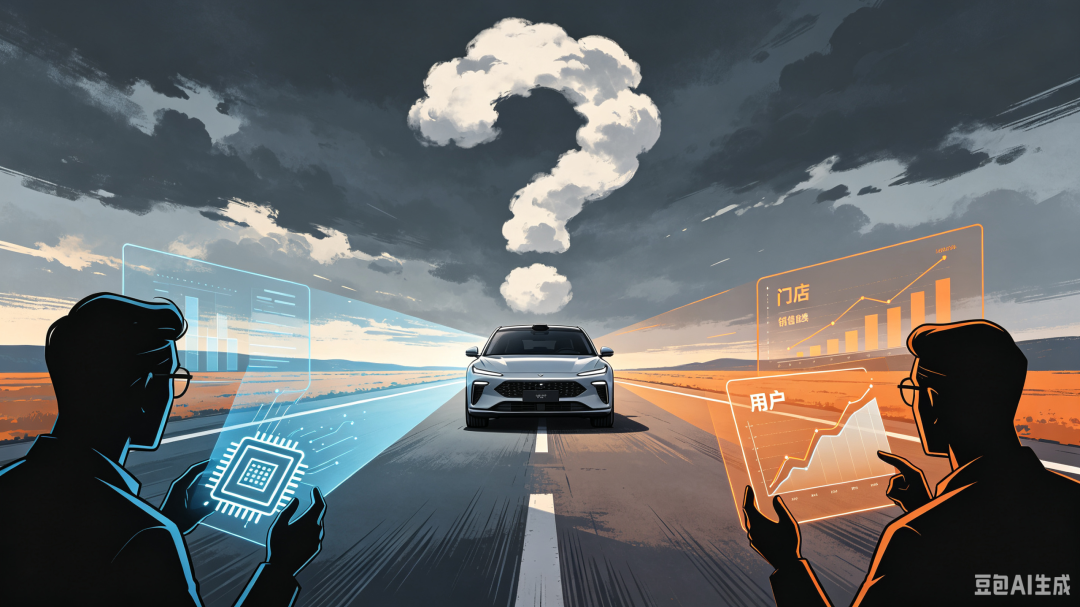
AITO's Coming-of-Age Ceremony/AI-generated Image
Manual Labor/Brother Wa
Manual Editing/Uncle Jiao
Produced by/Unicorn Observer
At noon on September 15, a significant announcement from Cailian Press reverberated through the automotive industry and capital markets: Huawei and Seres are set to overhaul their smart vehicle collaboration model this week. Moving forward, Huawei will adopt a lighter asset approach in its partnership with Seres. Key operational functions—previously fully managed by Huawei, including product definition, marketing, store sales, and customer service—will now be spearheaded by Seres. Huawei will step back into a technology-enabling role, continuing to offer comprehensive intelligent vehicle technology solutions, such as the HarmonyOS cockpit and Qiankun Intelligent Driving, but will cease heavy asset investments and full-link operations.
Interestingly, this news broke during the A-share market's lunch break. Seres' stock price initially surged by 1% briefly in the afternoon before reversing and plummeting by 5.09% to close at 45.4 yuan. This price represents a more than 75% decline from its peak of 173.55 yuan reached in late September of the previous year, marking a new three-year low.
The market's response was unequivocal: AITO's meteoric rise from an underdog to a leading new energy vehicle brand, boasting over 900,000 cumulative deliveries, was largely attributed to Huawei's brand endorsement, product definition prowess, and extensive network of Huawei stores across the nation.
Now, with Huawei "loosening its grip," the question remains: How high can AITO still soar?
A closer examination of the timeline reveals that this adjustment is not abrupt but the culmination of a strategic shift that has been in the making for at least a year. As early as the summer of 2025, Caixin Weekly reported that the sales leadership of three major brands under the Harmony Intelligent Mobility Alliance (HIMA)—Luxeed, Shangjie, and Xiangjie—had already been formally returned to their respective partner automakers. AITO is the final brand among HIMA's "Five Realms" to relinquish operational control.
In essence, Huawei's transition from "full-link control" to "asset-light enablement" in its smart vehicle model has been a year-long process. AITO's adjustment is merely the final piece in this strategic puzzle.
01 A Dual Narrative Behind Mutual Success
To comprehend this adjustment, we must revisit the pivotal moment four years ago when Seres teetered on the brink of collapse.
In 2020, Seres, then known as Sokon, sold a mere 732 units of its strategic model SF5 throughout the year, incurring a net loss of 1.73 billion yuan. This Chongqing-based automaker, which had transitioned from motorcycles to new energy vehicles, was nearly forgotten amidst the wave of new automotive forces. Huawei, however, rescued it from the precipice.
After Yu Chengdong took charge of Huawei's automotive BU, he selected Seres as the inaugural partner for its "Smart Selection" vehicle program. Zhang Xinghai, Chairman of Seres Group, defied convention and proactively restructured the product system according to Huawei's standards. It was a high-stakes gamble—Seres essentially ceded full control over product definition, pricing, marketing, and channels in exchange for Huawei's technology, brand, and traffic.
The outcome was a resounding success.
The AITO M5, M7, and M9 were launched sequentially. Notably, the inaugural M9 entered the 500,000-yuan luxury SUV market with a starting price of 469,800 yuan and became an instant sensation. The all-new M9 (2026 model) surpassed 10,000 deliveries just three weeks after launch.
In 2025, Seres achieved a record-high revenue of 165.054 billion yuan and a net profit attributable to shareholders of 5.957 billion yuan, finally turning a profit. AITO also became the first brand among HIMA's "Five Realms" to establish a viable business model, with cumulative deliveries exceeding 900,000 units. Seres' stock price soared from lingering around a few yuan during the Sokon era to a peak of 173.55 yuan, becoming a darling of the capital markets.
However, the flip side of the coin was Seres' deepening reliance on Huawei, which was becoming a burdensome shackle.
Market analysts estimated that the procurement cost of core hardware such as the HarmonyOS cockpit and Qiankun Intelligent Driving alone was approximately 50,000 yuan per vehicle. According to Seres' Hong Kong IPO prospectus, from 2022 to the first half of 2025, Seres' cumulative procurement from the Huawei ecosystem exceeded 75 billion yuan. Based on a simple calculation of 20 billion yuan in procurement and 147,000 AITO deliveries in the first half of 2025, an estimated 136,000 yuan per vehicle flowed into the Huawei ecosystem.
It should be emphasized that this is a simplified static estimate with timing mismatches between procurement stockpiling and vehicle deliveries, and it does not represent the official per-vehicle settlement amount. Nevertheless, this data underscores that Seres paid a hefty price for its deep integration with Huawei.
In 2025, Seres' net profit margin was a mere 3.61%. With revenue of 165 billion yuan, its profits were as thin as paper. New revenue could not be effectively converted into profits. As industry price wars intensified and sales shifted toward lower-priced segments, when economies of scale failed to offset the bundled cooperation costs from the Huawei ecosystem, losses became inevitable.
In the first half of 2026, the situation worsened.
Seres' revenue was 57.493 billion yuan, down 7.87% year-on-year; its net loss attributable to shareholders was 1.717 billion yuan, compared to a profit of 2.941 billion yuan in the same period last year. The net loss in the second quarter alone exceeded 2.2 billion yuan. More glaring was the "increased sales without increased revenue": new energy vehicle sales reached 179,000 units, up 3.9% year-on-year, and AITO deliveries even rose by 10.2%, but both revenue and profit declined.
During the same period, Seres' procurement of goods and services from Yinwang (Huawei's automotive BU entity) amounted to 9.84 billion yuan, an increase of 4.24 billion yuan from 5.6 billion yuan in the same period last year. The more vehicles sold, the more money paid to Huawei, while its own profits shrank—a model that had clearly reached a breaking point of unsustainability.
02 Why Is Huawei "Letting Go" Now?
If Seres has an incentive to regain operational autonomy, why is Huawei willing to loosen its grip? The answer may lie in HIMA's "Five Realms" strategy.
Currently, HIMA has formed a five-brand matrix: AITO (Seres) targets the premium SUV segment, competing with Li Auto; Luxeed (Chery) targets young tech enthusiasts, competing with Tesla; Xiangjie (BAIC) competes with Mercedes-Benz; Zunjie (JAC) aims for the ultra-luxury segment, challenging Maybach, Bentley, and Rolls-Royce; and Shangjie (SAIC) positions itself as an affordable model under 200,000 yuan, competing with Volkswagen and Toyota. With ten models across five brands, HIMA covers the entire price range from 150,000 yuan to over 1 million yuan, with cumulative deliveries exceeding 1.52 million units and an average brand transaction price stabilizing around 390,000 yuan.
As the first brand to establish a viable model, AITO has fulfilled its historical mission of "helping Huawei build its reputation." Meanwhile, Luxeed, Xiangjie, Zunjie, and Shangjie are still in their growth phases. Huawei needs to allocate its most elite product definition capabilities, marketing resources, and channel focus to these four brands. Continuing to invest heavily in full-link operations for AITO would severely dilute Huawei's resources—after all, Huawei's Consumer BG has limited team size and management capacity.
More importantly, this reflects the evolution of the business model. In the Smart Selection 1.0 era, Huawei was deeply involved in every aspect from product definition to sales services, essentially using an "operate an automotive brand" approach to validate its intelligent vehicle technology solutions.
This model offered strong control and a unified experience but had significant drawbacks: heavy asset investment, high costs, limited management reach, and potential conflicts over profit distribution and decision-making power with partner automakers.
In the Smart Selection 2.0 era, Huawei aims to be a "technology supplier"—providing the HarmonyOS cockpit, Qiankun Intelligent Driving, and Huawei's brand endorsement without engaging in front-end brand operations and channel management. This allows Huawei to serve more automakers with the same team resources, expanding HIMA's reach beyond the "Five Realms" to a broader market and achieving an asset-light, high-margin, and replicable technology enablement model.
This logic aligns with Huawei's smartphone business: Huawei does not manufacture its own phone chips but controls the core product experience and ecosystem discourse through Kirin chips and HarmonyOS. In the automotive sector, Huawei's ultimate goal is not to become an automaker but to be the "Android + Qualcomm" of the smart vehicle era—providing the underlying operating system and core chips to enable automakers to run on Huawei's technology ecosystem.
Huawei's "loosening its grip" on AITO marks a strategic pivot from "directly competing in the automotive market" to "supplying technology from behind the scenes."
03 Seres' Opportunities and Concerns
For Seres, regaining operational control of AITO is a long-overdue "coming-of-age ceremony."
The benefits are tangible. First, the profit-sharing model will shift from fixed royalties to dynamic profit-based distribution, allowing Seres to retain more operating profits. Second, product pricing power, supply chain procurement authority, and vehicle specification decisions will return to Seres, enabling more flexible product strategy adjustments based on market demand without being solely beholden to Huawei's product definition timeline. Third, Seres can finally build its own brand equity and channel system, no longer merely serving as "Huawei's contract manufacturer."
However, the challenges are equally formidable. Seres faces a "weaning period" survival test.
First is the marketing capability gap. Every AITO product launch and marketing campaign in the past was orchestrated by Huawei's Consumer BG marketing team, with Yu Chengdong, a walking traffic generator, personally endorsing each event. Now that Huawei has exited front-end operations, can Seres sustain AITO's brand momentum? Seres' in-house marketing team and brand operations capabilities are orders of magnitude behind Huawei's Consumer BG.
Second is the channel system reconstruction. AITO previously relied heavily on Huawei's offline store network—Huawei has over 6,000 experience stores nationwide, which were core infrastructure for AITO to quickly reach premium users. Post-adjustment, Seres needs to build or rebuild AITO's sales and service channels, entailing significant capital expenditures and a lengthy construction timeline. Amid the intensifying price wars in the new energy vehicle market, the costs and risks of channel reconstruction are non-trivial.
Third is the product definition capability test. The success of AITO M9 owed much to Huawei's precise insight into premium user needs and its product definition prowess—the interactive experience of the HarmonyOS cockpit, the technological leadership of Qiankun Intelligent Driving, and the premium brand image associated with Huawei were core sources of AITO's product strength. While Huawei will continue to provide technology solutions, with product definition now led by Seres, uncertainty looms over whether AITO can continue to launch blockbuster products like the M9.
Finally, there is the issue of brand perception. In consumers' minds, AITO is virtually synonymous with "Huawei's car." Many users purchased AITO vehicles essentially to buy into Huawei's brand and technology. With Huawei exiting front-end operations and AITO's "Huawei content" diminishing, will consumers still be willing to pay a brand premium for AITO? This is a question that only time can answer.
Notably, insiders emphasize that "AITO will not leave the HIMA ecosystem"—meaning AITO will still use Huawei's technology solutions and brand endorsement, remaining within HIMA's ecosystem. This partially allays market concerns about AITO's "de-Huaweification" but also signifies a shift from "deep integration" to a "loose alliance," granting Seres more freedom while exposing it to greater risks.
Following the news of the adjustment in Huawei and Seres' smart vehicle cooperation model, the market quickly polarized into two camps. Pessimists argue that without Huawei's deep integration, Seres may relapse into the predicament it faced as Sokon; optimists believe that with regained brand operational autonomy, Seres can expand profit margins and escape the passive situation of "working for Huawei."
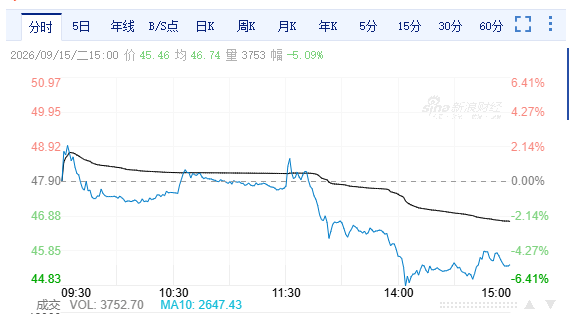
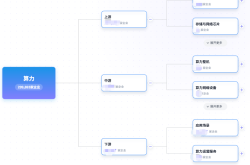
Seres' stock price initially rose and then fell sharply in the afternoon, with significantly increased trading volume (as shown in the chart), directly reflecting this profound market divergence in the capital markets.
Conclusion
Many attribute the challenges of enterprise AI implementation solely to inadequate models, but the real bottlenecks in industrial practice often stem from organizational issues. Delivering business results with AI is not just a technical problem but requires restructuring human-machine responsibilities, job processes, and performance metrics.
In four years, Seres transformed from near-bankruptcy to selling nearly 500,000 vehicles annually, while Huawei evolved from a crossover newcomer to building a "Five Realms" ecosystem covering price ranges from 150,000 to over 1 million yuan. This symbiotic relationship propelled both parties to success but also accumulated tensions.
Now, AITO's "weaning" is not a breakup but a coming-of-age. Huawei needs to shift from "raising a child" to "running a school," empowering more automakers with standardized technology solutions. Seres must transition from "being carried" to "walking independently," proving its worth through independent operations.
This adjustment, while essential for both parties, is also rife with uncertainties. Will AITO be able to sustain its competitive edge without Huawei's comprehensive support across the entire supply chain? Can Seres attain profitability through its independent operations? Will Huawei's asset-light business model prove to be successful? The answers to these questions will only unfold as time progresses.
One thing remains undeniable: this seemingly subtle shift in cooperation models is stealthily reshaping the competitive dynamics of the smart vehicle industry. (End)
-
![]()
Is It Harder for Automakers to Profit as Car Sales Increase?
-
![]()
After Returning Operating Rights to Seres, How Far Can AITO Progress Post-Huawei's Exit?
-
![]()
Why Build 'Space Towers' When Phones Can Connect Directly to Satellites?
-
![]()
31 Provinces’ Computing Power Integrated into the Grid: Huoshi Industrial Intelligence Unveils Five Regional Competition Trends
-
![]()
Lotus Tech: AR Glasses Split into Two Camps: Lightweight AI HUD and AR Large-Screen Viewing/Spatial Computing Glasses
-
![]()
How Did AI Customer Service, Which Transfers Calls to Human Operators After 660 Seconds, Turn into a ‘Talking Wall’?
-
![]()
Xiaomi Xuanjie O3 Debuts, Qualcomm Reveals Next-Gen Snapdragon Platform, Paving the Way for the Agentic AI Era
-
![]()
Will New Energy Vehicle Prices Climb Following the Introduction of the Battery Tax?