AI Short Dramas Enter the 'Era of Perception'
 09/16 2026
 534
534

Original: Shenmou Finance (chutou0325)
AI short dramas may be one of the most divided industries today.
On one hand, the industry is thriving. Platform data is rising, capital is flowing in, and hit stories emerge regularly. In the first half of 2026, the number of AI short drama users in China exceeded 600 million, with a market size surpassing 22 billion yuan. A total of 367,000 micro-short dramas were launched across platforms, with AI short dramas accounting for over 74%. In recent months, companies like Kling AI and Shengshu Technology have disclosed hundreds of billions of yuan in new financing.
On the other hand, the story has changed. Few teams are consistently making money from AI short dramas. One team launched 11 dramas in two months, earning a total of 9.6 yuan in revenue. On social media, countless practitioners report investing tens or even hundreds of thousands of yuan without seeing any return. While the industry is booming, many practitioners are struggling to keep up.
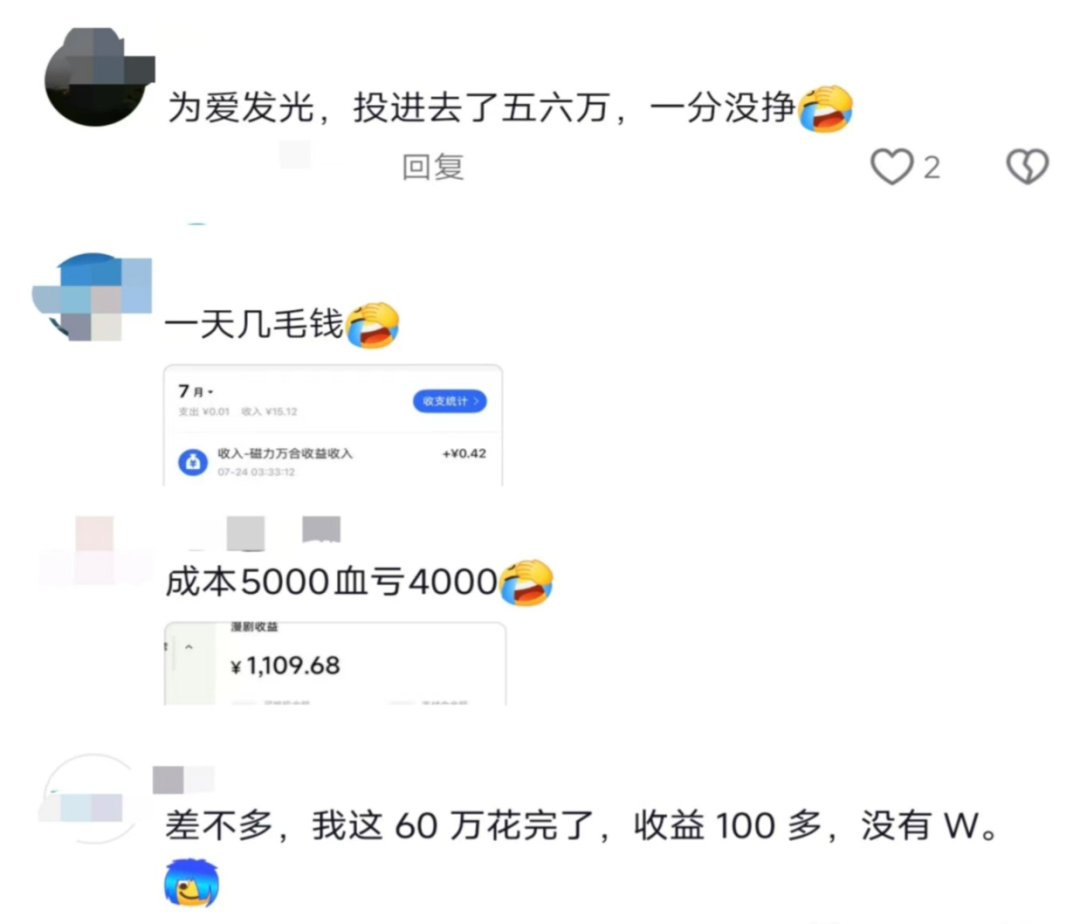
Why does the perceived prosperity of an industry repeatedly touted as a 'hot trend' differ so greatly from its profitability? The answer may not lie in the technology itself but in the fact that AI has only changed production tools, not the fundamental structure of the business.
01 Production Costs Fall, Traffic Costs Rise
The most direct allure of AI short dramas is cost reduction. No need to hire directors, screenwriters, or rent studios—one person with a computer can get started.
According to Shanghai Securities News, Zhong Tianxiang, founder of Liu Ranyun, built his own AI system workflow. With a team of two to three people plus AI, they can produce 8 to 10 short dramas per month. Wang Weizhi, vice president of Jiuzhou Culture, also noted that the overall production cost of AI micro-short dramas has dropped more than tenfold, with the company's monthly project output increasing from 100 in the era of human-produced content to 1,000.
The production Subject has shifted from studios to servers, from crews to workflows. But the money saved hasn't turned into profit.
In traditional filmmaking, the chain runs from crew to platform to user, with profits primarily retained between the crew and platform. Now, with AI short dramas, the chain runs from human and AI to platform to user, changing the production Subject .
What follows is a reduction in cost consumption, but the saved production fees don't stay with the producers—they flow out in a new form.
Lin Qiwen, vice president of DataEye Ju Chacha, stated that current AI short drama production costs have dropped by about 90%, but traffic acquisition costs have risen by over 100% year-on-year. The industry's overall revenue has shrunk by more than half, with many AI short drama companies still unprofitable. The saved production fees are handed over to traffic acquisition.
Moreover, DataEye data shows that 70% to 80% of overseas short drama downloads rely on paid traffic. In North America, the cost of acquiring a single user has reached $5.28, peaking at $15, with some platforms reinvesting nearly 80% of their revenue into traffic purchases.
This means the short drama industry is trapped in a cycle: stopping traffic acquisition means no new users, but increasing traffic acquisition continuously erodes profits.
This dilemma is even more starkly reflected in the financial reports of listed companies. Zhangyue Technology's revenue from short dramas and other derivative businesses reached 1.855 billion yuan in 2025, up 139.19% year-on-year, but promotion expenses hit 1.986 billion yuan. Kunlun Wanwei's revenue from short dramas and AI short dramas surged from 167 million yuan to 1.617 billion yuan, but annual sales expenses rose to 4.182 billion yuan, with the company reporting net losses exceeding 1.5 billion yuan for two consecutive years.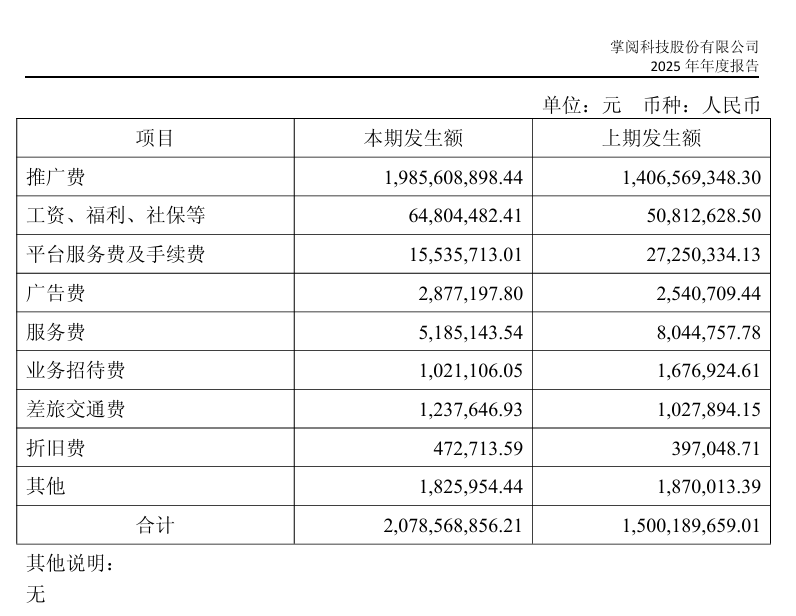
(Source: Zhangyue Technology)
Revenue is rising, but profits aren't staying. The larger the short drama business grows, the more it resembles working for traffic platforms.
Besides sales expenses, another cost arises from computing power.
ChineseAll's Q1 2026 report showed a more than 300% year-on-year increase in AI comic drama output, with weekly Token usage growing by over 20% month-on-month. Rising output and usage mean measurable computing power consumption behind each drama.
Wondershare, a company that entered AI content tools through video creative software, saw its operating costs rise by 54.96% year-on-year in the same period. The report explicitly attributed this growth to AI server fees and long-term asset depreciation.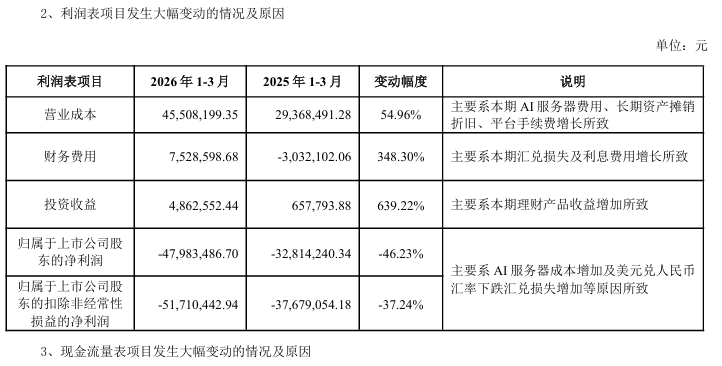
(Source: Wondershare)
The saved labor costs haven't fully turned into profit—most have become server bills.
This shows that AI hasn't created new profit margins out of thin air; it's just redistributed money previously paid to directors, screenwriters, and studios to computing power vendors and traffic platforms. Costly processes haven't decreased—just the nodes where costs are incurred have changed. Cost reduction in AI short dramas lowers the proportion of labor in total costs, not the total costs themselves.
More notably, AI hasn't made content more appealing.
DataEye data shows that over 221,900 new AI short dramas were launched on Douyin in the first half of 2026, averaging over 1,200 daily launches. However, only 1,055 surpassed 100 million views, with a hit rate of just 0.47%. Based on a breakeven line of 50 million views, fewer than 1.3% recouped costs, meaning roughly only 1 in 77 new dramas barely broke even. Most content fails to sustain user attention.
Tools have evolved, but content remains stagnant. If the content itself isn't compelling, lower costs only delay losses. This may be the most critical issue for the AI short drama industry: cost reduction doesn't equal revenue growth, and efficiency doesn't equal business success.
02 Old Approaches with New Tools: The Harder You Try, the More Heartbreaking It Gets
If cost reduction without revenue growth exposes structural business issues, a deeper dilemma lies in the fact that while tools have changed, most practitioners' mindsets haven't. They still pursue scale, broad coverage, and output.
Admittedly, this logic made sense in the era of human directors. Back then, a director could only produce a few projects a year, making capacity a hard constraint. Platforms covered everything—historical romances, modern dramas, mysteries—as a reasonable strategy. Audiences came for the people and the stories, so broader coverage increased hit probabilities.
But in the AI era, capacity constraints have largely vanished. China's Online Audio-Visual Association data shows that about 128,000 micro-short dramas were launched industry-wide in Q1 2026, with AI micro-short dramas accounting for 122,000, or over 95%. By mid-2026, platforms had launched 367,000 micro-short dramas, with over 1,500 new AI dramas daily, accounting for over 74%. Supply has shifted from scarcity to abundance.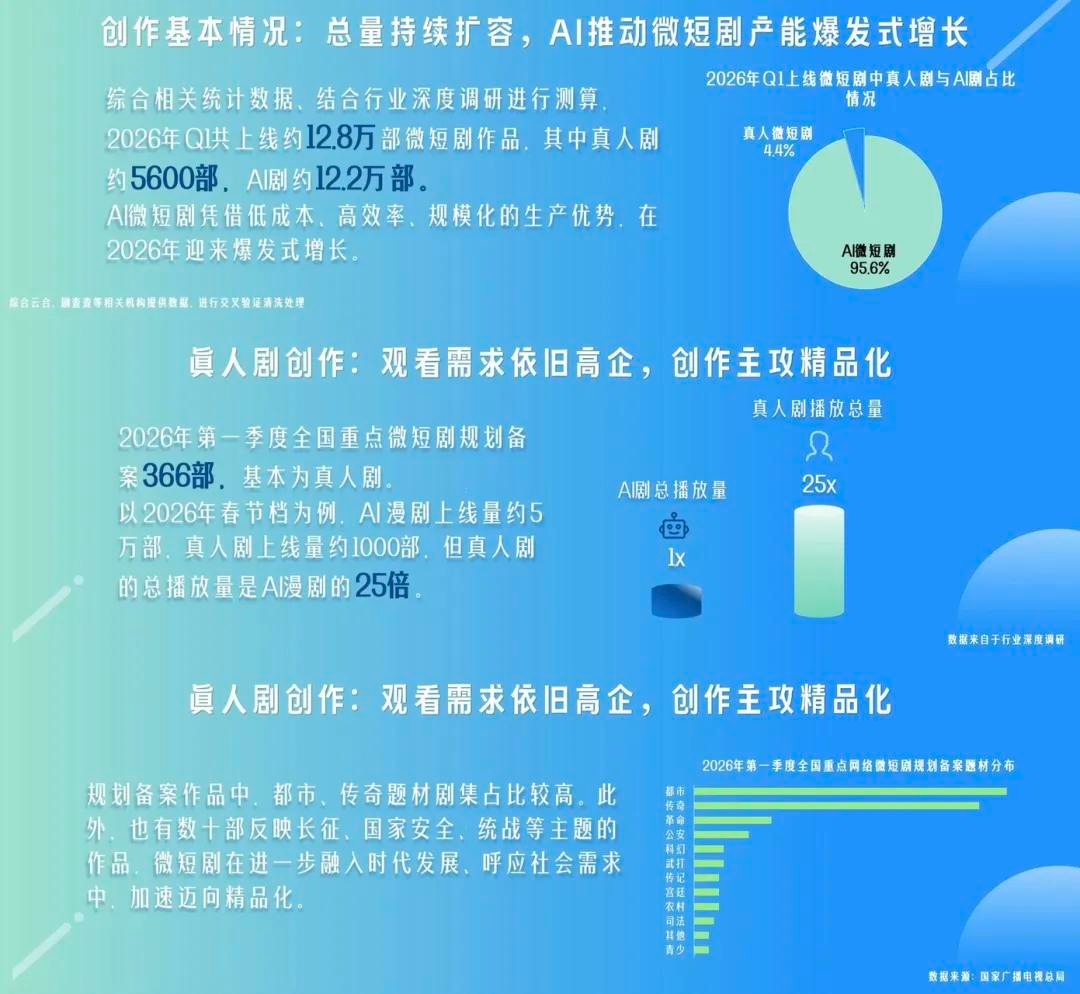
Against this backdrop, continuing the old logic may harm content creators. Pursuing scale dilutes user attention, making it hard for audiences to remember where they saw a particular drama. The direct consequence is low user retention. Adjust's latest report shows that the global D30 retention rate for short drama apps was just 2% in Q1 2026, with North America at only 3%. Users come and go, with few staying.
Mango TV's 2026 H1 report provides a concrete example. Its Damang Plan launched 2,647 micro-short dramas, up 124.51% year-on-year, with daily active users (DAU) in the short drama channel growing 104% year-on-year. However, membership revenue fell 22.6% year-on-year to 1.933 billion yuan. User growth didn't translate into long-term retention.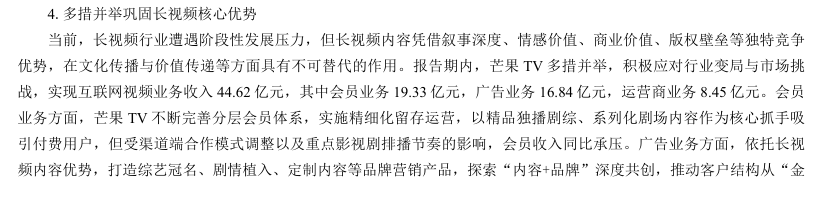
(Source: Mango TV)
Increased capacity not only dilutes user attention but also makes platforms harder to distinguish. Users easily adopt a "why not watch it anywhere" mindset. Surveys by institutions like CSM show that only 11.8% of micro-short drama users follow specific studios or accounts. Nearly 90% follow content, not platforms.
If users don't recognize platforms, long-term payment willingness is hard to establish. The industry then falls into content homogenization: everyone studies how to attract users and create hits, but few can articulate what differentiates them. Given persistent computing cost pressures, the sustainability of this model is questionable.
Overall, when everyone uses the same tools, produces the same content, and competes for the same users, no one stands out. The director-era logic has become obsolete in the AI era. Today, supply isn't scarce—differentiation is.
03 Compete Not for the Entire Market, But for a Niche
When it comes to differentiation, two common industry solutions exist. One is moving upstream to secure exclusive IPs, as seen in China Literature and ChineseAll's strategies. The other is moving downstream to expand channels and capture entry points, exemplified by Mango TV and Douyin's channel advantages.
Both approaches make sense, but they address supply-side issues without tackling the core problem.
IPs function like "specialty product stores"—unique to you, unavailable elsewhere. However, specialty stores decline rapidly if products become outdated or are surpassed by competitors. Building IPs is time-consuming and costly, essentially still competing on content without breaking free from homogenization.
Channel strategies aim to maximize exposure, but users may only see you as one of many AI short drama platforms. Channels bring visibility but not necessarily loyalty.
Given these challenges, AI short dramas' real opportunity may lie not on the supply side but with "users." Instead of trying to be a platform for all AI short dramas, the goal should be to become synonymous with a specific niche.
The e-commerce industry, which also faces oversupply and needs niche positioning amid homogenization, offers a useful reference through its two-decade competitive evolution.
In 2014, China's online retail market hit 2.8637 trillion yuan in transaction volume, growing 45%. That year, Alibaba and JD.com went public. Analysys International described the landscape as "two giants and multiple strong players," predicting this would persist long-term. In other words, the e-commerce battle's rankings seemed set, with little room for latecomers.
Yet that same year, Xianyu was born in Alibaba's Xixi campus pantry. Instead of trying to be another Taobao, it focused on secondhand goods. By 2016, Xianyu had over 100 million users, with GMV exceeding 200 billion yuan in FY2020. By 2023, registered users surpassed 500 million, and monthly active users reached 162 million by April 2024.
It didn't become another e-commerce giant but the go-to platform for "buying secondhand."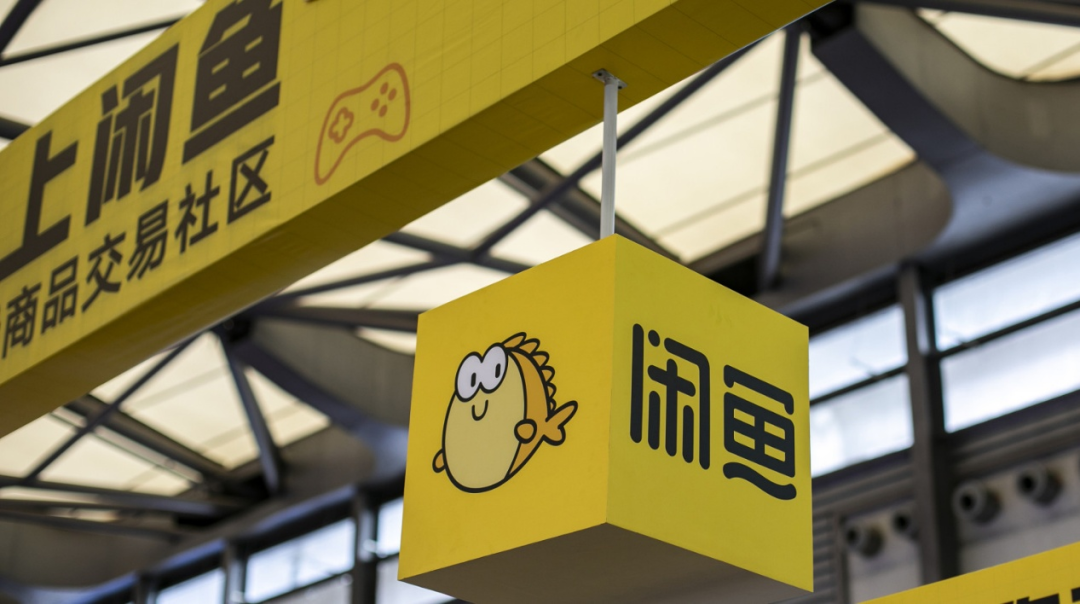
Similar logic applies to other platforms. Pinduoduo focused on affordable goods, while Douyin E-commerce found its niche through content + commerce. None tried to be platforms for all products but became first choices for specific needs.
This approach suits the AI short drama industry.
Moreover, the industry landscape hasn't solidified, and user perceptions of AI short drama platforms are still taking shape. This presents a window to establish category mindshare.
When supply shifts from scarcity to abundance, concentrating resources on a single direction rather than spreading thin allows for stable content quality and higher hit probabilities. As users repeatedly encounter similar content, they may transition from remembering a single drama to remembering its platform. Clear user personas also help B-side users better assess platform value, increasing retention.
But these are still business considerations. What truly anchors a platform is "user perception."
User perception isn't just about awareness. Short drama users encounter dozens of platforms daily—awareness doesn't equal retention, and retention doesn't equal loyalty. True perception means users think of you first when a specific need arises.
Xianyu exemplifies this. It anchored itself as the destination for "buying secondhand." When users want to sell idle items, find bargains, or track discontinued products, they instinctively open Xianyu. It doesn't sell "everything" but "what others might have."
This anchor could be a genre, viewing experience, community atmosphere, or even the intuition that "this platform has the most comprehensive content in this category." It needn't be a single type but must be specific, differentiated, and enough to distinguish you from other platforms. Once perception is established, the platform becomes more than a shelf—it becomes the default entry point for a need.
For example, when users say, "Watch X-type short dramas on X platform" or "Find X-theme short dramas on X platform," that platform has truly claimed its position.
In summary, AI short dramas won't automatically become a good business just by cutting costs. When capacity is no longer a barrier, the real challenge returns to age-old questions: Why do users remember you, and why do they stay? The industry must eventually shift from competing on output to competing on perception, from chasing traffic to claiming a position.
This process will not be too fast, nor will it be for everyone. However, platforms willing to delve deeply in a specific direction may not be the first to emerge, but they are more likely to endure until the end.
* The image is sourced from the internet. Please contact us for removal if there is any infringement.
-
![]()
Geely Achieves 174,000 Insurance Sales in August, with Galaxy Xingyuan Contributing Nearly 40,000 Units and Zeekr 9X Registering 1,300 More Insurance Claims Than Retail Sales!
-
![]()
BYD’s August Insured Sales Hit 232,000 Units, with Yuan UP Exceeding 22,000 Units and Fangchengbao Titan 7 Achieving 23,000 Units in Retail
-
![]()
Will Huawei Cut Ties with Seres?
-
![]()
Actual Controller Imprisoned! Raisecom's Private Network Communication Case Concludes with First-Instance Verdict
-
![]()
AI: The 'Nine Yin Manual' Analogy, But Dario Amodei Is No Wang Chongyang
-
![]()
New Advances in Sino-US Intelligent Driving: When Will We Reach Genuine 'Driverless' Automobiles?
-
![]()
AI Short Dramas Enter the 'Era of Perception'
-
![]()
After 15 months at the helm of Hisense's Air Solutions Business Division, Yin Bitong departs. Amid the integration of five brands, localized growth struggles to offset the decline in HVAC revenue. Whe