New Advances in Sino-US Intelligent Driving: When Will We Reach Genuine 'Driverless' Automobiles?
 09/16 2026
 481
481
Lead | Introduction
On September 3 (local time), Tesla officially introduced the world's first mass-produced vehicle specifically designed for autonomous driving scenarios—the steering wheel-less Cybercab commenced passenger services in Texas, operating at a cost of just 0.8 yuan per kilometer. The following day, Changan unveiled its fully independently developed 'Tianshu Pilot' intelligent driving solution, which supports natural language vehicle control. With China and the US simultaneously presenting their latest intelligent driving innovations—when vehicles begin to comprehend human speech and no longer necessitate human drivers, have we transitioned from 'driving cars' to 'traveling with robots'?
Produced by | This article is produced by: Heyan Yueche Studio
Written by | Article written by: Cai Yan
Edited by | Editing by: He Zi
Full text: 1,982 characters
Reading time: 4 minutes
Within less than 24 hours, significant automotive breakthroughs occurred on both sides of the Pacific—Chinese automaker Changan revealed its first end-to-end mass-production solution, while US automaker Tesla deployed steering wheel-less vehicles for passenger service. Both approaches converge on a singular objective: transferring driving control to machines. This competition has shifted from laboratories to public streets. How near are we to achieving true driverless technology?
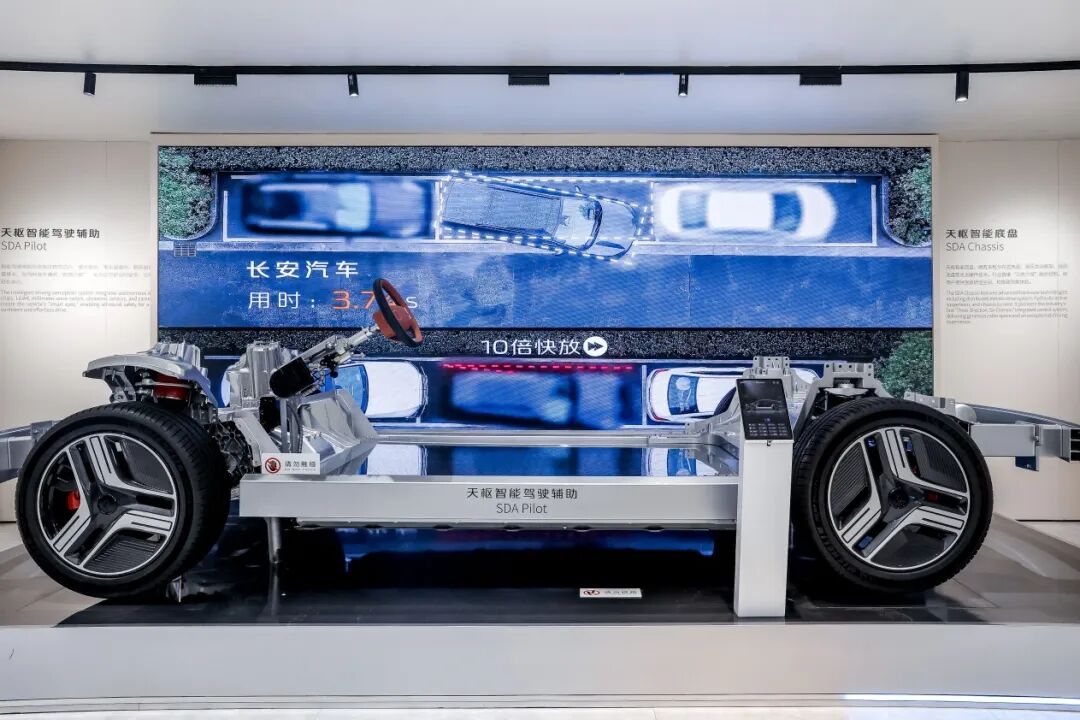
△ Changan unveils its fully independently developed 'Tianshu Pilot' intelligent driving solution
Two Paths, One Direction
On the specified date, Tesla launched the mass-produced Cybercab—no livestream, attendance by invitation only—but this two-seater model, which entirely eliminates steering wheels, pedals, and rearview mirrors, declared the commercialization of driverless travel in the most radical manner. By the evening of September 2, Tesla had registered 420 autonomous vehicles in Texas, including 45 Cybercabs. At 0.8 yuan per kilometer, driverless travel became economically feasible for the first time.
Almost simultaneously, at the Chongqing Changan Science Park, Zhu Huarong, Chairman of China Changan Automobile Group, proclaimed: 'Core technologies must remain in our own hands, as cars are evolving into 'evolvable intelligent automotive robots'—the ultimate form of embodied AI. State-owned enterprises must raise the banners of national competitiveness, new quality productivity, and technological self-reliance.' Changan's trump card was the 'Tianshu Pilot'—China's first end-to-end intelligent driving assistance system developed by a central enterprise, available in four tiers (Pro, Max, Ultra, Ultimate). All versions incorporate LiDAR and end-to-end technology. The debut model, Qiyuan Q06, starts at 147,900 yuan in pre-sale. Equipped with 560TOPS computing chips and 256-line LiDAR, it garnered 11,079 pre-orders within two hours, with 53% of buyers opting for the Tianshu Pilot Ultra high-end version. Over a decade, Changan has invested over 60 billion yuan in intelligent technologies, expanding its intelligent team from zero to more than 7,500 members.
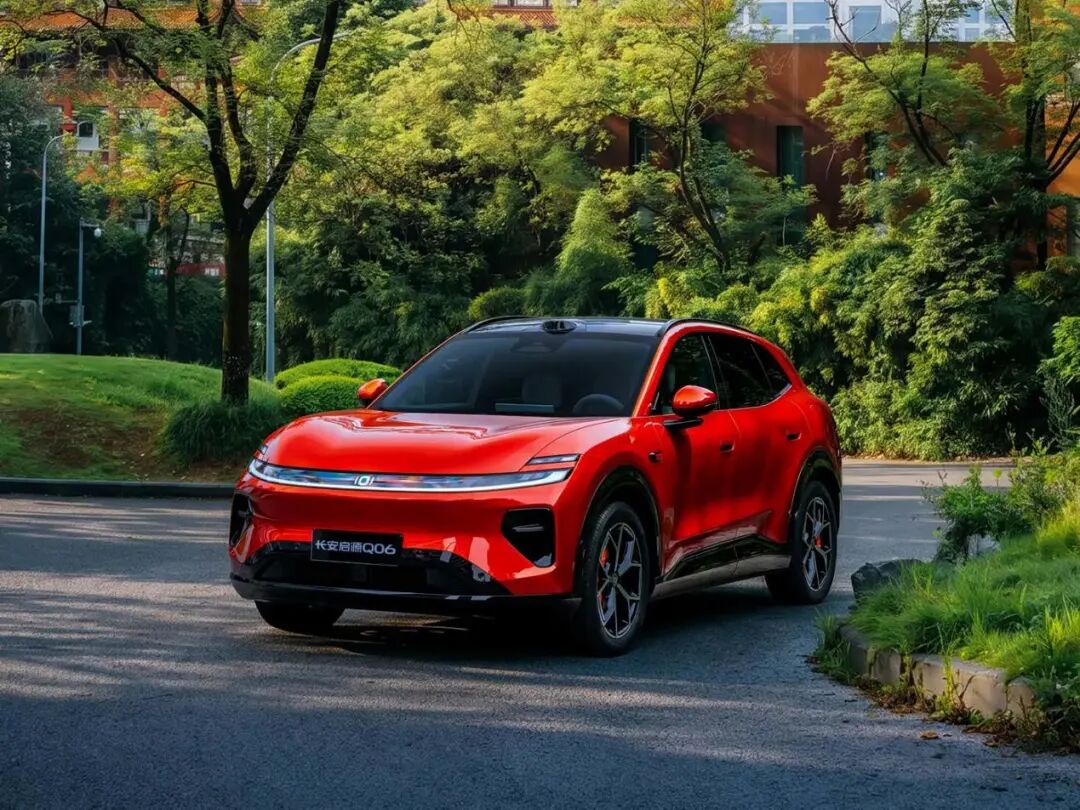
△ Qiyuan Q06 debuts with the 'Tianshu Pilot' system
The two launches delineate markedly different Sino-US approaches to intelligent driving. Tesla adheres to a 'pure vision + end-to-end' strategy, relying on 8 HD cameras and AI 4 hardware for autonomous operation, eschewing LiDAR and high-definition maps. The Cybercab progressed from concept to mass production in just approximately 18 months. Changan adopts a prudent 'multi-sensor fusion + LiDAR redundancy' approach, standardizing LiDAR across all models and training systems with over 20 million high-quality real-world driving data segments. Behind these technical divergences lie fundamental differences in autonomous driving logic between the two nations. The US is advancing a federal unified regulatory framework, aiming to create space for mass testing and deployment of steering wheel/pedal-free models through exemption mechanisms. China insists on 'regulation first'—the MIIT issued the first batch of L3 vehicle access permits in December 2025; on July 1, 2026, six cities (Beijing, Chongqing, Shanghai, Guangzhou, Shenzhen, Wuhan) simultaneously initiated L3 full-domain road trials; on July 30, the mandatory national standard 'Safety Requirements for Autonomous Driving Systems in Intelligent Connected Vehicles' was released, scheduled for implementation on July 1, 2027.
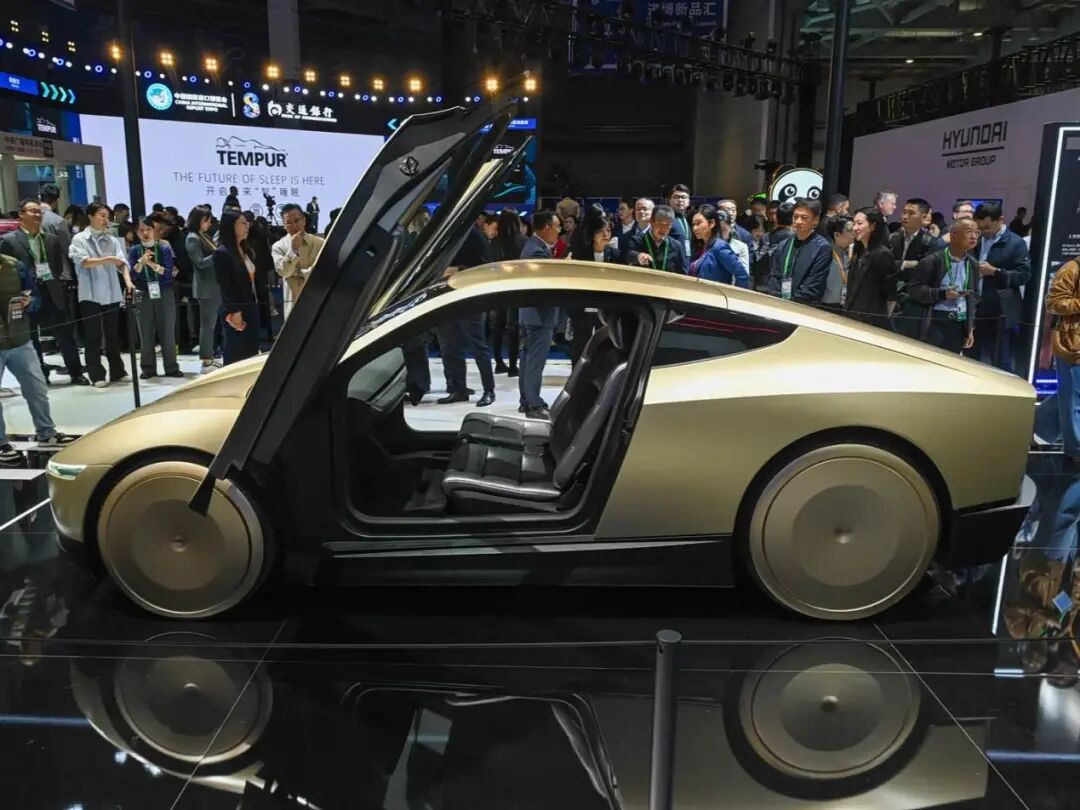
△ Tesla Cybercab follows the 'pure vision + end-to-end' path
How Far from 'Pilot' to 'Ubiquity'?
What is the current state of L3 technology? Insights emerge from two perspectives.
In passenger vehicles, China achieved the 0-to-1 breakthrough for L3 conditional autonomous driving. The Chang'an Shenlan SL03 and BAIC Arcfox Alpha S6 became the first legally roadworthy mass-produced models. The Shenlan SL03, for instance, accumulated over 150,000 km of activated mileage with no traffic violations or collision risks during trials. Chang'an is simultaneously advancing next-gen L3 R&D, having secured L4 Robotaxi testing licenses in March. However, L3's core challenge now extends beyond 'can the car drive itself' to the handover boundary in human-machine co-driving—systems often request takeover at capability limits and most complex road conditions, precisely when driver attention and situational awareness are 'offline.'
In the Robotaxi sector, a Sino-US duopoly has emerged. Apollo Go and Waymo both surpassed 20 million cumulative orders. By May 2026, Waymo completed over 500,000 weekly paid trips in the US with approximately 4,000 vehicles. Apollo Go handled 3.2 million trips in Q1 2026, up 120% year-over-year. The Cybercab's arrival signifies Robotaxi's evolution from 'retrofitting existing models' to 'operating purpose-built vehicles.' However, Cybercab's mass deployment faces regulatory hurdles—US federal safety regulations typically require manual driving controls, and Tesla lacks Robotaxi service permits in key markets like California.
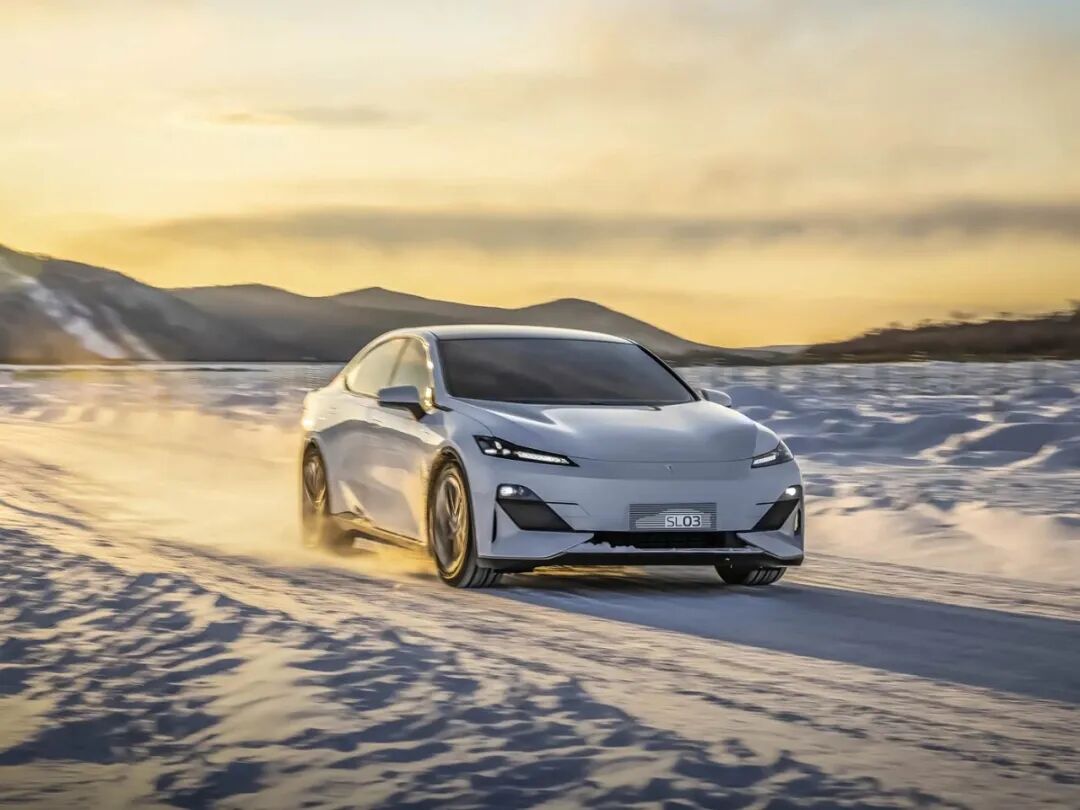
△ Chang'an Automobile secured L4 Robotaxi testing licenses in March
In the long term, the adoption of steering wheel-less vehicles will be gradual. In the Robotaxi sector, as regulations ease, costs decline, and user habits form, purpose-built models without steering wheels will dominate—as demonstrated by Cybercab. In the first four months of 2026, global autonomous driving private equity transactions totaled $23.3 billion, approximately 2.7 times the 2025 annual sum. Capital inflow signals industry consensus. For private passenger vehicles, steering wheel-free adoption will be slower—consumer demand for 'control,' insurance/liability systems, and existing road infrastructure adaptations remain constraints.
Commentary
One approach utilizes LiDAR and end-to-end models to enable cars to 'understand human speech' in a 147,900-yuan mass-produced model; the other employs pure vision and FSD to allow cars to 'operate independently' in a steering wheel-less production vehicle. Two paths, one direction. The L3 era will not arrive instantaneously but through gradual penetration—the institutional framework is established, technical routes are being explored, and commercial validation has just commenced. When vehicles truly begin to 'think autonomously and evolve continuously,' we may cross the historical threshold from 'driving cars' to 'traveling with robots.'
(Original article from Heyan Yueche. Unauthorized reproduction prohibited.)
-
![]()
Volkswagen Group 'Downsizes' in a High-Stakes Gamble for Survival
-
![]()
Official Announcement: Seres Reclaims Leadership of AITO Brand from Huawei!
-
![]()
Only Three Traditional Fuel Models Make the Cut: A Review of SUV Sales in August
-
Hillhouse and Lei Jun Place Their Bets! Jinzhwei Racks Up 640 Million Yuan in Cumulative Losses Over Three and a Half Years—Can It Stage a Turnaround with AI Agents?
-
![]()
"Taiyi Shenglian": Can It Reforge Nezha’s Golden Form?
-
The Fastest Runner Hits the Brakes First: The AI Safety Business Finally Finds Its Payers
-
![]()
What Signals Are Sent by This Major Collaboration Between FAW and GAC?
-
![]()
FAW and GAC Forge Alliance, Charting a Win-Win Path for China's Auto Industry Across Regions