Will Huawei Cut Ties with Seres?
 09/16 2026
 553
553
Just as individuals must learn to walk independently as they grow, brands too must chart their own course.
Yesterday, the automotive industry was shaken by a significant announcement: Huawei and Seres are set to revamp their smart vehicle collaboration model. The new partnership will shift towards a lightweight asset approach, moving away from comprehensive, 'nanny-style' services to a more focused, single-dimensional empowerment. Seres will take the helm in product development, marketing, sales, and service.
This signifies that AITO will step out of Huawei's 'nurturing environment' and truly stand on its own.
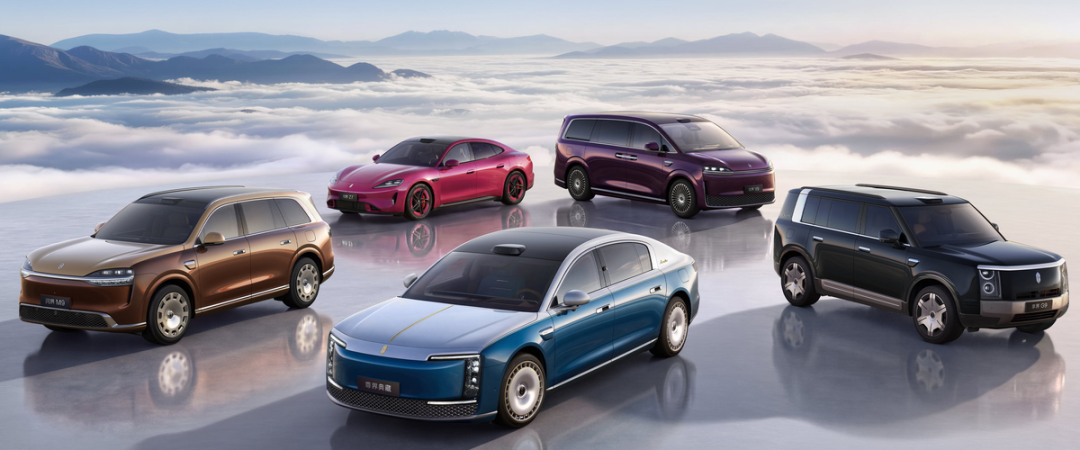
Another layer to this adjustment by Hongmeng Zhixing is to reallocate resources to support brands like Luxeed, Xiangjie, Zunjie, and Shangjie, thereby strengthening its foothold in the industry.
The market's reaction to this major shift in the cooperation model has been mixed, with varying interpretations on its impact on Seres.
Following the media's disclosure of the news, Seres' stock price took a sudden nosedive yesterday afternoon, plummeting more than 6% at one point during intraday trading and closing down 5.09% for the day.
From Humble Beginnings to Soaring Heights
Without its deep collaboration with Huawei, Seres might not have reached its current stature.
Prior to July 2022, Seres was known as Sokon, a relatively obscure automaker specializing in microcars and low-end SUVs during the era of fuel-powered vehicles.
Earlier, the company primarily manufactured seat springs, shock absorbers, and other components for microcars under the Changan brand. It wasn't until 2003, when it seized the opportunity to partner with Dongfeng Motor, that it officially ventured into complete vehicle manufacturing.
Although Sokon's products were primarily commercial vehicles targeting the lower-tier market, it held a relatively stable position in several niche segments and enjoyed decent profitability. In 2015 and 2017, its revenue surpassed the 10 billion and 20 billion yuan marks, respectively.
In fact, company founder Zhang Xinghai had long recognized the major trend of automotive energy transformation and began making strategic layouts. In 2016, the company invested in establishing SF Motors in the United States, led by his son Zhang Zhengping, who had overseas study experience, and began focusing on vehicle manufacturing.
In 2019, SERES made its debut at the Shanghai Auto Show, yet many automotive industry professionals were still unfamiliar with the brand.
The following July, Seres' first new energy vehicle model, the SF5, went into mass production but failed to achieve immediate success, selling only 732 units that year. In subsequent years, Sokon faced declining fuel vehicle sales while continuously investing in new energy vehicles, causing the company to shift from profitability to losses.
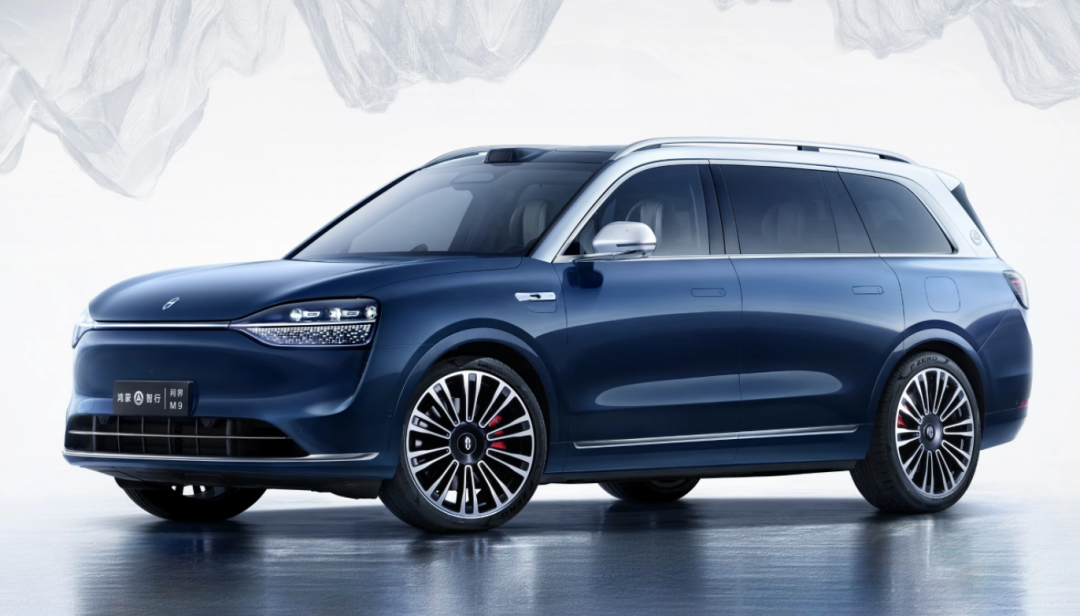
It wasn't until partnering with Huawei that Sokon experienced a significant turning point.
At that time, China's new energy vehicle market was on the brink of explosive growth. Huawei sought to apply its technological prowess to the more commercially viable automotive sector, while Sokon desperately needed Huawei's support. The two sides quickly reached an agreement.
By the end of 2021, the two sides launched the exclusive brand 'AITO' and deepened their cooperation through the smart selection vehicle model.
With Huawei's comprehensive support in technology, branding, marketing, and channels, multiple AITO models became hot sellers, propelling Seres' rapid growth. In 2024, its revenue surged by 305.04% year-on-year to 145.2 billion yuan, and in 2025, it continued to grow by 13.69% to reach 165.1 billion yuan. In both years, the company's net profit attributable to shareholders reached as high as 5.9 billion yuan.
Transformed into a 'Huawei concept stock,' Seres (601127.SH) witnessed a remarkable rise in the capital market. Its stock price soared, and at its peak on September 30, 2025, its market capitalization once exceeded 300 billion yuan, leaving many established automotive giants far behind. The Zhang Xinghai family thereby ascended to the top as the 'richest in Chongqing.'
Redistribution of Benefits
The success of Huawei's cooperation with Seres on AITO has fully validated Huawei's technology in the era of automotive intelligence.
Huawei has consistently adhered to a strategy of not manufacturing vehicles itself but instead empowering automakers through technology to build better cars. Its cooperation with automakers falls into three models:
In the component supplier model, Huawei provides core components and solutions such as intelligent driving, smart cockpits, and LiDAR to automakers.
The HI model offers full-stack intelligent automotive solutions to automakers, as seen with brands like Avatr and BAIC Arcfox.
In the 'Five Brands' smart selection vehicle model, Huawei is deeply involved in vehicle R&D and production while providing sales channel support. Each new vehicle launch is led by Huawei, and related products are sold through Huawei's channels.
Financial reports show that as AITO's sales grew rapidly in recent years, Seres' procurement demand for smart hardware surged. From 2022 to 2024, its procurement amounts with Huawei reached 5.802 billion yuan, 7.248 billion yuan, and 42.02 billion yuan, respectively.
In addition to hard procurement costs, Seres also had to pay channel services, branding, and technology licensing fees in its cooperation with Huawei. According to estimates by institutions and media, these fees accounted for approximately 10% of the price per vehicle.
Financial reports for 2024 and 2025 reveal that although Seres' gross profit margins were 26.15% and 29.14% in those two years, respectively—relatively high among automakers—its net profit margins were only 3.27% and 3.72%.
In the first half of this year, affected by rising prices of major raw materials and impairment of existing assets, the company returned to losses, reporting a net profit attributable to shareholders of -1.717 billion yuan.
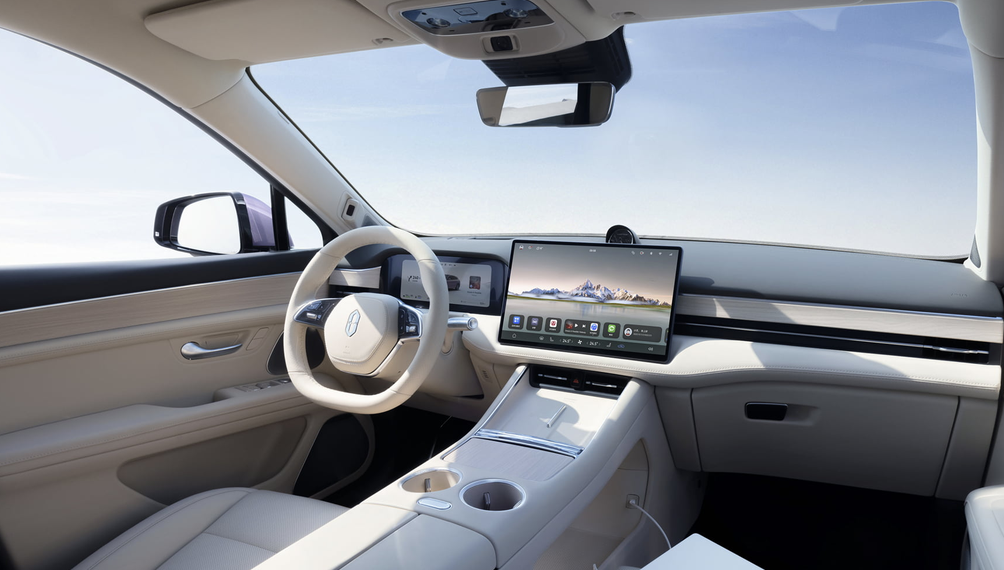
Under such circumstances, market interpretations of Huawei's adjustment in its cooperation with Seres vary widely.
Optimists believe that after Seres goes solo, it can reduce expenditures on Huawei's services and channels, which will help improve its overall profitability.
On the other hand, some argue that without Huawei's comprehensive support, Seres lacks brand operation capabilities and will struggle to lead AITO to breakthroughs in the current market environment.
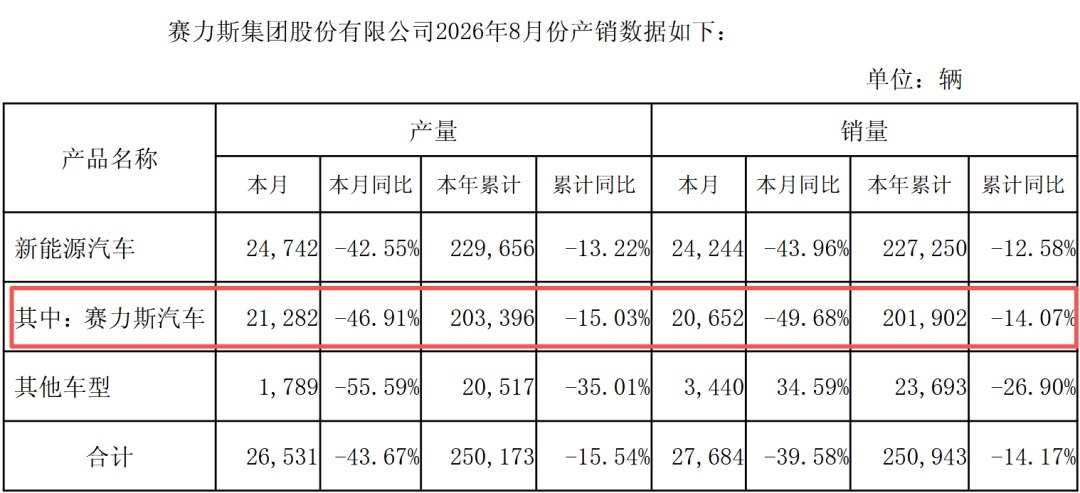
The market's concerns are not unfounded. In 2023, Seres independently operated the Landian brand outside of AITO, but its sales failed to achieve significant scaling.
In May this year, Landian Technology was renamed Saido Technology, and other strategic investors were introduced to launch the new brand AIVA, aiming to tell a new AI automotive story. However, Seres no longer holds a controlling stake in the company.
Creating Another 'AITO'?
Another layer to Huawei's decision to let go of AITO is to free up resources to help the entire Hongmeng Zhixing matrix break through development bottlenecks.
Currently, Hongmeng Zhixing has formed a five-brand layout, but Luxeed, Xiangjie, Zunjie, and Shangjie are all in their cultivation and growth stages and have yet to establish a solid sales base.
Data shows that from January to August this year, Hongmeng Zhixing delivered approximately 329,400 vehicles in total, with AITO accounting for 201,900 units, or over 60% of the total, indicating highly uneven development within the system.
Luxeed, relying on Chery's manufacturing system, has gained a foothold in the premium MPV market above 400,000 yuan with its V9 model, showcasing outstanding single-product popularity. However, its sedan and SUV products have underperformed, and its product matrix lacks resilience against risks.
Xiangjie focuses on the 400,000 to 700,000 yuan administrative luxury market, which has a strong niche attribute and a limited audience, making it difficult to achieve significant sales scaling. Zunjie targets the ultra-luxury segment above 1 million yuan, which is even more niche.
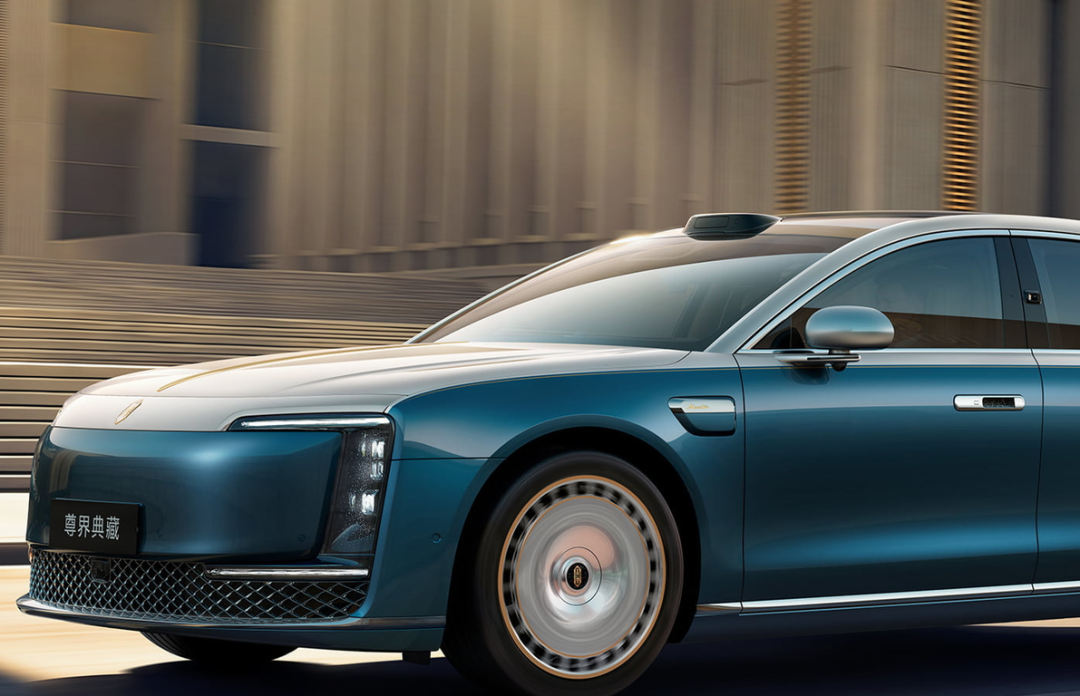
Shangjie is the youngest brand in the system, targeting the mainstream home-use segment of 150,000 to 250,000 yuan and is the only segment with the potential for large-scale sales. Backed by SAIC's mature supply chain and manufacturing system, its new vehicle launches have gained momentum quickly, but this price segment is extremely competitive.
After AITO operates independently, Huawei's channel, marketing, and operational resources can be fully released and redirected toward the other 'Four Brands,' refining a more standardized path for Huawei's smart selection vehicles to achieve significant scaling and replication.
However, today's new energy vehicle market is vastly different from five years ago, with intensifying competition and automakers' technologies becoming increasingly mature and differentiated. Whether Hongmeng Zhixing can create another 'AITO' remains a big question mark.
Meanwhile, AITO itself has shown signs of fatigue. In the first eight months of this year, its sales reached 201,900 units, down 14.07% year-on-year.
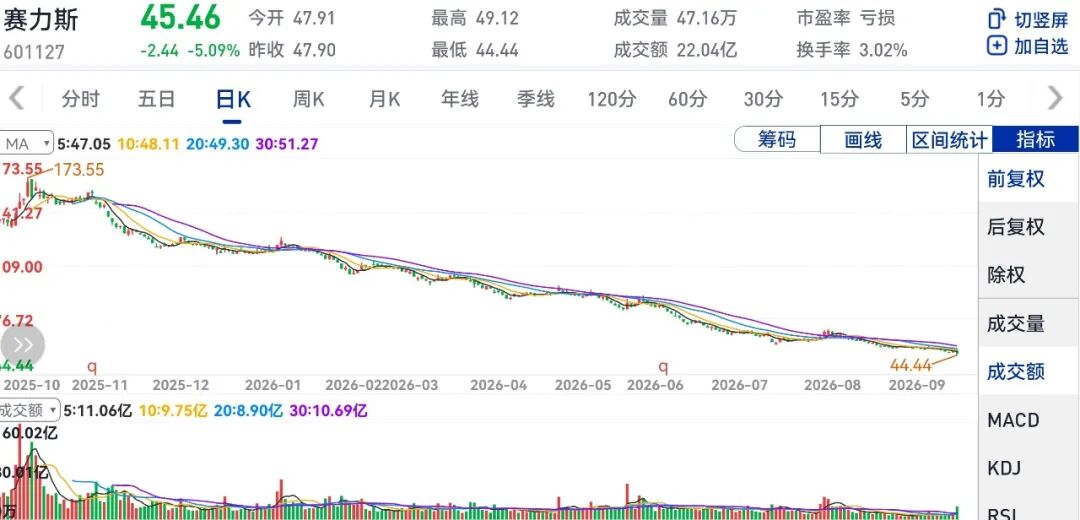
This year, Seres' stock price has continued to decline. Yesterday, it plummeted by 5.09%, closing at 45.46 yuan per share, hitting a near-three-year historical low. Its market capitalization stands at 79.19 billion yuan, having evaporated by over 200 billion yuan from its peak.
-
![]()
Volkswagen Group 'Downsizes' in a High-Stakes Gamble for Survival
-
![]()
Official Announcement: Seres Reclaims Leadership of AITO Brand from Huawei!
-
![]()
Only Three Traditional Fuel Models Make the Cut: A Review of SUV Sales in August
-
Hillhouse and Lei Jun Place Their Bets! Jinzhwei Racks Up 640 Million Yuan in Cumulative Losses Over Three and a Half Years—Can It Stage a Turnaround with AI Agents?
-
![]()
"Taiyi Shenglian": Can It Reforge Nezha’s Golden Form?
-
The Fastest Runner Hits the Brakes First: The AI Safety Business Finally Finds Its Payers
-
![]()
What Signals Are Sent by This Major Collaboration Between FAW and GAC?
-
![]()
FAW and GAC Forge Alliance, Charting a Win-Win Path for China's Auto Industry Across Regions