77-Year-Old Math Luminary Shing-Tung Yau Leverages AI to Solve Mathematical Problems, Once Skeptical of Its Capabilities
 09/30 2026
 463
463
Why Does Academia Have Mixed Feelings About AI?

A 77-Year-Old Fields Medal Winner Has Also Started Using AI.
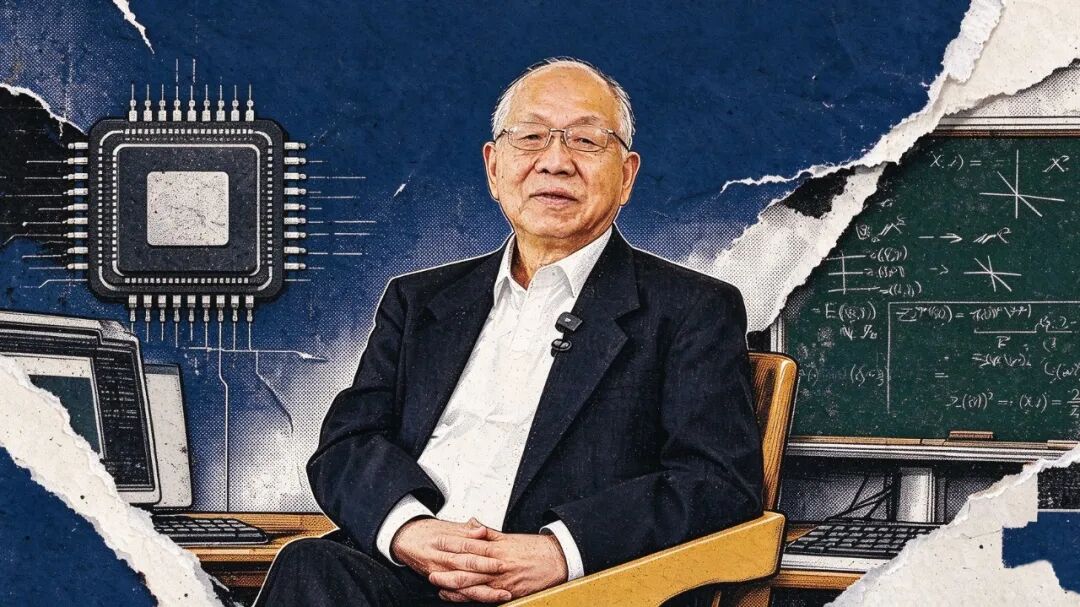
On September 24, a preprint paper in the field of differential geometry was uploaded to the academic platform arXiv. The last named author of the paper is Shing-Tung Yau, a Chinese mathematical luminary and Fields Medal winner.
The paper has sparked heated discussions in academia, not just because of its research content but also due to its acknowledgments. The team explicitly thanked two major AI large models, ChatGPT 6 Astra and Claude Pro, stating that these tools "provided valuable assistance in exploring and computing some proof strategies."
Interestingly, just two months earlier, Yau had publicly stated that AI could not solve truly difficult pure mathematical problems. His shift from openly questioning AI's capabilities to personally applying it in core research has drawn significant attention.
In fact, this is not just a change for Yau alone. Over the past year, AI has continuously made progress in mathematical reasoning, proof, and verification.
As AI begins to enter research processes previously completed mainly by human scholars, traditional research models are facing new questions: Will AI become a powerful tool for mathematicians, or will it reshape the entire set of rules for academic competition?

Shing-Tung Yau Has Also Embraced AI
In the global mathematical community, Yau's academic stature is unquestionable. He is the only mathematician in the world to have won five top international awards: the Fields Medal, MacArthur Fellowship, Crafoord Prize, Wolf Prize, and Marcel Grossmann Award.
At the age of 27, Yau successfully proved the Calabi conjecture, thereby pioneering the field of "geometric analysis" that has influenced the global academic community for decades. This research not only advanced the solution of multiple pure mathematical problems but also closely connected with studies in high-energy physics, cosmology, and other fields.
Yau has directly mentored over 70 Ph.D. students. MIT's renowned professor IM Singer once remarked, "Professor Yau alone is worth half of Harvard's math department."
In addition to his academic pursuits, Yau has recently focused on cultivating domestic talent in basic mathematics. As the dean of Tsinghua University's Yau Mathematical Sciences Center, he leads the "Shing-Tung Yau Leading Talent Program in Mathematical Sciences," commonly known as the "Yau Class." This program selects talent globally, admitting no more than 100 students annually. It adopts a 3+2+3 through-train training model, aiming to cultivate top basic science talents in China capable of leading global trends.
Despite being a master scholar deeply engaged in pure theoretical research and relying on human intellect to measure academic boundaries, Yau ultimately chose to embrace AI.
Reviewing Yau's public statements in recent years, his changing perception of AI becomes clear. In September 2022, Yau viewed AI merely as a basic tool for proofreading papers and checking proofs. In April 2023, he believed that cutting-edge mathematical research would remain unaffected by AI. By July 2025, he still stated that AI had little impact on his research.
However, by 2026, his attitude began to soften. In September of that year, Yau admitted in an interview that AI has introduced unclear variables to basic science. The "AI-Assisted Mathematics Journal," for which he serves as editor-in-chief and is planned to launch in 2027, is positioned to rely on AI to tackle top-tier problems in pure mathematics.
Under Yau's initiative, Tsinghua University's Yau Mathematical Sciences Center has also formed a team to attempt formalizing the proof of the Poincaré conjecture using AI.
The paper that has now drawn attention solves a classic problem that has remained unresolved for years.
As early as 1956, mathematician John Milnor proposed the theory of exotic spheres, discovering 28 types of spheres in seven-dimensional space with identical topological structures but distinct smooth forms. While standard spheres can possess uniform positive sectional curvature, it remained unknown whether the remaining 27 exotic spheres could achieve this. This problem was even included in Yau's classic collection of difficult problems in 1982.
Now, this AI-assisted paper announces that all 28 types of spheres have achieved positive sectional curvature.
In fact, Yau's attitude shift reflects a broader trend in cutting-edge mathematics. With various monumental mathematical problems awaiting breakthroughs, scholars worldwide are leveraging AI to accelerate research. Under this industry-wide trend, the cost of adhering to traditional research models is rising, compelling top scholars of the older generation to break free from fixed mindsets and reevaluate AI as a novel research tool.
Behind this transformation lies a qualitative change in AI's reasoning and deductive capabilities.

AI Is Solving Mathematical Problems in Batches
Over the past six months, AI's progress in mathematics has shaken the entire academic community.
A statistical review of over 30,000 mathematics papers on the arXiv platform revealed that in March of this year, only 1.39% of papers involved substantive AI contributions. Just five months later, in August, this proportion surged to 14.09%, representing a tenfold increase in overall scale within six months. AI's core applications lie in critical research processes such as complex theorem derivation and mathematical proof construction.
With its powerful logical deduction, autonomous trial-and-error, and batch computation capabilities, AI has broken the lengthy cycles of traditional mathematical research.
In early September 2026, OpenAI deployed nearly 10,000 AI agents and consumed 130 billion tokens of computational power to solve one of the seven Millennium Prize Problems—the existence and smoothness of the Navier-Stokes equations—in just 88 hours.
In contrast, human mathematicians, even with AI assistance, had made only partial progress in this direction over a year. Meanwhile, enterprise-grade large models produced a complete and rigorous 166-page proof document in just a few days.
Beyond problem-solving, AI is also beginning to play a role in proof verification. Regarding the century-old Poincaré conjecture, Yau's protégé Ben Chow led a team that further formalized related proofs by Hamilton and Perelman using proof assistants like Lean and AI tools such as ChatGPT and Claude, ultimately generating approximately 4.7 million lines of code.
Around 2.7 million lines of code were generated with direct AI assistance. The entire task was coordinated and split by AI agents for parallel execution, with human researchers stepping back to focus on determining mathematical approaches, verifying results, and finalizing drafts.
More disruptively, AI's research output has reached top academic standards. In August 2026, OpenAI demonstrated breakthroughs by its next-generation internal model, Astra, on ten major mathematical problems, including the non-sofic group problem proposed in 1999 that had puzzled the academic community for over two decades. According to public information, the API call costs for these research achievements were less than $2,000.
If these advances are ultimately fully validated by the mathematical community, the changes brought by AI will extend beyond merely "saving mathematicians time."
Traditionally, mathematical research competed on talent, accumulation, and time. Now, model capabilities and computational power have also become part of research efficiency. A decade-long research project could potentially be advanced in a shorter time by teams with stronger models and more computational resources. The tool gap is increasingly translating into a research speed gap.

Collective Anxiety Among Top Scholars
AI brings not only efficiency gains but also severe disruptions to traditional academic values.
On September 11, 2026, 25 Fields Medal winners, including Terence Tao and Deng Yu, jointly published an open letter expressing concerns about AI companies using mathematical problem-solving as a test of model capabilities.
In these mathematicians' view, if AI continuously provides "right" or "wrong" answers at extremely high speeds, researchers may increasingly focus on results themselves without sufficient time to refine new mathematical methods or form complete theoretical systems.
Furthermore, issues such as attribution of results, originality, and academic misconduct may become more complex.
Traditionally, a mathematical paper typically clearly corresponds to the researcher's thinking, deduction, and proof processes. However, when AI becomes involved, new academic questions arise: Which parts constitute original human contributions, which come from the model, and how should different degrees of AI involvement be evaluated?
Beyond these discussions, China's mathematical community faces another layer of practical challenges: the gap in AI tools themselves. Yau once used a simple metaphor to describe the current situation: AI in modern basic research is like a telescope in astronomy—an indispensable core infrastructure.
In the context of global research competition, possessing top-tier AI models and computational clusters grants a research advantage. Teams lacking core tools and constrained by technological barriers will see their research speed and innovation limits fall behind, undermining research fairness.
The problem is that the world's most advanced mathematical AI tools remain primarily controlled by a few overseas tech companies. Data shows that among mathematical papers acknowledging substantive AI research, Chinese authors account for 32.9%, similar to the United States. However, regarding AI models mentioned in acknowledgments, OpenAI accounts for about 60%, Anthropic about 22%, and domestic models only about 2.24%.
When Chinese mathematicians conduct cutting-edge research, the "telescopes" they hold mostly come from overseas. This dependency on critical tools has raised concerns among researchers about the autonomy of domestic basic research.
Now that even a 77-year-old mathematical luminary has begun exploring AI's potential, we must acknowledge that the evolution of technological tools has pushed humanity to the threshold of a new era. As computational power and models reshape research rules today, how should human scholars preserve independent thinking while riding the wave of the times? This historic question has only just begun to unfold.
Referenced Articles:
"True Scholarship Should Follow Its Own Path," Beijing News;
"Shing-Tung Yau: It's Unclear How AI Will Impact Mathematics, But It Brings Many Variables to Basic Science Development," Beijing News;
Breaking: Terence Tao, Deng Yu, and 23 Other Fields Medalists Jointly Declare: AI Companies Are Destroying Mathematics," Jiqizhixin;
"Yau's Protégé Leads AI to Write 4.7 Million Lines of Code, Formally Verifying the Poincaré Conjecture for the First Time," Synced Review;
"Shing-Tung Yau: Excellence Shouldn't Become 'Seizing the Best,'" China Newsweek;
"Behind Tsinghua's 'Yau Class' Student Expulsions: Top Talents Aren't 'Plucked,'" Southern Weekly;
"88 Hours: AI Solves a 90-Year-Old Unsolved Problem," Financial Associated Press;
"Breaking: OpenAI's Next-Generation AI Solves 10 Fields Medal-Level Problems," Synced Review.
THE END
Special Disclaimer: This article is for reference only and does not constitute any investment advice. Unauthorized reproduction is prohibited.
-
![]()
Dongfeng's Independent Brands Make Significant Strides
-
![]()
Breaking News: Next-Gen AI Model Release Scrapped! OpenAI Pulls the Plug
-
![]()
Two Chinese Women Close a $55 Billion Deal, with Employees Set to Share in $5.5 Billion
-
![]()
Geely Acquires 30% Stake in NIO Energy: NIO and Geely Strike a Deal on Charging and Battery Swap Transaction Restructuring, Paving the Way for Industry-Wide Standardization?
-
Hongmeng Zhixing Launches a Vehicle Directly Targeting Xiaomi YU7!
-
![]()
AUDI's European Presence: Sparking Anxiety and Redefining Global Market Strategies
-
![]()
Ideal i9: Is It the "Fireman" for Ideal?
-
Pharmaceutical Giant Doubles Down on AI